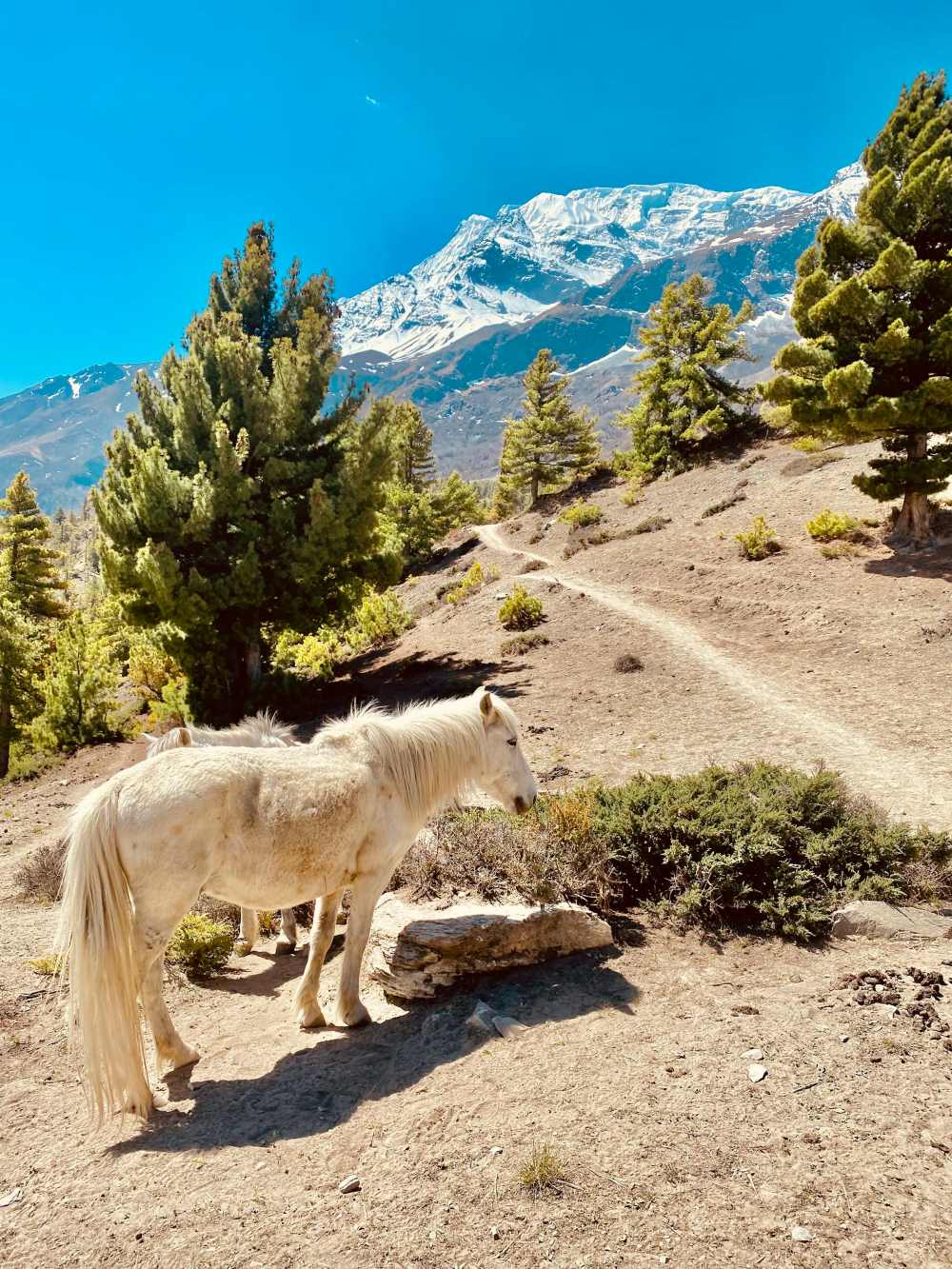
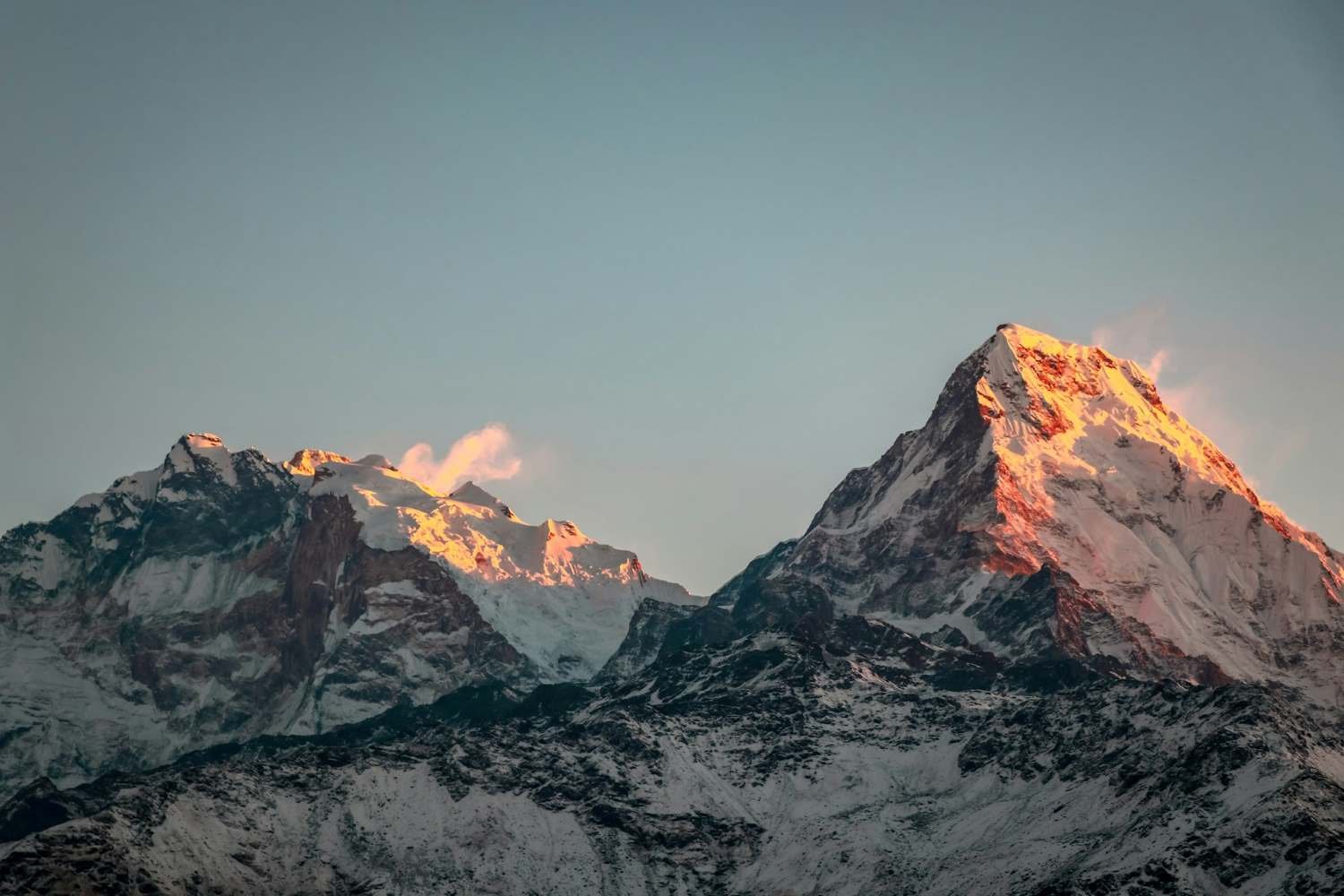
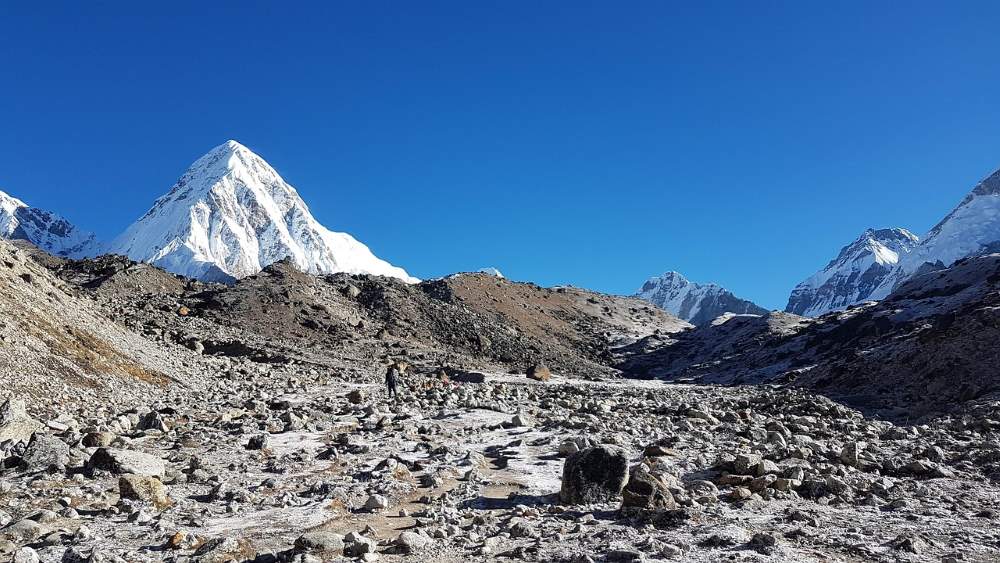
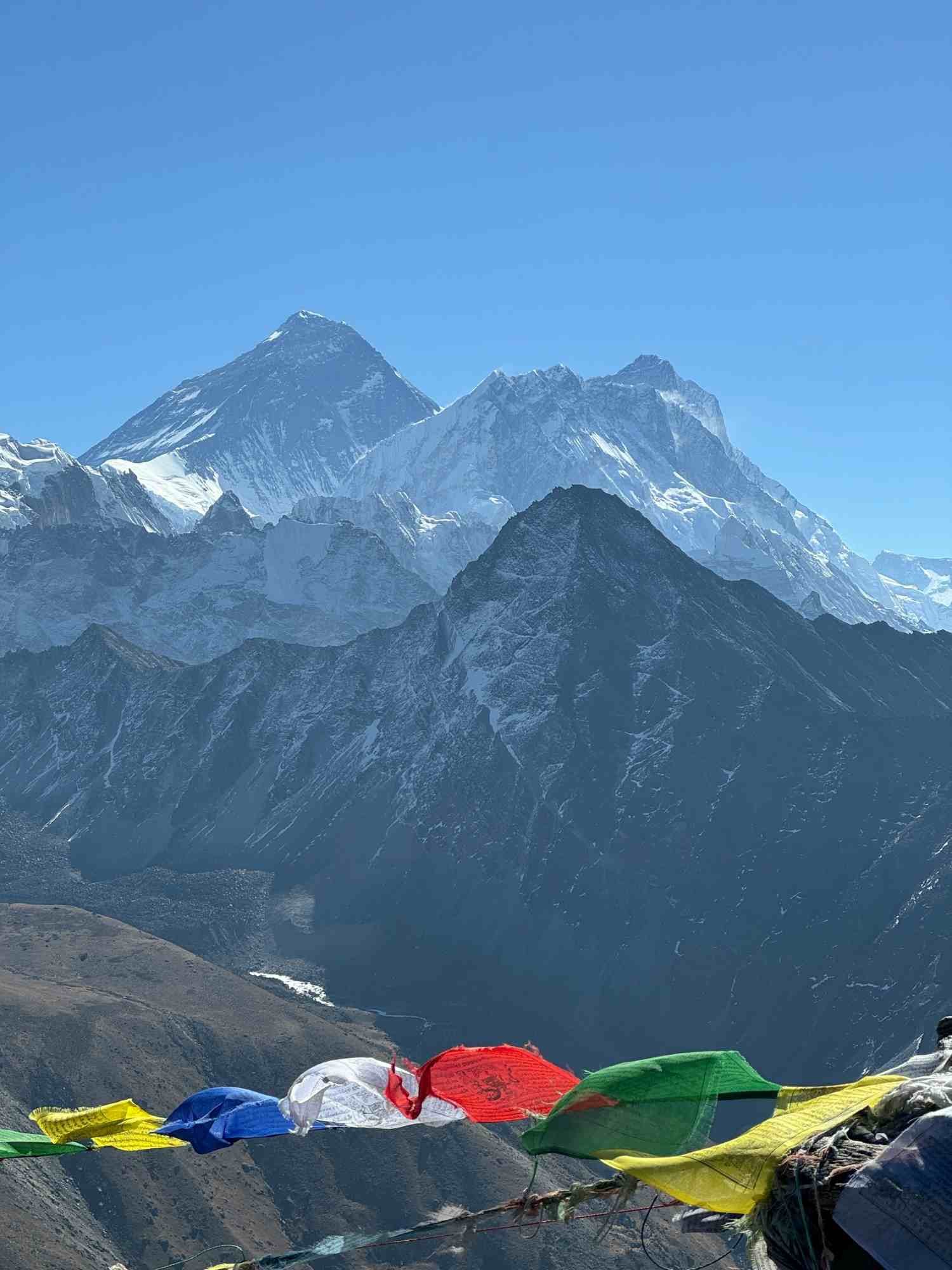
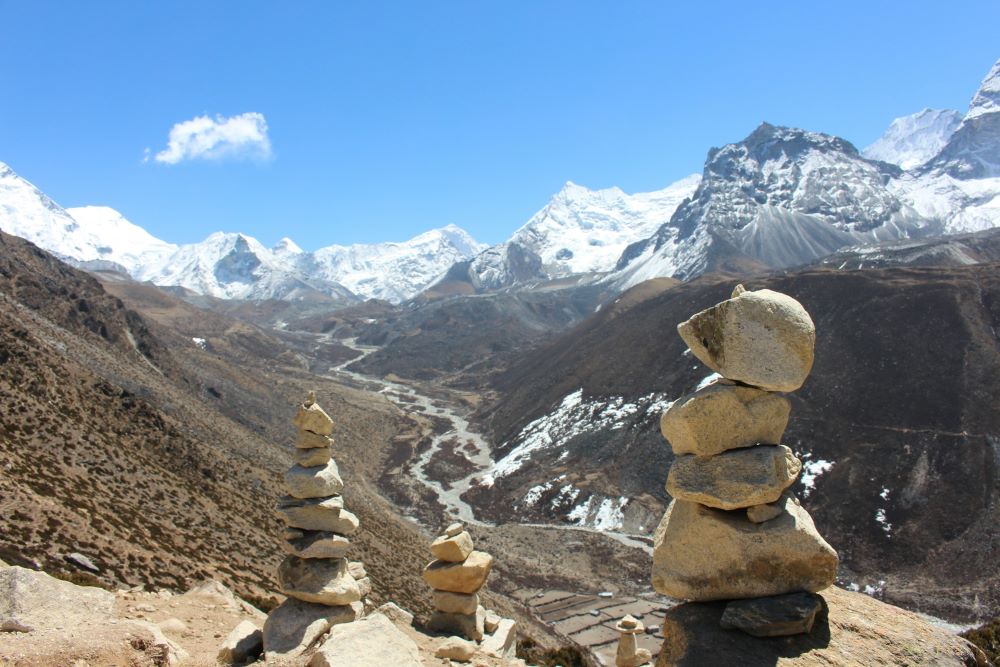
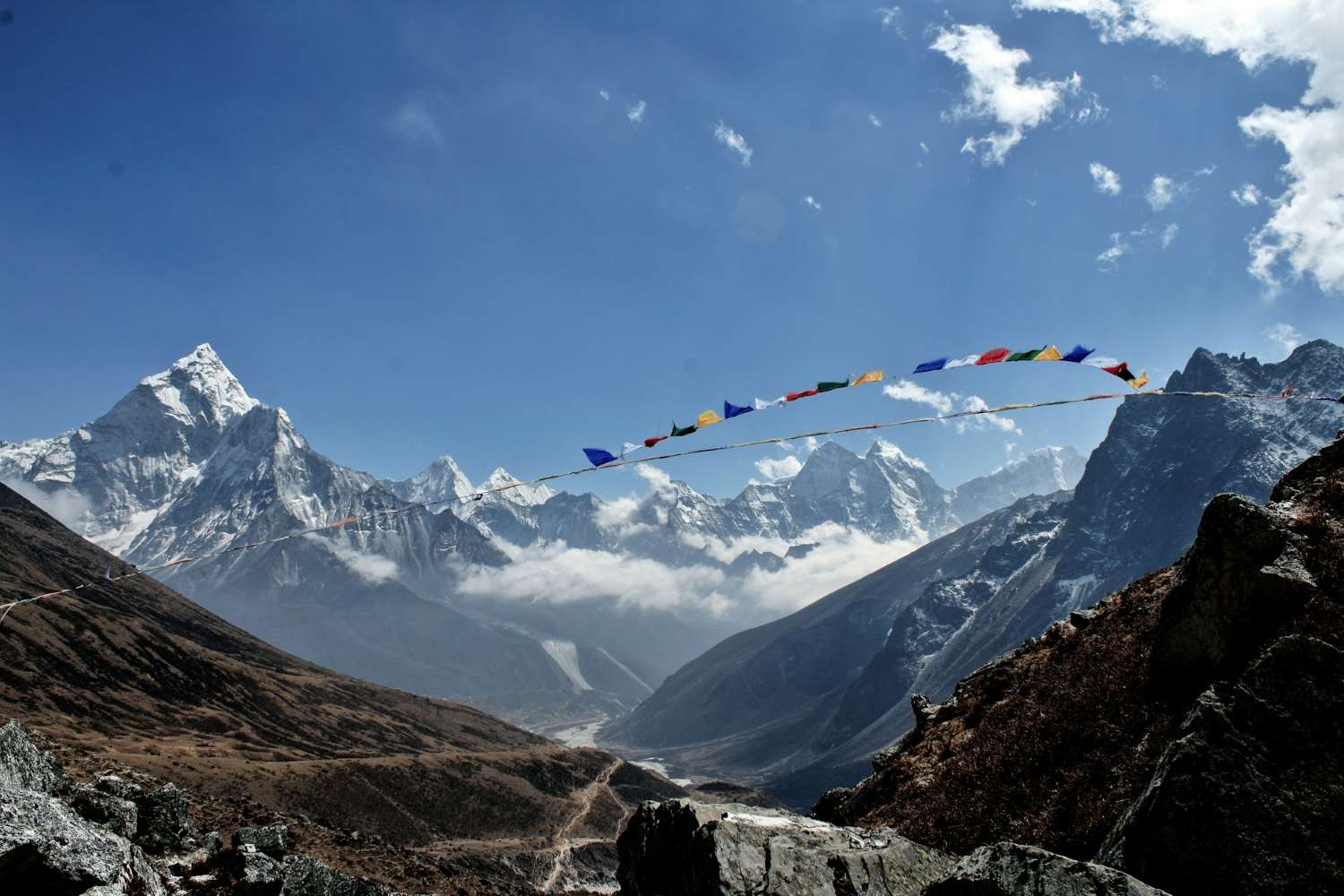
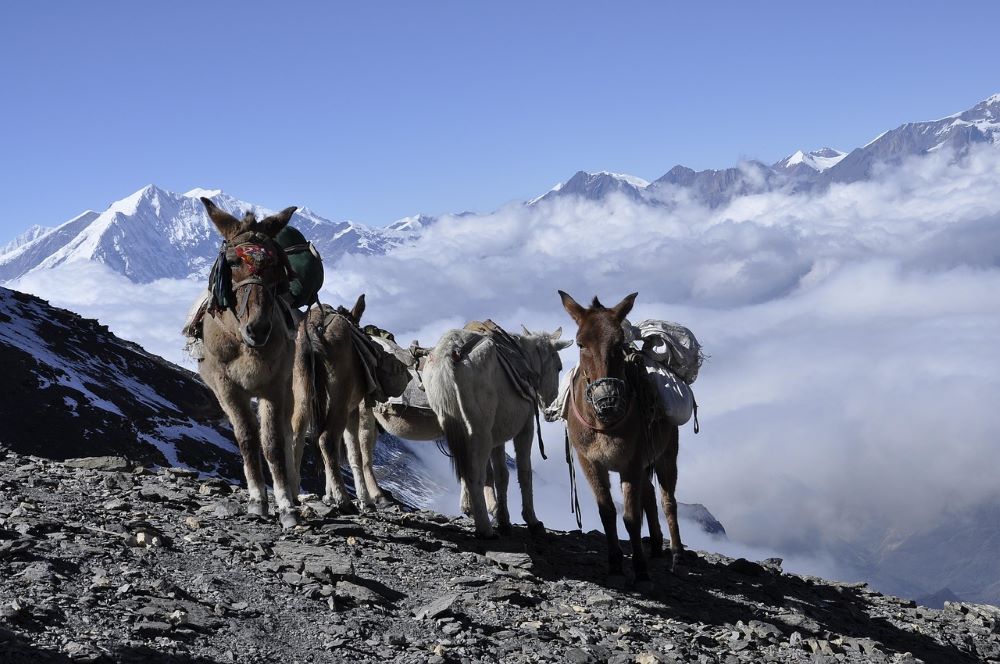
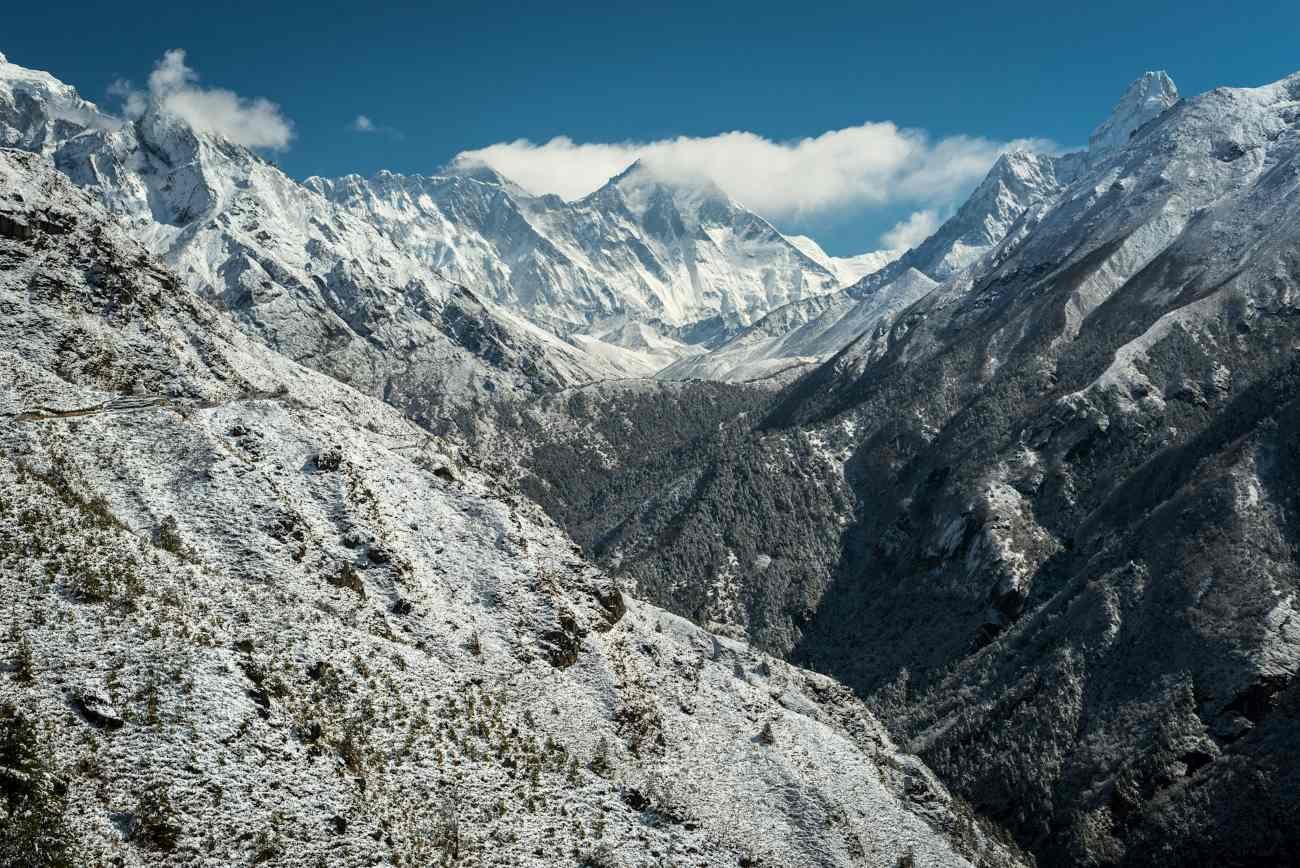
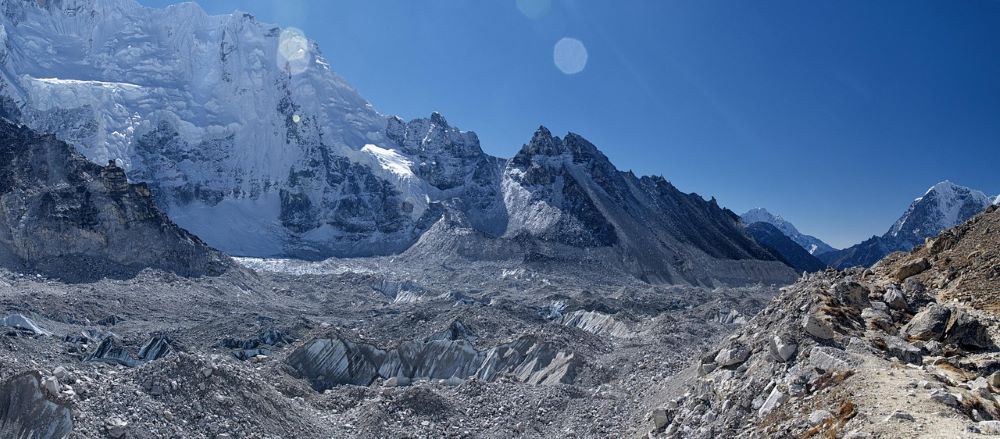
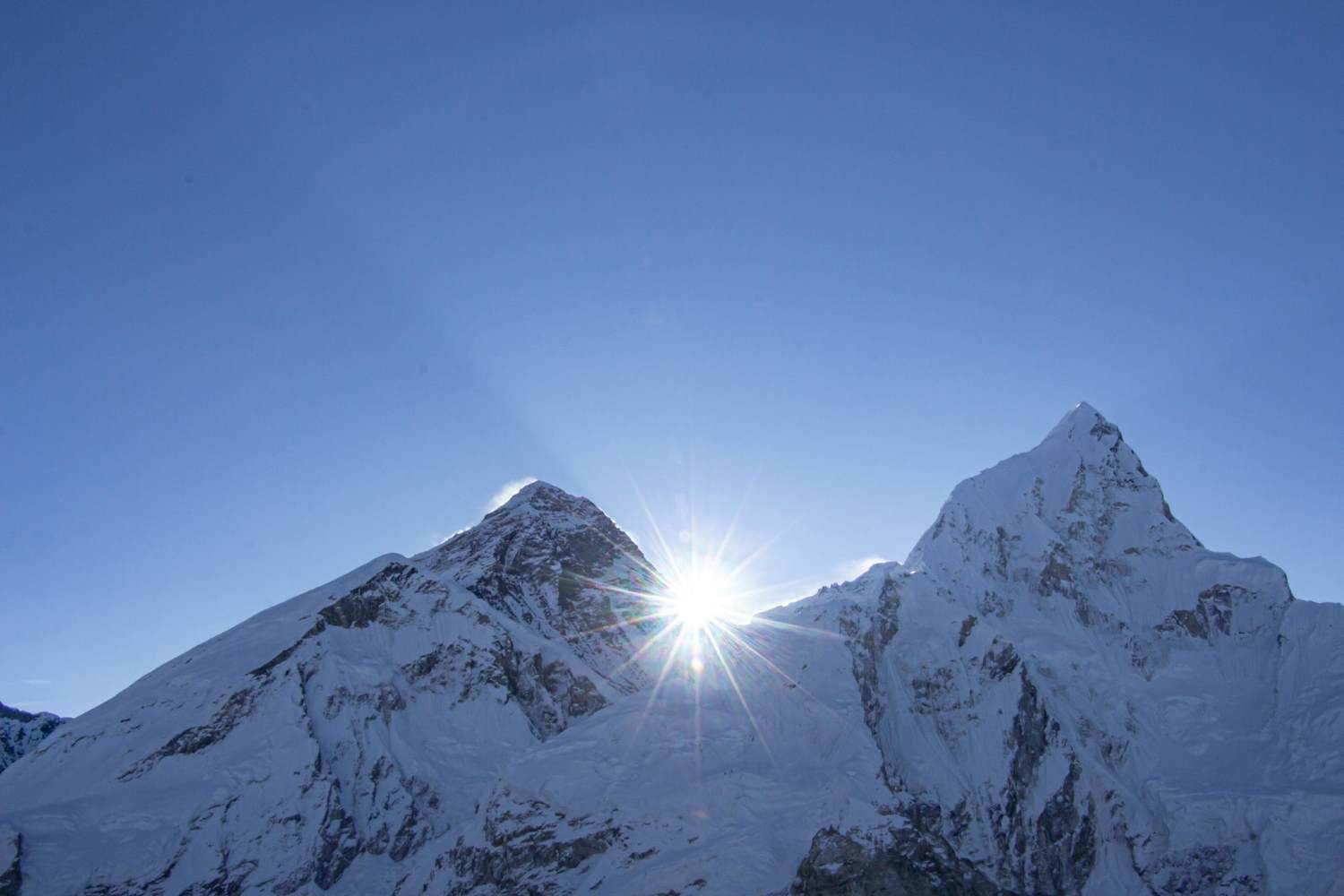
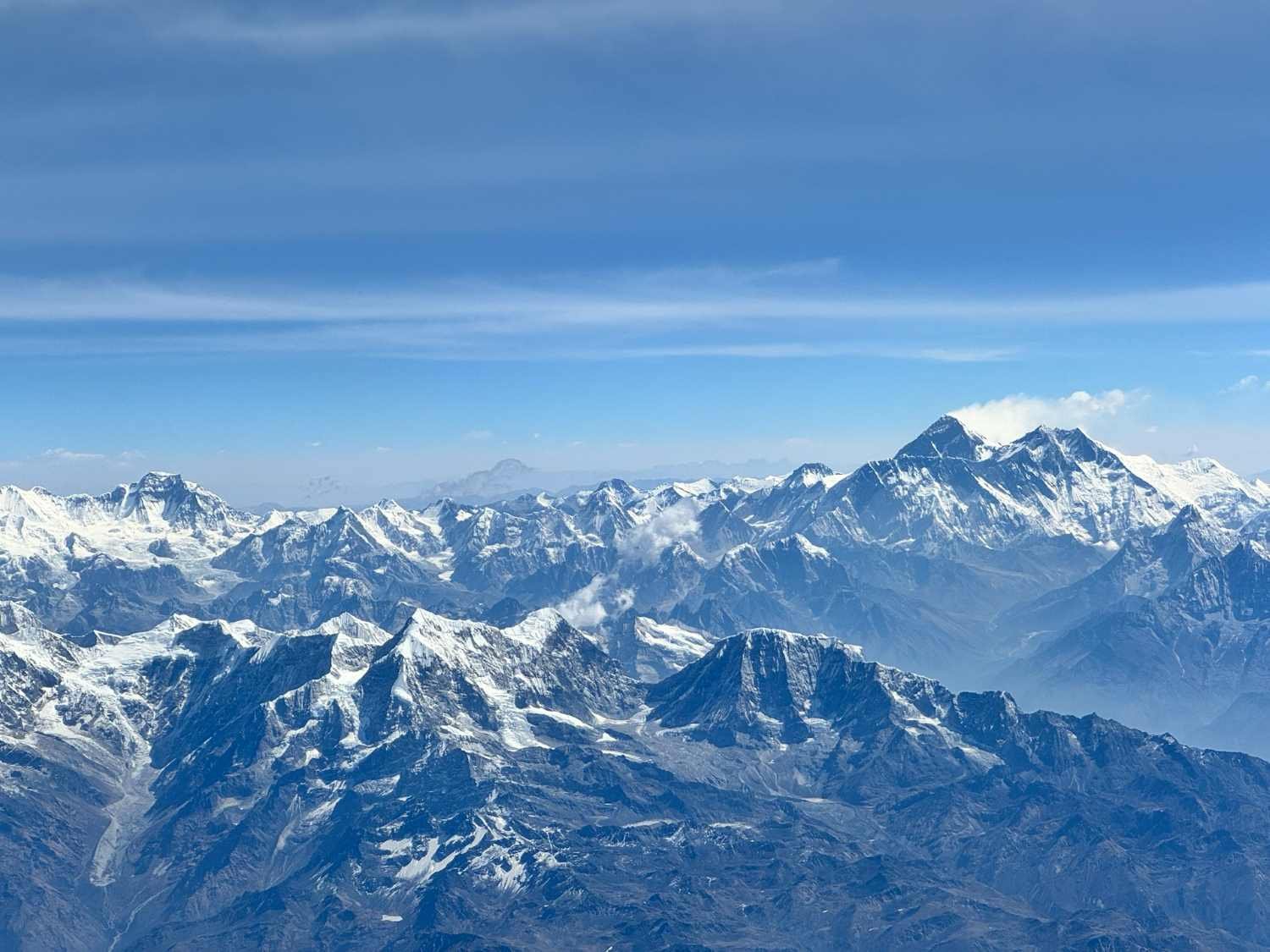
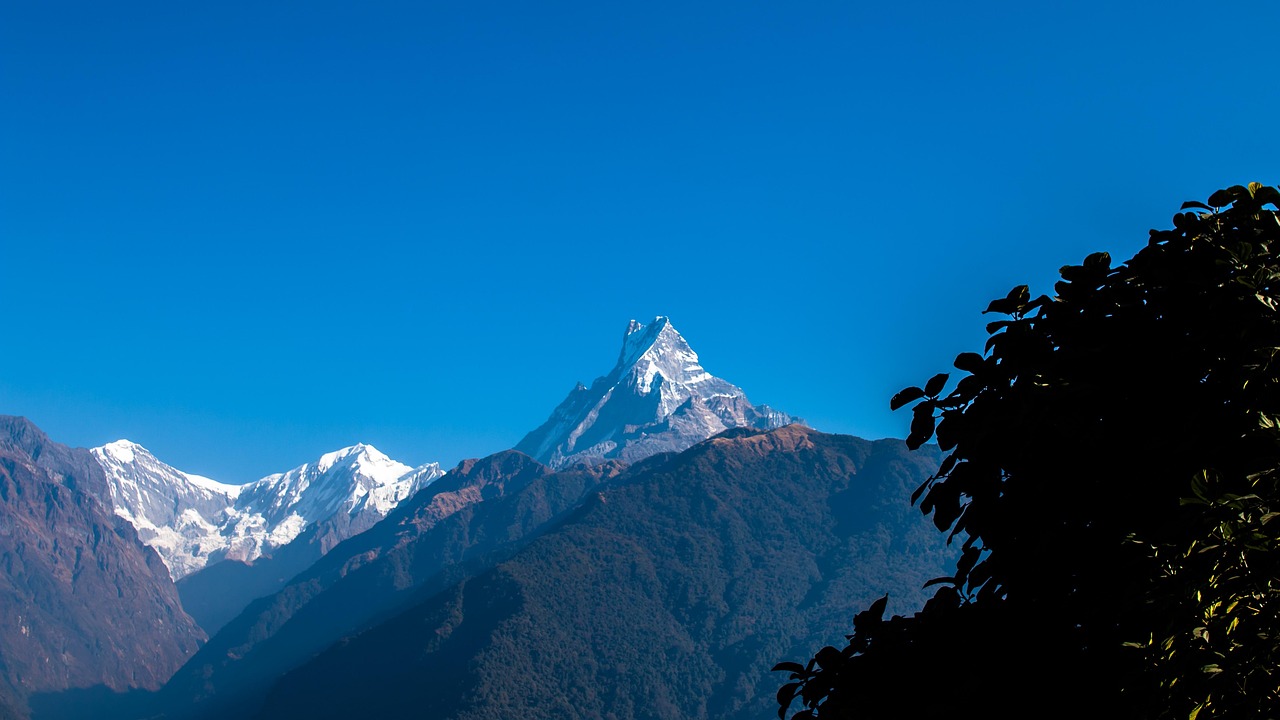
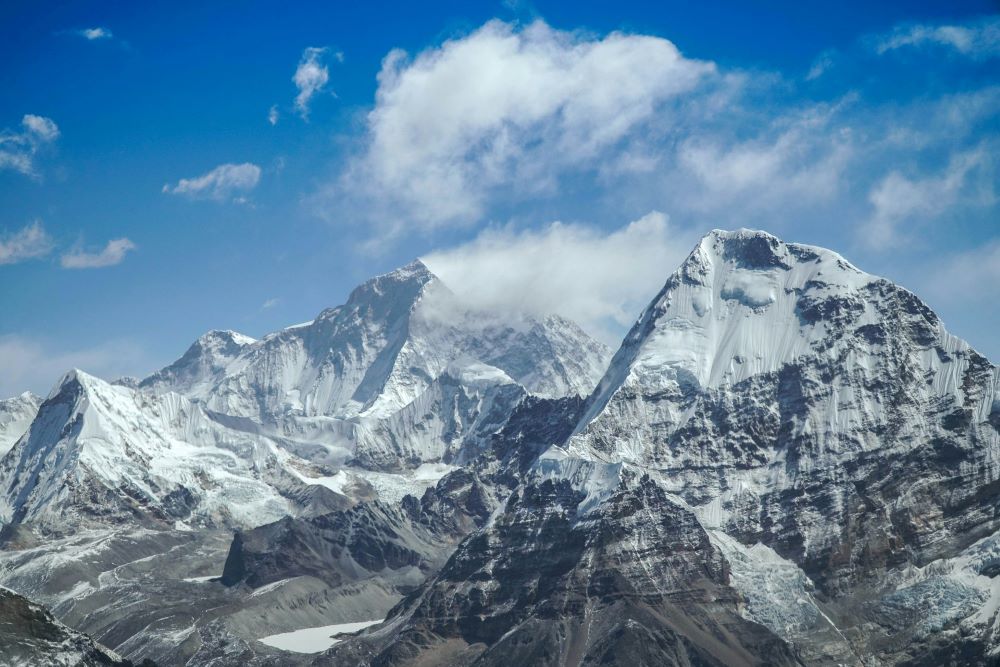
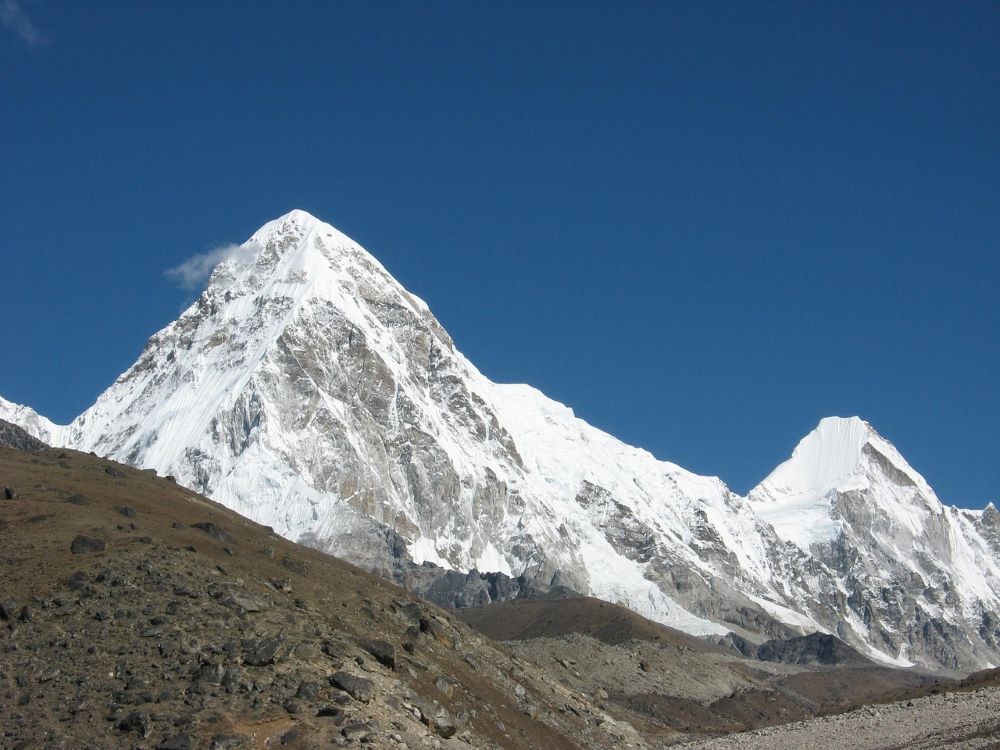
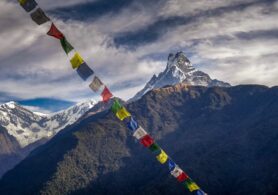
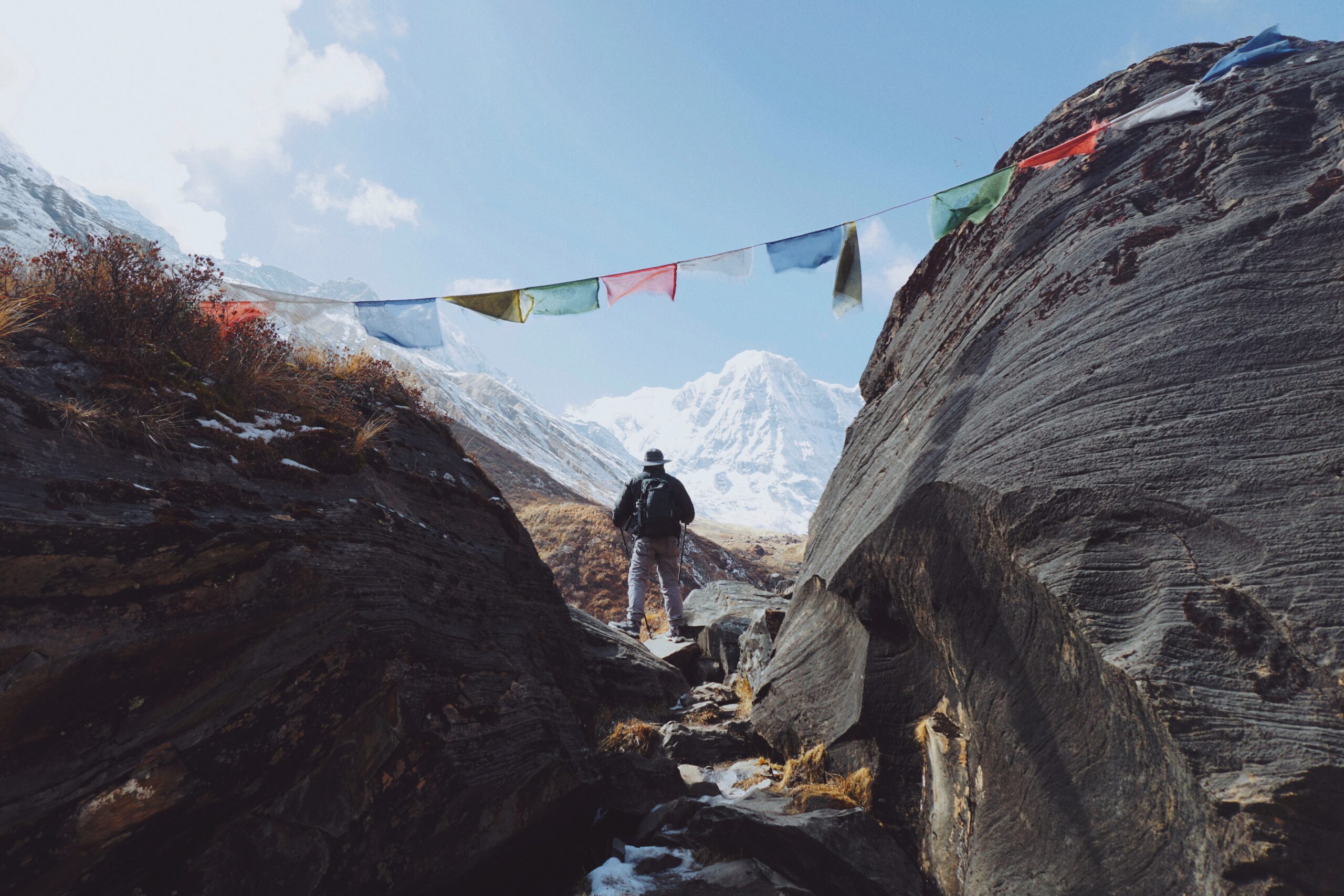
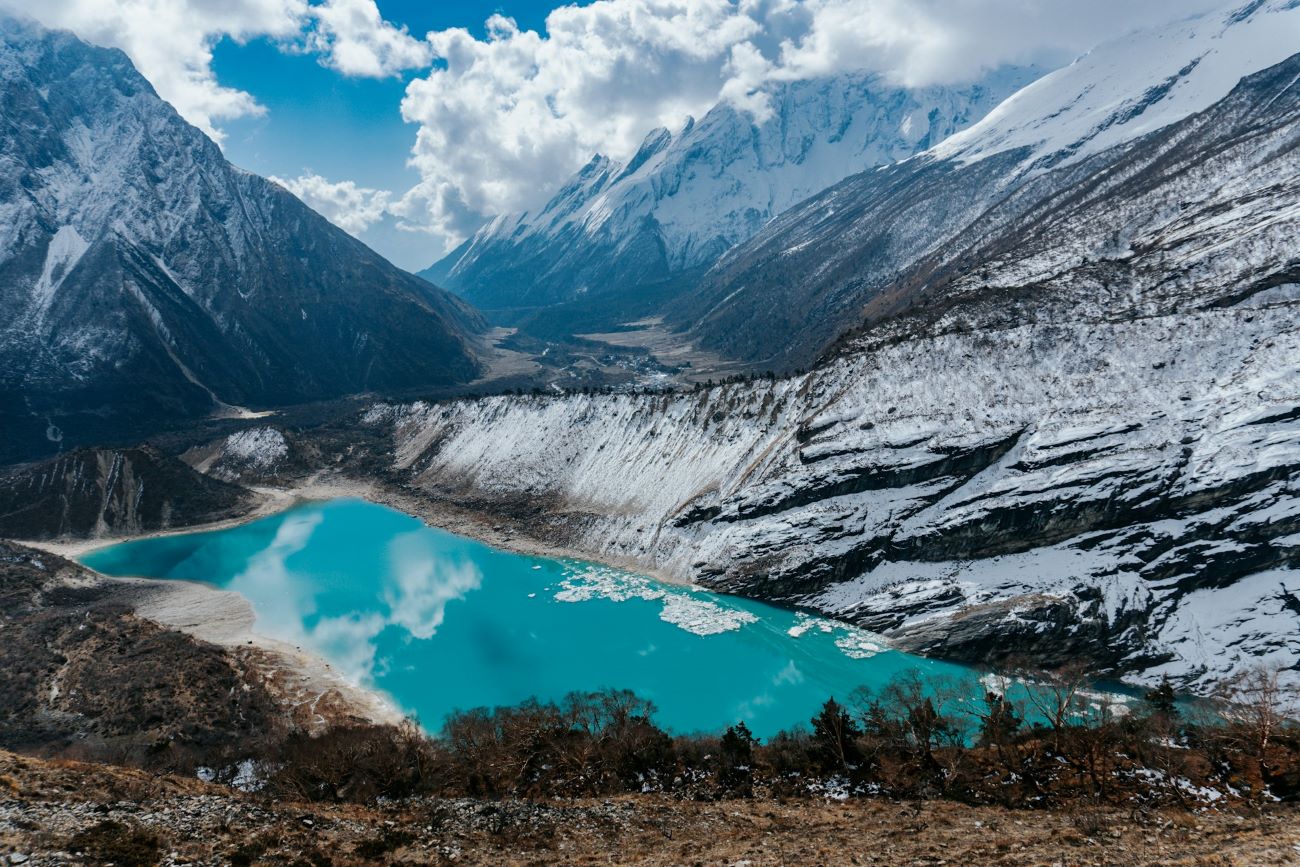
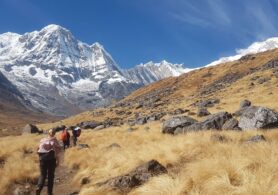
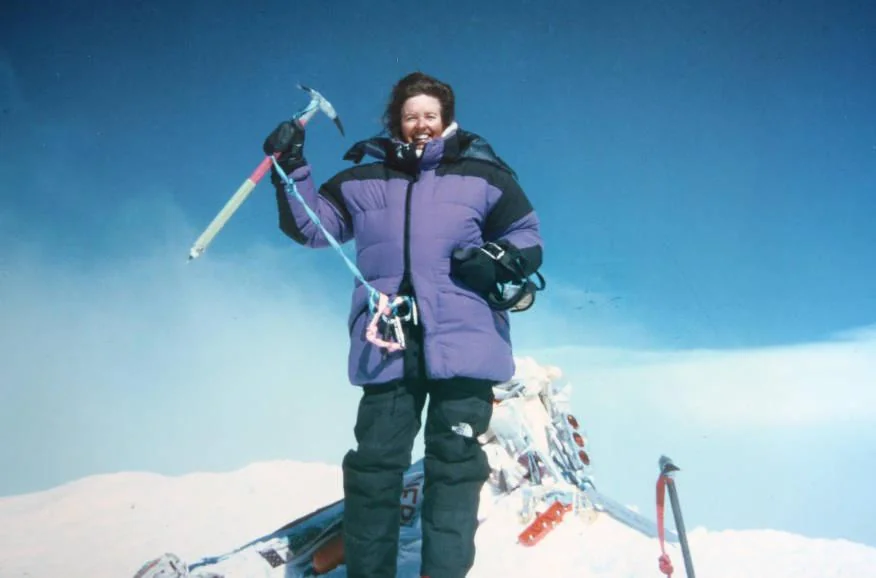
Annapurna Region is one of the popular and famous regions of Nepal for trekking and climbing. SimilaAnnapurna Region is one of the popular and famous regions of Nepal for trekking and climbing. Similarly, the Annapurna region is one of the most beautiful Himalayan regions of Nepal. This is the home of all kinds of different famous mountains. Likewise, this region is the dream destination for many climbing and trekking lovers. Similarly, it is the best destination for many passionate trekkers. Due to its unique landscape, a lot of people love traveling here. Our country Nepal is blessed to have it in its territory. Similarly, the Main Attraction of the Annapurna Region is listed below.
It includes some of the most unique mountains of Nepal including the Annapurna Massif itself with some other popular mountains. Like Fishtail(Machapuchare). This region is very much suitable for trekking and climbing. With superb trekking infrastructure and easy access, most trailheads are just an hour or two from Pokhara. Similarly, when you are traveling via this region you will explore different ethnic groups such as Gurung, Manangi, and Thakli villages which will add a cultural highlight to your trip.
Main Attraction of Annapurna Region
There are many attractions in the Annapurna Region of Nepal. But, the most popular among them are.
Pokhara – the city of Lakes
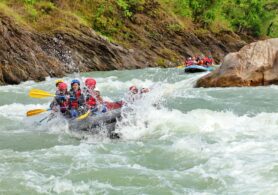
Pokhara is one of the most beautiful cities in Nepal. It is as popular as the capital city of Nepal Kathmandu. During your visit to this region first, you will arrive at the beautiful city of Pokhara. The outskirts of Pokhara are famous for their hiking and trekking in Nepal. Pokhara is filled with different kinds of enjoyment and adventure activities. Similarly, when you are in Pokhara you can participate in different kinds of adventurous activities like paragliding, bungee jumping, rafting, zip-lining, and so on. Furthermore, if you chrome here with your family and friends then you can enjoy boating in Phewa Lake. Therefore, it is the Main Attraction of the Annapurna Region.
Muktinath is – the most important pilgrimage site
Muktinath is a place of great importance in the hearts of both Buddhist and Hindu pilgrims. In Hindu culture and mythology, Muktinath is known as a place of liberation.’ It is said and believed that bathing in the water from Muktinath’s 108 springs will liberate you from all your sins. According to Hindu and Buddhist scriptures, it is also one of the only places on earth to hold all five elements, fire, water, sky, earth, and air from which all material things in the universe can be made. It is the temple situated at the highest altitude. (3800m). Similarly, when you are here then you can get a magnificent view of Mount Dhaulagiri. So, it is the Main Attraction of the Annapurna Region.
Manang- the most dramatic village with Annapurnas
There is no place better than Manang if you want to experience the lifestyle of people leaving in the remote areas of Nepal. The variety of food, clothing, and culture will make your mind blow. You will feel like you never want to leave here. Similarly, your visit to Manag will be very refreshing you will never forget this experience for the rest of your life. Similarly, Manang is the rest stop with a stunning view of mountain ranges, semi-deserted lands, and beautiful forests. Many people consider it as the gateway to the Annapurna region, where the trekking adventures start. Therefore, it is the Main Attraction of the Annapurna Region.
Nar-Phu Valley – the twin hidden villages
The trek to Nar-Phu village is very different. Similarly, this will give you a different experience than the other trekking routes. The isolated part of the valley tells you a lot about the remote nature of the trek. As the trekking route is not as popular as other trekking routes, the rich ancient Tibetan culture is still living there. So, travelers can enjoy and travel back in time as they experience the villagers’ roving yak-herding lifestyle. With this, there is a magnificent view of vast pasture lands, white rocks, shining glaciers, the beautiful Nar-Phu River, and the beautiful Annapurna peaks. Which will add fun to your journey. Therefore, it is the Main Attraction of the Annapurna Region.
Flora & Fauna in Annapurna Region
When you travel to this region you are going to find different flora and fauna of the place. Similarly, the flora and fauna of the place are both unique and rare. The flora and fauna you are going to find here are rare you cannot find this in the other places of the world. Some of the rare flora and fauna of the place are junipers, saxifrages, primulas, rhododendrons, cotoneasters, and ephedras. Similarly, if you want wildlife then you will find different species like snow leopard, musk deer, Tibetan argali, Tibetan wolf, etc. if you visit here then the abundant flora and fauna of the place will add value to your trip. Therefore, it is the Main Attraction of the Annapurna Region.
Ethnic Communities in Annapurna Region
There are so many different kinds of ethnic communities that you are going to find during your visit to this region. Similarly, there are over 150000 inhabitants in this region. Including 10 ethnic groups like – Gurung, Thakali, Bhotia, Ethnic Tibetan, Magar Manangi, and Indo Aryan; Brahmin, Kshetri, Kami, Damai, and Sarki. These ethnic groups have been living here for a very long time enjoying their livelihood in the hillsides of the region.
Permits and Fees in Annapurna Region
There are only two types of permits for someone wanting to travel in this region.
Trekkers Information Management System (TIMS)
Trekkers Information Management System or TIMS is very important for every trekker wanting to trek in Nepal. This is a basic permit implemented by the coordination of the Nepal Tourism Board (NTB) and Trekking Agencies Association of Nepal (TAAN) to make sure the safety and security of every trekker planning to trek in Nepal.
Cost: TIMS permit: 1,000 NPR (Approx. US $10)
Annapurna Conservation Area Entry Permit (ACAP)
This region was made a conservation area by Nepali Government in 1992. Similarly, the Annapurna Conservation Area is the largest in Nepal. Everyone wanting to trek in this region should compulsorily have Annapurna Conservation Area Entry Permit (ACAP). This conservation area is located across the Manang, Myagdi, Lamjung, and Mustang districts of Nepal. It was established to create sustainable economic and social development to benefit the local people of the region.
Cost
ACAP try permit fee for foreigners: 3,000 NPR
ACAP entry permit fee for SAARC nationals: NRP 200
Note: Any trekker below the age of 10 doesn’t require purchasing this permit.
When is the best time to go?
The best weather and climate that you are going to find suitable for climbing in his region is during the spring and autumn season. During this month the weather is pleasant and you can travel here in the clear sky. Similarly, you can fully enjoy the beauty of the surrounding. Likewise, if you travel here during this time then you can fully enjoy the view of Annapurnas and Dhaulagiri. Although the best time to visit here is during the spring and autumn season. Keep in mind that the monsoon season is also very favorable for visiting here. Therefore, if you are planning to visit this region then the best time is these seasons. Furthermore, if you travel here during the spring and autumn season then you are going to experience different festivals. As it is the festive season in Nepal. This time is best to enjoy the Main Attraction of the Annapurna Region.
Weather and Temperature in Annapurna Region
The lower part of this region is slightly warmer than the upper part. Similarly, the temperature is around 15 degrees Celsius during the day when there is sunlight. Likewise, at the night it drops to about 7-8 degrees celsius. However, as you go higher up the altitude you will feel the weather getting a little colder. Most importantly, we recommend you check the weather forecast before leaving for the trek.
Annapurna region after Earthquake
The earthquake in Nepal was very devastating. But luckily for us, not many trekking routes in Nepal were devastated. Similarly, the trekking region like Kanchenjunga, Makalu, Annapurna, Dhaulagiri, Lower and Upper Mustang, Dolpo, Humla, and Jumla escaped the widespread damage. So, they were ready to welcome all the passionate trekkers in the autumn of 2015. This region has also escaped the earthquake. Even after the earthquake a lot of trekkers planned their trek from Pokhara. And, completed the trek under the shadow of Mount Annapurna and Mount Dhaulagiri.
Annapurna Region Trek Options
There are a lot of trekking options when you are trekking in this region. Due to the beautiful landscape of the region, you can find different trekking options in this region.
Tiji Festival Trek
The Tiji Festival mainly falls under the spring season. Similarly, this festival trek takes place in Lo Manthang. This is a spring-renewal party that ushers in the monsoons while celebrating the triumph of good over evil in a ritual locals call “the chasing of the demons.” Tiji comes from the words ten Che, meaning the “hope of the dharma prevailing in all worlds. Likewise, this is a very popular festival in the Upper Mustang region. In addition, if you visit the Annapurna Region during the spring season then might also experience this festival. Additionally, the Mustang Tiji Festival Trek is one of the most popular Festival Treks In Nepal. Altogether, if you get a chance to experience this festival then the memory of the festival is going to be lifelong.
Highlights of Tiji Festival Trek
Get a chance to visit Historical places including Kagbeni and Lo-Manthang.
Observe 3 days of Tiji Festivals in Upper Mustang and know their culture
Explore the very beautiful backdrop of Dhaulagiri, Nilgiri.
Experience the best views of the Himalayas range.
Annapurna Sanctuary Trek
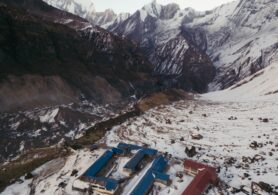
Annapurna Sanctuary Trek is one of the most anticipated treks in Nepal. During the Annapurna Sanctuary Trek, you will be traveling into the frozen hearts of the Annapurna Region. The trail of this trek takes you through the beautiful rice paddies and leads through a gorge of bamboo and forests. Similarly, during this trek, you are going to see the beauty of the landscape. During this trek, you are going to experience different cultures and traditions of the place which is going to add value to your trek.
Furthermore, you can get a 360-degree view of the Annapurna ranges, Hiunchuli, Gangapurna, and Machhapuchhre Himal from the Annapurna Base Camp. Which are also the main attraction of the trek. Similarly, if you do this trek during the spring and autumn season then you can explore the full beauty of the place. Likewise, the trails and routes also get easy during this time of the year. Therefore, it is the Main Attraction of the Annapurna Region.
Highlights of Annapurna Sanctuary Trek
Get an amazing view of the surrounding
Experience the local culture and food
Observe a 360-degree view of the Annapurna ranges, Hiunchuli, Gangapurna, and Machhapuchhre Himal from the Annapurna Base Camp.
Experience traveling with 7000 and 8000 plus peaks around the trekking routes.
Begnas Thulokote Hiking
Begnas Thulokote Hiking is a 1-day hike. So, it is suitable for someone not wanting a physically tough trek. This hike is for someone who just wants to enjoy traveling in Nature. Similarly, you don’t need any kind of special training for this hike. You can simply enjoy the hike by being in the open air and enjoying the beautiful landscape. Most importantly, the Begnas Thulokote Hiking is a part of the Annapurna Royal Trek. The Begnas Thulokote Hiking starts with the beautiful city of Pokhara. This hiking destination is one of the most beautiful Hiking destinations in Pokhara. During this trek, you can enjoy a stunning view of the Annapurna and Himalayas. So, will not forget the tour for the rest of your life. Therefore, it is the Main Attraction of the Annapurna Region.
Highlights of Begnas Thulokote Hiking
Enjoy great views of Annapurna and the Himalayas
Travel in the footsteps of royalty on a hike that is part of the ‘Royal Trek’ completed in 1980 by Charles, Prince of Wales
Learn and explore the region from commentary by the guide
Experience traveling by private guide and transportation, boat ride, and hotel pickup and drop-off.
Pokhara Day Tour
On this day tour, you will get a chance to know about Pokhara within a single day. During this Pokhara Day Tour, we will get to know about the local culture. During this day tour, you will be boating to the most beautiful lake in Nepal the Phewa Lake. if the weather is right then at Phewa Lake you are going to see the image of a Fishtail in the lake. Similarly, you can visit the Gupteswor Temple. The other place that you can visit on your Pokhara Day Tour is Davids Fall and Shree Gaden Dhargay Ling Monastery, etc. these places will add value to your trip. A lot of people including both national and international tourists visit these places on their Pokhara Day Tour. Altogether, this is the best tour in the Annapurna Region.
Highlights of Pokhara Day Tour
Experience World Peace Pagoda Sunset Tour
Explore the ancient Gupteshwor Cave and Seti Gandaki gorge.
Observe water fun trips on Phewa Lake and visit the local market.
Visit the mountain museum as it is a source of mountaineering information.
Get splendid views of the Annapurna Himalayan range during the tour.
Annapurna Circuit Trek
Annapurna Circuit Trek is one of the famous trekking journeys in the Annapurna Region. Annually a lot of passionate trekkers love trekking here when they visit the Annapurna Region. The whole Annapurna Circuit lies within the 7,629 sq. km which makes it a very big circuit trek. This trek is mostly around two weeks long. So, you should come prepared for this circuit trek. Similarly, during this trek, you will dramatic desert-like, Tibetan-style scenery of the upper Kali Gandaki Valley.
Most importantly, the best time to do the Annapurna Circuit Trek is during the spring and autumn seasons. During this time of the year, you can travel in the clear sky. Furthermore, the trails get easy for you to travel. But, for the circuit trek, you can also do this in the monsoon season in June. Similarly, during the trip, you will travel through some of the most beautiful valleys along the way. Which will add value to your circuit trek.
Highlights of Annapurna Circuit Trek
Travel through some of the remote trekking routes
Get a magnificent view of the surrounding
Get a birds-ey view of Annapurna from the Annapurna Base Camp
Experience to know about the local culture of the place
The upper mustang is a moderate-level trek. Anyone with any physical condition can do this trek without any difficulty. Usually, the Upper Mustang Trek is about 15 days long. Similarly, you can start your Upper Mustang Trek from Jomsom and end from the same place. Likewise, this is one of the must-do trekking destinations in the Annapurna Region of Nepal. A lot of young and passionate trekkers do this trekking all around the world. Similarly, this trek is also very famous among national visitors. Likewise, during this trek, you are going to explore Newari and Thakali culture and food. This will make you fall in love with Nepal. The deep desert of the place will make you feel like you are in a whole new world. This is also the main reason for this trek to be famous. Therefore, it is the Main Attraction of the Annapurna Region.
Highlights of Upper Mustang trek
Explore the ancient Kingdom of Lo Manthang
Experience trekking through a stark desert landscape with spires and cliffs
Observe lying in the rain shadow, a great trek to escape the summer monsoon
Learn about the different cultures of the Upper Mustang.
Mardi Himal Trekking
Mardi Himal Trek is a short Trek with all the elements of the trekking journey. Everyone can enjoy the adventure during the trek. As it is one of the easiest treks in the country. Similarly, this trek is recently opened by the Nepal Government. This trek is best for someone who hasn’t got any experience in climbing or trekking. Similarly, if you are looking for a short trek in the Annapurna Region then this trek is best for you. During this trek, you will get the ultimate Himalayan feeling which will add to your journey.
Most importantly, when you are at the Mardi Base Camp you will get an outstanding view of Fishtail and other mountains in the region. The Mardi Himal Trekking is a short trek which means you can complete this trek in a very little timeframe. Although this trek is a short trek that can be completed within 10 days, this will give you the extreme Himalayan experience. Similarly, during this trek, you will pass through different villages where you can learn a lot about the culture and tradition of the place. A lot of people have done this trek and all of them have a positive review of the trek. Every one of them loved it. So, if you are in this region, you should do this trek. You will have a lifetime experience. Therefore, it is the Main Attraction of the Annapurna Region.
Highlights of Mardi Himal Trekking
Get to know about different cultures of the place
Get an ultimate trekking experience
Explore different villages along the way
Experience an ultimate trekking experience.
Observe a stunning view of Machapuchere and Mardi Himal from the base camp.
Pokhara to Annapurna Helicopter Tour
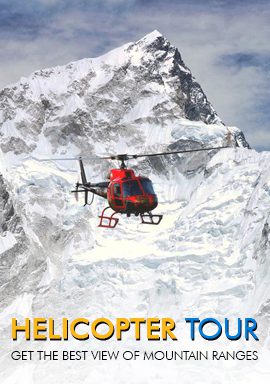
This is a very famous tour in this region. A lot of people love to do this Helicopter Tour. Similarly, this tour allows you to bask in the splendors of nature and experience Nepal’s dotted travel destinations from the comfort of a helicopter. You will have your meals at the awesome vistas of snow-capped peaks, glaciated passes, quaint village settlements, and panoramic landscapes.
This will add value to your tour. Likewise, the tour runs for about 1.5 hours by helicopter. During this time you will get a bird’s eye view of the Annapurna Base Camp. similarly, you will get an outstanding view of the lush forest and unique landscapes. Furthermore, the Annapurna Base Camp Helicopter tour takes you to some of the bases of Annapurna Range of Mount Fishtail, Gangapurna, Hiunchuli, and Nilgiri Peaks. Most importantly, the helicopter tour costs depend upon the itinerary that you choose. It usually is around $500 to $600. Therefore, it is the Main Attraction of the Annapurna Region.
Highlights of Pokhara to Annapurna Helicopter Tour
Get a scenic view of the surrounding from the helicopter
Enjoy the views from Annapurna Base Camp
Get to know about the local culture of the place.
Experience having meals at the snow-capped peaks, glaciated passes, and quaint village settlements.
Ghorepani Poon Hill Trek
The Ghorepani Poon Hill Trek is a magnificent trek near Pokhara at the heart of the Annapurna region which will give you stunning views of the snowy rugged Annapurna and Dhaulagiri Himalayan range. The trek to Ghorepani Poon Hill will be a lifelong memory for you. The trek is normally for about 10 days but it depends on the itinerary you choose. During your visit to Ghorepani Poon Hill, you will be knowledgeable about a lot of local cultures. Similarly, you can enjoy different local foods that will add value to your trek. Furthermore, you should not be that experienced to complete this trek. Altogether this trek is very exciting. We recommend when you visit the Annapurna Region, you must do Ghorepani Poon Hill Trek.
Highlights of Ghorepani Poon Hill Trek
Learn about different cultures of the place
Experience different foods while visiting the place
Travel enjoying the beauty of the landscape
Get an ultimate trekking experience while doing the Ghorepani Poon Hill Trek
Heli Sightseeing Pokhara
This is a 30 minutes Heli Tour. During this Heli Tour, you will get a wonderful view of the surroundings of Pokhara. On this trek, you will fly over many lakes like Begnas Lake, Rupa Lake, and last but not least Phewa Lake. Altogether, this trek will be a fun experience for you.
Nepal is home to different kinds of beautiful places. Similarly, among them, Pokhara is one of the mNepal is home to different kinds of beautiful places. Similarly, among them, Pokhara is one of the most extraordinary and unique places. It is home to all kinds of different lakes, caves, and religious places in Nepal. Furthermore, Pokhara is at the height of 884 meters and approximately 203 Km to the west of Kathmandu. Likewise, Pokhara is one of the most popular tourist destinations in Nepal. Most importantly, Pokhara is a powerful spiritual land. In addition, it is a spiritual land, resting on the kind lap of the Annapurna Range. So, it is the main reason for the increasing popularity of Pumdikot View Tower. A lot of trekking and hiking destinations start from Pokhara.
If you visit Pokhara you will find a unique cross-section of human cultures and natural habitats. Pokhara is heavenly blessed with swiftly flowing rivers and lush vegetation. This is a city of paradise where a lot of tourists visit to enjoy the sheer beauty of nature.
Most importantly, you can get a 360-degree view of Pokhara from the Pumdikot View Tower. Only a single visit to the heavenly blessed city makes sure that the visit can be a memorable moment for you. The visitors cannot forget the experiment forever and ever. Similarly, Pumdikot View Tower is a recently opened tourist destination in Pokhara. Likewise, it is a three-storied view tower.
Which is at the Pumdi-Bhumdi village, a neighboring tourist city of Pokhara. Additionally, the village is at an altitude of 1500 meters from sea level. If you visit here you will get wonderful views of the Annapurna Range. Furthermore, the cost of making this view tower was about 6.4 million. This view tower offers the view of Pokhara city, Phewa Lake, Lekhnath, Sarangkot, Pame, and World Peace Stupa. And some parts of Syangja, Parbat, and Tanahun districts. Likewise, you can see mountains like Machhapuchre, Annapurna, and Dhaulagiri from the tower.
Construction of Pumdikot View Tower
Without the help of the District Technical Office, Pokhara, and the Ministry of Peace and Re-Construction this project would be impossible. Similarly, with the construction of Pumdikot View Tower, the Pumdi-Bhumdi village is now a famous tourist destination in the Annapurna Region. Pumdi-Bhumdi has recently been developing as an attractive destination for tourists. The view tower has become a popular landmark of Pokhara.
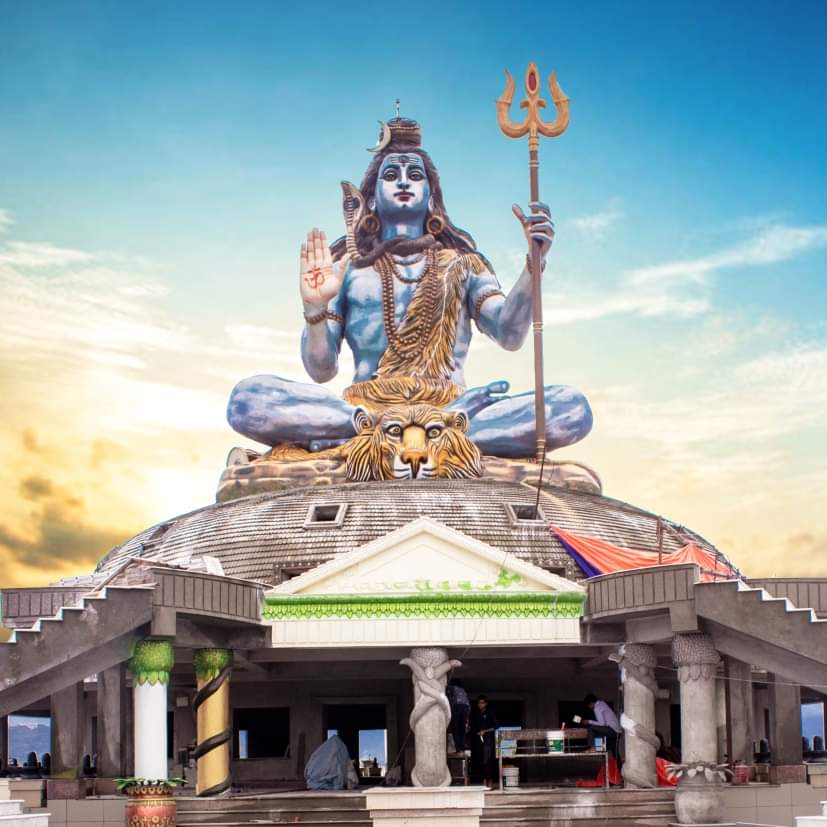
Pumdikot View Tower is one of the best places in Pokhara for getting marvelous Mountain Views and views of Pokhara valley. The main attraction of the place is a 50 feet high statue of Lord Shiva. And, amidst the theme park. The Shiva statue has made the identity of the tallest and the largest statue in the country. Most importantly, the overall construction of the park and view tower is still going on. However, it has attracted a lot of tourists with its potential and views. Most importantly, it is a master plan that includes the construction of this view tower, trekking trails, conference halls, cottages, and roads.
Major Attraction of Pumdikot View Tower
Explore the tallest and biggest statue of Lord Shiva
Beautiful theme Park
Famous View Tower
Get the most captivating view of the entire Pokhara Valley
Experience the best viewpoint for the Annapurna and Dhaulagiri Massif
Observe the most interesting remote settlements with unique cultures and traditions.
A New Attractions in Pokhara
There are a lot of attractive places and things to do in Pokhara. But, the View Tower and Shiva Statue are the newest and most famous attractions in Pokhara.
Why is the Pumdikot View Tower an attraction in Pokhara
This view tower is one of the new attractions in Pokhara. There are a lot of attractions in Pokhara like David’s Fall, Gupteshwor Cave, and different kinds of temples and religious towers. Because of the View tower, the Pumdi-Bhumdi village is now a famous tourist destination in Pokhara. A lot of National and International people love to visit this tower. Similarly, the main reason for this tower to be an attraction in Pokhara is it provides a wonderful view of the Pokhara valley and many mountains. Similarly, with the help of the view tower, a lot of villagers are running their lifestyles smoothly. Although it lies in the neighboring village of Pokhara. Similarly, this is the perfect destination to visit from Kathmandu and other districts of Nepal.
A person who comes to Pokhara loves to visit the view tower as it gives a mesmerizing view of the surrounding and beautiful landscapes. Furthermore, Pumdikot View Tower is situated at Pumdi Bhumdi which is right upward from World Peace Pagoda. Which is another famous attraction of Pokhara. Likewise, the World Peace Pagoda also attracts a lot of foreign tourists. This also helps in the overall development of the tourism sector of Pokhara. Additionally, when you are at the place you will get a wonderful sunset. Nowadays a lot of youngsters love to visit the place for sheer entertainment.
View Tower
Pumdikot View Tower is a supplementary tourist attraction in Pokhara. Similarly, it is popular for its view tower and a huge Shiva statue. The new 3-story view tower is just above the World Peace Pagoda in Pumdi Bhumdi Village in Pokhara. Which adds value to the View Tower. Due to the help of the View Tower, the remote Pumdi-Bhumdi is slowly but steadily developing. Likewise, the view tower also helps the village by attracting different tourists from all around the world. The view tower helps the tourist to know the local culture and tradition of the place. When they come to visit the view tower.
Most importantly, the view tower is a distinguished landmark of Pokhara. But, the construction of the tower is still going on. However, it is rapidly becoming an attraction to many tourists. Similarly, the overall construction of the park is still going on. Although it is still under construction it has attracted many tourists as one of the most loved hill stations in Nepal. Furthermore, when you are at the hill station it offers you a magnificent view of the surroundings. Similarly, this hill station gives you a wonderful view of famous peaks and mountains such as Dhaulagiri, Annapurna, and Machhapuchhre mountains. Therefore, it is a must if you visit Pokhara.
Shiva Statue
There is another wonderful thing to get excited about while visiting the Pumdikot View Tower. A gigantic statue of Lord Shiva at Pumdikot with a height of 51 feet. The statue sits on top of an enormous dome in the theme park. Similarly, the total height of the temple is 108 feet. Likewise, the nearby theme park has an attractive garden with a 108-step stairway to visit the Shiva Statue.
Furthermore, the view from the theme park is majestic. You will forget all the hardships of your life. Additionally, you can visit this place to be far from the busy city life. Similar to the Shiva statue, another major attraction of the place is the Shiva Damaru. Which adds value to your visit and the place. Most importantly, the Shiva Damaru in Pumdikot is considered the biggest in Asia. The same thing also attracts a lot of tourists annually. Additionally, there is another plan to construct Martyrs’ Memorial Park with a model of Mount Sumeru featuring shrines to Parvati and Shiva.
How can Pumdikot View Tower help in the development of the tourism sector of Pokhara?
Pokhara is and always has been one of the most popular tourist destinations in Nepal. Due to the unique nature of the place and different landscapes, it has always been the best tourist destination in Nepal. However, the addition of Pumdikot View Tower has increased the total number of tourists arriving in Pokhara. Not only international tourists but also national tourists love visiting Pokhara just to see the view tower, park, and shiva statue. Because it is unique and you cannot find the same elements anywhere in Nepal. Similarly, Pokhara has a lot of tourist destinations like Phewa Lake, David’s Fall,Mahendra Cave, etc.
Similar to these famous places now the Pumdikot View Tower is also a tourist attraction in Pokhara. Due to this nowadays the tourism sector of Pokhara is developing. Furthermore, the overall infrastructure of the place is also developing. Several major plans are going on for the development of Pokhara and Pumdi-Bhumdi villages. Therefore, Pumdikot View Tower is playing a vital role in the development of the Tourism Sector In Pokhara.
Hiking routes of Pumdikot View Tower
If you are looking for a simple hiking route to reach Pumdikot View Tower. Then don’t look anywhere. We will give you a perfect guide on how to reach Pumdikot View Tower with an easy trail and route. Most importantly, for a comfortable hike, you should start your hike from Chhorepatan or at least from Stupa. Which takes around 45 minutes from the stupa. However, the last part of the hike is slightly steep, which can be a little uncomfortable for new hikers. But, the same hill just below the tower provides the best views on a beautiful day. To enjoy and travel in good weather. You can choose the month in the spring season.
Similarly, you can see the most beautiful view of Mount Machhapuchhre. Likewise, on your right is Phewa Lake on the bottom, beautiful hills on your left, and also the view of Pokhara. Furthermore, the stoned steps trail to the view tower is so pure and untouched. You will feel it when you get there. It is so underrated and great because tourists ride on the motorway now and this last part is untouched and emits pure natural vibes. Additionally, if you are a nature lover then this place will be equal to heaven for you. Just make sure you choose the right time to do the Pumdikot View Tour tour.
What to expect on this tour?
It is a three-storied view tower constructed at Pumdi-Bhumdi VDC. It is a neighboring tourist city of Pokhara. Pudi-Bhumdi village is at an altitude of 1500 meters from sea level. The whole project costs around 6.4 million. The tower gives a wonderful view of Pokhara city, Phewa Lake, Lekhnath, Sarangkot, Pame, World Peace Stupa, and some parts of Syangja, Parbat, and Tanahun districts. Similarly, you can also enjoy a majestic view of Machhapuchhre, Annapurna, and Dhaulagiri mountains. Along with it, the scattered villages on the lush hillside provide a glimpse of the pure Nepali cultures and traditions. There below is a short and simple description of some of the major attractions of the Pumdikot View Tower.
Hiking to Pumdikot View Tower
There are a lot of wonderful hiking destinations in Nepal. Similarly, hiking in Nepal is a wonderful experience. The unique landscape adds to the hiking experience in Nepal. Hiking is one of the most popular tourism activities in Nepal. Pumdikot view tower and the big Shiva Statue are about 13 km southwest of the primary market of Pokhara. Likewise, if you are planning to hike in this region you better start it early in the morning. You can hike up to the World Peace Pagoda.
In addition, you can choose various options to reach the Pumdikot View Tower. You can do hiking trails, blacktopped roads, and cycling trails, to get to the place. And after you reach the place. You can either visit the Buddhist shrine or head uphill to Pumdikot Danda. The choice is yours. And, you can reach the place within 45 minutes of the uphill climb from the World Peace Pagoda. The journey is going to be very fun for you.
In addition, it can be an entertaining journey for you. Moreover, while hiking to Pumdikot View Tower you will get an ultimate hiking experience in Nepal. The trail is pure and natural and also very easy to take. There is no special requirement for hiking to the Pumdikot View Tower. Apart from this, you can also take a vehicle. But, the roads are slippery and can be quite uneasy. Therefore, hiking is a good choice.
Hike to World Peace Pagoda and Shiva Statue
While you hike uphill from Pokhara. You will get a wonderful view of Phewa Lake and nearby temples. That will follow you along the way. As the hiking goes on, the views become wider and clearer. Similarly, the morning rays of the sun peeking through the majestic mountains like Annapurna, Machhapuchhre, and Dhaulagiri will encourage you on your tour. As you reach the World Peace Pagoda, you will have a great angle view of nearby lakes and Pokhara city.
After hiking for about 40–45 minutes, you will reach the hill just below the enormous statue of Mahadev and the Pumdikot Viewpoint. Walking past the green hill is one of the greatest moments of hiking near Pokhara.
After you climb up the hill, you will explore the great Pumdikot Shiva Statue right before you. Lord Shiva rests on an enormous dome. Right beside the statue, you view a three-story view tower. Climbing up the tower offers a wonderful view of Pokhara city, Sarangkot, the World Peace Pagoda, and different lakes. As you see the mountains looking right at you, you can’t stop smiling and being happy. With the touch of the cool breeze on your face. With the beautiful scenery and the mountains, you will create a lifetime memory at the viewpoint. Without a doubt, the Pumdikot hike is one of the top experiences in Pokhara.
Last but not the least
Pumdikot View Tower is the most wonderful destination in Pokhara. Also with the addition of the view tower, it has become the most popular choice of visitors. It is a majestic place not only in terms of its strategic location of the place but also of the pristine and undeterred environment. We recommend you to visit the Pumdikot View Tower while in Pokhara. It is the most glorious hike in Pokhara. You would love this tour.Read more...Read less
The EBC Heli Tour is best for someone who is interested and wants to tour the Everest Region but doeThe EBC Heli Tour is best for someone who is interested and wants to tour the Everest Region but doesn’t have much time on his hand or is just not ready yet. Trekking is one of the most popular hobbies in the world. And, traveling to the Himalayas is the dream of every adventure addict.
And of course, the Everest area is a trekking paradise. Likewise, trekking to Everest Base Camp requires little free time, strength, and preparation. Similarly, Everest Base Camp Heli Tour is the best way to experience the highest peaks in the world. Everest (8848m).
The Everest Base Camp Heli Tour is specially designed for those who want to avoid difficult trekking and don’t have enough free time. Moreover, the EBC Heli Tour gives you immediate access to the Everest Base Camp with panoramic views of the most beautiful mountains.
Nepal is a land of the wonderful Himalayas and stunning natural wonders. Most importantly, there are 14 mountains in the world with a height of over 8000 meters. And eight of them are in Nepal.
So if you want to experience the huge mountaintop wilderness, Nepal is your best choice. Similarly, it will give you many wonderful experiences that you will cherish forever.
Nepal has ample space for hiking, trekking, and mountaineering. Of all the places, everyone likes to visit the Everest area. Indeed, this mysterious area offers all its uniqueness. Everest Base Camp Trekking is painful, physically demanding, and troublesome at times.
So if you don’t have enough time and physical condition to experience the beauty of Himalayan heaven, the EBC Heli Tour is what you need to make your dreams come true.
The Everest Base Camp Heli Tour is a great trip to the Everest region, which offers uncompromising views of the high Himalayas. This is one of the best luxury trips in the world and you don’t have to worry too much.
Just choose this tour and enjoy a smooth ride. Furthermore, you should not go against a fierce trip. We are always there for your support.
Everest Base Camp Trek is one of the most attractive experiences of her life. Book a special chartered helicopter service on this tour. You enjoy the wonderful Mountains of Nepal and enjoy a view that has not been disturbed.
Immerse yourself in the natural beauty of the Khumbu region, including the snow-capped Himalayas, glaciers, and entire settlements.
Main highlights of the Everest Base Camp Heli Tour
Get Helicopter Tour to the mystic Himalayas
Is Best for the one who doesn’t have good physical structure and enough time
Observe a luxurious and efficient way of getting to Everest, the highest peak of the world.
Explore Kala Patthar (5,565 m) & Everest Base Camp (5,364 m)
Get ariel’s view of the entire Himalayas
Enjoy an iconic view of Khumbu Icefalls & Khumbu glacier from Everest Base Camp
Experience fully customized options for Private as well as Group Heli Tour
Weather and climate for the Everest Base Camp Heli Tour
The climate on the mountain stays quite unstable. It changes each season. Surprisingly, it changes each hour too. However, Everest Base Camp Heli Tour may be finished anytime during the 12 months.
The climate at Everest stays clean during the morning for the duration of the 12 months however at some point of the monsoon season, the climate is commonly disturbed.
The daylight temperature in Everest Region above 2000 m to 4000 m is from 15°C to 20°C.
The nighttime may be a bit less warm than the daylight. The temperature at some point of the night time drops from 10°C to -0°C withinside the most important seasons. In the center of September to December, the climate may be easy and gives a pleasant view of the mountain.
The temperature is degrees from -5°C to 20°C at some point in daylight. At night time, the temperature will drop from 10°C to -5°C.
During the iciness season, the view may be clean however the temperature may be less warm than in October. The daylight temperature may be 10°C to 15°C and at night time it drops from -15°C to -10°C.
Many tourists additionally pick Everest Base Camp Helicopter Tour from April to June. At that time, the temperature begins moving upward pushing withinside the mountain and it’ll be appropriate for our body.
During the daylight, the temperature may be around 15°C to 20°C and nights may be less warm than daytime.
The EBC Heli tour can always be done. You just make sure that the weather conditions are good and executable to remove the helicopter. Therefore, it is recommended that you don’t miss this lifetime adventure whenever you are here in Nepal.
However, if you want the best experience on the tour, please read the details below. You will get some knowledge about the best time to visit the Everest Region.
March to June
These months are the perfect time for the Everest Base Camp Heli Tour as a whole. During these months, the average daily temperature is about 15 ° C to 20 ° C. The weather is fine and the sky is almost sunny.
Undoubtedly, here you can get the best views of the area and the Himalayas. The temperature is moderate, so you don’t have to prepare for extreme situations. Similarly, flights are most unlikely to be canceled during these times of the year.
September to October
During this time of the year, it is the period of the most beautiful autumn months and the beginning of winter. Therefore, you can take it as the second-best option for an Everest Base Camp helicopter tour or your EBC Heli tour.
During these months, the average daily temperature is about 20 ° C. The temperatures at night and early in the morning are quite low, but the weather is good. Therefore, it is convenient for helicopter flights.
December to March
During this time of the year, the days are the coldest. And, the temperature is so cold that they can even fall below zero during the day.
Therefore, such bad weather makes the tour very difficult. Nevertheless, you have a perspective. In addition, everything is covered in snow, so the whole area looks great.
Detailed itinerary of the Everest Base Camp Heli Tour
The Everest Base Camp Heli Tour is a wonderful and luxury trek in Nepal. It usually lasts for 4 to 5 hours. Here is the standard Everest Base Camp Heli Tour itinerary:
05:50 AM: Wake Up and Get Ready
Our representative will pick you up from your hotel in a private vehicle early in the morning and drop you at the Tribhuvan International Airport, from where your journey starts EBC Heli Tour.
6:30 AM – 7:00 AM: Arrival At Airport And Check-In
The check-in process begins as soon as you arrive at the airport. Guides are available everywhere, but be sure to bring your passport, tickets, and other necessary documents. After official verification, you are ready to participate in the battle.
7:00 AM – 08:00 AM: Fly From Kathmandu To Lukla Airport (2860M)
At first glance, there are fascinating aerial photographs. It starts with a view of the Kathmandu Valley. You can easily find famous landmarks such as Swayambhunath, Boudhanath Stupa, and Pashupatinath.
Then the panorama of the village of Jiri in Draka may make the view more comfortable. Glittering mountains such as Mt. Ganesh and Gaurishankar are also nearby.
After crossing the lush hills, when you reach the Khumbu region, it turns into alpine plants. The beautiful view of the Sherpa settlement welcomes you first.
You have mountains around you. After flying for about 45 minutes, we will land at Lukla Airport.
8:00 AM – 8:15 AM: FLIGHT REFUELING AT LUKLA
You will spend a while at Lukla. Here you can enjoy the refreshing scenery of the morning and have a cup of tea. You can witness the culture and lifestyle of the local Sherpa.
There you will also meet a Sherpa guide. So you have a chance to learn a lot in this short time.
8:15 AM – 8:30 AM: FLY TO KALA PATTHAR (5643M)
Then fly directly to Kala Patthar. Along the way, you’ll see breathtaking views of the entire Khumbu Valley.
Your flight will eventually follow the route to Namche, Tengboche, Dingboche, Gorakshep, and finally Kala Patthar.
The views of these settlements, the Tengboche Monastery, and Everest Base Camp are spectacular. Don’t forget to discover Khumbu Falls and glaciers. at the EBC Heli Tour
I feel that the plane is close to the mountains. After a 15-minute flight, you will reach the point of view. Kala Pather.
8:30 AM – 8:45 AM: EXPLORATION AROUND KALA PATTHAR
Now that you are at the best point of your trip, you`re unfastened to discover it in your very own way.
You can take photographs, movie the moment, or have a relaxed time amidst the mountains. This enjoyment goes to be a brilliant one.
You could have the nearest view of Mount Everest, Nuptse, Cho Oyu, Langtang, Pumari Amadablam, Cholatse, Tamraseku, and more. Undoubtedly, you may fall in love with the serene environment.
8:45 AM – 9:00 AM: FLY TO EVEREST VIEW HOTEL, SYANGBOCHE
After having the wonderful and lovely panoramas from Kala Patthar, we can head to one of the maximum locations withinside the world; Everest View Hotel on your EBC Heli Tour
It is the area from which you’ll have an all-around view of majestic mountains. You get there within 15 mins and get the warmest welcome ever.
9:00 AM – 9:45 AM: BREAKFAST AT EVEREST VIEW HOTEL (3880M)
Hotel Everest View is well-known for its scrumptious delicacies and gives a nice provider withinside the Khumbu region.
Hence, having breakfast there after an hour of flight may be relaxing. You can experience several foods like Continental, Japanese and more.
The indoors of the inn are famous for the masterpiece of Nepali sculpture and it additionally draws visitors.
9:45 AM – 10:15 AM: FLY TO LUKLA & REFUELING
We will return to Lukla after having a few exceptional moments in the hotel. From the hotel, you may fly return to Lukla.
You can another time experience the magnificent ariel view of the Himalayas. You will retrace the aerial path, so attempt to spot the locations you overlooked before.
We will once more take a quick wreck at Lukla.
10:15 AM – 11:00 AM: BACK TO KATHMANDU
Finally, it`s time to bid goodbye to the Everest Region and cross to Kathmandu.
You may have a very last appearance down on Namche, Lukla, Phakding, and surrounding landscapes. Don`t neglect to identify new scenes for your manner again as you probably did before.
After forty-five mins of the flight, you’ll attain Kathmandu. Your Everest Base Camp helicopter excursion ends here. Upon your return, our representatives will drop you again at your hotel.
Clothes Required For Everest Base Camp Heli Tour
Everest Base Camp Heli Tour is one of the most costly tours withinside the world. The tour ist continually as long as others and one dont want to worry about packing heavy bags and masses of clothes.
However, to make sure a comfortable experience along the journey, proper clothing is a must.
The clothes that one wants to have for Everest Base Camp Heli Tour rely on the season you are traveling the place.
You want to do on layers of clothes even though the weather is normal. It is normally very cold at high altitudes, and the wind pace is also strong at such heights.
Everest Base Camp Heli Tour can be a comfortable and brilliant journey if you are placed on the right clothes.
Essentials for the Everest Base Camp Heli Tour
Insulated Down Jacket
Windproof Warm Trousers
Hiking Boots
Lip Balms
Comfortable Innerwear like underwear, sports bra
Warm hat/beanie and a wide-brimmed sun hat
Sunglasses
Water Bottles
Toilet papers
Camera, Cell Phones, and Recorders
Recommendations for Everest Base Camp Heli Tour
Wear warm clothes and comfortable shoes
Don’t forget to bring your Passport and ID card.
Don’t carry heavy bags and luggage.
Wear masks, face shields, and sanitary gloves.
Maintain social distancing
Fasten your seat belt on board your helicopter tour to Everest Base Camp.
Don’t Change your seat and stand from your seat during your flight.
Don’t throw out anything from the helicopter during your flights.
Smoking is prohibited during your flight, be prepared.
Wait in the helipad until our operators call you to come. Sometimes Pilot needs to re-position the helicopter in the Helipad.
FAQ for Everest Base Camp Heli Tour
When is the best time for Heli Tour?
The best time for the EBC Heli Tour is during the spring and autumn season. During this time of the year, the temperature is moderate and you can travel in the clear sky. However, if the conditions are right this tour can be done during the winter seasons as well.
How difficult is Heli Tour?
There is no difficulty during the Everest Base Camp Heli Tour. However, you should not have Acrophobia otherwise, this is going to be difficult for you.
Is the Heli Tour Safe?
Yes, the Everest Base Camp Heli Tour is safe for everyone.
How long is the Everest Base Camp Heli Tour?
The Everest Base Camp Heli Tour is about 4 hours long.
What is the cost of the Everest Base Camp Heli Tour?
The average cost for the Everest Base Camp Heli Tour is around US$3500 to $4000 per trip.Read more...Read less
There are about 2000 high peaks in Nepal among them only 414 peaks are open for mountain climbing. SThere are about 2000 high peaks in Nepal among them only 414 peaks are open for mountain climbing. Similarly, these high peaks and mountains of Nepal have a beautiful position in the Himalayas of Nepal. Some of these mountains have great religious importance for the Hindus. Likewise, Nepal is home to 8 of the 14 8000m+ peaks in the world. Going to trek or on high peaks expedition is an exciting and adventurous activity in Nepal. Annually, a lot of passionate people come here for trekking and climbing and they have a lot of fun doing so. Furthermore, going to trek in the mountains is an exciting experience. Along with its beauty, you should consider all Lobuche Peak Climbing Difficulty
Similarly, Lobuche Peak is a peak in the Himalayas of Nepal. It lies in the Khumbu District of Nepal at Sagarmatha National Park standing tall with a height of (6,119 m / 20,075 ft.) The Peak lies at the southeast of Mount Everest whereas Lobuche village lies to the southwest part. The first official ascent of the Lobuche peak was made in 1984. It is one of the most challenging and thrilling summits in Sagarmatha National Park. Due to its unique landscape, a lot of people are fond of doing this trek.
Lobuche Peak is technically straightforward and anyone can attempt the climb very easily. But we suggest you have basic and little knowledge about using all of the climbing equipment. Furthermore, it is more Challenging than Island Peak. Your physical and mental toughness helps you do this adventure successfully. Similarly, the initial days of the Peak Climbing take you through the route to reach the Everest Base Camp.
Lobuche West and Lobuche East
The summit of the peak gives you the most beautiful panoramas of Everest and other neighboring mountains in the region. Due to the location of the peak being on the way to Everest Base Camp, many climbers go for this peak as a warm-up for Everest Expedition. Importantly, it has two main peaks, Lobuche East and Lobuche West. However, the western peak is a little more challenging and troublesome than the eastern peak. Similarly, the western peak is more like an expedition than a trekking peak.
Likewise, in the case of the eastern peak, you can easily reach the summit of the peak. The east peak is moderately difficult. Even if the west Lobuche is challenging a lot of people to reach the summit successfully. Furthermore, climbing Lobuche West can be a good exercise for someone planning the Everest Expedition. Moreover, for Lobuche East, there is not much technical climb. So, anyone passionate about trekking and climbing can easily complete the climb and have fun at the same time. However, even for the east climbing, if you are not prepared then it can add to your Lobuche Peak Climbing Difficulty.
Lobuche Peak Climbing rewards you with the most marvelous scene of the highland terrain with a spectacular view of snowy mountains. Similarly, on your visit here you can explore remote Sherpa villages and elegant Buddhist monasteries. In addition, the summit offers a stunning view of the surrounding peaks.
Highlights of Lobuche Peak Climbing
Experience Lobuche East Peak Climbing with Everest Base Camp
Get spectacular mountain peaks
Explore Sherpa culture and hospitality
Experience the warm-up peak for Everest
Get suitable trails for novice trekkers
Explore the technically straightforward trekking peak of Nepal
Lobuche Peak Climbing Difficulty
Although Lobuche Peak is technically straightforward and is relatively easy. But, you should consider and make the necessary preparation for the climb. To overcome most of Lobuche Peak Climbing Difficulty. Although, Lobuche Peak is one of those trekking peaks of Nepal which is slightly more challenging than other similar peaks in the same region the scene you will have after completing the climb is certainly a rare opportunity. Similarly, this climb involves different factors that make the journey rather troublesome. Below are some short descriptions of each of them.
High altitude
The Lobuche Peak is at the high altitudes of the Khumbu region. Similarly, the peak stands tall with a height of 6,119 m / 20,075 feet. So, climbing at a high altitude is always difficult. You might fall, victim to altitude sickness. Therefore, you need to be very careful while doing this peak climbing. Furthermore, any peak higher than 2500 m is vulnerable to altitude sickness. At such a huge height, you are likely to have altitude sickness. Furthermore, the climate is unpredictable and unstable at high altitude mountains. Moreover, the fierce blow of the wind makes it harder to climb the peak. However, having a good physical and mental condition will certainly help you during the climb.
Temperature, climate, and weather
Early mornings and late nights are always too cold in the Himalayas. Hence, you need warm gear for climbing Lobuche Peak at any season of the year. During, autumn the average temperature at Lobuche is around 5º Celsius. Similarly, in spring it is around – 2º Celsius. Likewise, in winter the temperature is around -9º Celsius whereas in the summertime it is around 5º Celsius. Furthermore, temperatures at the lower altitudes are a bit warmer than at the higher altitude. Therefore, the more you climb towards higher altitudes, the less temperature will be there. So, the harsh cold of the mountain is one of the elements that make the climb difficult. And, add to your Lobuche Peak Climbing Difficulty.
Steep Trail
The trails of Lobuche Peak Climbing are steep and uneven which makes it a little challenging to climb Lobuche Peak. Therefore, before you begin Lobuche Peak climbing, you have to trek from Lukla to Lobuche Base Camp. So, for that section of trekking, you will require an average of 5 to 6 hours of trekking per day. The hiking trails are not simple but steep and tiring. Beginners who have not trekked before can face a little challenge while doing this climb. And, can add to your Lobuche Peak Climbing Difficulty Once you pass Lobuche village, the trail begins to get rough, rocky, and steady. The harsh trails get steeper and steeper as you head towards Lobuche Base Camp. Therefore, it is also a factor that makes the Lobuche Peak Climb a little difficult.
Accommodation facilities
The high-altitude region of Nepal is not that developed. Therefore, finding proper accommodation facilities is a little challenging. Mostly, the climbing itinerary of Lobuche Peak Climbing includes a camping itinerary for some days of the climb. . Some nights, until you return to the village, are supposed to be spent in the camp tent and have to eat food cooked by the helper there. So, this situation can be a little challenging situation for those who have not climbed a mountain before. And, can add to your Lobuche Peak Climbing Difficulty.
Summit of Lobuche Peak
Lobuche Peak Climbing is a moderate level climb. Almost anyone can do this climb. However, you should be physically fit to do this climb successfully. Similarly, the summit of Lobuche Peak is especially challenging for rookie climbers that can add to your Lobuche Peak Climbing Difficulty. The summit of Lobuche Peak can be difficult even for experienced climbers. There is a snowy and steep section just a few climbs below the summit which is sloped at around 45°.
Similarly, this particular section is as lengthy as 50 m and it can be more difficult than other sections. A total of around 7 to 10 hours is essential to do on the summit day. In addition, you can not do this adventure without the use of climbing gears. Moreover, beginners face more challenges at this part of Lobuche Peak climbing and they have to give a real test of their skills. Even with these facts written above, the Lobuche Peak is a doable trekking peak in Nepal.
How long does it take to climb Lobuche Peak?
Lobuche Peak is a small peak that lies in the Kumbu region of Nepal. Comparing Lobuche Peak to some of the other peaks like Island Peak and Everest Peak. It is a shorter climb. However, you should spend some time climbing Lobuche Peak. Similarly, the average itinerary of Lobuche Peak Climbing has a 20-day itinerary. The overall journey includes sightseeing in Kathmandu, preparation for the climb, flight to Lukla, Trek to Lobuche Base Camp, Acclimatization, the actual summit climbing, and the return journey from the place. Roughly, it takes approximately 18 to 21 days for Lobuche peak climbing. Furthermore, to have the successful summit of Lobuche Peak within the limited time frame, you should walk around for 6 to 7 hours on the daily basis. But, the final summit takes around 8 hours.
In addition, if you follow this outlined itinerary then you will have a clear idea of the time that might take to climb Lobuche Peak. And, will help you figure out most of the Difficulties of Lobuche Peak Climbing. This will make your climb easier.
Outlined itinerary of Lobuche Peak Climbing
(note: below numbers indicate the day you will be spending climbing Lobuche Peak.)
01
Arrival at Kathmandu and transfer to hotel.
02
In Kathmandu preparation for the trek and climb
03
Fly to Lukla 2,800 m & trek to Phakding 2,640 m- 03 hrs.
04
Trek to Namche Bazaar 3,440 m – 06 hrs.
05
Rest day at Namche Bazaar for acclimatization and local hike.
06
Trek to Thyangboche 3,867 m – 05hrs.
07
Trek to Dingboche 4,260 m – 05hrs.
08
Rest day at Dingboche for acclimatization and excursion.
09
Trek to Lobuche 4,930 m – 05 hrs.
10
Trek to Gorakshep 5,170 m and Everest Base Camp 5,364 m and return to Gorakshep -08 hrs.
11
Hike to Kalapatthar and trek to Lobuche Base Camp 4,865 m – 05 hrs.
12
Trek and climb to Lobuche High Camp 5,600 m – 04 hrs.
13
Climb Lobuche Peak 6,119 m / 20,070 ft and to base camp – 08 hrs.
14
Reserve or contingency day in case of unfavorable bad weather.
15
Trek to Thyangboche – 05 hrs.
16
Trek to Monjo 3,830 m – 06 hrs.
17
Trek to Lukla – 04 hrs with afternoon free.
18
Fly to Kathmandu & transfer to hotel.
19
In Kathmandu with sightseeing tour.
20
International departure for homeward bound.
How much is the cost to climb Lobuche Peak?
Lobuche Peak Climbing is a cheaper mountain for trekking expeditions in Nepal. Lobuche is a beautiful peak that gives you a complete vibe of the Everest region. The Lobuche Peak climbing costs around USD 2500 to 3500. The overall Lobuche Peak Climbing includes transportation, accommodation, permits, and miscellaneous expenses. Lobuche Peak Climbing cost can change depending upon the season. Likewise, if you travel in a group, the cost will be less because you will get a discount. However, it will be a little expensive to travel independently or alone.
Lobuche Peak Climbing Permit cost can change from season to season. Similarly, it costs USD 250 in the spring season, USD 70 in summer and winter, and USD 125 in September. And, other elements vary the price of the peak.
Similarly, you should have a Local Area entry permit for this climb which costs USD 20. The entry permit cost of Sagarmatha National Park is different for the SAARC national and other country residents. But, it costs around USD 30 for foreigners. The peak Climbing cost includes guide and porter costs in the package. It costs USD 20 for the porter to carry a 25kg backpack for you and the average cost for having a tourist guide on Lobuche Peak Climbing is $22 to USD 25 per day.
Climbing route of Lobuche Peak
Lobuche Peak has two main peaks. The Lobuche East Peak is easy and technically straightforward and is famous among trekkers for that reason. If you choose this trekking route then you can easily reach the summit without facing many Lobuche Peak Climbing Difficulty Furthermore, the peak is near the Khumbu Glacier. Therefore, the standard route for this peak is up southeast Ridge. Similarly, the route gained popularity after Mr. Laurice Nielson and Ang Gyalzen Sherpa successfully did the summit from this route on 25 April 1984.
The South and Southeast Ridges is an unusual rock triangle that extends from the panel to the Khumbu Glacier. Lateral moraines with stone memorials make the ridges easy to see from the trek. Likewise, the journey begins with a flight to Lukla from Kathmandu and then trek via villages like Phakding, Namche, Dingboche, Tengboche, and finally Lobuche. And, from Lobuche, the routes get changed where the EBC route heads on to Gorakshep, and Lobuche Peak’s trail moves to Lobuche Base Camp.
Lobuche Base Camp is at an altitude of 4,950 m. After the Base Camp, the way heads upward just over the Khumbu Glacier to reach Lobuche High Camp at 5,400m high. After, you will do camping accommodation there. The summit of Lobuche Peak is only one hard stretch far from the high camp. Likewise, at the high camp, the path turns steeper and steeper where the summit track finds its way via a sharp snow ridge. Then, the route goes towards the northwest of the peak where some small snow peaks and notches lie. After that is the final summit climb over a steep way onto the summit point.
Experience Required to Climb Lobuche Peak
Lobuche Peak Climbing is a relatively easy trek. Almost anyone passionate about trekking and climbing can easily do this climb. However, having prior knowledge about trekking and climbing will certainly help. Although the climb at a lower altitude of Lobuche Peak is easy the climb at the summit can be a little difficult to climb even for experienced climbers. The climb to the summit will test your skill and stamina. It will push your body to limits. Furthermore, running and jogging before attempting the climb will certainly help you face most of the Lobuche Peak Climbing Difficulty. However, people with little experience can easily do this trek.
Best time to do the Lobuche Peak Climbing
Nepal is a paradise for trekking and the mountains of Nepal are the most wonderful ones. Nepal lies in the subtropical zones. So, Nepal receives the summer monsoon. The weather and climate of Nepal are also amazing you can do any kind of adventure here. Overall, Nepal has a pleasant and mild climate. However, climbers often seem to be worried about the climate factor before doing any adventure in Nepal.
Trekking, Hiking, and Mountaineering can be done throughout the year in this country. However, spring and autumn are the most ideal time for such adventures in Nepal. Lobuche Peak Climbing is time bounded climb. You cannot get ready for this peak any time you like. There are two perfect times in the year for climbing the Lobuche East; March to May (spring) and September to November (autumn) these times of the year give you an ideal time for Lobuche Peak Climbing.
Spring and autumn season
Spring and autumn seasons give the best conditions to do a trek and climb. Both of the seasons are completely rain-free and possess stable weather and warm temperatures and the sun is out every day. During autumn and spring, you will travel with a clear sky and visibility. And, there are lower chances of trip cancellation at this time of the year.
One can enjoy the real wonder and beauty of this trek if it is either in Spring or Autumn. These months are clear and on bright days. Similarly, you can have unbelievable views from the summit during these seasons. Furthermore, you can eat and breathe mountains everywhere in this region. And, these vistas will help you forget all the Lobuche Peak Climbing Difficulties during this adventure. You can see different high peaks in one glance as there will be no clouds blocking the beautiful view. Most importantly, Lobuche Peak climbing is mostly a trouble-free experience if it is during the autumn and spring season.
However, the summer and winter seasons are not suitable for this climb and adventure. In summer, the unpredictable and reoccurring rainfall will hinder you a lot and during the winter season, there will be a very cold climate at such a high altitude.
Gears Required to Climb Lobuche Peak
Lobuche Peak Climbing is a strenuous climb. Similarly, it is technically very straightforward. Furthermore, this peak demands enough mental stamina and physical to face every challenge. Lobuche Peak Climbing expedition demands some technical climbing gear for the climb. The last 50 m journey is so deadly therefore you should be very skillful in using all the gears. Even the experienced climbers feel a little uncomfortable climbing this section. So, when you are doing the last stretch of Lobuche Peak you need to be very careful.
In addition, here is a list of the essential items that you should not forget to bring with you on your Lobuche Peak climbing.
Clothing
A pair of trekking boots with good ankle support
Rucksack or daypack at least 30 liters with a waterproof cover
Trekking pants and waterproof trousers
Hard Shell Trousers
Down jacket
T-shirt and shirt
Wind/ waterproof light jacket
Fleece jumper or jacket
Inner Thermal top and trousers on the high altitudes
Socks and underwear
Sunglasses, sun hat, woolen cap, or balaclava
Inner and outer gloves
Summit Mittens bring warm insulated gloves with safety straps
Headlamp, power bank, and extra batteries
Sun protection cream, wet wipes, and hand sanitizers
Towel, flip-flop or rubber sandal, toiletries
Water bottle and water purification tablets
Gaiters
Sleeping bag
Sleeping bag liner
A sleeping bag that is suitable for all 5 seasons
Climbing equipment
Climbing Boots (insulated stiff-soled, ideal for high altitude)
Panch Pokhari Trekking Panch Pokhari trekking is new and one of the Recent Trek Routes in Nep
Panch Pokhari Trekking
Panch Pokhari trekking is new and one of the Recent Trek Routes in Nepal. Although it is a newly opened trekking route in Nepal. But, it did not take long for people to see the potential and beauty of the trek. Similarly, the treks include a sacred and pristine group of five glacial lakes, Panch Pokhari, seated on the base of Jugal Himal. Furthermore, this trek is a moderate-level trek. Almost anyone with any physical condition can complete this trek. Most importantly, this place has great importance in the Hindu and Buddhist cultures and traditions. It is located in the wild nature in the northeast region of Sindhupalchowk district.
Furthermore, this place is located at an altitude of 4010m in a beautiful natural setting surrounded by the various Himalayas. Annually, a lot of Hindu and Buddhist enthusiasts come to this lake for holy purposes. Similarly, this is a small trekking journey. So, it is suitable for someone with a limited timeframe. And, hs a desire to be near the Himalayas. A short trek to Panch Pokhari starts from Kathmandu. After you arrive in Kathmandu, you will drive to Simpal from there you will continue your trekking.
Panch Pokhari Trek starts from Chautara of the Sindhupalchok. Similarly, many settlements of Sherpa and Tamang people lie on the trail. And you have a chance to know the cultural factors of their lifestyles and incredible hospitality. Furthermore, the landscape is untouched and luring. Also, it is one of the Recent Trekking Routes In Nepal.
What to expect from this trek
This trek is one of the most popular short treks which has become popular in recent days. Similarly, this trek is designed uniquely to offer glorious holidays in Nepal. It has been recently opened and includes the sacred and pristine glacial lakes. Furthermore, it is the Recent Trek Routes in Nepal.
The main highlight of the trek is the five lakes that are famous for the Hindu pilgrims. Likewise, the superb Himalayan views in the northeast and the charming biological diversities make the trip wonderful. In addition, this trek covers the base of the Jugal Himal and some parts of the Langtang Region.
The trek covers an altitude of 4,500 meters. And you need to have a good physical and should be in mentally tough condition for an easy and pleasant trekking experience. Likewise, the major highlights of the trek include different significant valleys, waterfalls, gorges, and ancient caves. Although, it is a recently opened trek in Nepal. But it has quickly gained popularity.
Why do Panch Pokhari Trek
Panch Pokhari trek is an exciting trek. Furthermore, this trek is recently opened trek in Nepal. So, a lot of passionate trekkers are excited to do this trek. During the Panch Pokhari trek, you will get the ultimate trekking experience of Nepal. Annually, a lot of native and foreign tourists love to do this trek. Similarly, this trek is less crowded so you can travel fully enjoying the beauty of the place. Likewise, you will experience different Sub-Tropical forests with a large variety of Rhododendrons. Furthermore, on your visit, you will explore various ancient settlements of Tibetan origin Lama and Tamangs, and their rich heritage. This will add to your Panch Pokhari Trek. Another reason is it is one of the Recent Trek Routes In Nepal.
Trip Facts For The Panch Pokhari Trek
Location: Bhotang, Sindupalchowk
Duration: 5 to 7 days
Maximum Altitude: 4,100 m
Trip Grade: Moderate
Accommodation: Camping
Best Time: April, May, September, October, and November
Highlights Of Panch Pokhari Trek
Travel on less crowded trails
Explore Paanch Pokhari (Five Holy Lakes) of Nepal
View Jugal and Langtang Himal
Get a sub-Tropical forest with a large variety of Rhododendrons
Experience the ancient settlement of Tibetan origin Lama and Tamangs and their rich heritage
Outline itinerary of Panch Pokhari Trek
Note: Below numbers indicate the day you will be spending at the Panch Pokhari Trek
01: Arrival in Kathmandu
02: Drive to Bhotang Village (1800 meters)
03: Trek to Nasimpati
04: Trek to Panch Pokhari Lakes (4100 meters)
05: Trek down to Bhotang village
06: Drive to Kathmandu
07: Final departure
Tamang Heritage Trail
Tamang Heritage Trek is a Recently Opened Trek and short trek in Nepal. Similarly, it is a community-based trekking journey between the Ganesh Himal and Langtang ranges. Likewise, it is a culturally rich trail. And populated by the Tamang people who are closer to the Tibetan Traditions as it touches the Tibetan border in the north. Furthermore, trekking on the Tamang Heritage way offers you an off-the-beaten-track experience on a newly developed route with charming mountain views. Therefore, it is the best trek to explore both naturally and culturally. Furthermore, this is a Recent Trek Routes in Nepal
The Trail combines wonderful landscape, enchanting white peaks, and scattered settlement which is rich in ancient traditions and culture. The beautiful trip is also popular for an exploration of the nomadic lifestyle to its heavenly Shangri-La. In addition, the natural hot spring at Tatopani releases the tiredness of the second hiking day. And, you will be able to capture the incredible mountain views of Langtang Lirung and Ganesh Himal during this tour. Furthermore, the trek region protects various wild animals like red pandas and bears. Which are rare animals in Nepal.
Tamang Heritage Trail is the best choice to experience the most amazing hospitality in the country. Likewise, the sceneries of the ancient monasteries and houses added with prosperous wood engravings around the Tamang heritage trail are wonderful. Therefore, the experience of this trek is fantastic. You will get an ultimate and lifetime trekking experience when you are trekking at the Tamang Heritage Trail.
Who can do Tamang Heritage Trail
There is no special requirement for doing this trek. However, you should be physically and mentally tough. Because whenever you are climbing at a higher altitude it is always challenging. Similarly, the Tamang heritage is at the high altitudes of Nepal. But, it is a moderate level trek. So, you can easily do this trek. Furthermore, if you are a passionate trekker then you can do this trek. In addition, if you are a nature lover then this trek is suitable for you.
Why does Tamang Heritage Trail
It is one of the Recent Trek Routes in Nepal, so, a lot of people would want to do this trek. Similarly, when you are on this trek then you will get a stunning view of Langtang and Ganesh Himal. You will get to explore the luxurious hot spring of the place. Likewise, during the trek, you will experience the typical Tibetan Culture developed within Nepal. In addition, during this trek, you will trek in a verdant environment.
Lastly, this trek is less crowded. And, this is a Recently Opened Trekking Routes so everyone would want to do it. Therefore, you can travel freely. You can enjoy the amazing view of the landscape and the surroundings. Additionally, you will have a lifetime experience during this trek. You can also get the amazing hospitality of the local people which will add value to your trek. And this is a short trek so this is perfect for someone who has limited time on them. Also, another main reason to do this trek is it is one of the Recent Trek Routes In Nepal.
Facts of Tamang Heritage Trail
Location: Rasuwa
Duration: 8 to10 days
Maximum Altitude: 3,870 m
Trip Grade: Moderate
Accommodation: Homestay
Best Time: September to January and March to August
Highlights of Tamang Heritage Trail
Get spectacular views of Langtang and Ganesh Himal
Experience the hot spring waters at Tatopani
Explore the typical Tibetan Culture developed within Nepal.
Get amazing hospitality in a homestay
Travel on one of the nearest treks from the capital
Observe off the beaten trek with the verdant environment
Travel through less crowded trails
It is a Recent Trek Routes in Nepal so, there is a lot to explore
Outline itinerary of Tamang Heritage Trail
Note: (below number indicates the number of days on your Trek)
01: Arrival in Kathmandu
02: Drive Kathmandu to Syabrubesi
03: Syabrubesi trek to Gatlang (approx. 5.5 hours)
04: Gatlang to Tatopani (approx. 7 hours)
05: Tatopani to Thuman (approx. 4 hours)
06: Thuman to Briddim (approx. 5 hours)
07: Briddim trek to Syabrubesi (approx. 3 hours)
08: Return to Kathmandu
09: Departure
Lumba Sumba Trek
Lumba Sumba Trek is one of the new and Recent Trek Routes in Nepal. Similarly, this trek was founded in April 2012. Lumba Sumba Peak (5,200 m) is the main attraction of this trek. Similarly, his trek offers some of the most spectacular Himalayan landscapes in the region. Lumba Sumba Trekking Route is home to various ethnic groups like the Limbus, Sherpas, Tamang, Gurung, Magars, Newars, and Rai. So, during this trek, you will learn about the different traditions and cultures of the place.
Lumba Sumba Pass Trek coast via Kanchenjunga Conservation Area (KCA) in the eastern Himalaya. Visitors can explore the traditional farming practices and see various birds and wildlife species. Including the endangered red panda and snow leopard, from the route. There are some big mountain lakes in Olangchung Gola. Which is one of the important transits to Tibet from Nepal. Via this route, we experience two of Nepal’s best-preserved protected areas the Makalu Barun National Park and Kanchanjunga Conservation Area. Likewise, via the route, trekkers can trek to the base camps of Mount Kanchanjunga and Mount Makalu. In addition, if you visit here you will be in love with the nature of the place.
Tourist attraction of Lumba Sumba Trek
Furthermore, the Arun River and Tamor systems is the other attraction for tourists visiting here. These two rivers are the main influent on the mighty Sapta Koshi River. Similarly, the route circumscribes alpine grasslands, rocky outcrops, dense temperate and sub-tropical forests, and low river valleys of the region. Not only natural beauty but also trekkers can explore the cultural heritage of the region. Like monasteries, Chortens, temples, and prayer walls which is the main attraction of the trek. In addition, the festivals of all of these people living in harmony only serve to make the native culture livelier. Additionally, it is one of the Recent Trek Routes in Nepal. Therefore, there is a lot in this trek to explore.
Why do Lumba Sumba Trek
Lumba Sumba Trek is a must-do trek in Nepal if you want to experience the undeterred natural landscapes. Additionally, it is a beautiful place in the world. Similarly, annually a lot of native and international tourists do this trek to witness the natural beauty of the place. Furthermore, on this trek, you will explore a spectacular Himalayan Landscape. Also, another main reason to do this trek is it is one of the Recent Trek Routes In Nepal.
Moreover, you will get a lot of Knowledge about the culture and traditions of different ethnic groups Sherpa, Limbu, Rai, Gurung, and Tamang which will add value to your trek. In addition, this trek is a Recently Opened Trekking route in Nepal. So, you can travel on a less crowded trekking route and explore a lot about the place. Likewise, if you are a nature lover then this place is heaven for you. And, during this trek, you will get a magnificent view of Mount Makalu and Mount Kanchenjunga. Also, this trek is 22 days long. So, you will have plenty of time to enjoy nature. Altogether, this trek is perfect if you want to be free from the busy city life and experience the beauty of Mother Nature.
Who can do Lumba Sumba Trek
There is no special requirement to do this trek. Everyone passionate about trekking can do this trek. However, you should be physically and mentally tough for this trek. Because whenever you are trekking at a higher altitude it is always challenging. Likewise, the Lumba Sumba Trek is at the high altitudes of Nepal. But, it is a strenuous trek. Therefore, you can easily do this trek just to have confidence in yourself. Additionally, if you are a passionate trekker then you can do this trek. And, if you are a nature lover then this trek is suitable and perfect for you.
Facts of Lumba Sumbha Trek
Location: Taplejung
Duration: 20 to 25 days
Maximum Altitude: 5,159 m
Trip Grade: Strenuous
Accommodation: Teahouse + Camping
Best Time: March, April, May, October, and November
Highlights of Lumba Sumbha Trek
Lumba Sumba Peak is 5,300 m high
Explore spectacular Himalayan Landscapes
Visit Makalu Barun National Park and Kanchenjunga Conservation Area with rich preservation of endangered species.
Explore different ethnic groups (Sherpa, Limbu, Rai, Gurung, Tamang)
View Mount Makalu and Mount Kanchenjunga
Experience beautiful and picturesque river valleys
Itinerary of Lumba Sumba Trek
Note: (below number indicates the number of days on your Lumba Sumba Trek)
01: Arrival in Kathmandu
02: Sightseeing Trip in Kathmandu Valley
03: Fly from Kathmandu to Bhadrapur and drive to Phoomling (Taplejung) by Jeep
04: Trek from Phoomling to Mithlung 909m/5 hours
05: Trek from Mithlung to Chhirwa 1246m/6 hours
06: Trek from Chhirwa to Lelep 1687m/7 hours
07: Trek from Lelep to Ela Danda 2051m/5 hours
08: Trek from Ela Danda to Selep Kharka 2525m/5 hours
09: Trek from Selep Kharka to Olangchung Gola 3208m/5 hours
10: Trek from Olangchung Gola to Upper Langmale 3893m/6 hours
11: Trek from Upper Langmale to Pass Camp 4,747m/6 hours
12: Trek from Pass Camp to Chaurikharka 4,595m/5 hours via Lumba Sumba Pass 5,177m
13: Trek from Chaurikharka to Thudam 3500m/7 hours
14: Trek from Thudam to Yak Kharka 2877m/6 hours
15: Trek from Yak Kharka to Chyamtang 2229m/6 hours
16: Trek from Chyamtang to Hatiya 1595m/7 hours
17: Trek from Hatiya to Gola 1128m/6 hours
18: Trek from Gola to Hedangna Gadi 1179m/5 hours
19: Short trek from Hadangna Gadi to Num and drive to Tumlingtar 405m by jeep
20: Flight from Tumlingtar to Kathmandu from the domestic airport in Tumlingtar
21: Free day in Kathmandu
22: Departure
Khopra Danda Trek
Khopra Danda Trek is one of the best Recent Trek Routes in Nepal. It is located in the Annapurna region of Nepal. The trek is featuring the most wonderful natural views of the mountain landscapes and amazing ethnic cultures. Similarly, the trek is less crowded and families and children should be free from busy life. One can walk easily on the routes as the trails are well maintained for any kind of trekker. Likewise, this trek is suitable for inexperienced trekkers.
Similarly, Khopra Ridge offers stunning views of Mt Dhaulagiri, Annapurna, Tukuche Peak, Nilgiri, and Dhampus Peak. As well as one of the most spectacular valleys on the Kali Gandaki River can be seen from this trek. Khayer Barahi Temple or Khayer Lake, Tatopani, Narchyang village, and Ghandruk village are the main attractions of Khopra Danda Trek. Here you will learn a lot about the local culture and traditions of the place.
The trail of Khopra Danda Trek passes via wonderful villages of Gurung, Chhetri, Magar , and Brahmin communities, which allows trekkers to observe and experience the pure Nepali lifestyle and culture. Similarly, the trek is a perfect way to make your children familiar with the joys of trekking and exchanging culture and experience with the local people, which will make them knowledgeable about the landscapes and beauty of Nepal.
Facts Of Khopra Danda Trek
Location: Annapurna Region
Duration: 5 to 7 days
Maximum Altitude: 3,640 m
Trip Grade: Moderate
Accommodation: Teahouse
Best Time: Spring and Autumn
Highlights of Khopra Danda Trek
Get a stunning view of the Annapurna Manaslu Range
Explore wild and peaceful trekking experience challenging going hike to the Khayar Lake
Experience traditional settlement of Gurung and Magars
Get superb Panoramas of the lush hillsides
Enjoy hot spring
Enjoy a wonderful sunrise view
Itinerary of Khorpa Danda Trek
Note: (below number indicates the number of days on your Trek)
01: Arrival at Kathmandu Airport.
02: Drive from Kathmandu to Pokhara.
03: Drive from Pokhara to Nayapul /Syauli Bazaar / Kimche (1,784m). Trek to Ghandruk (1940m / 6,364ft)
04: Trek from Ghandruk (1940m / 6,364 ft) to Bayeli Kharka (3,450m / 11,318ft)
05: Trek from Bayli Kharka (3,450m/ 11,318ft) to Khopra Danda (Ridge) (3,660m / 11,811ft)
06: Trek from Khopra Danda (Ridge) (3,660m / 11,811ft) to Swanta (2,214m / 7,874ft)
07: Trek from Swanta (2,214m / 7,874ft) to Ghorepani (2,880m / 9,350ft)
08: Early morning hike to Poon Hill (3,210m / 10,525ft) then trek to Birethanti (1,039m / 3,250ft) -Drive to Pokhara.
09: Flight to Pokhara
10: Departure
Limi Valley Trek
Limi Valley Trek is one of the best long Recent Trek Routes in Nepal that is fully under isolation. Similarly, it is a newly opened Trek. The trek lies in the Humla, Limi Valley which is very near to the Tibetan Border. So, trekking to this region was prohibited to protect the sensitive place until 2002. Furthermore, the trek has its own distinct identity as it follows a historical trade and pilgrim route over rugged trails and high passes of the region.
Humla Limi Valley Trek is still unknown to many people. Similarly, the region attracts fewer tourists, to make sure that the flora and fauna continue to exist for future generations. It is considered one of the most infertile places in Humla, however, the century-old Buddhist culture remains. The Humla Limi Valley Trek gives not only beautiful mountain scenery but also a visit to the holiest Mount Kailash, which will add value to your trek. Also, another main reason to do this trek is it is one of the Recent Trek Routes In Nepal.
Humla Limi valley trek is a perfect “new track” in the western Himalayas of Nepal. Along with exploring the Karnali River. This trek takes you to an unexplored Upper Limi valley. But, the village of Halji, Dzong, and Til includes strenuous routes and a beautiful Tibetan culture and tradition. Therefore, Humla Limi Valley Trek is popular for its divine beauty. You should try this trek with your friends.
Facts Of Limi Valley Trek
Location: Humla
Duration: 20 days
Maximum Altitude: 4,949 m
Trip Grade: Moderate/Strenuous
Accommodation: Camping
Best Time: Spring and Autumn
Highlights of Limi Valley Trek
Explore the best outdoor activity!
Tibetan Buddhism is preserved better than in Tibet in this region.
Experience most amazing landscapes, people, culture, and traditions
Get off the beaten trail
Get a peaceful trekking experience
Explore traces of the ancient trek route on the way
Itinerary of Limi Valley Trek
01: Arrival in Kathmandu (1350 m)
02: Free day in Kathmandu
03: Fly from Kathmandu to Nepalgunj
04: Fly from Nepalgunj to Simikot (2950 m)
05: Trek to Dharapuri (2300 m) 5 hrs walk.
06: Trek to Kermi (26500 m), 4 hrs walk
07: Trek to Yalbang (3010 m) 6 hrs. Walk
08: Trek to Tumkot (3380 m) 6 hrs. Walk
09: Trek to Yari (3690 m) 5 hrs. Walk
10: Trek to Hilsa (3720 m) via Nara La Pass (4620 m)
11: Trek to Manepema (3990 m) 6 hrs walk
12: Trek to Til (4000 m) 6 hrs walk
13: Trek to Halji (3670 m) 4h00 walk
14: Trek to Jang (3930 m), 4 hrs walk
15: Trek to Talung (4370 m), 8 hrs walk
16: Trek to Shingjuma (3620 m) via Nyalu La pass (4950 m), 8 hrs walk
17: Trek to Kermi (2670 m), 7 hrs walk
18: Trek to Simikot (2950 m), 7 hrs walk
19: Fly from Simikot to Kathmandu with h brief stop at Nepalgunj
20: Leisure at Kathmandu
21: Final departureRead more...Read less
What is Three Peak Climbing in Nepal Three-peak climbing is the combination of three popular
What is Three Peak Climbing in Nepal
Three-peak climbing is the combination of three popular peaks in Nepal. Nerekha Peak, Island Peak, and Lobuche Peak. Similarly, if you want to enjoy the best adventure peak climbing in Nepal this is the best. This trekking and climbing route in the Everest Region is the most popular one. Annually, a lot of people love to do this peak climbing. Furthermore, Nepal is a country with a lot of beautiful peaks and to stand out among them is an accomplishment on its own. Likewise, the unique structure of the peaks is the main reason for their attraction.
Similarly, Three Peak Climbing in Nepal is the combination of adventure, excitement, and the thrilling experience of climbing three peaks above 6,000 m in Nepal. This combination of peak climbing is best for foreigners who want to travel to the high altitudes of Nepal. Likewise, the three peaks of Nepal offer the most wonderful views of mountains like Mt. Everest, Makalu, Pumori, Makalu, Lhotse, Lhotse Shar Nuptse, Ama Dablam, and many more surrounding mountain peaks. In addition to the climbing adventure, the Everest trekking period and the Khumbu region offer a surprising opportunity to explore the local people’s valley, landscape, and glacier full-scale cultural lifestyles.
Mera, Island, and Lobuche Peak
Mera Peak is the best trekking top in Nepal. Similarly, the best Three Peak Climbing in Nepal. Mera Peak is 6,476 m excessive. Though it’s by far the best trekking top, it calls for a very little technical trekking experience. Mera Peak Climbing is well-known as a mild hiking and trekking experience. If you’re making plans to head on this journey in Nepal, consider that it isn’t too technical however it surely calls for primary alpine skills.
Island Peak, additionally called Imja Tse, is a surprising top amid the giants of the Himalayas. It is 6,189 m excessive and it does now no longer require superior hiking skills. Therefore, it’s far similarly famous amongst skilled and newbie trekkers. Similarly, the splendor of this mountain can not be aptly defined in words. This mountain does certainly appear to be an island withinside the snowy field. The perspectives from the pinnacle of this mountain are simply wonderful.
Lobuche Peak is a lovely top positioned at an altitude of 6,119 m above sea level. From the summit of Lobuche, you may have breathtaking and panoramic perspectives of the Everest Region. Furthermore, the top is positioned close to the Khumbu Glacier. Likewise, this trek additionally gives a possibility to have a look at the historical Buddhist monasteries and look at excellent scenery. This trek additionally entails several peaks over seven or 8 thousand meters altitude.
Main Highlights of the Three Peak Climbing in Nepal
Climb three stunning peaks over 6,000 meters in the Everest region
Three Peak Climbing is the ultimate rock-climbing holiday, climbing three peaks over 6,000m and climbing the Anhurapcha Pass at an altitude of 5,850m. Climbing to Mera, Island, and Lobuche Peak is physically and technically difficult. Furthermore, these three peaks are the most famous and most popular mountaineering peaks in the Everest region. The combination of the three will make this summit a perfect adventure full of thrills and excitement.
Mera, Island, and Lobuche are perfect for trekkers seeking full thrill and adventure during trekking and mountaineering. Of the three peaks, the island peak is relatively difficult in some technical sections. Also, there are several glaciers, crevasses, rocks, and ridge walkways.
In addition, the Three Peak Slime is considered intense due to the long trekking/climbing times in remote, isolated areas over 5,500 m and the need to sleep for several days at altitudes above 5,000 m.
To be successful in climbing Three Peaks, the climber must have a good physical level. Similarly, on Summit Day, climbers should leave the base camp at 2 am and return to the base camp only late in the afternoon. Likewise, this climbing involves the use of climbing equipment (harnesses, ice axes, crampons, climbing shoes, climbing shoes). Previous experience is essential. Overall, the rise in Three Peaks is exhausted.
Which seasons are best for Three Peak Climbing in Nepal
Peak climbing in Nepal is a seasonal activity. Autumn and spring are the best seasons to climb most of Nepal’s mountains. Likewise, the autumn season (September, October, and November) and the spring season (March, April, and May) are the best time to climb Mera, Island, and Lobuche Peak. During these months, Himalayan days are sunny and warm. Additionally, the sky is sunny and the Himalayan atmosphere is fascinating. So we have a wonderful view of the mountains.
However, adventurous guests who do not like the hustle and bustle of the trip can also choose the winter season (December, January, February) for this trip. The monsoon season (June, July, August) is a very difficult time to climb the Himalayas due to the monsoon. During the monsoon, the trails become slippery and muddy, and landslides also occur.
Autumn and Spring
Autumn and spring are ideal seasons for climbing three peaks. The temperatures will drop considerably as you ascend higher and higher. Moreover, the nights are cold (between 5˚C to 5˚C) and the days are sunny and hot (between 10˚C to 20˚C). Mornings are usually clear, beautiful with clouds building up in the afternoon and disappearing at night. Furthermore, trekking and climbing during the monsoon seasons and winters are not recommended as the visibility is poor and limited whilst upper parts and high passes will be covered with snow.
Most climbers prefer March, April, October, and November for Three Peak Climbing in Nepal. We also recommend booking trekking for any of the above months. In addition, there is no obstacle to ruining trekking during this time.
How long does it take to climb the Three Peak Climbing in Nepal?
Mera, Island, and Lobuche Peak Climbing are one of the longest peak climbing routes in Nepal. This package, commonly known as three-peak climbing, takes about 28-30 days to complete. Similarly, this climbing route requires climbers with experience in altitude trekking and rock climbing as they climb high passes and climb high mountains.
Our 3 peak climbing begins with an arrival at Tribhuvan International Airport Similarly, on a subsequent day, you’ll have time to put together the trek, meet the guides, and set up the system for the hit trek. We may have a scenic flight to Lukla from wherein our real trek begins at the 1/3 day.
We will begin our trek slowly via the untouched and far-flung Hinku Valley of Khumbu place. Furthermore, the path to Mera Peak hiking gives stunning herbal eventualities of plants and fauna, alpine vegetation, river and streams, snow-capped mountains, and the world-well-known Sherpa lifestyle, culture, and traditions. On the manner to Mera Peak Base Camp, you’ll skip with the aid of using exclusive stunning valleys like Ningsow, Chetrekhola, Kothe, Thangnag, Khare, etc.
After right acclimatization, instruction, and schooling with the aid of using our hiking manual withinside the camp we climb Mera Peak, the very best hiking top withinside the world.
After Mera Peak Climbing, we can maintain our trek to Island Peak. Frozen waterfalls, glaciers, and jaw-losing snow-capped mountains deliver corporation at some point of the trek, a thrilling experience. In the center of snow-included heaven crossing Amphu Lapcha by skip is a sensational second supplying a 360-diploma snow-included view with big partitions of mountains like Mt. Everest, Cho Oyu, Makalu, and lots more.
After filing Island Peak, we whole Kongma-La Pass (5,535 m) and trekked in the direction of Everest Base Camp earlier than Lobuche top as trekking 3 excessive peaks again to again may be difficult. So, we tour Everest Base Camp and live in Gorakshep.
And we can go back to Lobuche after trekking to Kala Pathar early withinside the morning and live in Lobuche Peak Base Camp. After acclimatizing to Lobuche High Camp we can climb one of the well-known Lobuche East Peak (6,119 m). After efficaciously hiking the 3 famous peaks withinside the Everest region and trekking to Everest Base Camp we can descend to Lukla and fly again to Kathmandu. For this itinerary, you want to stroll for approximately four to five hours daily.
Cost for Three peak climbing in Nepal
Mera, island, and Lobuche peak climbing are slightly expensive for their length. The entire climbing expedition takes more than about four more weeks. Therefore, the expedition costs in the season are $ 4,500 to the USD 5,000 range.
General expenses for three-peak climbing in the Everest region are a 4-night stay in Kathmandu at the tourist tour including BB plan, city guide, all entrance fees, and private traffic. After that, the cost also covers the Kathmandu Lukla up and down the flight, climbing permit, trekking permissions, and national park entrance fees. In addition, all meals, room rates, guides, and porter costs are also guided at the same cost.
We also offer camping facilities, climbing machines, general emergency assistance, and all government taxes from the same amount.
We think that we do not have to provide the best service at competitive prices in a 100% successful warranty.
Experienced required for the Three Peak Climbing in Nepal
Mera, Lobuche, and Island peak is a technical adventure activity in Nepal, which requires Peak Climbing equipment and also requires previous trekking experience, and technical skills to have a successful summit. Furthermore, the journey is very suitable for adventurous motivated trekkers with the opportunity to run snow crushes and adventurous roads. If you walk at a height of high height to attract high altitude illness, a steady walk will be a perfect solution. We recommend that you are all Trekkers. If you made other small peaks in the same area, you recommend that you realize Mala, Island, and Lobuche. List of activities where you must have to be obliged before you try to peak clients in Nepal:
Go on the hills and hills, and you need to climb and run.
A long walk once a week. Swimming and cycling.
You can also increase the stairs of the skyscrapers up and down. Eat healthy food. keep it up.
If you can do more yoga related to breathing.
Fitness required for the Three Peak Climbing in Nepal
One of the most common questions with Three Peak Climbing is the level of the physical strength required to climb these peaks. Mera, Island, Lobuche is a considerable amount of trekking peaks. Thus, the summit itself is technical and generally, increases fatigue. These summits are not for beginners. They are primarily suitable for climbers that are mainly experienced and physically matched. Because they are healthy, this does not mean that they are ready to expand the summit. Our weir has enough space for adaptability, but it is recommended that you go through many fitness routines a few months before your actual trip.
Likewise, physical training should be started 3-4 months before the trip. If you’ve done some kind of high-altitude trekking, it’s usually an advantage. However, if you have never done advanced trekking before, you may need a little more difficult training.
The Three Peak Slime carries a backpack and gear to climb and descend thousands of feet on consecutive days. Therefore, it is important to start preparations early and gradually improve your physical and mental condition. This is an essential part of your trip. Here are some things you can do to prepare for an adventure:
Go hiking often
Build up stamina
Practice jogging, running, walking, aerobic exercise, and other prescribed cardiovascular fitness workouts.
Follow security guidelines.
Gears required for the Three Peak Climbing in Nepal
The tools and devices indexed below are important for the Three Peak Climbing. We request you to get all of the devices indexed underneath for a successful trip. We additionally request you to put together a tick list and be acquainted with the usage of those instruments. Similarly, you can purchase or rent the equal in Kathmandu as they’re to be had in lots of hiking stores from branded to nearby producers in Kathmandu.
Clothing and Footwear:
Long sleeve shirt
Pants
T-shirt
Warm jacket / sweater / sweater
Waterproof jacket and trousers
Underwear
Underwear
Warm socks
Warm hat, gloves (bottom), bandana/scarf
Extra clothes to wear in Kathmandu when returning from trekking.
Trekking shoes (full)
Snow skirt
Camping slippers / flip-flops
Daypack 3035 liters (to carry sunscreen, water, cameras, waterproof jackets, and anything else you need during a trek)
Also, make a checklist to familiarize yourself with how to use these devices. Similarly, in Kathmandu, you can buy or rent what is sold at many trekking shops, from brand makers to local makers.
Documents
Passport with visa and validity of 6 months after your trip completion
4 copies of passport size photos for permits and official formalities
Travel Insurance (Please refer to the general information page for more detail about it)
Credit cards in case of emergencies
Flight Tickets
Driving ID or any other ID in case of loss of your passport.
(Please carry the photocopy of all the documents along with you and leave a copy to next of kin)
Others
Thermarest or similar sleeping mat
Headlamps with extra batteries
Sunglasses with UV protection
Camera with charger or spare batteries
A pair of trekking poles
Water bottle one (1) liter
Laundry bag to keep the dirty clothes
Large plastic bags to keep the clothes dry
Binoculars
Padlock
Reading materials, notebooks, and pens
Toilets And Hygiene:
Quick-drying towel
Small face towel
Toothbrush &Toothpaste
Deodorants, Soap, and Shampoo (Smaller bottle)
Face and body moisturizer, Sunscreen, and lip balm
Hand sanitizer/Antiseptic wipes
Hygiene product
Basic first aid kits
Personal Climbing Equipment
Plastic mountaineering boots
Mountaineering/Climbing Harness
Ice Axe
Helmet
Crampons
Ascender/Jumar
Descender/ 8 figure (Rappelling device)
Screw gate Karabiners (Lock 2/Unlock 2)
Prusik loop
Outline itinerary of Three Peak Climbing in Nepal
Note: Below number denotes the days you will be spending on the Three Peak Climbing in Nepal
1 – Arrival in Kathmandu [1,350m/4,430ft]
2 – In Kathmandu for trek/climb preparation [1,350m/4,430ft]
3 – Fly to Lukla [2,800m/9,187ft] and trek to Poiyan [2,800m/9,184ft]
4 – Trek to Pangoma [2,850m/9,348ft]
5 – Trek to Ningsow Bhuk [2,850m/8,348ft]
6 – Trek to Chetra Khola [2,800m/9,184ft]
7 – Trek to Khote [3,600m/11,812ft]
8 – Trek to Thaknag [4,356m/14,292ft]
9 – Acclimatization and rest day [4,356m/14,292ft]
10 – Trek to Khare [5,045m/16,552ft]
11 – Pre-Climb training and acclimatization day [5,045m/16,552ft]
12 – Trek to Mera High Camp [5,800m/19,029ft]
13 – Summit Mera [6,476m/21,247ft] and trek to khongma Ding [4,840m/15,180ft]
14 – Trek to Seto Pokhari [5,000m/16,405ft]
15 – Trek to Amphu Lapcha High camp [5,400m/17,717ft]
16 – Trek to Chukung [4,730m/15,518ft] via Amphu Lapcha Pass [5,850m/19,190ft]
17 – Rest and contingency day
18 – Trek to Island Peak Base Camp [5,200m/17,060ft]
19 – Summit Island Peak [6,189m/20,305ft] and trek to Chukhung (4,730m/15,518ft)
20 – Trek to Dingboche [4,412m/14,475ft]
21 – Trek to Lobuche [4,910m/ 16,105ft]
22 – Move up to Lobuche High Camp (5,400m/17,712ft)
23 – Summit Lobuche East [6,119m/20,075ft] and trek to Thugla [4,600m/15,088ft]
24 – Reserve day for contingency
25 – Trek to Pangboche [3,985m/13,071ft]
26 – Trek to Namche Bazaar [3,450m/11,316ft]
27 – Trek to Lukla [2,800m/9187ft]
28 – Fly back to Kathmandu [1,350m/4,430ft]
29 – Free day in Kathmandu [1,350m/4,430ft]
30 – International departure
FAQs about Three Peak Climbing in Nepal
When is the best time for Three Peak Climbing?
Peak climbing in Nepal is a seasonal activity. Autumn and spring are the best seasons to climb most of Nepal’s mountains. Similarly, the autumn season (September, October, and November) and the spring season (March, April, and May) are the best time to climb Mera, Island, and Lobuche Peak. During these months, Himalayan days are sunny and warm. The sky is sunny and the Himalayan atmosphere is fascinating. So, we have a wonderful view of the mountains.
Is the Three Peak Climbing Safe?
Nepal is certainly a safe tourist destination for all tourists, and Nepal promotes sightseeing on a woman’s trip that is not a security issue. Likewise, those who love trekking and climbing can do the Three Peak Climbing. Similarly, tourists are protected by the victims before all possible hazards. The details of education and tour are required in advance and recorded by the security unit.
How fit should I be for the Three Peak Climbing?
One of the most common questions with Three Peak Climbing is the level of physical strength required to climb these peaks. Mera, island, Lobuche is a considerable amount of trekking peaks. Thus, the summit itself is technical and generally has increased fatigue. Moreover, these summits are not for beginners. They are primarily suitable for climbers that are mainly experienced and physically matched. Because they are healthy, this does not mean that they are ready to expand the summit. Our weir has enough space for adaptability, but it is recommended that you go through many fitness routines a few months before your actual trip.
How experienced should I be in the Three Peak Climbing?
Mera, Lobuche, and Island Peak are technical adventure activities in Nepal and require peak climbing equipment. Also, a successful summit requires previous trekking experience and technical skills. Furthermore, this trip is very suitable for adventurous trekkers who have the opportunity to crash snow or walk adventurous roads. If you are walking in the highlands to attract altitude sickness, stable walking is the best solution. We recommend the trekker.
What is the average cost for the Three Peak Climbing?
Mera, Island, and Lobuche peak climbing are a little expensive for their length. The entire climbing expedition takes more than about four more weeks. Therefore, the expedition costs in the season are $ 4,500 to the USD 5,000 rangeRead more...Read less
Nepal is a small landlocked country. So, air transportation plays a vital role in every aspect, be iNepal is a small landlocked country. So, air transportation plays a vital role in every aspect, be it transportation. Therefore, having good airports are very important in the case of Nepal. Furthermore, having a good airport facility helps foreign flights to land and helps in welcoming foreigners. And, this country has a unique landscape that helps attract many foreigners.
About 86 % of Nepal’s total land is covered by hills and mountains. Many high altitudes parts of Nepal are remote. Also, road transportation is the most dependable transportation here because of the same reason. Also, because there is no sea in this country. So, water transportation is impossible
Similarly, Ropeways and Railways are not advanced in Nepal. After, road transportation, air transportation has great importance in Nepal. As of right now, there are 34 actively operating Airports in Nepal. Likewise, it has no relation to the sea and oceans. Also, the country is surrounded by huge snowcapped peaks and giant hills. In that case, road transportation is more common in this country.
But, many remote and secluded parts cannot be by road. Therefore, air transportation is gaining more popularity and importance. There are many airports in Nepal. But, some of them are Major Airports in Nepal which plays a vital role in the transportation of the country.
The air transportation facility in this country, also, provides you access to the remote and secluded areas of Nepal. Without much effort and time and at the same time, you would have the most thrilling experience and stunning mountain views. In addition, flying over the wonderful mountain peaks themselves is so beautiful. Watching through the window, you will have the most beautiful scenes and sights from the flight. Additionally, you will get beautiful views of the different lush forests and greenery of Nepal.
Description of Major Airports In Nepal
Altogether, a journey by plane is a lifetime experience you will never forget. For a lot of people, it is a dream come true. Here in this article, we provide some important airports in Nepal that are making travel easy for many years. Also, these airports are the Major Airports in Nepal
Tribhuvan International Airport is the only international airport in Nepal until now. This airport is in Kathmandu. Similarly, this is the first airport in Nepal. Likewise, this airport was built in 1942. Firstly, the name of Kathmandu was Kathmandu Airport. Likewise, after 13 years the airport was renamed Tribhuvan International Airport in 1955.
The airport code of Tribhuwan International Airport is KTM for IATA and VNKT for ICAO set by the officials. Being only the International Airport in Nepal. It is a Major Airport In Nepal which plays a vital role in the International transport of this country.
Tribhuvan International Airport connects Nepal with 17 countries in 40 different destinations. Therefore, it is the busiest airport in Nepal. Kathmandu airport lies at an elevation of 1338 m Similarly, the runway length of Kathmandu airport is 3350 meters and is 45 meters wide. Furthermore, it is the biggest airport and is one of the Major Airports In Nepal.
Furthermore, international airlines such as Air Arabia, Qatar Airways, Air India, Thai Airways, Air China, Jazeera Airways, Etihad Airways, and many more airways operate regular flights to Tribhuwan International airport. The airport runs all year round in all weather conditions despite being the only International Airport.
Moreover, some domestic airlines that run flights to and from Tribhuwan International airport to every corner of the country are Nepal Airlines, Buddha Air, Saurya Airlines, Simrik Airlines, Yeti Airlines, Shree Airlines, and Tara Air, Sita Air, and Summit Air.
Tenzing-Hillary Airport – Lukla Airport
The name of Tenzing-Hillary is the name of a famous person who first successfully did the summit of Mount Everest. And, created a lot of history throughout their lifespan. Similarly, the second name of this airport is Lukla Airport. Lukla Airport is situated in the bustling town of Solukhumbu district of province No. 1.
Importantly, the airport was built in 1964 but the proper runway was not built until 2001. Due, to the geography of the place. Furthermore, the runway length of this Airport is 527 meters. Which is a small runway.
But, even this small runway is suitable for domestic flights. Similarly, the airport codes of Lukla airport are LUA (IATA) and VNLK (IACO). Lukla Airport (Tenzing Hillary Airport) is poured as the most dangerous airport in the world. Apart from a short runway, it has an elevation of about 9500 feet which results in two main problems thin air and lesser landing time. In addition, the landings must be in one go as the airport is surrounded by mountains and peaks.
Lukla Airport only runs domestic flights. Importantly, the airport actively operates scheduled flights to Kathmandu airport. Some airlines that operate flights to and from Lukla are Tara Air, Summit Air, Nepal Airlines, and Sita Air.
Pokhara Airport
Pokhara Airport is the third busiest domestic airport after Lukla Airport and Tribhuvan International Airport. The airport is in the middle of Pokhara valley. The airport was built in 1958 AD. Pokhara airport serves as the main gateway for the visitors heading to pilgrimage sites like Muktinath temple and many trekking trails of the Annapurna region for visitors.
The IACO and IATA codes for Pokhara airport are VNPK and PKR. The airport lies at an elevation of 827 m above sea level. With growing popularity as a tourist spot, the Nepal government has started its massive makeover as an international airport. Similarly, the new runways will be 8200 feet long along with a breadth of 147 feet. Likewise, there will be multiple parallel taxiways. The Civil Aviation Authority of Nepal is taking all the responsibility for the airport.
Flights to Jomsom, Bharatpur, Kathmandu, Manang, and Bhairahawa are available from Pokhara airport. Additionally, Buddha Air, Yeti Airlines, Tara Air, Sita Air, Summit Airways, and Simrik Airlines. Nepal Airlines and Shree Airlines regularly operate flights from Pokhara airport to the above-mentioned places in Nepal.
Biratnagar Airport is one of the most popular airports in Nepal. Similarly, the airport lies in the big city of Kathmandu. Likewise, the main focus of Biratnagar Airport is its 5000 feet by 98 feet asphalt runway and facility for aircraft refueling. Biratnagar Airport is one of the biggest international hubs in Nepal.
Similarly, it is correlated with different Major Airports in Nepal. Therefore, this airport plays a vital role in the overall air transportation of Nepal. In addition, this airport opens your way to different destinations in Nepal.
After its popularity and value to the tourist, the Nepal government had made a to make it a Multi-National airport. Additionally, The IATA and ICAO codes for the Biratnagar Airport are BIR and VNVT. Most importantly it is one of the important airports in Nepal which plays a vital role in the overall development of the tourism sector in Nepal. Furthermore, Buddha Air, Nepal Airlines, Sita Airlines, Yeti Airlines, etc. are the major flights of the Biratnagar Airport.
The Biratnagar Airport is the busiest domestic airport in Nepal. Similarly, the flights of this Airport take you to some of the popular places in Nepal. Likewise, this airport operates in every kind of weather.
Nepalgunj Airport
Nepalgunj airport in Nepalgunj district. And, is one of the Major Airports in Nepal. It is the second-largest airport in Nepal. After Kathmandu in case of air connectivity. Nepalgunj airport runs flights with 16 airports in different areas of Nepal. Similarly, it plays a valuable role to connect the rural hilly, and mountainous areas of the west and far west of Nepal. It contributes significantly to the tourism development of Nepal.
And, as many potential tourist destinations lie in these regions it is important that this airport is in good condition. Furthermore, it serves as the main air gate for Indian devotees to visit the Kailash Manasarovar of Tibet.
Nepalgunj airport lies in the Terai region, at an elevation of 150 meters. The IATA and IACO codes for this airport are KEP and VNNG, respectively. Since, 1961, the airport has been offering its facilities to the people of Nepal. Nepalgunj Airport has a runway with a length of 1505 meters and a width of 30 meters.
Likewise, the airport has a large apron that can operate a variety of large and small domestic planes. Altogether, the airport aims to add additional flights in the future because of its capacity to operate larger aircraft and link to several air routes in Nepal.
Bharatpur Airport
Bharatpur Airport is in the beautiful Chitwan district of Nepal. Similarly, Bharatpur Airport is a Major Airports In Nepal. Which plays a vital role in the tourism development of the country. After Pokhara and Lukla airports, it is a major foreign currency earning domestic airports in Nepal. The airport, located in the Chitwan area, gives different services to nature enthusiasts since its establishment in 1961 AD.
Chitwan is one of the most favorite destinations for the best vacation and enjoying Nature. In addition, the Bharatpur airport gives a high volume of passengers. Because of people’s demand, the airport is developing the number of aircraft and flight services in the country.
The code of Bharatpur Airport for IATA is BHR and for ICAO is VNBP respectively. The airport runs in all weather conditions and is in direct correlation with Pokhara airport and Kathmandu airport. Similarly, this airport puts a huge value on the tourism development of the country. Annually, a lot of visitors who want to visit the charmful city of Chitwan takes this scenic flight.
Furthermore, some of the popular airlines like Buddha Air, Yeti Airlines, and Simrik-run active flights to and from Kathmandu and Pokhara. Despite being one of the busy domestic airports of Nepal, just two airlines only operate regular flights to and from Bharatpur airport. And the airlines are Buddha air and Yeti airlines of Nepal.
Jomsom Airport
Jomsom Airport is one of the Major Airports in Nepal. Annually, a lot of native and international visitors go and come via this airport. Furthermore, it is the most dangerous airport in Nepal. Because this airport is at a high altitude. Likewise, this airport is at an altitude of 8900 feet above the Kali Gandaki River canyon.
This airport is very important to the local citizen. Clearly, just because this airport connects Jomsom to the rest of Nepal. Furthermore, this airport is the main gateway to the popular tourist destination of Nepal. Including, Muktinath Temple which is a favorite choice and holy place for both Nepali and Indians.
Jomsom Airport has an asphalt airstrip of 2400 feet long and 66 feet wide. Similarly, The air route to this airport is covered with snow-capped mountain ranges of Nepal. Furthermore, if you travel via this route at the right time of the day, the sun shining and views of the snow-capped mountains will simply amaze you and will be unforgettable to you. The IATA code for this airport is JMO and the ICAO code of this airstrip is VNJS.
In addition, this Airport is famous among those who love to trek and be at the beautiful nature of Nepal. Furthermore, Nepal Airlines, Sita Air, and Tara Air are the most operating flights to this airport.
Bhairahawa Airport
The other name for Bhairahawa Airport is Gautam Buddha Airport. Similarly, this is a Major Airport In Nepal that plays a vital role in the development of Nepal. Most importantly, this is valuable for the tourism sector of Nepal. But, there is a huge construction going on at this airport for the better function of the airport.
Likewise, this is the gateway for many foreign tourists who want to visit Lumbini. Furthermore, after the completion of this airport, this airport will be the second international airport in Nepal.
The IATA and ICAO codes of Bhairawa Airport are BWA and VNBW respectively. Similarly, the main reason for this airport development is it has got an asphalt concrete runway and apron. Likewise, from Bhairahawa airport, flights to Kathmandu and Pokhara airport are in operation regularly.
Buddha Air, Yeti Airlines, Shree Airlines, Nepal Airlines, and Saurya Airlines are some of the airlines that intervene in regular flights to and from Bhairahawa airport. In a year or so, the airport will start running international flights after the construction.
Manthali Airport (Ramechhap Airport)
The Manthali Airport or Ramechhap Airport is situated in the Ramechhap district of Nepal. Similarly, this airport is a Manthali which is the headquarters of the Ramechhap district. Therefore, this airport plays a vital role in the air transportation of Nepal.
Manthali Airport is famous as Ramechhap Airport. The IATA code of Manthali airport is RHP and the ICAO code of the same is VNRC. This airport is gaining popularity as the flights to Lukla are from this airport as these places are important destinations for someone wanting to trek in Nepal. Similarly, this Airport is a Major Airport in Nepal because it helps to attract a lot of foreign tourists to Nepal.
The airport was built in 1979 and was renovated in 2015 by the officials. But, now the airport is one of the busiest domestic airports. Because the number of tourists heading toward Everest is very high starting from Lukla. And the flights must be early in the morning because it is not possible for landing and take off during the afternoon. The harsh gust of wind and poor visibility may increase the chances of accidents while landing.
Dhangadhi Airport
Dangadi Airport is a domestic airport in the Kailali District of Nepal. Similarly, this is one of the oldest Major Airports In Nepal. This airport was built on 6 July 1958. Likewise, after some years this airport will be an international airport of Nepal.
The surface of the runway is asphalt with concrete and has a length of 5000 feet. With an elevation of 600 ft. It is 650 km away from Kathmandu it is a major airport for local people. The IATA and ICAO codes of this Airport are DHI and VNDH respectively.
Similarly, major domestic airlines of Nepal operate daily flights to and from Dhangadhi. In addition, Buddha Air has daily and direct flights from Kathmandu to Dhangadhi. Likewise, from Dhangadhi you can explore and observe further popular places such as Karnali Bridge, Tikapur National Park, and Ghodaghodi Tal.
Phaplu Airport
Phaplu Airport is a domestic airport in the Phaplu village in Solu Dudhkunda at Solukhumbu district in Nepal. This airport is only 280 km away from Kathmandu valley and lies closer to Lukla Airport. And it lies at an elevation of 2413 meters. In addition, you can enjoy an alpine climate all-round the year at this place. The runway is 671 meters in length with a blacktopped surface that was asphalted in 2013.
Likewise, several airlines are flying to and from Kathmandu and Biratnagar. The airport is the second most busy airport after Lukla where different charter flights are available. Furthermore, you can explore destinations near Phaplu which are Renjo Pass, which will add value to your flight. Additionally, you can explore the Halesi Mahadev temple Tengboche Monastery, Sagarmatha National Park, and many more. Furthermore, you can get other beautiful views of the landscape of the place.
Janakpur Airport
Janakpur Airport is a major domestic airport in the Dhanusa district of Nepal. Similarly, it is operated by the Civil Aviation Authority of Nepal (CAAN). Likewise, it is 4 km away from Janakpur. In addition, the biggest temple of Nepal ‘Janaki Temple’ lies in Janakpur.
The surface of the runway is tarmac with asphalt and has a length of 4000 feet. And, with an elevation of 256 ft. Similarly, it is 200 km away from Kathmandu. Furthermore, the IATA and ICAO codes for Janakpur Airport are JKR and VNJP.
Major domestic airlines of Nepal operate daily flights to and from Janakpur. Likewise, Buddha Air has direct and daily flights from Kathmandu to Janakpur. Similarly, the nearest location you can travel to from Janakpur is Jaleshwor and Dhanusha Dham which is popular. Also, these places are famous for their cultural importance.
Chandragiri Airport (Bhadrapur Airport)
The other name for Chandragadi Airport is Bhadrapur Airport. Similarly, this is one of the oldest and Major Airports in Nepal. And this airport is in the Jhapa district of Nepal. So, if you want to visit Jhapa and if you decide to take a flight then you will get to see the beautiful landscape of the place.
Similarly, it is only 4-5 km away from the city center of Bhadrapur. Additionally, Bhadrapur is the oldest municipality in Nepal. Furthermore, it is the closest city to Bhadrapur is Ilam which is the tea city of Nepal.
The airport was built in 1963 with a surface of asphalt and a length of 5000 ft. Similarly, it is at an elevation of 300 feet and is 450 km away from, Kathmandu. Likewise, domestic airlines operate daily flights to Bhadrapur. Most importantly, Bhadrapur is the major entry point for trekkers visiting Mt Kanchenjunga, the third tallest mountain in the world. Similarly, you can visit Makalu Barun National Park and Siliguri on your visit here.
Talcha Airport (Rara Lake, Mugu)
The Talcha airport is the most remote airport in Nepal. Talcha airport in Mugu district is one of the most visually pleasing airports globally and, the world’s scariest airport at the same time due, to its structure of the airport. The airport lies at a height of 2720 meters above sea level on a hilltop in Nepal. Because of its complex setting, taking off and landing are challenging and troublesome. Furthermore, this domestic airport has been serving people since 2003, and it is widely famous for getting to Rara Lake at the earliest.
Therefore, many people refer to Talcha Airport as Rara Airport. Moreover, the airport has one runway of length 570 meters and 20 meters wide. The airport codes for this airport are THL for IATA and VNRR for IACO. Summit Air, Tara Air, Sita Air, and Nepal Airlines regularly operate flights to Talca airport from Nepalgunj, the only connected airport to the place.
Juphal Airport (Dolpa Airport)
Juphal Airport or Dolpa Airport is in the beautiful Dolpa district of Nepal. Similarly, it is a gateway to several traveling destinations. For Example, Dolpa Airport is the one and only gateway to Shey Phoksundo Lake and Shey Phoksundo National Park. Likewise, it is the gateway to many trekking destinations in the Dolpo Region. Jupal Airport, similar to any other airport in Nepal, has a single airstrip. Dolpa Airport runway is about 560 m long and 20 m wide. The airport codes for Jupal Airport are DOP (IATA) and VNDP (IACO). In addition, the parking capacity of Jupal Airport is two DHC6 types of planes, and its apron size is 2400 square meters. Sita Air, Nepal Airlines, Tara Air, and Summit Air are the only airlines that operate their flights to Dolpo Airport.
Tumlingtar Airport
Tumlingtar Airport is a major domestic airport in the Sankhuwasabha district of Nepal. Similarly, Tumlingtar is the deepest valley in Nepal between Arun and Sabha Rivers.
Importantly, Tumlingtar Airport was established on 1 October 1972 and from then it is providing its services to the people. Similarly, the surface of the runway is surface with asphalt and has a length of 4001 feet. With an elevation of 1315 ft, it is 500 km away from Kathmandu it is a Major Airport in Nepal. The IATA and ICAO codes for Tumlingtar Airport are TMI and VNVT respectively which are important for any flight.
Different domestic airlines of Nepal run daily flights to Tumlingtar. And, Buddha Air has daily and direct flights from Kathmandu and Biratnagar to Tumlingtar. Similarly, it is the main gateway to Makalu Trek. You can visit Makalu Barun National Park during this unforgettable trek the place.Read more...Read less
Nepal is the home to beautiful Hindu temples and Buddhist monasteries. Similarly, the mighty snow-caNepal is the home to beautiful Hindu temples and Buddhist monasteries. Similarly, the mighty snow-capped Himalayas, green forests, and white rivers come to mind when thinking about Nepal. Nepal, located between two large countries, India and China, may be small but should not be underestimated. There are many Adventure in Nepal to do.
Similarly, the state has to offer more than just stunning views. If you’re looking for adventure, there’s nothing better than Nepal. The chivalry and beauty of this place are doubled by the unlimited fun and excitement package of Adventure in Nepal available here.
If you explore attractive external sports here in Nepal, your heart is beating with thrill. A sudden adrenaline rush is when you can be sunbathed in one of these sports. So, let’s make something worthwhile to go with Lodge from a relaxed bed and remember the lifetime. Similarly, you may have completed a series of sports in various countries, but the great truth is Nepal is rustic labeling of wonderful Himalaya. This is a list of thriller Adventure in Nepal.
Trekking
When you think of adventure in Nepal, this is the first thing that springs to mind. It’s understandable, given that you have the unique opportunity to explore the Himalayas. Similarly, Nepal is home to eight of the world’s ten tallest peaks, making it a trekking paradise for visitors from all over the world. Every year, some 200,000 trekkers travel to Nepal in quest of thrill and adventure. It is the best Adventure in Nepal.
Some of the most beautiful trekking trails may be found in the Himalayas. It’s no surprise that Nepal is at the top of trekkers’ bucket lists all around the world. You will be completely awestruck by the breathtaking splendor of the Himalayan ranges as you begin your amazing trek. In addition, the mountain residents’ ancient way of life will astound you.
Best Time For Visit in Nepal
Although you may hike in Nepal all year, most trekkers opt to do so during the prime hiking seasons of fall and spring. If you’re going trekking in Nepal for the first time, we recommend going during one of these high seasons. Although the trails may be more congested, we believe the benefits will outweigh the inconvenience.
Fall (October – November)
This is Nepal’s most popular trekking season. You’ll have the highest chance of seeing clear mountain views, sunny sky, temperate temperatures, and no precipitation during this period. Similarly, on the downside, you’ll be sharing the trail with hordes of other tourists, and teahouses will be crowded, especially along the most popular routes.
Spring (March-April)
In Nepal, spring is the second most popular season for trekking. Giant rhododendron plants bloom across Nepal’s hillsides as the winter melts on high mountain passes. The weather is normally pleasant at this time of year, and it’s also an excellent time to see wildlife.
Similarly, spring hiking has two major drawbacks: crowded routes and the risk of the hazy sky, which can obscure mountain views. However, as you gain altitude, foggy skies become less of an impediment.
Off Peak Season
Trekking in Nepal outside of the peak seasons can also be rewarding. Solitude is simpler to come by, prices are lower, and making friends with the locals is also easier. However, there are considerable disadvantages to trekking outside of Nepal’s peak seasons, so don’t be too hasty when planning your trip.
Winter travelers will discover bright days and spectacular mountain vistas during this time of year (December – February). Similarly, Temperatures can be bitterly cold, daylight hours are reduced, and severe winter storms can disrupt travel plans without warning.
Due to excessive snowfall at high elevations, several popular trails will be closed this time of year.
Trekking during the rainy season (May to September) is usually not recommended. Landslides and leaches are common in Nepal during the monsoon season.
The former makes mountain travel difficult (if not dangerous), while the latter is simply disgusting and inconvenient. This time of year, the weather can be hot and humid, and the mountains are frequently shrouded by clouds.
Here are some of the best trekking experience that you can get in Nepal
Everest Base Camp
Annapurna Circuit
Poonhill trek
Manaslu Trek
Gokyo trek via the east of the Everest Base Camp
Upper Mustang
Upper Dolpo
Makalu base camp
Kanchenjunga
Cost to do some of these treks are:
NPR 65,000 and NPR 5,46,000 (for eight to ten days). This includes permits, a guide, some transportation to the trailhead (where the walk begins), lodging, and meals (including your guides).
White Water Rafting
Nepal features some of the best whitewater rafting in the world. Splash about in the cold waters while experiencing one of the most thrilling river rafting and kayaking adventures. As you row along serpentine channels surrounded by rocks and boulders, the adrenaline rush peaks. It is the best Adventure in Nepal.
Similarly, Most of the rivers in this area flow down from the snow-capped Himalayas into the river valley below. The emerald woodlands and clear skies add to the beauty of your river rafting adventure. This is a must-see for watersports enthusiasts; the adrenaline rush is out of this world.
Why White Water Rafting in Nepal
Because Nepal is home to some of the world’s most famous Himalayan rivers, river rafting in Nepal is unique. The catch is the steep descent; as the rivers cut through Nepal’s rugged terrain, they create steep falls that are faster and more intense than other rivers on the earth.
The rivers provide a thrilling proposal for thrill seekers, as they create a series of beautiful formations and rappelling torrents, making for ideal river rafting conditions. And rafting across raging streams may be the most exciting of all the activities available in the beautiful Himalayan region.
Here are some of the best white water rafting in Nepal
Day trip: Including transport and lunch mostly cost around NPR 7000.
Paragliding and Parahawking
Do you want your heart to race as you soar into the gorgeous skies of Nepal? In Nepal, paragliding is an adventure you must not miss. Exhilarating is the panoramic vistas of villages, monasteries, lakes, emerald jungles, and temples.
Fly with Himalayan griffins, eagles, and kites, among other species. Parahawking, a new sport, is another highlight. Keep a piece of meat in your gloved hands to feed the birds while you fly. It is the best Adventure in Nepal.
Paragliding in Nepal
Paragliding in Nepal allows you to see the Himalayas from above. As you glide over villages, monasteries, temples, lakes, and jungle with a great perspective of the mighty Himalayas, you will share airspace with Himalayan griffin vultures, eagles, and kites and share airspace with Himalayan griffin vultures, eagles, and kites. Paragliding is available in Pokhara, a lovely lakeside town at the foot of the Annapurna Mountains.
The best time to visit is from October through April. There are several packages available for both experienced and inexperienced paragliders.
Beginners can take a three-day introduction course, and tandem flights with an instructor are also available. Nepal, which is shaped like a rectangle on the southern slopes of the Himalayas, is without a doubt the most beautiful country on the planet. It is the best Adventure in Nepal.
The Pokhara valley, with views of three of the world’s 8000m peaks and welcoming and consistent conditions for your paragliding holiday, is the major area for paragliding.
The stable climate of this region, which is located in a vast valley at an altitude of 800 meters, allows for consistent and favorable circumstances for paragliding pilots. It’s no surprise that Pokhara has established a reputation as one of the top paragliding locations in the world in just a few years.
Here are some of the spots for Paragliding in Nepal
The Himalayas
Annapurna range
Pokhara is the finest destination to go paragliding because of its magnificent scenery. As you fly across the sky, the lakes appear as blue dots. Sarangkot and Lakeside, Khahare, and Khapaudi are the take-off and landing points, respectively.
Cost
Flight Duration: 30 to 50 minutes
30-minute flight: NPR 10,000
50-minute flight: NPR 15,000
Jungle Safari
Nepal’s diverse biodiversity has provided opportunities for nature lovers and animal enthusiasts. It’s entirely up to you whether you want to ride an elephant or explore the deep jungles in a jeep. The Terai, or southern lowlands of the country, are home to some of the world’s most unusual species.
Natural reserves, national parks, and wildlife sanctuaries cover about 16% of the country’s total area, giving you lots of opportunities to explore the country’s natural wilderness. It is the best Adventure in Nepal.
Crocodiles, one-horned rhinoceros, and elephants are among the endangered animals to be found here. And if you happen to stumble upon the majestic Royal Bengal Tiger, consider yourself fortunate.
Jungle Safari in Nepal
Chitwan National Park, Bardia National Park, and 11 other national parks in Nepal are home to a diverse range of flora and fauna, including the endangered great one-horned rhinoceros, and several types of deer, bear leopard dolphin, crocodile, birds, and tigers, among others. Elephant safaris, dugout canoeing, nature walks, bird viewing, jungle excursions, and visits to the Tharu village are all popular activities in the parks.
Chitwan National Park in the center of Terai lowlands and Bardia National Park in the western Terai are two of Asia’s best destinations to see wildlife and nature. Elephant back, jeep, and boat tours are available. Jungle Lodges, Tented Camps, and Guest Houses are available from which to explore the Himalayan parks and wildlife. It is the best Adventure in Nepal.
Similarly, all sightseeing and outings, including elephant back safaris, nature/bird walks, boat rides, and vehicle safaris (as per the specified schedule provided for different packages), park entrance fees, and all meals for the length of the package tour are included in the price.
Likewise, this unique wildlife lodge is nestled in a woodland setting in an area rich in the park’s diverse biodiversity, providing the ideal jungle experience.
Here are some of the best jungle safari in Nepal
Chitwan National Park
Bardia National Park
Cost
Jungle Safari Price: Starting from NPR 2000 to NPR 17,000
Canyoning
Canyoning is a must-do water activity in Nepal. Because of the high altitude and unusual topography of the area, you will have a canyoning experience unlike any other. The rivers of Nepal are the birthplace of some of the world’s most exhilarating and spectacular adventures, including canyoning.
Similarly, you’ll be glad to see the beautiful environment in the background as you climb over the granite rocks. More importantly, the spectacular waterfalls pouring into shallow pools here add to the allure of canyoning. It is the best Adventure in Nepal.
What Happens in canyoning in Nepal?
The usual trip for canyoning in Nepal embarks from either Chitwan or Pokhara.
We’ll change at a small home at the bottom of the hill once we arrive. There will be time for a brief cup of tea before embarking on a 20-minute climb to the summit, where you will be greeted by a 100-meter waterfall. It has to be one of Nepal’s most gorgeous locations.
Likewise, you’ll have time to take photos under the enormous waterfall or have a quick dip in some of the natural pools while your guides get everything ready.
After a thorough safety briefing, you will be fitted with a harness, life jacket, and helmet, and we will begin teaching you how to climb and abseil.
Best Place to go on a canyoning in Nepal.
The waterpark at the Jalbire Canyon
Bhotekoshi Valley (about 100 km from Kathmandu)
Kakani ( about 35 km from Kathmandu)
Marsyangdi valley
Sisneri (about 30 km from Kathmandu)
Cost
For Indian nationals, a day journey costs NPR 4700. (this includes both-way transportation by bus, lunch, and canyon activities). Moreover, additional agencies’ identical packages range in price from NPR 9000 to NPR 20,000, depending on the group size and other amenities provided.
Bungee Jumping
Bungee jumping is one of the most adrenaline-pumping activities on the planet. Fall of the world’s sharpest ravines and enjoy a free fall like no other. One of New Zealand’s top bungee experts created the bungee jump in Nepal. It is the best Adventure in Nepal.
Similarly, the pleasant and professional jumpers here will ensure that you enjoy a secure freefall while also providing an exciting adrenaline rush. This is unquestionably your call, adventure seekers.
Bungee Jumping in Nepal
Bungee jumping is one of Nepal’s most popular adventure sports. You take a terrifying free fall from a suspension bridge over the fast-flowing Bhote Koshi River into a 160-meter-deep valley. Similarly, the 160-meter jump was created by one of New Zealand’s top bungee consultants and is run by some of the industry’s most experienced jump masters. Safety is taken “very seriously” by the agency.
Similarly, if you’re visiting Nepal for vacation, don’t miss Bungee Jumping in Nepal, a once-in-a-lifetime experience in the Himalayan country. This jump package may be added to any of Nepal’s trekking or tour itineraries, as the destination is only 3 hours away from Kathmandu.
Best place to go on Bungee Jumping in Nepal
Last Resort (160 meters)
Hemja (20 minutes from the Lakeside in Pokhara)
Cost
Last Resort: Starting from NPR 8500-NPR 9000 for one day (including equipment and one meal).
Hema: NPR 6500-NPR 7000.
Mountain Flights
Do you have a limited amount of time but yet want to see the beauty of snow-capped mountains? You won’t have to accomplish it on foot because the mountain flights here will take care of it. Moreover, the magnificent mountain peaks, rich foliage, and blue lakes will leave you speechless. It is the best Adventure in Nepal.
Similarly, every day, numerous flights allow you to soar close to the breathtaking mountain ranges. It was truly fortunate to be able to see the peaks so closely and with such little effort.
Best Place for Mountain Flights in Nepal
Buddha Air (50 minutes)
Everest Base Camp Heli Tour
Cost
Locals and SAARC Citizens: NPR 11,550
Foreign nationals: NPR 16,000.
Rock Climbing
This is a popular adventure sport that has grown in popularity in recent years. Nepal’s rugged landscape provides a very unique and exhilarating rock climbing opportunity. As you climb the rugged slopes, beads of sweat develop, but every drop of sweat is worth the excitement and adventure. Similarly, climbers of all levels can enjoy the country’s outstanding rock climbing opportunities, which include beginner, intermediate, and professional climbers.
Similarly, you’ll appreciate it if you challenge yourself with these Nepalese rocks. The heavily grown vegetation surrounding greets you with wide arms as you wind your way to the top.
Rock climbing in Nepal
Climbing is a sport in which participants ascend or descend natural or man-made rock formations or rock walls. Furthermore, the goal is to avoid falling and reach the top of a formation or the finish of a pre-defined route. Moreover, climbing differs from other sports in that it requires the use of hands to support the climber’s weight and provide balance. Moreover, many people come to do this Adventure in Nepal.
Climbing is a physically and intellectually difficult sport that puts a climber’s strength, endurance, agility, and balance, as well as mental control, to the test.
Best Places to go on rock climbing in Nepal
Astrek Climbing Wall in Thamel, Kathmandu
Pharping (also called Hattiban)
Nagarjun Forest (a 20-minute drive from Kathmandu)
Bimal Nagar (a 15 minutes drive from Bandipur)
Nagarkot
Namche Bazaar
Cost
Full-Day Pass at Astrek: NPR 400
Rental facilities: For harness and shoes are also available for NPR 100 each.
Heli-Skiing
As you slide down the undisturbed, pure slopes in Nepal, you’ll get a mind-blowing panoramic picture of the Himalayan environment. Heli-Skiing has been increasingly popular in recent years, and anyone searching for a thrilling adventure in Nepal will not be disappointed.
Similarly, exploring the distant mountain slopes in powdered snow only adds to the excitement. While skiing in Nepal, you can admire the magnificent Nepalese Himalayas in all of their majesty and glory. This is the perfect area for experienced skiers to put their skills to the test. Moreover, many people come to do this Adventure in Nepal.
Heli-Skiing in Nepal
The Himalayas, the world’s highest mountain range, are well-known in Nepal. Nepal is home to eight of the world’s fifteen highest peaks. A ski or snowboard vacation in this region necessitates thorough planning and the best guides available. Annually, many people come to do this Adventure in Nepal.
Himalayan Heliski Guides is a partner of Epique. Experienced guides and modern helicopters will securely transport you across this breathtaking scenery. Epique ensures that you arrive at the foot of the Himalayas fully prepared.
Moreover, this journey leads you to the western Himalayas, where you will spend the night in Pokhara. The population of Nepal’s second largest city is roughly equal to that of Utrecht. Moreover, many people come to do this Adventure in Nepal.
Furthermore, it is a popular tourist destination in Nepal due to its stunning views, and diverse selection of hotels, pubs, and activities. When the weather in the mountains is terrible, staying in Pokhara is usually the best option. Swap your ski or snowboard boots for flip-flops as soon as you step off the helicopter and explore the city or surrounding area.
Best Places for Skiing in Nepal
Annapurna range
Mount Fishtail
Dhaulagiri
Makulu
Cho Oyu
Kanchenjunga
Dolpo Region
Cost
Seven-day package: Approximately NPR 8,00,000
Zip Flyer
Buckle up your belts for here in Nepal you will have the most thrilling ziplines to venture on. The steep and long zip lines here guarantee you minutes of acute thrill and adventure. You will be amazed by the dark green forests and the tall mountain ranges overlooking them. Importantly, nature’s exceptional beauty here makes the zip flying experience even more memorable. Moreover, many people come to do this Adventure in Nepal.
Moreover, you will fall in love with Nepal’s outdoor activities if you are an adventure fanatic. The variety of activities available here ensures that you will have an endless amount of fun and excitement. Hardcore adventure activities abound in the Himalayan country, which boasts spectacular scenery and mountains.
Zip Line/Flyer in Chitwan (Aaptari)
The 367-meter-long Zipline/Zip flyer is located around 3 kilometers from the bustling metropolis of Narayanghat and a few miles from Sauraha. The zipline extends into the dense sal forest, where it is possible to see a variety of birds.
Similarly, it was developed in the community forest as a joint project of a local entrepreneur and the Aaptari Jaladevi community forest. The zip flyer is broken into two sections, the first of which is 192 meters long and features three separate stations amid a dense mixed forest.
Likewise, the second chapter is 175 meters long and takes place over a pond. The journey lasts around an hour and costs Rs. 2000 for foreigners and Rs. 1500 for SAARC nationals, including video and photography. Moreover, many people come to do this Adventure in Nepal.
Zip Line/Flyer in Dhulikhel Kathmandu
Dhulikhel Zipline is a day tour around the Kathmandu Valley. The zipline/flyer is located 35 kilometers from Thamel, Kathmandu, and takes 90 seconds to travel from Thakle Danda (Dhulikhel) to Khawa Danda. The zip line has a length of 1100 meters and is angled at 75 degrees. Enjoy a magnificent mountain perspective of Dorje Lhakpa, Gauri Shanker, Numbur Peak, and several more snow peaks with landscape diversity in 1 minute 30 seconds.
Foreigners and SAARC nationals pay separate prices, and Zipline/Flyer tickets are divided into three categories: classical, Superman, and Couple/Tandem. International tourists (USD30/45/60) and SAARC tourists (USD30/40/50) are used to calculate the cost variation.
Best Place for this Adventure
The trail begins at Sarangkot (1625 meters) and goes to Hemmja Plain at 960 meters. It’s 1860 meters long, and the adrenaline rush is unlike anyplace else on the planet.
Cost
Locals and SAARC citizens: NPR 8200 for Indian nationals whereas for other
Foreigners: NPR 9000.
Weight Limit: 35 kg to 140 kg.Read more...Read less
Makalu is the world’s fifth highest peak. It is situated in the eastern Himalayan range. This trekMakalu is the world’s fifth highest peak. It is situated in the eastern Himalayan range. This trek is ideal for those looking to explore Nepal’s isolated and pristine wilderness. The region’s gorgeous landscape will make you fall in love with this adventure again and over again. The Makalu Base Camp walk takes you through the Barun Valley, which features some of Nepal’s last surviving virgin forests and alpine meadows. Because the walk takes you from one of the world’s deepest valleys, Arun Valley, to the world’s fifth highest mountain, the trek takes you through a diverse variety of habitats and cultures. The distance coverage is limited, but the climate fluctuation is significant. Thus, this is an exciting trek to enjoy.
As a result, the journey itself is thrilling. The Makalu Base Camp Trek is ethnically varied as well. The region is dominated by Rai, Sherpas, and Bhotias. These people live in full unity in secluded communities. Animal feed, fuel, food, housing materials, fertilizers, and medicine are all dependent on forest resources.
The Makalu – Barun National Park and Conservation Area, Nepal’s eighth national park, was established in 1992. It extends around 2,330 square kilometers. The vast environment of Makalu – Barun is well-known. There are just two small towns and seasonal meadows on the island. Due to its relative inaccessibility, the area receives few international trekkers, and the journey to base camp is an unforgettable experience.
The mountains of Makalu, Everest, Lhotse, and Chhamlang, which create a spectacular backdrop at the top of the Barun Valley, are also worth mentioning. The ambiance of the location is inviting. The Makalu Base Camp Trek is a fantastic adventure that is mainly unspoiled by tourism. It’s one for the wild place’s connoisseur! This climb offers breathtaking views and unique trekking opportunities.
This post will provide you with crucial information on the Makalu Base Camp Trek.
How do I get to Makalu Base Camp From Kathmandu?
A one-hour flight from Kathmandu to Tumlingtar, some 500 kilometers east of the city, is required for the Makalu Base Camp trip. Buddha Air and Yeti Airlines each have one flight every day. This trek option is followed by the majority of treks.
Our Makalu Base Camp adventure begins with a flight to Tumlingtar, followed by a walk to Khandbari. Sakurate is reached by trekking through lovely scenery and camping among the dense Rhododendron forest. One must cross suspension bridges and cross the Arun River to reach Num from the hidden town of Sakurate. The climb from Num to Seduwa offers spectacular views of terrace farms and fields. The altitude rises from Mumbuk as you travel higher up the mountain on rugged roads.
Proper acclimatization in Mumbuk is required before proceeding to NeheKharka. NeheKharkka is located in the sacred Barun Valley, which is lush with flora. Makalu Base Camp is reached after leaving NeheKharka and passing through Shershon. The team will travel down to NeheKharka after examining the base camp.
We’ll also go for a short climb to see Shipton La Pass (4,250m). This pass offers the best views of the sunset over the Alps. Then we’ll make our way back to Sedua. We’ll return to Khandbari via Mure to complete our journey. It’s a 3-hour trek from Khandbari to Tumlingtar before getting a flight back to Kathmandu.
How Long Does It Take to Complete Makalu Base Camp Trek
Makalu Base Camp Trek is a great way to see Makalu Barun National Park and enjoy the region’s diverse flora and fauna. This journey will take you to areas you’ve never visited before. The region’s remoteness keeps the little, lovely communities secluded from the outside world. This voyage, however, allows you to encounter and engage with them.
The Makalu Base Camp Trip, on the other hand, is a high-altitude trek. It is both remote and challenging. The trail to the base camp is both rough and steep. The trek is slow and arduous because of the remote location, high altitude, hazardous avalanches, and glaciers. As a result, the trek should not be undertaken hastily. It takes 20 to 25 days to complete the leisurely walk. However, some trekking firms provide short-duration customized excursions that are quite difficult for beginning hikers.
Highlights of Makalu Base Camp Trek
Flight from Kathmandu to Tumlingtar in the Terai’s interior.
Makalu Base Camp, at 4870 meters, is the base camp of the world’s fifth tallest mountain.
National Park Makalu Barun
Stunning views of Mt. Makalu (8463m), Mt. Everest (8848m), Mt. Kanchenjunga (8586m), ChamlangHimal, and many other snow-capped mountain summits.
Barun Valley, Barun Glaciers, and High-Altitude Lakes excursion.
By going through the Rhododendron forest, you may enjoy the lovely Jungle. Red pandas, rivers, and Georges as a green valley are examples of wildlife.
Beautiful Rai and Sherpa communities to walk through.
Visit lower altitude Tumlingtar 4,00m to higher altitude Makalu Viewpoint 5,265m in the Himalayas.
The people and culture of the Himalayan highlands.
Explore eastern Nepal’s secluded valleys and rural areas.
Cost For Makalu Base Camp Trek
In Nepal, the Makalu Base Camp Trek is not an expensive trek. Many trekking businesses in town offer the most affordable and reasonable Makalu Base Camp Trek prices. The price, however, is always determined by the service. The Makalu Base Camp Trek costs between USD 1800 and USD 2000 in general.
The cost of Makalu Base Camp includes the hiking permit, tea house lodging, three meals per day on the trek, all airport arrival and departure by private vehicle, and much more.
The Difficulty of Makalu Base Camp Trek
The Makalu Base Camp Trek is one of the least traveled and wildest trekking routes in the world. The main highlights of this arduous and intriguing walk are the expansive vistas of all of Nepal’s major peaks to the east, including Everest and Kanchenjunga.
Overall, this is a difficult trek. This hike is best suited to experienced hikers. Because the lodges in this area are of a poorer level than those in other parts of Nepal, the Makalu Base Camp trek is less comfortable than other major treks in Nepal. This trek usually necessitates at least two days of acclimatization. As a result, this is a tough walk with numerous challenges.
The alternative route from Makalu Base Camp to Everest and Lukla, which demands mountaineering skills, is considered extremely difficult.
Best Time for Makalu Base Camp Trek
The optimum seasons to travel to Makalu Base Camp, like any other trekking route in Nepal, are spring and autumn. The reason for this is that both seasons enjoy good temperatures and clear skies. A brief list of seasonal hiking options to Makalu Base Camp follows:
Autumn
Because of the open skies and lack of snowfall, autumn is the greatest season for a Makalu Base Camp Trek. During the transition from monsoon to fall, however, there is a chance of little rain. September, October, and November are the fall months when the weather is sunny and comfortable. During these months, the nights will not be bitterly cold, although they may be chilly depending on elevation.
Because the monsoon will have limited influence during the first week, the month of September is prone to change. However, the beautiful blue skies and fresh air provide the ideal aroma and setting. The temperature can reach 17 degrees during the day and 2 degrees at night.
October is the most beautiful month, with the trails displaying the various colours of lush forests and tall mountains. The weather is also ideal, making the walk very memorable. The average temperature during the day reaches 12 degrees and drops to 0 degrees at night.
Although November is on the cusp of winter, it is still a great time to trek to Makalu Base Camp. Although the weather begins to drop during this month, the walk will be delightful. During the day, the temperature decreases to 6 degrees, and at night, it drops to -2 degrees.
Spring
Following autumn, spring is the most popular season for trekkers to visit Makalu Base Camp. During the transition from winter to spring, the weather is sunny and pleasant, with some snowfall at higher elevations.
March, April, and May are the spring months when the skies are clear and the temperature continues to rise with each passing day. The pathways are surrounded by foliage and a rainbow of hues as the season progresses.
Spring begins in the country with Holi in the first month. The weather gradually warms, making the days feel longer as the ice melt away. The trails begin to give stunning views of rhododendrons in blossom and snow-capped peaks in the distance. The average temperature during the day is 11 degrees, and at night it is 4 degrees.
April is an excellent month to start planning your Makalu Base Camp Trek. Lower sections are warm, while higher areas are moderately cool. The fully flowered flora and tall peaks captivate every trekker in the spring. The average daytime temperature is 11 degrees and the nighttime temperature is 7 degrees.
The month of May is ideal for mountain climbing and trekking in the Himalayas. The weather in the Makalu is excellent for travel as it continues to warm. The temperature fluctuates between 15 and 10 degrees during the day and night.
Winter
Although winter is the off-season, Makalu Base Camp Trekking is still achievable with great caution. You must be able to handle the high and low irregular weather and temperatures to travel during this season.
December, January, and February are the months when the trails allow you to experience unique moments with spectacular vistas. The low number of hikers is the nicest part about hiking in the winter.
For those who prefer peace and privacy on their journey, December becomes a winter wonderland. The winter has only just begun, but the Makalu Trek routes are already deserted and quiet. The daytime temperature is 6 degrees and the nighttime temperature is -3 degrees.
January is the coldest month of the year, with a lot of snow blocking the roads due to the significant snowfall. As a result, you may have to return halfway or take a different path, which can be long and difficult, so be cautious. The temperature fluctuates between 4 and -8 degrees during the day and night.
Although February marks the end of winter, temperatures remain cold across the region. The skies are clear, allowing for excellent vision and a less congested road. The Himalayan routes are less crowded and quieter than normal, providing a true sense of adventure. The temperature is around 7 degrees during the day and -5 degrees at night.
Monsoon
Because of the constant rain, the monsoon is not the best time to arrange the Makalu Base Camp Trek program. Natural disasters such as floods and landslides are likely to occur around this time.
June, July, and August are the monsoon months, when temperatures rise and rainfall is irregular. The weather is humid as a result of them, and creatures such as leeches and bugs crawl down the walkways.
The first week of June is a good time to arrange your Makalu Base Camp Trek Itinerary since the weather is still pleasant, with few dark clouds and little rain. However, as the days pass, the trails begin to receive mild rain and heavy clouds.
In July, there is still a chance of heavy rain, making the air humid and steamy. Because of the wet and slick roads, trekking during this month can increase the danger of harm.
As August approaches, the humidity and rain begin to fade. The skies gradually clear, but the pathways will remain muddy, so starting the trek a week or two later is preferable.
If you look past the muddy trails and obstructed vision, you’ll find the gorgeous flower species that have begun to bloom as a result of the courses’ persistent rains. The maximum temperature is 18 degrees during the day and 2 degrees at night.
How Difficult is Makalu Base Camp Trek?
Makalu is one of the world’s most famous peaks. It is tough to reach the Base Camp of such a high mountain. The Makalu Base Camp Trek path is moderate to severe in difficulty.
This walk is difficult due to the elevation gain, weather uncertainty, actual trekking distance, and other considerations.
To reach the base camp, the route follows various ups and downs, much like any other journey. It also takes you over 3000 meters and stays with you for nearly two weeks in the Makalu region.
Although the journey is difficult, it is not impossible. You can lessen the hazards and make the voyage successful if you have the necessary gear and practice. The trek can be completed by novice or experienced hikers alike.
Permits Required for Makalu Base Camp Trek
This trek requires two types of permissions to complete. This hike requires a Makalu Barun National Park permit as well as a Nepal Government TIMS permit. Here is some background information about these permissions.
A Makalu Barun National Park Conservation Area permit (US $30 per person)
A Trekkers’ Information Management Systems (TIMS) card (US $20 per person)
Useful Information for Makalu Base Camp Trek
Gear Up
The appropriate equipment is the key to your success. Have suitable hiking footwear and shock absorbers, as well as a warm layer windproof down jacket, a warm hat, windproof inner layer gloves, sunglasses, and a scarf.
Hike Light
Your backpacks become heavier as you climb higher in elevation. As a result, you should constantly be cautious when packing. Make sure your backpack isn’t too heavy. So don’t overpack and only bring what you need. Only bring one complete warm layer from top to bottom, as well as a couple extra pairs of clothes and your belongings.
Consider all the Challenges
The Makalu Base Camp Trek is one of Nepal’s most difficult but rewarding hiking treks. However, a variety of circumstances have a role. The hikers must be willing to adapt to the changes. Weather can be unpredictable, altitude sickness is widespread, snowdrifts might obstruct your path, and there are no tea houses for basic provisions. Before you start this project, you should have a good outlook.
Completely Prepare yourself before the Trek
Before commencing the walk, always prepare yourself physically and mentally. To continue walking on tough terrains, you must exercise and develop your stamina as well as leg strength. Maintaining mental stability by keeping your mind tranquil.
Short walks and camping at higher elevations can help you prepare for the expedition. Long walks, running, swimming, cycling, going to the gym, and other activities are also options.
Climb Slowly
Many trekkers overestimate their walking time in order to complete the journey quickly, which is a tremendous mistake. Doing so will only exacerbate their health concerns. Traveling slowly and taking your time to enjoy the moments will assist.
It is recommended that you do not hike more than 500 to 700 meters every day. AMS is caused by rapid walking without stopping. To avoid altitude sickness, walk gently and allow your body to acclimate to the new environment.
Because you have no prior experience of the mountains, you may become disoriented if you go too quickly and lose sight of your party.
Acclimatization
To avoid altitude sickness, including more than one acclimatization in your schedule. You can add a day for acclimatization if the journey is shorter, but if it is longer, add 2 to 3 days depending on your needs.
Another natural therapy for preventing Acute Mountain Sickness is acclimatization. You don’t sleep all day on these rest days. Instead, you go on walks and hikes to acclimatize your body with the surroundings. If you’re a first-time trekker, make sure you get some acclimatization in before going higher.
Always Hydrate Yourself
The most important piece of advice you should follow is to drink enough of water. You walk for several hours every day, sweating profusely, so the possibilities of dehydration are significant. Carry a bottle with you at all times and drink 3 to 4 liters of water every few hours.
Another strategy to avoid altitude sickness is to drink plenty of water. Bottled water is also available at the lodges, but you never know when the next shop will open. So, if you have a bottle, you can fill it up with stream water or at your hotel.
Because the natural water source is unknown, you may experience stomach discomfort or diarrhea. To avoid such scenarios, you should carry water purification tablets that eliminate bacteria.
Booking
Because the trails leading to Makalu Base Camp are in a secluded area, there are few tea houses and hotels. If you travel during peak times without making a reservation, you may not be able to find a hotel for the night.
So, whether you’re trekking in the peak or off-season, make sure to book your accommodations ahead of time. It is no longer necessary to travel from hotel to hotel in search of lodging.
Avoid Alcohol and Cigarettes
Avoid drinking alcohol and smoking cigarettes, even if you are a skilled trekker. In higher heights, your body is attempting to adjust to the increased cold and decreased oxygen. As a result, smoking or drinking impairs your body’s ability to cope with the growing altitude.
Carry Equivalent Currency
Because ATMs and e-banking are not available on the Makalu Base Camp routes, you must bring enough cash to last the entire climb. Make sure you have the equivalent currency because they only accept Nepalese rupees.
How To Prepare Yourself before Makalu Base Camp Trek
The amount of physical training required for someone who intends to perform the Makalu Base Camp trek. The better form that person should be in, the longer and higher the walk. For example, for 15-day high-altitude treks such as the Everest Base Camp Trek or sections of the Annapurna Circuit, trekkers should be doing cardio for at least a month before the trek. Being in good enough shape to walk for many hours should suffice for lower-altitude and shorter treks around the Kathmandu valley. Consult your doctor for more detailed advice on training and physical preparedness.
Outlined Itinerary for Makalu Base Camp Trek
Note: The following numbers denote the number of days you will be spending at the Makalu Base Camp Trek
01 Arrive in Kathmandu and Transfer to Hotel.
02 Full Day Guided sightseeing inside the Kathmandu
03 Kathmandu to Tumlingtar – Drive to Num
04 Num (1490m) – Sedua (1460m 5/6 hrs hiking)
05 Sedua (1460m) – Tashi Gaun (2070m – 5 hrs Hiking)
06 Tashi Gaon (2070m) – Kauma (3470m – 6hrs Hiking)
07 Kauma (3470m)
08 Kauma(3470m) – Mumbak(3570m – 5 hrs Hiking)
09 Mumbuk(3570m) – Neha Kharka – (3700m – 6hrs Hiking)
10 Neha Kharka – (3700 m) – Sherson (4615 m – 7 hrs Hiking)
11 Sherson (4615 m) – Makalu Base Camp(5000 m – 4/5 hrs Hiking)
12 Explore Makalu Base Camp
13 Makalu Base Camp to Neha Kharka – (3700 m)
14 Neha Kharka – (3700 m) – Mumbuk (3570 m)
15 Mumbuk (3570 m) – Kauma (3470 m)
16 Kauma (3470 m) – Tashi Gaon (2070 m)
17 Trek to Pakuwa (1520 m)
18 Pukuwa (1520m) – Bumling (1160m)
19 Bumling-Tumlingtar – 860 m
20 Tumlingtar to Kathmandu
21 Free Day at Kathmandu
22 Final Departure
Conclusion
The Makalu Base Camp Trek is for you if you’re seeking a different kind of trekking adventure. The journey is the finest destination because of the abundance of natural and cultural resources. There is nowhere to see the hidden world with its amazing beauty and considerable preservation. Despite the difficulty of the voyage, the thrill of the adventure relieves your aches.
I hope you find this article interesting. Please feel free to contact us if you have any questions about this Journey.Read more...Read less
Everest Base Camp Trek in December For trekkers from all over the world, the picturesque Ever
Everest Base Camp Trek in December
For trekkers from all over the world, the picturesque Everest Base Camp Trek is a dream destination. This fantastic hike may be done at any time of year. While December is off-season, it is still a beautiful time to travel the Himalayan mountains, especially to Everest base camp. In December, hikers will be able to enjoy a peaceful environment free of crowds.
However, because the latter half of December can be rather chilly, the walk is not suggested. As a result, for an unforgettable journey, you should trek in the first half of the month. December is ideal for budget travelers and backpackers because the amenities are inexpensive.
Mount Everest
The weather remains dry in the season, but the weather gets cold when the sun goes down. Thus, the trekkers must prepare with proper clothing and trekking gear. The trails get quiet and peaceful in the winter, which means trekkers will have a great time exploring the region.
Besides that, you will also get to observe the region’s cultural landscapes. There are local settlements of the Sherpa and Tibetan communities along the trails. Their unique heritage, including landmarks like monasteries, gompas, and small Chortens are the highlights of this journey.
Overall, trekking to Everest Base Camp in December is a spectacular winter experience. Do you want to learn more about this adventure? Continue reading for comprehensive information about the December Everest Base Camp Trek.
Highlights of Everest Base Camp Trek
Sunrises from Kala Patthar and other Himalayan vistas are magical.
Views of snow-capped mountains such as Mount Everest, Ama Dablam, Lobuche, Nuptse, Lhotse, and others are breathtaking.
Beautiful pathways with forests, waterfalls, lakes, glaciers, and more.
The warm welcome and warmth of the locals
Experiencing the Everest region’s winter atmosphere
Trying the Nepalese people’s delicacies
Cultural exploration of the community’s rich legacy, culture, and way of life
Weather Condition of Everest Region in December
In the winter, December is a fantastic month for trekking experiences. However, the weather in late December can be fairly harsh. This month, the temperature progressively declines. The trails in the lower regions are less frigid, but as you progress higher up the route, you may encounter freezing temperatures.
Furthermore, the temperature in Lukla, the trek’s starting point, is roughly 8-10 degrees Celsius. By the time you reach Gorakshep and Everest Base Camp, however, temperatures are expected to be around -8 to -10 degrees Celsius. Even lower temperatures are possible at night.
The daytime temperatures, on the other hand, are ideal for difficult trekking. Your body heats up as you walk, allowing you to journey with ease. Furthermore, the average rainfall is around 3mm, resulting in dry trails and little chance of rain. In clear skies, you can walk while admiring the snow-capped Alps.
The Difficulty of Everest Base Camp Trek in December
Throughout the year, the trip to Everest Base Camp is somewhat difficult. During the off-seasons of winter and monsoon, the difficulty level increases. Altitude sickness is the first obstacle. Trekkers continue to suffer from acute mountain sickness. Trekkers will gain a lot of elevation in a short amount of time. Furthermore, the climate has low oxygen levels and air pressure, making hikers susceptible to altitude sickness.
To combat this condition, trekkers will need to acclimatize and rest well in between treks. They should drink 3 to 4 liters of water per day while on the road. They should also hike slowly and not climb more than 500 meters in elevation. Furthermore, the climate has low oxygen levels and air pressure, making hikers susceptible to altitude sickness.
To combat this condition, trekkers will need to acclimatize and rest well in between treks. They should drink 3 to 4 liters of water per day while on the road. They should also hike slowly and not climb more than 500 meters in elevation. Furthermore, you should sleep at a lower level than the highest point reached during the course.
More on the difficulties of Everest Base Camp Trek in December
Two acclimatization days are included in this trip to allow you to enjoy the gorgeous region while adjusting to the high altitude. Another obstacle is the topography, which frequently travels through uphills and downhills. Even experienced trekkers will find certain trails challenging to navigate. As a result, you should engage in rigorous physical and mental training.
A competent guide is required to avoid becoming lost, wounded, or experiencing other problems. In addition, hikers will need to overnight in local teahouses. These tea houses aren’t luxurious and just offer the absolute essentials in terms of food and lodging. Trekkers will have to adjust and make do with these primitive facilities.
Furthermore, the weather this season remains tough, as the temperature progressively declines throughout the month. Because December is the first month of the winter season, the mornings and early evenings are bitterly chilly. In the high heights, the hikers will face unpredictably changing weather. Overall, trekkers should be properly prepared before embarking on the December Everest Base Camp Trek.
Essential Tips for Everest Base Camp Trek in December
Trek early in the morning to ensure you have enough time to reach your objective.
Drink 3 to 4 liters of water per day to stay hydrated.
Between trips, take enough rest.
Acclimate and adjust to the new environment.
Bring snacks to munch along the journey to keep you energized.
Before going on the expedition, make sure you have adequate travel insurance.
Prepare for the journey by purchasing adequate trekking apparel and equipment.
Trek slowly so that you do not become exhausted in between.
Each day, just climb 500 meters in altitude before resting.
Pre-book all of your route’s amenities, such as meals and lodging.
Trekking guides and porters must be hired.
In the distant trails, do not trek after dark.
Conduct thorough background checks on all guides and porters.
Learn about the trek through the internet, veteran trekkers, and other sources.
Training For Everest Base Camp Trek in December
The Everest Base Camp trip in December necessitates a demanding training regimen. The Everest region’s breathtaking foothills are traversed by challenging treks. There, you’ll have to ascend steadily for several hours. These pathways can quickly deplete your energy and produce weariness. Along the trip, there is a great chance of injury and cramps. As a result, trekkers must prepare thoroughly for the trek to prevent them.
Multiple physical exercises that improve strength and stamina should be included in these training regimens. Aside from that, aerobics or cardiovascular exercises are crucial because they aid with flexibility. It will assist you in reducing minor injuries and breathing in low oxygen and air pressure situations. As a result, these activities are an important aspect of this adventure.
Last but not least, mental stability is required for these treks. The mental exercises help you prepare for the difficult hike by keeping your mind positive and stable. This will assist you in completing the higher altitude training. Even if you are physically fit, you will need mental fortitude to complete this journey. Overall, you should devote a few weeks to these training routines. This entire process will acclimate you to the harsh environment.
Why Take Everest Base Camp Trek in December?
Incredible Mountain View
The high-altitude climb provides breathtaking views of the summits. Furthermore, the Himalayas of the Everest region are unlike any other natural wonder on the planet.
Various overlooks, such as Kala Pathar, offer panoramic views of the snow-capped Himalayas. Apart from that, the breathtaking sunrise and sunset vistas make this journey even more memorable. You can use your camera to capture these wonderful moments.
Exciting Trekking Experience
The gorgeous and daring hiking journey is the main feature of this Everest Base Camp region. The journey passes through difficult terrain and provides trekkers with a once-in-a-lifetime opportunity to discover the Himalayan foothills. The Himalayan foothills are rugged, passing through a variety of natural landscapes such as green hills, grasslands, glaciers, lakes, and waterfalls.
Diverse Cultural Experience
The Everest Base Camp Trek is culturally significant, as are other treks in the country. Even at high altitudes, local people’s settlements can be found. Buddhist landmarks such as prayer wheels, flags, and stones etched with Tibetan prayers can be found alongside the settlements.
With the guidance of a skilled trekking guide, you may learn about this ancient culture inspired by Tibetan Buddhism and connect with the people. This understanding will also assist you in learning about the civilization and history of the region. As a result, it is a high point of this trekking adventure.
Wildlife Exploration
This Everest Base Camp Trek in December also offers numerous opportunities for animal discovery. Trekkers will see Himalayan Tahrs, black bears, Danfe, and other rare and endangered wildlife species. However, because they hibernate in the winter, it will be difficult to observe them in the latter part of the month.
Things to Consider during Everest Base Camp Trek in December
Acclimatization
Trekking to EBC is a difficult task that needs trekkers to stay in shape. As a result, acclimatization is critical during the voyage because it aids in the adaptation to changing environments. The trekkers will not have enough time to acclimate because they will reach this location in a short period.
They will have the opportunity to explore the surroundings and adjust their bodies to a greater altitude. This is a crucial part of every trekking trip, and you must adhere to it. You will, however, hike a little to explore while acclimating, although you will not gain much altitude.
Trekking Guides and Porters
Professional trekking guides are available to assist you in a variety of ways throughout the challenge. They will aid with navigation, protect from numerous external forces, and assist you in the event of an emergency.
So, after conducting a background check, you should select an exceptional expert advisor. They have the necessary understanding of the area, thus engaging and exploring the area is not a problem for them. These guides will provide you with an up-close look at the location.
Porters are responsible for transporting trekking luggage to tea houses. They’ll keep you in shape so you can make it to your destination on time. Porter guides who can serve in both capacities are also available. Therefore, you can hire them at a reduced price on the trip.
Trekking Gear and Equipment
To complete the Everest Base Camp Trek in December, trekkers must be safeguarded from a variety of hazards. As a result, hikers will require appropriate warm clothes and hiking equipment to stay safe during the trek. Some of the problems are the chilly climate, unpredictable weather, frigid temperatures, and so on. You can rent these hiking gears daily if you just want to use them once.
Travel Insurance
High altitude, environment, and injuries are all danger concerns in this expedition. Even if the hikers experience a little cramp, they must be removed because there are no medical facilities in the area.
As a result, trekkers should purchase these travel insurance packages before embarking on their journey. It must also address several factors, including those described above. Additionally, travel insurance covers loss, damage, and property theft, among other things. Some of the problems are the chilly climate, unpredictable weather, frigid temperatures, and so on. You can rent these hiking gears daily if you just want to use them once.
Training Regime
Various physical and mental activities are included in the Everest Base Camp Trek training regimen. Trekkers’ fitness permits them to journey comfortably even in the most difficult terrain. Mental toughness, a positive attitude, and a focused mind are all necessary for a successful journey.
Outlined Itinerary for Everest Base Camp Trek
Note: The following day represents the days one will be spending at the Everest Base Camp Trek.
1 – Flight from Kathmandu to Lukla (2,830 m.) and trek to Phakding (2,640 m).
2 – Trek From Phakding to Namche Bazaar (3440m)
3 – Acclimatization in Namche
4 – Trek from Namche Bazaar to Tengboche (3867 m)
5 – Trek from Tengboche to Dingboche (4260 m)
6 – Acclimatization Day in Dingboche
7 – Trek from Dingboche to Lobuche (4930 m)
8 – Trek from Lobuche to Gorak Shep (5170 m) and Everest Base Camp (5364 m) and return to Gorakshep.
9 – Early morning hike to Kalapathar (5545 m) and trek to Pheriche (4240 m)
10 – Trek from Pheriche to Namche Bazaar (3467 m)
11 – Trek from Namche Bazaar to Lukla (2800 m)
12 – Fly from Lukla to Kathmandu
Trekking Guides are essential for Everest Base Camp Trek
This Everest Base Camp Trek requires the services of professional trekking guides. These trekking guides will assist you with a variety of difficult areas, such as navigation. Although the Everest Base Camp Trek is very well-known, trekkers may become disoriented due to convoluted pathways. As a result, these people will guide you and protect you from numerous external threats.
They are also knowledgeable about first aid and safety protocols. As a result, you will be fully protected throughout the walk and, if required, evacuated. Another appealing feature of hiring a guide is that they will assist you in learning the local language. When engaging and dealing with the locals in the tea shops, this local knowledge is crucial.
They also have networks, so you will have access to the best amenities and accommodations. You will also learn about the region’s rich heritage and experience cultural landscapes. Porters deliver your belongings to your location ahead of time. This allows you to trek without having to carry anything on your back. As a result, employing these guides and porters is critical for the December Everest Base Camp Trek.
Start of the Everest Base Camp Trek
The Everest Base Camp Trek adventure often begins with a sunrise from the tea house balcony. Trekkers can enjoy stunning views of the sun rising over the snow-covered mountains. In the morning, the sky remains clear. After that, you’ll finish your morning routines and go to the teahouse for breakfast, which usually consists of bread, eggs, tea, and coffee.
The trek’s pace is also determined by the destination and the duration of the day. You’ll keep walking until you reach a teahouse where you can stop for lunch. The “Dal Bhat” lunch is highly filling and provides energy for the walk. We’ll keep walking by hydrating frequently and resting in between.
Remember to bring refreshments for the hike so that you do not go hungry. You will finally arrive at your destination, where you will rest and have some food. One will eat your dinner, which is usually Dal Bhaat, around 8 p.m. You can converse with other hikers or read a book to pass the time. You will go to bed early to see the gorgeous sunrise the next morning.
Food and Accommodation During the Trek
Food and lodging are often provided by local teahouses along the walk. Dal, rice, cereal (pulses), vegetables, lentils, spinach, and other dishes are common in these areas. These meals provide a well-balanced diet, ensuring that you don’t go hungry even after a long journey. This lunch will be offered twice a day.
Breakfast can consist of small meals such as tea and coffee with bread and eggs. Noodles, momo, thukpa, and other dishes are available at some tea shops in the lower region. Even yet, as you progress further on your voyage, the facilities and menu variety will be drastically diminished.
Because the food items must be brought on the back of a yak, donkey, or by porters, the meal expenses are quite costly. In tea shops, drinking water is provided, but you should not drink it straight from the tap; instead, purify it by boiling or using water purification tablets.
You can also bring snacks with you so you don’t get hungry while hiking the region’s difficult routes. The tea houses will also provide you with lodging in addition to food. The houses are quite small, with only the most basic of amenities. In the case of overcrowding, you may be forced to share a room with another trekker.
The services offered by the people will melt your heart, no matter how little the facility is. They treat visitors with wonderful kindness. During your trip, staying in these modest houses will provide you with a great deal of enjoyment. However, you should bring extra sleeping bags.
In these conditions, the temperature is bitterly cold, especially in late December. You should pack warm clothes and supplies for the hike and keep track of your toiletries. Furthermore, the toilet facilities are typically eastern squat style, which means you’ll have to get used to them.
Packing List for Everest Base Camp Trek in Nepal
Clothing
Trekking shirts
Windproof jacket
Thermal wears
Trekking socks
Warm woolen cap
Trekking gloves
Trekking boots
Raincoat
Down jacket
Trekking pants
Waterproof jacket
First aid and Toiletries
Shampoo
Soap
Toothpaste
Quick-dry towel
Toothbrush
Toilet paper
Sanitizer
Sunscreen
Anti-nauseant medication
Water purifying tablets
Insect repellent
Others
Solar Charges
Extra Batteries
Local SIM card
Trekking Map
Reusable water bottles
Camera
Phone
Power Banks
Important Document
Passport
Trekking Permits
Travel insurance
Last but not the Least
The Everest Base Camp Trek in December is great for those seeking a calm trip. Since December falls during the winter season, this is an off-season excursion. The hikers will travel through beautiful scenery in a peaceful, uncrowded environment.
However, the second half of December can be quite cold, with the possibility of substantial snowfall. It would be ideal if you trekked as far as possible in early December. During this December trek, trekkers should dress appropriately and have appropriate trekking equipment. This December trek in the Everest Base Camp region is a one-of-a-kind and breathtaking adventure.
Humans are wired to seek out new experiences throughout their lives. Staying in one area for an exteHumans are wired to seek out new experiences throughout their lives. Staying in one area for an extended period of time makes us feel bored. We all enjoy traveling to new areas. Traveling is the world’s greatest source of pleasure and enjoyment. Some people travel to be entertained by nature’s beauty, while others go for business. Some people travel to new places to catch up with family and friends. Many people go to new places for a variety of reasons, including pilgrimage, study, and observation. Whatever the reason, most of us consider travel to be our favorite pleasure. It is the noblest form of recreation and leisure. As a result, we strive to assist you by providing some important Traveling Tips in Nepal. And, here we will discuss 13 traveling tips in Nepal.
When we plan a trip, we consider a variety of factors. There are numerous things to consider before traveling to your vacation destination. As a Himalayan country, Nepal provides a variety of trekking tracks for nature lovers, such as the Annapurna Base Camp Trek and the Everest Base Camp Trek. This country is noted not just for its breathtaking natural beauty, but also for its distinctive characteristics and phenomena. While in Nepal, visitors can see arts, culture, customs, rituals, traditions, and many other things. So a traveler considering Nepal can discover and experience things in this tiny Himalayan country that he or she has never known before.
We will undoubtedly have reservations about the location we are visiting. When planning a trip to an unfamiliar location or nation, we frequently consider safety and security, costs, visa procedures, travel companions, and other factors. We are throwing light on the things that a visitor should be prepared with before visiting Nepal in this blog. So, here are our top 13 Travelling tips for Nepal.
Know About Passport And Visa For Nepal Travel
Passports and visas are perhaps the most important things to have before visiting any country on the planet. Except for Indian nationals, all foreign visitors to Nepal will require a visa. Visa-on-arrival is available for citizens of all European nations at Kathmandu’s Tribhuvan International Airport. However, some nationalities must apply before arriving at the Tribhuvan International Airport.
A visa from Nepal is not that difficult to obtain. The procedure is straightforward. However, before applying for a Nepal visa, make sure your passport is valid for at least six months. Since 2014, you can apply for an online tourist visa within 15 days of your arrival date. Because Nepal and India have an open border, Indian citizens do not require a visa to visit Nepal. The US Dollar is the preferred currency for paying the visa fee in cash, but you can also use any other common international currency. This is one of the 13 traveling tips in Nepal.
A visa on arrival is not available to citizens of Afghanistan, Iraq, Zimbabwe, Ethiopia, Somalia, Ghana, Cameroon, Liberia, Nigeria, Switzerland, or the Palestinian Territories. You can also extend your visa for a maximum of 150 days at the Immigration Department in Kathmandu or Pokhara. For the first thirty days, citizens of SAARC nations can visit Nepal for free.
Wherever you go in Nepal, you must carry your visa, passport, and permit. You can be asked to produce them anywhere, at any time, by the police or any other authority. You will be in danger if you are unable to provide such documents in front of them. As a result, this is a vital Nepal Travel Tip and this is one of the 13 traveling tips in Nepal.
Having A Nepali Contact
Nepali are noted for their straightforwardness. They greet everyone with a pleasant approach. The Nepalese see visitors as gods. Even though most people are pleasant, polite, and straightforward, some people with malicious intentions will unavoidably approach you. It’s strange to be in an unfamiliar environment. Language difficulties, complex systems, and comparable local dilemmas are all common occurrences when traveling. This is one of the 13 traveling tips in Nepal.
You are more likely to choose acceptable and trustworthy local agencies rather than foreign agencies to avoid such tough conditions. Local travel agencies are knowledgeable about their destination. They reside there, have visited the area, and make a profession planning excursions to the place. They are an excellent source of information on the most essential things to see, hidden treasures, local hangouts, and everything else you need to know about the destination. This is critical and necessary. Travel Advice and one of the 13 Travelling Tips for Nepal.
Avoid Solo Treks At High Altitude
If traveling on a trek, one of the most crucial travel safety advice for Nepal is to always make sure you are accompanied by other travelers or at the very least a guide. This is because, in recent years, there have been numerous examples of visitors going missing while solo trekking.
Traveling alone in Nepal is not advised. It is prohibited to travel alone to certain popular trekking destinations. As a result, partnering with a local trekking agency is encouraged. There are a few websites where you can look for other people who are planning a trek to Nepal. If you’re thinking of trekking in Nepal, take this advice carefully. Furthermore, this is an important Travelling Tip for Nepal and one of the 13 traveling tips in Nepal
Learn Basic Nepali Words For The Travel
Nepal is a country with many languages. Many ethnic groups consider Nepali to be a second language. The English language is not accessible to all Nepalese in this situation. Many individuals in Nepal do not speak or comprehend English, despite it being a widely spoken international language. People who work in the tourism business are fluent in English. However, when you arrive at your trekking location, you will encounter numerous people who do not understand or speak the language. If at all feasible, learn some of the most often used Nepali words. This is one of the 13 traveling tips in Nepal.
Basic Nepali Terms
Moreover, some most important Nepali terms are Paani for “water”, and Yo Baato Kata Jaanchha for “Where does this road go?” Namaste for Greetings, and Paisa for “Money”.Sim Card, Electricity, and Internet Availability Khana, Khaja for “food”, Namaste for Greetings, and Paisa for “Money”.Sim Card, Electricity, and Internet Availability. Therefore, it is an important Travelling Tip for Nepal.
In comparison to the recent past, Nepal’s telecommunications progress is astounding. When visiting Nepal, you should not be concerned about exorbitant roaming rates or data packages. A Nepalese SIM card is easy to obtain and may be obtained right at the airport. As a result, when in Nepal, we recommend getting a Namaste SIM card. This is one of the 13 traveling tips in Nepal.
In Nepal, the most common SIM card providers are Nepal Telecom, Ncell, and Smart Cell. This allows you to effortlessly contact your Nepali contacts, making your travel easier. A 4G connection with the SIM card is an added plus. When communicating in a new nation, purchasing a local SIM card is always the preferable option.
You should no longer be concerned about Nepal’s electricity shortage. Except for some of the country’s most remote areas, every section of the country has power. However, remember to bring power banks because electricity can go out unexpectedly owing to weather or other impediments. When traveling to Nepal, we also recommend bringing a universal adaptor. And, and this is an important Travelling Tips for Nepal. This is one of the 13 traveling tips in Nepal.
Budget Tips For Nepal Travel
Nepal is one of the cheapest nations to visit in the world, according to the World Economic Forum’s Travel and Tourism Competitiveness Index. The majority of Nepal’s population still lives in rural areas. In Nepal, several internet payment platforms, such as PayPal, are not widely used.
Furthermore, if you’re traveling to villages, ATM cards and Visa services cards may be the worst alternative. It is preferable to travel to Nepal with cash. If you are concerned about pickpocketing, there is little risk in Nepal, and such incidents are uncommon. Before going on a trip, you can exchange enough cash at a money exchange. Always remember to set a budget for spending before traveling on vacation and to bring an extra budget with you. In addition, this is a very important and important Travelling Tips for Nepal. This is one of the 13 traveling tips in Nepal.
Travel Tips For Equipment And Gears In Nepal
Nepal is a land of mountains. Hills and mountains occupy 83 percent of her overall land area. As a result, traveling in Nepal may be a fascinating experience. While many of you may find it exhilarating, you may find it challenging to pack. The high Himalayas are home to the majority of Nepal’s trekking sites. As a result, the weather in these areas is unpredictable. Packing appropriate clothing and equipment is critical to a successful vacation. Packing needless goods can potentially derail your vacation. The most basic rule is to keep your backpack as light as possible. Make sure you have everything you need according to the Nepal packing list. In all sections of the country, don’t bring too much uncomfortable or revealing attire.
Similarly, these items can be purchased or rented on the streets of Kathmandu. So don’t bother hunting for them in your nation. Additionally, bring water filter tablets with you when visiting villages and rural areas. Moreover, this is one of the essential Travelling Tips for Nepal. This is one of the 13 traveling tips in Nepal.
Essentials
T-shirts
Long-sleeved t-shirt
Fleece
Cash
Water
Sunscreen
Sunglasses
Hat
Head torch
Rain jacket
Down jacket
Socks
Backpack
Sleeping bag
Lightweight hiking shoes
Shorts
Trekking pants
Travel Insurance
Traveling without insurance puts you in a dangerous situation. Loss of passport and personal belongings coverage, loss of checked-in baggage coverage, and other dangers are covered by travel insurance. These risks are covered, providing an extra layer of protection against financial loss. If your flight is canceled for any reason, you will be compensated up to a certain amount if you have Travel Insurance. These expenses would have been a drag on your wallet if you hadn’t purchased Travel Insurance. Travel Insurance protects your finances by reimbursing such non-refundable charges. This is one of the 13 traveling tips in Nepal.
To avoid the worst-case scenarios, double-check your passport, and learn about travel restrictions, backpacking, and better lodging options. This is a very important Travelling Tip for Nepal.
Traveling to a new country is fraught with dangers such as natural disasters, lockdowns, and other man-made mayhem. Insurance allows you to get the most out of your vacation. Medical insurance, compensation for difficult conditions, robbery, and other unforeseen problems can save your life.
Create The First Draft Of Planning A Vacation And Time Frame
Traveling provides a great opportunity to be overcome with excitement or homesickness. It is critical to stick to the plan. This ability to manage time is really valuable. You are more likely to achieve more tasks if you plan ahead of time. If you underestimate your time in Nepal, you will likely miss out on many things you should have seen and done. You will be more productive and less anxious throughout your holiday in Nepal if you keep this in mind as you travel. Also, this is an important Travelling Tip for Nepal.
As a result, it is a good idea to add one or two extra days to your plan because transportation and flight delays occur in Nepal due to inclement weather and accidents. Due to altitude sickness, landslides, strikes, and other unexpected factors, your planned schedule may become useless. This is one of the 13 traveling tips in Nepal.
Carry Major Essentials First Aid, Maps, And More
Carrying necessities such as maps, compasses, and first-aid kits is one of the most crucial Nepal travel recommendations. Many parts of Nepal are covered in deep forests. When internet connections are absent, a trekking route map might help you better comprehend the terrain.
Travel basics such as maps, compass, altitude meters, and first aid are important for efficiency, safety, and independent life skills for the traveler in these locations. Travel safety is an important consideration when traveling. While assessing medical care in the middle of nowhere in an emergency can be difficult enough, we recommend carrying medication and first-aid supplies.
List of First Aid Kits for Your Nepal Vacation First aid can save a person’s life. It allows you to help people who have been harmed in an accident or an emergency until medical help comes. Trekking excursions are not without risk. On the way, anything can happen. When traveling, having a first aid kit with you can help you treat minor injuries and avoid infections in wounds.
First Aid Kit Essentials
Moleskin or another type of blister medications
Ibuprofen (or other painkillers)
Insect sting treatment
Antihistamine for allergies
Non-stick pads
Butterfly bandages
Tweezers
Safety pins
Antiseptic wipes
Antibacterial cream
Hydrogen peroxide to clean wounds
Assorted bandages
Gauze pads in necessary sizes,
Medical tapes
Avoid Habits Uncommon To Locals
The earth is a melting pot of various ethnic groups and their customs. Nepal is a country with its own distinct culture and social customs. Traveling to other nations necessitates an understanding of cultural differences. Many everyday objects in the world may be completely repulsive to Nepalese people. Knowing what you should and should not do will make all the difference in your trip.
Nepali people are somewhat religious and adhere to customary laws. In Nepal, social standards and values are always held in great esteem. Here is a list of activities that are considered unusual in Nepal. Moreover, This is an essential Travelling Tip for Nepal.
Disrespecting their deities and gods
Between opposite genders, kissing or suspicious hugging
Both men and women should avoid wearing too exposing clothing.
Cultural appropriation
Abusing natural resources.
Making fun of someone’s social status.
Some More Travelling Tips For Nepal
Use the villagers’ respectful welcomes.
Before entering a house or a sacred location, remove your shoes.
As much as possible, use your right hand for social functions such as eating, shaking hands, and so on.
Only put trash in the trash cans.
Reduce the amount of plastic you use every day.
Always stay on the route and never invade someone else’s property without their consent.
You should not disturb any animals while traveling.
Contribute to environmental protection while avoiding harm to flora and fauna.
Why Travel Nepal
There are many reasons for traveling to Nepal.
Best For Eating Out
The Nepali capital is a sensory overload, with an intriguing old town, many temples, shrines, and religious sites, bustling markets, and several fascinating museums and galleries – with a fair amount of traffic and pollution.
People to Kathmandu come for the history and culture, but the city also offers a diverse food scene that caters to visitors from all over the world. You’ll find everything from Korean bulgogi (barbecued beef), Japanese sushi, and Thai curries to French crêpes, Austrian schnitzel, and Middle Eastern falafel alongside superb Nepali food.
Best For Trekking
The Nepali Himalayas, which are home to eight of the world’s ten tallest mountains, stretches the length of the country and provide unrivaled trekking opportunities. Soaring snow-capped peaks, gin-clear lakes, terraced green slopes, secluded settlements, and chains of fluttering prayer flags make for breathtaking scenery. Best of all, aside from obtaining a Trekkers’ Information Management Systems (TIMS) card and paying any applicable national park fees, you may hit the trails with very little preparation.
The most popular treks are the Everest Base Camp, Annapurna Circuit, and Langtang Valley treks, although there are many other routes but still stunning routes to choose from. This is one of the 13 traveling tips in Nepal.
The dramatic two- to three-week journey to the base of Nepal’s third tallest peak, Kanchenjunga, in the extreme east of the country, is a breathtaking path with only a few trekkers.
Best For Tibetan Buddhist Culture
In the heart of the Kathmandu Valley, in the village of Bodhnath (also known as Boudha), on the outskirts of Kathmandu, stands Asia’s largest stupa (dome-shaped Buddhist monument). Thousands of pilgrims visit the shrine every day to make a kora (religious circumambulation) of the magnificent white stupa, which is best visited in the late afternoon after most visitors have left. This is one of the 13 traveling tips in Nepal.
Bodhnath is also a popular destination for people interested in learning about Tibetan Buddhism, with a variety of courses, seminars, and presentations available. Backstreets are where you’ll find Nepal’s most proficient repoussé metalworkers.
Best For Spotting Rhinos
Chitwan, Nepal’s first national park, was established in 1973 and has since won an international reputation for its conservation efforts, with expanding populations of rhinos and tigers in the marshlands and woods flanking the confluence of the Rapti and Narayani Rivers.
This UNESCO World Heritage Site is one of the best sites in South Asia to see animals, located in the western Terai, a thin ribbon of low-lying territory that runs across southern Nepal. Its forests, grasslands, marshes, and rivers are home to a diverse range of animal and bird species, including a large population of one-horned rhinos, who have recovered from the brink of extinction thanks to effective conservation efforts.
The serene valley of Kathmandu, set against the towering Himalayas, is the magical place in Nepal where many people throng in search of the ultimate adventure. This city is a popular tourist destination for all types of visitors. Kathmandu has a lot to offer in terms of tourism, from adventure to culture. The religious monuments of Kathmandu are particularly well-known. The city’s terrain is dotted with temples, monasteries, and stupas, including the Pashupatinath Temple and the Changu Narayan, which are known for their gorgeous, detailed religious artworks.
Pokhara
Pokhara, a peaceful lakeside city in the Himalayan heartland, serves as both the start and final point for trekkers on the Annapurna Circuit. Hikers can get directions and supplies here, and tired hikers can relax and recoup. However, Kathmandu, Nepal’s second-largest city, is more than just a stopover for long-distance trekkers. Spend a few days exploring the city’s Lakeside district and museums, as well as a nearby Tibetan hamlet and Lake Phewa.
Chitwan
Chitwan, Nepal’s fifth largest city, features a plethora of tourist attractions. It is famous for its cultural diversity, jungle activities, pilgrimage tours, and other activities. The city is easily accessible due to its geographical location. Sauraha is Chitwan’s most popular tourist site. There are no international tourists and local tourists have been reduced as a result of the country’s lockdown due to the coronavirus outbreak.
After a four-month hiatus, Sauraha tourism entrepreneurs have chosen to reopen their doors on July 30. This decision was made after the government permitted tourism activities to restart following the end of the lockdown. The president of the Sauraha Regional Hotel Association says the hotels will take efforts to avoid infection. This is one of the 13 traveling tips in Nepal.
Conclusion
Traveling allows you to meet new people, see new places, and enjoy new experiences. People in our modern period should plan to travel far and wide if they have the time and money to do so. Traveling should be enjoyable. However, if we are unaware of some simple travel guidelines, our entire trip may be destroyed. I hope this blog has answered your questions and provided you with some tips for your trip to Nepal.Read more...Read less
Manaslu Climbing Difficulty Mount Manaslu is the world’s eighth tallest peak, and many cl
Manaslu Climbing Difficulty
Mount Manaslu is the world’s eighth tallest peak, and many climbers want to know how difficult it is to climb it. It is situated at an altitude of 8163 meters above sea level in the Mansiri Himal of Nepal’s west-central region. So, the altitude itself adds to Manaslu Climbing Difficulty.
The difficulty of the Manaslu expedition is determined by past climbing experience, climbing equipment, weather conditions, and physical fitness. The climb is difficult and difficult, but with exceptional devotion and training, you may easily complete it.
We’ve broken down the Manaslu Expedition Difficulty in more detail below, so keep reading to find out how difficult it is to climb Mount Manaslu.
Manaslu Climbing Difficulty
The Manaslu Expedition will be tough due to various factors, some of which are listed below:
Altitude Sickness
One of the most difficult aspects of the Manaslu Expedition is altitude sickness. When traveling above 4000 m/ 13000 ft, there is always the risk of suffering from AMS owing to a lack of oxygen.
Because Mount Manaslu sits at an elevation of 8163 meters, Acute Mountain Sickness is common among climbers. As you ascend higher, your oxygen level drops, making it difficult to breathe and continue your trek.
Vomiting, insomnia, nausea, weariness, loss of appetite, shortness of breath, body swelling, headache, and other symptoms are some of the most prevalent symptoms of AMS.
Because the illness might develop over time and lead to serious problems, it’s important to seek medical advice.
Also, not all climbers get altitude sickness; just a handful are untrained, used to ascending at high altitudes, or suffer from chronic illnesses. As a result, don’t take it lightly and take the required precautions.
Long-Distance And Duration
The enormous distance and duration of the Manaslu Expedition contribute to its difficulty. Because the whole ascent will take more than a month, you’ll need to plan beforehand.
You will confront various Manaslu Climbing Difficulties throughout this long period, such as freezing weather, low temperatures, and so on. You also walk up and down for several hours every day, which might be exhausting for newcomers.
On the tough paths, you usually walk for 5 to 6 hours and cover 12 to 15 kilometers while crossing various forests, bridges, and streams. However, for those with limited time, the length appears long, so some skip acclimatization and increase the walking time instead, which is a major mistake.
Climbers put their health and lives in danger by increasing the number of hours they walk and decreasing the number of days they trek.
Weather And Temperature
The primary Manaslu Climbing Difficulty that can make or break your adventure is weather and temperature. Because the climatic conditions at higher elevations are unpredictable, there is a considerable risk of unexpected weather changes.
In the mornings, it can be sunny and bright, but in the evenings, it can be windy and cold. Mount Manaslu’s routes travel through six climate zones, thus as you ascend higher in altitude, the weather and temperature change.
In addition, traveling in the winter will be more difficult due to the weather. Because winter is a snowy season, strong blizzards can cause road closures.
In addition, in the early months of spring, the snow melts, posing additional problems to the climber. So, before you go, check the weather and temperature forecasts to see when the optimum time to climb Mount Manaslu is.
Avalanche
Avalanches are uncommon, but they are one of the challenges climbers confront on Manaslu. There are some spots on the trails where it is more likely to happen.
To reach the summit, you must pass through four camps, and serac can cause avalanches on these slopes. This calamity is caused by the snow sweeping down from above the campgrounds.
You can’t avoid avalanches because they’re unexpected, but you can reduce the amount of time you spend in such locations. It is preferable to cross these areas early in the morning before the sun warms the snow.
Crevasses
Climbers who are reckless and unprepared will be swallowed by crevasses that emerge in glacial ice. The portion between Camps I and II features a difficult technical region with multiple cracks.
Climbers should never walk alone in the glaciers for fear of slipping and falling into a crevasse nearby. It does not necessarily result in death, but it can result in life-threatening injuries.
To cross the crevasses, the climbing team links ropes together so that if somebody slips, they may be dragged along. So, take it slow and steady and follow in your leader’s footsteps.
Falls
Falls are one of the most difficult aspects of the Manaslu Expedition and a leading cause of fatality in the mountains. Climbing to higher camps and ridges increases the risk of falling, so be cautious.
Another thing to keep in mind is that the ground is covered in ice, so don’t leave your tent in the dark. Many climbers don’t bother to wake their guide or companion and instead trek further out from the camp to use the restroom.
The ice-covered terrain can sometimes break and injure climbers. As a result, wake your companion or guide, but do not walk alone at night.
Summit Fever
Expeditioners should be enthusiastic about completing the expedition, but also practical. Every climber hopes to reach the peak by pushing themselves up treacherous slopes, which increases the difficulties and risks.
A mountaineer should set a turnaround time so that they know when to stop and return. Instead of endangering your life, you should be sensible and return if you feel uneasy, even if you are near the summit.
However, keep in mind that motivation is quite beneficial along the ascent. However, you should not get carried away and should be aware of your limits, since one mistake can rapidly become disastrous.
Improper Diet
Some climbers do not eat properly while in the mountains, and as a result, they return home with food poisoning. As a result, it is critical to eat nutritious food when on the road.
Because there is no established refrigeration in the higher elevations, you should avoid consuming meat, frozen food, and other perishable foods. Also, because many travelers are unfamiliar with it, do not drink water immediately from an unknown source.
Tips To Overcome Manaslu Expedition Difficulty
Manaslu is caused by several different circumstances. Climbing difficulty is unavoidable, but you can minimize the impact by taking the essential precautions. As a result, below are a few pointers on how to overcome the difficulty of the Manaslu Expedition:
Acclimatization
Because the risk of altitude sickness is considerable on this climb, plan a schedule that includes many days of acclimatization before reaching the peak. This allows your body to adjust to the present weather conditions and minimizes the risk of AMS.
You don’t sleep on rest days; instead, you go on brief tours throughout the area and climb to higher elevations. Because the Mount Manaslu Expedition lasts more than a month, make sure your plan includes 7 to 8 days of acclimatization.
Rest days allow you to acclimate to the upper environment and prepare for climbing.
Carry The Right Gear
Because climbing Mount Manaslu is a technical endeavor, having the correct equipment is crucial. You’ll need the proper gear, such as a harness, rope, belay device, cord, and other items, as well as appropriate clothes, such as a down jacket, trekking pants, and other items.
It is always cold from Base Camp to the summit, regardless of the season, so dress warmly. Also, keep in mind that porters may only lift 10 to 15 kilograms per person.
You won’t be able to complete the journey unless you have the right equipment. Additionally, ensure that the tools you bring are of high quality, as your life depends on them.
Stay Hydrated
Many climbers forget to drink enough water, resulting in AMS or dehydration. It is critical to bring a bottle with you on your walk and to replenish it at lodges or streams.
To feel rejuvenated, you should drink 4 to 5 liters of water per day. Carry water purification tablets with you and use them when filling a container with water from an unknown source.
Proper Training
Climbers must have high stamina and leg strength to complete the 45-50-day Manaslu Expedition. You’ll need the stamina to walk for many hours each day for a month or more in tough terrain.
You must also learn how to use climbing equipment such as ropes, harnesses, and other such items. Mountaineers might take six-month classes to strengthen their skills before the climb.
Things To Consider Before Climbing Mount Manaslu
Mount Manaslu is one of the most beautiful and anticipated peaks in Nepal. Annually, a lot of visitors visit Nepal to do this climb. Following epic long trials and terrible weather, Mt. Manaslu is deservedly regarded as one of the most treacherous mountains to climb. This mountain, located in the Mansiri Himal, is violent, with a serrated snow wall and ice slope. Climbers must overcome a range of possible hurdles along the way.
Overcoming these stumbling blocks appears to lead them to the trail’s most difficult part, which comprises long mountain slopes and valley glaciers. Climbers must go over the mountain pass and through large crevasses to reach the top, which is extremely demanding.
As a result, mountaineers attempting to climb Manaslu will need to plan and prepare for the climb ahead of time. Climbers should be aware of a few factors before attempting Manaslu.
Along with the beauty of the peak, Mount Manaslu can get challenging. So, one should consider all the challenges and prepare accordingly. Similarly, these are the following things that you should consider during this trip. This will help you prevent Manaslu Climbing Difficulty.
Increased Strength And Skill
Climbing a peak as difficult as Manaslu takes a lot of muscle and stamina. Mountaineers must prepare for the tough ascent with sheer rock faces and glaciers because the approach to the mountain is not a standard hiking trail.
A steady ascent across a sharp corniced ridge and valley glaciers is required to submit the mountain. There are numerous steep slopes along the journey that are both physically and mentally challenging. As a result, mountaineers should increase their fitness to face the climb’s potential challenges. This will help you prevent Manaslu Climbing Difficulty.
Weather And Temperature
Due to the high altitude and low air pressure, the weather and temperature in Manaslu are extreme. In the peak trekking season, temperatures can drop below 0 degrees Celsius at the top. In higher elevations, the wind picks up to a whirlwind speed, posing problems for mountaineers.
Heavy snowfall and blizzards should be expected for pre- and post-winter climbers. This might wreak havoc on the trip, forcing the climbers to scale back. As a result, before traveling to the mountain, the climber should take into account expected weather in terms of highs and lows.
Learning about the environmental conditions and weather at Manaslu needs a great deal of research and comprehension. Climbers should take a break from their busy schedules to investigate the weather pattern, precipitation, and temperature variations. Therefore, one should consider how much weather and temperature can impact a journey and it’s the same while doing the Manaslu Expedition. Likewise, if you don’t consider the weather and climate while Manaslu Expedition then it can add to the Manaslu climbing Difficulty.
Research Climbing Route
Thorough awareness and knowledge of the trek routes are required before embarking on Mt. Manaslu. Climbers will not be able to reach the peak unless they have comprehensive path information. It will also assist them in navigating the seemingly unending trek with the support of a local climbing guide.
Aside from the length, the paths have sheer glacier valleys and ice cliffs, which present several hazards. Before transitioning from sub-tropical Himalayan foothills to arid trans-Himalayan high pastures, it goes through remote communities, untamed forests, and steep terraces.
On their journey to the peak, climbers will have to traverse a snowy ridge and pass a large chasm. To get to the crest, they had to climb up a steep ice wall and mountain ridge. As a result, mountaineers must conduct an extensive investigation and background research on Mt. Manaslu’s climbing routes. This will help you prevent Manaslu Climbing Difficulty.
Altitude Training
Even though it necessitates similar fitness training and exercise, climbing Manaslu is not like any other adventurous activity. Mountaineering entails several other dangers, including altitude sickness, which is caused by a lack of oxygen at high altitudes.
The lower the atmospheric pressure becomes, the less efficient you appear to be. Climbers should pre-acclimate and give their bodies adequate rest to tolerate the reduced oxygen levels while preparing for the mountain ascent. This will help you prevent Manaslu Climbing Difficulty.
To avoid the negative effects of high altitude, they must follow basic fitness guidelines and training before the hike. Before ascending Manaslu, climbers should go on a pre-excursion or summit low summits.
Right Climbing Equipment
Climbing mountains isn’t simply about being in shape and exercising. It also entails selecting the appropriate equipment and gear, which appears to make the adventure less difficult. Mistakes and injuries are frequently caused by insufficient or malfunctioning equipment.
As a result, mountaineers will need to consider elements such as weather, difficulty, and trek duration when selecting equipment. They must make certain that whatever items they choose for the Manaslu expedition are in good working order and will be useful. This will help you prevent Manaslu Climbing Difficulty.
Cost For Manaslu Expedition
The Manaslu trek is a breathtaking 8000m mountain climbing journey. Climbing this magnificent mountain in the Annapurna region’s Mansiri Himalayan range is a challenge. With an elevation of 8163 meters, this Himal is one of the highest in the world. With a prominence of 3092 meters, it is the world’s eighth tallest mountain.
The trek to Mt. Manaslu is extremely difficult because it is only one of the world’s fourteen thousand meters. This stunning mountain top is located on the Nepal-Tibet border. Furthermore, the route of this trip takes you through spectacular scenery such as mountains, hills, rivers, glaciers, and more.
The entire cost of the expedition is something to think about before embarking on this adventure. The cost of a Manaslu expedition is determined by several factors, including the length of the itinerary. Food, lodging, travel insurance, permits, guides, porters, and other expenses all affect the price.
We provide a complete expedition package that includes all of these costs. As a result, you can schedule an exclusive mountaineering and peak climbing adventure with us. You should also read what is included and what is not included in this bundle. Understanding this will help you in climbing Mount Manaslu.
This post has covered everything you need to know about the Manaslu Expedition Cost. You will receive a detailed cost breakdown as well as the overall cost of the Manaslu adventure.
Manaslu Expedition Package Cost Details
Cost Includes
Arrival and Farewell dinner
Staff clothing and Insurance
Porters cost
Kitchen and camping equipment
Staff and crew salary
First Aid Kits
Airport and Government taxes
Pickup and drop off facilities
Full sightseeing tour of Kathmandu
Transfers to and from hotel
Entrance fees
Transportation costs.
Sightseeing tour in Kathmandu
Accommodation cost
Food cost
National Park Permits
Trekking and climbing guides cost
Trekking Permits
Manaslu climbing Permit
Climbing gears and equipment
Costs Excludes
Travel insurance
Climbing gear
Personal costs
Tips and donations
Other Miscellaneous Costs
Tipping Costs And Donations
Tipping charges for the excursion should also be divided. During the journey, you must tip the guides, porters, and others. Additionally, you can tip based on your degree of satisfaction. The cost of gratuity for guides is typically around 10% of the overall cost.
Tipping is also widespread in services such as hotels, restaurants, and tea houses. You can tip based on your preferences or the level of service provided. Aside from that, you’ll need to set aside some money for the donations or charitable work you want to accomplish. This will benefit the local community’s overall economic status.
Connectivity
Various NTC or Ncell SIM cards provide connectivity on these distant paths. These SIM cards are available for $1-$2 with additional data charges. However, because there are no towers higher up on the path, you may not be able to connect.
Charging
It will also cost you money to charge various electrical gadgets such as cellphones, computers, laptops, and others. Because electricity is scarce in certain areas, you will have to pay for charging on these trails on an hourly basis. In these distant routes, the hourly billing rate ranges from $1 to USD 3.
Hot Showers
Another additional expenditure in this high-altitude trekking excursion is hot showers. Along the walk, there is no fuel or energy for continuous hot water. As a result, you’ll have to pay extra for hot showers along the way. In the high altitude zone, these premium facilities cost roughly $1 – USD 3. If these facilities are not available in the high-altitude area, moist wipes might be used to clean.
Personal Expenses
Various components of the tour are included in personal expenses. Souvenirs for family back home, as well as celebratory dinners and drinks, may be included. As a result, you should budget for these personal expenses as well.
Total Manaslu Expedition Cost
The cost of the Manaslu trip is approximately US$11500 per person. Meals, transportation, lodging, guides and porters, and hike permits are all included in these packages. Except for a few minor expenditures, these costs are included in the package. Personal expenses, travel insurance, tipping expenses, and so forth. Before beginning the expedition, read the Manaslu Expedition cost breakdown in detail.
Outlined Itinerary For Manaslu Expedition
Note: The following number denotes the days you will be spending at the Manaslu Expedition.
01: Arrive in Kathmandu (1320m)
02-03: Expedition document application, Preparation, briefing for Expedition
04: Drive to Aarughat by private vehicle.
05: Trek to Soti Khola (775m) 6 hrs.
06: Trek to Machha Khola (900m) 5-6 hrs.
07: Trek to Jagat (1340m) 6 hrs.
08: Trek to Ngyak (2310m) 6 hrs.
09: Trek to Ghap (2100m) 6 hrs.
10: Trek to Lho (3200m) 6 hrs.
11: Trek to Sama Village or Gaon (3500m) 6 hrs.
12: Rest day at Sama Gaon for acclimatization
13: Trek Sama Gaon to Manaslu Base Camp
14-42: Climbing Period of Manaslu Expedition (8163m)
43: Trek Base camp to Sama village
44: Trek to Namrung village
45: Trek to Philim village
46: Trek to Machha Khola
47: Trek to Arughat
48: Drive back to Kathmandu
49: Rest in Kathmandu
50: Departure to your country
Nepal features a variety of must-see attractions. It has far more interesting spots to see than any Nepal features a variety of must-see attractions. It has far more interesting spots to see than any other country on the planet. Nepal is also on the cool list because many travelers are attracted by the opportunity to combine charity work with an adventurous vacation in a beautiful setting. This tiny country the has some of the best culture, cuisine, colorful festivities, and beautiful places to visit. Nepal also has well-known low-altitude treks. It is truly a bit of heaven on earth. Similarly, here we will talk about Low Altitude Trek in Nepal.
Trekking is one of Nepal’s most popular outdoor sports. Nearly half of all visitors come to the nation simply to participate in hiking activities. Many famous vacation locations, such as Everest Base Camp, Annapurna Base Camp, Mustang, and the Langtang Valley Trek, are located here.
Millions of people have visited Nepal since Col. Jimmy Roberts, dubbed “the father of trekking” in Nepal, began trekking in the 1950s. Nepal is one of the top trekking locations in the world, and it is a true haven for all types of hikers.
Low-altitude hikes are famous for providing excitement, cultural observation, sightseeing, and outdoor experience in a short amount of time. Unlike longer treks, low-altitude treks get you near to the mountains in a short amount of time while still providing breathtaking views of nature.
Why Trek In Nepal
Almost every major trekking location in Nepal provides short treks, such as the Everest Base Camp Trek, Annapurna Panorama Trek, Ghorepani Poon Hill Trek, and Langtang Valley Trek, Ruby Valley Trek, Kathmandu Valley Trek, and so on. These are ideal for travelers who will only be in Nepal for a short time, senior travelers, and those who are prone to altitude sickness.
The trip can be combined with the chance to learn about the rich culture, lifestyle, cuisines, and traditions of native Himalayan tribes including the Sherpa, Tamang, Gurung, Magar, and Hyolmo. Low-altitude treks are one of Nepal’s most popular outdoor activities, lasting six to ten days on average.
Because of their short duration, low-altitude treks are becoming increasingly popular. It is on the bucket list of people who don’t have a lot of time and aren’t suited to high altitudes. Another reason for their appeal is that these hikes are appropriate for family vacations.
Trekking In Nepal
Trekking in Nepal during the holidays is an exciting time for those who want to get some real pleasure’ out of their hard-earned vacation. Hiking and Trekking are both foot journeys into mountainous locations, with treks covering a considerable distance. Nepal provides a variety of technical and nontechnical walks throughout its stunningly diversified landscape. Nepal’s tourist business for trekking and hiking is currently experiencing a boom due to its growing appeal among hikers and trekkers.
Today, walkers in Nepal have the option of choosing from hundreds of hiking agencies. Most hiking and trekking routes now have a number of lodges and hotels, making travel to Nepal’s remote places much easier. Hikers in Nepal have the option of staying in camps or tea houses (lodges) along most of the hiking trails. Glorious Himalaya will make your trekking and hiking holidays in Nepal an amazing experience of a lifetime, regardless of the trek you choose.
Nepal Trekking
Trekking in Nepal provides a unique opportunity to experience blended cultures, Nepal’s natural beauty, and limitless sightseeing. While trekking in the Nepal Himalayas, you will be able to see and experience the adventure in each day’s varied scenery. Even though Nepal is surrounded by the Himalayas, the people are warm, helpful, and charming. Trekking and trekking paths take you up and downhill, just like life, which may be both joyous and sad at times.
Trekking and climbing in Nepal will undoubtedly have you joyful and rejuvenated. There are seasonal treks regions such as Upper Mustang, Dolpa, Rara Lake, Nar Phu, and Limi treks in Humla that can be done during the monsoon season, as well as Everest base camp, Gokyo, Langtang Gosainkunda, Annapurna sanctuary, Annapurna circuit, and others that can be done during the spring and autumn seasons.
Everest Base Camp Trek
Among other high-altitude hard climbs, the Everest base camp excursion is undoubtedly the most popular. You will walk to the land of the highest mountains in Nepal’s Solukhumbu area with EBC Trek.
Your tour begins with a flight to Lukla Airport, at 17,598 feet, one of the world’s highest airports. The Lukla flight is fascinating and daring in and of itself. The Himalayan wind greets you as you get off the plane, giving you a glimpse of authentic mountain life. Therefore, it is one of the best low altitude trek in Nepal.
This Nepal high-altitude trip gives you a better view of the country’s greatest peaks, glaciers, and suspension bridges. You will understand how grand life can be as you stroll through the world’s highest suspension bridge. Another highlight of this high-altitude hike in Nepal is the sunrise vista from Kalapatthar. The highest point on the EBC Trek is Kalapatthar, which stands at 5,643 meters.
What’s More
This thrilling high-altitude location represents humanity’s bond with the Himalayas. You get to experience Sherpas in their natural habitat, as well as their culture and way of life. The EBC climb will also take you to one of Nepal’s highest monasteries, the Tengboche Monastery, making it one of the top high-altitude hikes in the country. Similarly, Namche Bazaar is an incredible area that is also noted for being one of the world’s highest-altitude market towns. It is a crossroads of a global commerce hub, information flow, shopping destination, and antique market.
Not only that, but you’ll also get to see the world’s tallest glacier, the Khumbu Glacier, on this greatest hike above 4000 m in Nepal.
The hike is moderately difficult and demands high physical fitness and tenacity. If you’re a first-time trekker or want to stay in luxury, the Everest Base Camp Luxury Lodge Trek is for you. Because you’ll be walking to high altitudes, it’s one of Nepal’s more difficult treks, and there’s a risk of altitude sickness. So, read a thorough Everest base camp Trek guide and prepare well before beginning on the adventure. Therefore, it is one of the best low altitude trek in Nepal.
Best High Altitude Above 4000m
Everest Base Camp [5,364 m (17,598 feet)]
Gokyo lake Trek [5,357 m]
Everest Three Passes Trek [5,545 m (Kala Patthar)]
Annapurna Base Camp Trek [4,130 m]
Annapurna Circuit Trek [10,107 m]
Manaslu Circuit Trek [5,106 m / 16,752 ft (Larkya La pass)]
Kanchenjunga Trek [4,660m (15,88 feet)]
Dhaulagiri Base Camp Trek [4,748 m]
Upper Dolpo Trek [4,530 m. to 5,115 m]
Nar Phu Valley Trek [4,250 m]
Why a Low Altitude Trek in Nepal
Easier for Trek
The fact that low altitude treks are easier than high altitude treks is the most common reason for their appeal. This is a less difficult hike with a low risk of altitude sickness. These hikes usually end below the snowline. Furthermore, you won’t have to worry about steeper or more difficult trails like those found on high-altitude climbs. You’ll be able to complete these trips without having to walk the difficult trails. As a result, low-altitude trips become much simpler right away. So, that is why Low Altitude Trek In Nepal is best.
Suitable For Every Age Group
Low-altitude treks are suitable for all types of hikers. You are fit for them if you can walk easily for 4 to 5 hours per day. There is no upper age limit for these hikes because there is little risk of altitude sickness. It’s surprising that these excursions are open to people of all ages, from eight to seventy. You can accomplish it if you can walk comfortably. So, that is why Low Altitude Trek In Nepal is best. Furthermore, you should not embark on these hikes alone, leaving any of your family members at home. It is the ideal location for family vacations.
Experience Is Not Necessary
The majority of Nepal’s or any other country’s high-altitude hikes require prior trekking experience. However, none are required here. These considerably easier excursions can also be completed without prior experience. So, that is why Low Altitude Trek In Nepal is best. Because the trails are not very difficult, even unskilled hikers can complete these low-altitude excursions. Your ability to walk and your determination to overcome adversity enables you to create the most beneficial moment of your life. Keep in mind that low-altitude excursions are unlikely to have any unexpected surprises.
Shorter in comparison to other treks
Fortunately, practically all of the low-altitude hikes are substantially shorter and require very little time. You should be able to finish the expedition in about a week. You can, however, extend it for as long as you need. These excursions are ideal for those who have a limited amount of time to travel. Surprisingly, these treks give you a taste of longer treks. So, that is why Low Altitude Trek In Nepal is best. Each of these treks can be seen in a single day. Similarly, because of the short time duration, the expense of the expedition will be reduced.
No Physical Preparation Is Necessary
As previously stated in the last few caps, low-altitude hikes are the easiest and may be completed by people of all ages. You don’t have any of the most difficult trials to face. There are only a few steep tracks left to complete the expedition. And, unlike the tough treks, you do not need to undertake any substantial or regular training to complete this type of journey.
Is Best As A First Trek Experience
Low-altitude treks are not only a way to realize your ambition of exploring beneath the Himalayas, but they also serve as a warm-up for high-altitude treks in the future. Many people enjoy going on lower-level treks in order to prepare for the higher-level hikes. So, that is why Low Altitude Trek In Nepal is best. If you don’t have any prior experience, high-altitude climbs are the hardest. As you complete these types of treks, you will get more and more qualified for the more difficult ones. If you’re looking to do the same, it might be an option for you.
To Explore The Beautiful Surroundings
Nepal is a galaxy of the most beautiful mountain peaks in the planet. Furthermore, for anthropologists and sociologists, it serves as a live ethnographic museum. Everyone should travel to Nepal to learn about its unique culture. There are several places where simply strolling around can teach you a lot. The lives of people who live in rural places can inspire everyone. Low-altitude walks, fortunately, can be a fantastic way to immerse yourself in those bustling villages. Similarly, the cold makes it difficult for individuals to stay in the higher altitudes. They’re more likely to be found in the lower levels.
Best Budget-Friendly Treks
Everest Base Camp Trek.
Ghorepani Poon Hill Trek.
Annapurna Base Camp Trek.
Langtang Valley Trekking.
Everest View Trek.
Best Low Altitude Treks
Poon Hill Trek
The Annapurna Region is Nepal’s most famous trekking destination. The Annapurna region attracts almost two-thirds of hikers who arrive in Nepal. This region has numerous classic and elegant trekking trails. Furthermore, this region is home to one of Nepal’s most well-known short treks, the Annapurna Poon Hill Trek. It’s a popular choice because of the quick access to the Annapurna region and the relatively easy hiking experience. The trip continues along the Annapurna massif’s foothills. At Ghorepani and Poon Hill, visitors will be able to see the vibrant Himalayan lifestyle before taking a diversion through the charming scenery to reach Mohare Danda. Therefore, this is one of the best Low Altitude Trek in Nepal.
Unlike Poon Hill, Mohare Danda is a lesser-known attraction. Mohare Danda, located in a secluded part of Annapurna, has a gorgeous lake, spectacular views of Annapurna I and Dhaulagiri, and lovely Magar settlements.
What’s More
In addition, a short drive from Pokhara to Nayapul kicks off the short walk. Trekkers ascend the enormous 3200 stairs to Ghorepani as they pass through verdant pastures on their way to Tikhedhunga. Ghorepani is a typical Gurung village with a higher number of teahouses than the others. Poon Hill, a short climb from Ghorepani, offers a spectacular view of the mountains and a spectacular sunrise. Therefore, this is one of the best Low Altitude Trek in Nepal.
The adventure isn’t over yet. Instead, it takes a diversion to Mohare Danda and continues ascending. Trekkers can see the breathtaking grandeur of the environment and culture at Mohare Danda, which is a reasonably moderate hike. Trekkers retrace their steps down Galeshwor, passing via Nangi and Banskharka.
Highlights of Poonhill Trek
One of the most well-known vantage points is Poonhill.
Experience Annapurna South, Annapurna I, II, III, and IV, Dhaulagiri, Lamjung Himal, Machhapuchhre, and Manaslu’s most stunning panoramas
Unique Gurung and Magar Hospitality
3000+ stairs in Ulleri, Ghorepani, Annapurna Conservation Area
Kathmandu Valley Trek
The Kathmandu Valley Trek is designed for individuals who only have a few days off. The hike is suited for all ages and abilities, including children, couples, and senior persons.
Similarly, the walk to Helambu and Langtang regions is included in the Kathmandu Valley Trek package. The easiest and closest trekking near Kathmandu is Helambu, which begins in Sundarijal, on the northern outskirts of the Kathmandu valley. Your eyes will be nourished by the greenery of the surroundings. The hike comes to a halt at Chisapani (2,215 m) and then swings southeast towards Nagarkot. When the sun sets over the mountains, Nagarkot provides a spectacular view. Therefore, this is one of the best Low Altitude Trek in Nepal.
From Nagarkot, you can see the Dhaulagiri (8,167 m), Mount Everest (8,848 m), Sishapangma (8012 m), Dorje Lhakpa (6,966 m), Ganesh Himal (7,422 m), Langtang Lirung (7,227 m), and Gauri Shankar (7,134 m) in the north.
What’s More
The Kathmandu Valley Trek is a complete package that allows you to see Nepal and learn more about Nepali culture. In the middle of technology, this lovely city retains the scent of ancient Nepal. There is also cultural, religious, and historical heritage, as well as lovely parks, art galleries, museums, and hill stations.
Kathmandu Valley Treks last approximately a week or less. The trip is suitable for everyone aged 8 to 70. This hike can be done at any time of year. Even in the off-season, this excursion can be completed.
Mount Everest View Trek is a short trek in the Everest region that provides a spectacular panoramic view of Mt. Everest (8,848 m.), Lhotse, Makalu, and other peaks in the Everest region. Likewise, trekkers will be able to explore the cultural, spiritual, and natural splendor of Nepal’s Everest area on this trek. Therefore, this is one of the best Low Altitude Trek in Nepal.
Visitors will remember the kind Sherpa people, scenic villages, diverse cultures and traditions, colorful festivals, and monasteries of this region for a lifetime. Because the highest point on this trekking track is just 3,870 meters near Tengboche monastery, a reasonable level of physical fitness is required to finish the short Everest view trek.
What’s More
Trekkers can experience the Sherpa Mani Rimdu celebration in Tengboche monastery during the Everest view trek. Another highlight of the walk is the Sherpa people’s Dumje festival, which takes place in April. Aside from that, hikers can learn about the Sherpa people’s culture, religion, and way of life.
The flight from Kathmandu to Lukla is the start of the short and simple Everest view trek. Lukla serves as the gateway to the Everest region. Furthermore, we continue our hiking vacations from Lukla through the Sagarmatha National Park, which is densely forested with pine and rhododendron blooms. Your profusion of wild animals and birds such as red pandas, snow leopards, wild boar Danfe, and others may be found in this park. The trekking concludes in Tengboche, which is home to the world’s tallest Buddhist monastery (4100m.).
The amazing splendor of Mt. Everest (8848 m) and its neighboring peaks such as Ama Dablam, Lhotse, Nuptse, and others can be seen from Tengboche. The Sherpa people’s kind behavior and warm greetings increase the visitors’ enjoyment.
Highlights of the trek
Experience a scenic flight to Lukla
Visit Tengboche Monastery
Observe local festivals
Get the unique hospitality of Sherpa people
View the tallest mountains from nearby
Explore Sagarmatha National Park
Helambu Trek
The Helambu Trek is one of the top trekking packages among many other low-altitude treks. The Helambu Trek is the shortest and most accessible trekking route from Kathmandu. It is one of the most beautiful trekking paths in the country. The Helambu Trek is highly enjoyable and easy because the elevation range is between 800 and 3,600 meters, which is very low in contrast to other treks. The Hyolmo ethnic group and its traditional culture are found in the Helambu valley. In Helambu, we will visit various Tibetan Buddhist monasteries, shrines, and stupas. We’ll learn about the Sherpas and Tamangs who live there, as well as their fascinating way of life. Therefore, this is one of the best Low Altitude Trek in Nepal.
Similarly, this trekking route is less popular, and the natural splendor of the area will astound you. We will be trekking through ridgelines and through deep forests, which will provide us with breathtaking views of flowering rhododendron blooms and bamboo forests. The serene scenery is provided by the sceneries and verdant meadows.
What’s More
We will drive for about an hour to Sundari Jal, 72 kilometers northeast of Kathmandu valley, and then walk to our destination, Chisapani. We will enter the Shivapuri National Park after a few hours of trekking and then proceed to Chisapani. The trail goes through Kutumsang, the first permanently inhabited village on this hike, as it follows a ridgeline. We will reach Tharepati after trekking through lovely rhododendron and bamboo forests. The trek’s highest peak is Tharepati. We climb along the Melamchi Khola from Tharepati, and above it is the historic settlement of Melamchi Gaon. The monasteries in this area provide us with an insight into the Tibetan cultures of the residents as well as breathtaking mountain scenery.
We’ll be walking through the Melamchi Khola valley for the next three days, passing through verdant meadows and fields of the Melamchi Pul Bazaar. The next day, we’ll drive back to Kathmandu, bringing our wonderful journey to a close.
The Helambu trek is a short and easy hike that you should take.
Highlights of Helambu Trek
The shortest and closest trek from Kathmandu Valley.
Tamang Heritages of Sundarijal
‘Melamchi’ is a traditional village near Shivapuri National Park, which has a diverse range of vegetation and fauna, as well as spectacular waterfalls.
Learn about the Hyolmo people and their way of life
Are you planning a June hike across the Annapurna region’s magnificent landscapes? Read on to learAre you planning a June hike across the Annapurna region’s magnificent landscapes? Read on to learn more about the Annapurna Base Camp Trek in June, as well as other details.
The Annapurna region is one of the world’s most popular trekking destinations. Every year, hundreds of trekkers embark on this remarkable high-altitude trip in the Annapurna region. This wonderful hike is best done in the spring and autumn. June is the offseason, thus trekking is less common during this month.
However, with adequate preparation, walking to the Annapurna Base Camp in June is achievable. In the region, the wet monsoon season begins in June. This hike will appeal to botanists and those who enjoy the rain. The Annapurna Conservation Area is traversed by the trails of this thrilling journey.
Mt. Annapurna is the world’s tenth highest mountain, standing at an elevation of 8091 meters. Another attractive part of this walk is the region’s untamed and diversified flora and fauna. Trekkers will also pass past villages of the Gurung, Tamang, and Magar ethnic groups. Villagers’ rural lifestyles and agricultural activities can be observed.
This spectacular trip is available at a reasonable cost. Continue reading to learn more about the Annapurna Base Camp Trek in June, as well as other useful information.
Highlights Of The Trip
Trekking across gorgeous landscapes in a calm and tranquil environment.
From the vantage point of Poon Hill, spectacular Himalayan dawn may be seen.
Snow-capped peaks such as Annapurna South, Annapurna I, Nilgiri, Hiunchuli, Mardi Himal, and others may be seen.
Natural hot water dipping in Jhinu Danda.
Meals, lodging, transportation, and other services are all discounted.
A cultural investigation of the Gurung, Tamang, and Magar ethnic groups’ traditions and way of life.
The Nepalese people’s great hospitality and welcome.
Exploring lush greenery is perfect for wildlife enthusiasts.
The Weather Of The Annapurna Base Camp In June
The month of June provides a lot of rain to the area. This makes the trails slick and muddy, increasing the chances of injuries and accidents along the way. In the Annapurna region’s upper northern reaches, the odds of precipitation are slim. The lower region, on the other hand, experiences considerable rains in the mornings and evenings.
There’s a good risk that planes will be delayed or perhaps canceled. Avalanches and landslides can be dangerous for hikers. Flora and fauna, on the other hand, acquire a new lease on life during this season. The lush greenery along the walk will captivate you, especially if you are a botany fan.
In addition, there are rain shadows places in the area. There are fewer chances of heavy rain in the first week of June. In some places in June, spring weather can still be found. However, by mid-June, the weather has turned into a monsoon, and landslides and avalanches have occurred in the area. As a result, you should check the weather forecast before embarking on your hiking expedition.
You must also be cautious of the slick terrain and leeches. In June, the temperature in the ABC region ranges from 3 to 16 degrees Celsius. During the day, you may encounter hot, damp, and humid conditions. The temperature in the region drops dramatically at night, making it much cooler.
Why Take The Annapurna Base Camp Trek In June?
In the Annapurna region, June is the off-season for trekking. There are, however, a number of reasons why you should trek this month. The following are a few of them:
Quiet And Peaceful Trails
Because it is the offseason, there are fewer trekkers. The quieter, less congested routes offer a relaxing adventure in a serene setting. This Annapurna Base Camp hike in June is great for those who enjoy trekking without being disturbed.
One of the delights of this journey is the beautiful vistas of the Himalayan scenery. Natural sounds such as water running and birds chirping can be heard in the area.
Magical Views Of The Snow-Capped Mountains
After a period of severe rain, the sky clears, revealing magnificent vistas of the mountains. You can also take in the beauty of the green landscape all around you. Along the path, the bright blue skies and unimpeded views of Annapurna South, Hiunchuli, and other peaks will mesmerize you.
Gorgeous Sunrise Vista
The afternoons and nights are cloudy, with heavy rain falling all day and night. However, the skies are clear early in the morning, giving you spectacular vistas of the mountain summits. A once-in-a-lifetime event is witnessing a golden sunrise over silver mountains, making them golden. The region’s green hills, wide meadows, and water streams are all stunning.
Discount And Bargain Offers
During the off-season, backpackers can save money. Similarly, during the off-season, the cost of lodging and transportation will be greatly reduced. During this season, trekkers will receive exceptional savings.
Because there will be fewer people, you will have more options for lodging and dining. If you’re good at haggling, you’ll earn even more savings. Some tea houses will also provide free lodging if you agree to eat your meals at the same teahouse.
Variety Of Food And Accommodation
In most stretches of the path, the tea houses and lodges are deserted. You can select your preferred room and pay a reasonable amount for it. Blankets, electronic charging, hot water, and other amenities will be provided to trekkers.
You are not required to share rooms. Solo rooms with attached bathrooms are also available without having to wait in huge lineups. However, because there are no transit amenities in the higher elevation communities, they will cost you more. A porter or a yak is required to transport food ingredients.
You’ll be fed Nepalese “Dal Bhat,” a nutritious dinner that will keep you energized. To combat altitude sickness, you must stay hydrated with fluids and drink at least 2-3 liters of water. Similarly, you can even carry your own water bottle.
Difficulties Of Annapurna Base Camp In June
The Annapurna Base Camp trek is a difficult journey for people of all ages and abilities. These hiking paths are tough if you have never walked at a high altitude previously. Trekkers should plan on hiking for about 6-7 hours per day. The monsoon season adds to the difficulty by bringing heavy rain and slick trails.
There are also leech-infested pathways, which adds to the difficulty. Another important aspect of this walk is physical strength, stamina, and a basic degree of fitness. As a result, proper training is an essential element of your preparation. Altitude sickness is a significant concern for trekkers on this trail, as it passes to altitudes of 5000 m and above.
Before beginning your walk, be sure you don’t have any underlying heart conditions. The need of acclimatization and hydration at frequent settlements cannot be overstated. In the high altitude region, dehydration can produce altitude sickness. As a result, these are some of the Annapurna base camp trek’s challenges in June.
Food And Accommodation On The Trek
The Annapurna Base Camp trip is a lovely journey that takes you through stunning scenery. Meals and lodging, including the room of your choice, are available at low prices. There are other amenities such as an adjoining bathroom, hot showers, heated heaters, Wi-Fi, charging, and so on.
“Dal Bhat” is a traditional Nepalese dish that is served for lunch and dinner twice a day. The high-calorie meal is great since it provides energy for the strenuous hike. Hydration is critical, and you can clean water with purification pills or chlorine solutions. Tea, garlic soup, coffee, rhododendron tea, mint tea, and other hot beverages are also available.
These types of accommodations are also available at discounted rates during the off-season. Some teahouses also provide free lodging, but you must eat your meals at the same teahouse. You can also bring protein bars, granola bars, chocolate bars, and other energy snacks with you on your trek.
Detailed Itinerary For Annapurna Base Camp In June
Day 1: Fly From Kathmandu To Pokhara, Drive To Nayapul, And Trek To Ulleri.
A representative from our company will pick you up from your accommodation in Kathmandu (1400m). You’ll be taken to Tribhuvan International Airport, from whence you can travel to Pokhara (1400m). After a 25-minute flight, you will arrive at Pokhara airport. In addition, the region’s snow-capped mountains and green hills can be seen.
After a quick 2-hour drive from Pokhara, you will arrive at Nayapul, our next stop. After landing in Nayapul from Pokhara, we will hike through numerous towns. We will begin our hike to Annapurna Base Camp from Nayapul. When we arrive at Birethanti, there are several communities and a difficult elevation along the trail (1100m).
This lovely rural settlement is located near the Burundi Khola and Modi. We will continue our journey from Birethanti through severe uphills to Tikhedhunga (1520m). Similarly, we will arrive in Tikhedhunga after a 5-hour hike along the Sudan trail. We will trek uphill for two hours from Tikhedhunga to Ulleri.
From numerous viewpoints along the walk, the beautiful vistas of snow-capped mountains are breathtaking. After reaching Ulleri (1960m), our day’s target, we’ll come to an end to our hike. We will rest and spend the night at the teahouse after arriving at Ulleri.
Day 2: Trek From Ulleri To Ghorepani
We’ll trek uphill to Ghorepani after breakfast in Ulleri (2874m). Ghorepani is a lovely town perched on the crest of a hill. The trek begins with a stroll through rhododendron and oak tree woodlands.
After a 2-hour trek, we will arrive at Banthanti (2200m), a lovely Gurung town. We arrive in Nang Thanthi after another 2 hours (2500m). Beautiful vistas of snow-capped mountains like as Annapurna I, Hiunchuli, Annapurna South, and others may be seen.
Following Ghorepani, we shall go through the region’s many towns. Along the trek, there are several snow-capped mountains to see, including Annapurna South, Dhaulagiri, and Machhapuchhre. In Ghorepani, there are several tea houses along the trail where you can spend the night.
Day 3: Trek From Ghorepani To Poon Hill And Trek To Tadapani
We’ll set out for Poon Hill before the sun rises. We will arrive at Poon Hill viewpoint after a 45-minute ascent. One of the nicest sunrises may be seen over a snow-capped mountain panorama. We hike back to Ghorepani after witnessing the Himalayan sunrise.
We descend to Tadapani (2630m), where we may take in vistas of sun-kissed peaks such as Annapurna South, Manaslu, Annapurna I, and others. We’ll walk for around 5-6 hours to get to Tadapani, passing through magnificent forests along the way. Beautiful suspension bridges, streams, and cascades will be encountered.
On your way to Tadapani, you’ll see a variety of birds and orange groves. Manaslu, Machhapuchhre, Annapurna I, and Hiunchuli can all be seen from Tadapani. In a teahouse for the night.
Day 4: Trek From Tadapani To Sinuwa
After a hearty breakfast, we’ll go on our adventure. We’ll continue our journey to Sinuwa by following an easy downhill trail (2360m). Sinuwa offers a breathtaking view of Modi and Chhomrong Khola. Many hikers flock to Sinuwa because of the magnificent architecture of the tea houses in the area.
We will reach a crossing with a suspension bridge across the Modi River after more downward trekking. Finally, we’ll arrive in Chhomrong, a small town right below Annapurna I. We’ll walk from Chhomrong to Sinuwa for around 2 hours. We can see the gorgeous view of snow-capped mountains north of Sinuwa after arriving in the village. We’ll spend the night in a neighborhood teahouse.
Day 5: Trek From Sinuwa To Deurali
From Sinuwa and its magnificent environs, we watch the stunning Himalayan sunrise. After that, we’ll have breakfast in Sinuwa before continuing our trip.
Our trip will begin in Sinuwa and end in Deurali (3230m). We’ll arrive at Bamboo after around 45 minutes of hiking.
We continue on through a rhododendron and bamboo forest, which is home to a variety of fauna and birds. After passing through Hinku cave, we will arrive in Deurali, a lovely village. On your way to Deurali, you can see a variety of glacial rivers, streams, and suspension bridges. You will spend the night at a tea house after arriving in Deurali.
Day 6: Trek From Deurali To Annapurna Base Camp
Early in the morning, we will begin our walk to Annapurna Base Camp. We resume our trip down the Modi Khola bank to Machhapuchhre Base Camp after breakfast. This Base Camp area is surrounded by stunning mountains that will enchant any trekker.
We travel to Annapurna Base Camp after snapping photos and exploring Machhapuchhre Base Camp (3700m). You will be enchanted by the breathtaking vistas of Annapurna I, Mardi Himal, Dhaulagiri, and other peaks. In this area, avalanches are extremely prevalent. As a result, you should exercise caution in avalanche-prone locations.
We will arrive at Annapurna Base Camp after hiking for around 7 hours (4031m). The trek offers spectacular mountain views, including the Annapurna massif. The stunning sunset vista from Annapurna Base Camp is just spectacular. We will tour the area and spend the night in Annapurna Base Camp at a teahouse.
Day 7: Trek From Annapurna Base Camp Down To Sinuwa
From Annapurna Base Camp, we will witness a magnificent golden sunrise over the surrounding panorama. We will climb down to Sinuwa (2360m) after breakfast, passing through scant woodland and stony pathways. We’ll descend the slope and pass through several communities.
The descent trail is more comfortable than some of the other trails in the area. Another exciting part of this journey is the vista of the Annapurna Range of mountains. We’ll travel through several communities via Hinku Cave and Bamboo after arriving at Deurali. We’ll be staying in Sinuwa.
Day 8: Trek From Sinuwa To Siwai And Drive To Pokhara
We will begin our walk from Sinuwa and travel for around 2 hours to Siwai (1250m). Chhomrong welcomes you with stunning vistas of snow-capped mountains, picturesque farmlands, and cascades.
After lunch in Chhomrong, we will begin our journey to Jhinu Danda. To go to Siwai, we’ll have to cross the Kimrong Khola. In Siwai, our journey comes to a close, and we’ll drive to Pokhara via Nayapul. From Nayapul, we’ll take a 2-hour picturesque journey to Pokhara, from whence you can drive to your destination.
Things To Consider For Annapurna Base Camp Trek In June
Acclimatize And Hydrate
To combat altitude sickness on hikes, you must adapt to a higher altitude trail. Acclimatization is the process of adjusting to low oxygen levels at high altitudes. Likewise, Acclimatization is the process of acclimating your body to the current environment. As a result, you should get enough of rest, acclimate, and drink on a regular basis.
Hire A Guide
The Annapurna Base Camp location is a fantastic place to go trekking. However, solo trekking is not recommended during the monsoon season. Because of the unpredictability of the weather, there is a larger risk of injury and accidents. As a result, finding assistance in an emergency may be difficult.
As a result, you should either hike in a group or hire a professional guide. When it comes to traversing paths, these local recommendations come in handy as well. It can be perplexing at times, and interacting with natives is also simplified.
Train Properly
The trek to Annapurna Base Camp might be difficult at times. Even if you are a novice hiker, you can complete this path. However, in order to improve stamina and fitness, you must follow a rigorous exercise regimen. Strength and endurance training, as well as cardiovascular exercises, are necessary. Swimming, hiking, cycling, jogging, and other activities can be done at least 2-3 weeks before the expedition.
Pack Well With Essential Items
High altitude places see frequent weather changes, as it can be both hot and cold. Rainfall is heavy, resulting in moist and humid conditions. The temperature in the area remains colder at night.
During the trek, raincoats and waterproof clothes are required. Pack clothes that are easy to put on and take off depending on the temperature.
Get A Travel Insurance
When it comes to high-altitude trekking, travel insurance is also crucial. You must be certain that it covers things like injuries, flight delays, and thefts, among other things. You might also need to be evacuated in an emergency. Make sure your travel insurance protects you if you’re going above 6000 meters.Training.
For Annapurna Base Camp In June
The Annapurna Base Camp Trip is a beautiful trek through the Annapurna massif’s foothills. To complete this walk, you must have a basic degree of fitness. As a result, strength and endurance training, as well as mental preparation, will be extremely beneficial.
Strength And Endurance Training
Trekking in the Annapurna range necessitates a combination of strength and endurance training. These exercises will increase your stamina and fitness levels dramatically. In high-altitude settings, cardiovascular sports such as jogging, hiking, swimming, cycling, hiking, and others supply you with energy and breathing abilities.
Mental Preparation
The trek in the Annapurna region requires a lot of mental preparation. This journey will be easier if you maintain a positive attitude with motivational exercises. Likewise, you can also do further research on this walk by asking experienced hikers or looking it up on the internet. A practice hike with backpacks can give you a good indication of how long this excursion would take.
Some Essential Tips For Annapurna Base Camp In June
During the trip, acclimate properly and stay hydrated with water and other liquid refreshments.
Teahouses do not have enough blankets, thus sleeping bags are required.
Before embarking on this journey, make sure to check the weather forecast.
Carry Nepali rupees in your wallet and be wary of pickpockets.
Rent equipment for a reasonable price.
Water purification tablets should be carried along with tea houses to filter the water.
A regular workout program is necessary for increasing stamina and fitness levels.
You can trek without any worry if you book ahead of time.
During your walk, bring granola bars, protein bars, chocolate bars, and other snacks.
Annapurna Base Camp Trek In June – Packing List
Clothing
Thermals underwear
Woolen cap
Trekking Gloves
Trekking boots
Insulating down jackets
Raincoats
Short-sleeved Trekking shirts
Long-sleeved Trekking shirts
Trekking pants and jackets
First Aid
Diamox tablets
Mosquito and insect repellents
Band-aids
Anti-nausea Medicines
Toiletries
Moisturizer
Toilet Paper
Hand sanitizer
Sunscreen
Shampoo
Soap
Accessories
Solar Chargers
Extra Batteries
Sleeping bag
Sunglasses
Water Bottle
Hot water Thermos
Cameras
Power Banks
Important Documents
Travel Permits
Travel Insurance
Passport
Final Say On Annapurna Base Camp In June
The Annapurna Base Camp in June is a difficult endeavor, but one that can be completed with appropriate planning and preparation. Landslides and slick trails are big risks to trekkers in the lower region due to heavy rains. You should proceed with caution and be aware of the leech-infested pathways.
Additionally, there are discounts on food, lodging, and transportation. You’ll have a room of your choice. The trails on this walk are quieter, with fewer people on them. Moreover, we hope this post provided you with some useful information regarding the Annapurna Base Camp in June. You can get more information about this adventure and book your vacation right now by contacting us.Read more...Read less
The Annapurna Base Camp Trek (ABC) is one of Nepal’s most popular treks. It’s a much easier and The Annapurna Base Camp Trek (ABC) is one of Nepal’s most popular treks. It’s a much easier and shorter walk than some of Nepal’s other high-altitude hikes. This journey includes a variety of terrain, culture, and wildlife. Along with the most breathtaking and up-close views of the Annapurna range, Machhapuchhre, Hiunchuli, and Dhaulagiri. Also, in this article, we will discuss the Annapurna Base Camp Elevation.
In the spring, it blooms with a variety of gorgeous flowers, including the Nepalese national flower, the Rhododendron. During the journey, you will be accompanied by orchids, the Machhapuchhre massif, and the deepest gorge in the world, the Kali Gandaki.
High cascading waterfalls can be seen on occasion. When you visit the Ghandruk museum, you will also learn about people of many ethnicities, particularly Gurung people.
However, depending on your path, you may or may not pass through Ghandruk. From Chomrung onwards, the track is the same, however, you can choose to include or exclude Ghorepani Poon Hill and Ghandruk. Poon hill provides a great view of Annapurna and other peaks, as well as dawn and sunset.
The hot springs are another highlight of this walk! For your sore muscles, this is a very calming and restorative treatment.
MBC also passes through ABC (Machhapuchhre Base Camp). What a wonderful experience. In one journey, visit two base camps!
These trails, together with the Annapurna Circuit, attract over 70% of all trekkers who visit Nepal.
Trip Highlights
View of Annapurna, Machhapuchhre, and Dhaulagiri Hot Springs from afar.
Ghandruk’s Gurung Museum
Flora and fauna from throughout the world
The Kali Gandaki Gorge is the deepest in the world.
Earthquake Update for Annapurna Base Camp
The terrible earthquakes that struck Nepal on April 25 and May 12 were kind to the Annapurna region. It took the least amount of damage. During an earthquake, fewer than 1% of the route and 3% of guesthouses were destroyed, according to Miyamoto International’s damage assessment report. The Annapurna Circuit trial, not the ABC trial, sustained the majority of the damage. As a result, the region welcomed trekkers throughout the autumn peak season (September-November).
By September of the same year, minor damages had been repaired, and the road had regained its charm. It’s back to normal now, as safe as it’s ever been.
When is the best time to do Annapurna Base Camp trekking?
The Annapurna Base Camp hike can be done at any time of the year. However, the monsoon season is not ideal. The rain is strong in the evenings and at night, but gloomy clouds are always present. This implies that you won’t be able to see the lovely peaks. It also implies the presence of leeches, and insects, the possibility of landslides, and slick roadways. However, this is when animals are most active. If you’re a serious biologist, the monsoon season is ideal.
First, let’s look at the seasons. There are six seasons in Nepal, although they are translated as:
Spring (March to May)
Summer/Monsoon (June to August)
Autumn (September to November)
Winter (December to February)
This journey is best done in the autumn. Autumn is a dry season with clear skies and comfortable temperatures. This is the finest time to hike in Nepal and, as a result, it is extremely crowded. Along with this getting knowledge about the Annapurna Base Camp Elevation is important for the travel.
If you want it to be quieter, you may travel in December. ABC is also conceivable in the winter. Dry air and clear skies provide the finest visibility, but it will be very cold and snowy during the winter. If you’re planning a hike in December, make sure you’re well-prepared with the right gear.
When traveling from Deurali to Machhapuchhre Base Camp starting in January, you must be cautious of avalanches.
Avalanche danger exists throughout this stretch. Trekkers should exercise caution when trekking from Deurali to MBC, regardless of the time of year.
The Annapurna Base Camp trek is also best done in the spring. However, keep an eye out for the avalanche. Listen to the locals for information about the impending avalanche. The trail will be blooming with red and white rhododendrons, as well as many other exotic flowers native to this region, in the spring, making it a good time to visit for botanists.
Annapurna Base Camp trek route/itinerary
There are two or three ways to get to ABC. You can create a variety of itineraries using this information. At Chomrong, all routes meet and follow the same way to the base camp.
The trail can take a direct route to Annapurna Base Camp, a detour to Ghorepani Poon Hill, a lesser diversion to Ghandruk, or both. Climbing and returning stops can be made in different villages. Taking other routes, of course, adds or subtracts 3-4 days. Along with this getting knowledge about the Annapurna Base Camp Elevation is important for travel.
Here’s an example of a trip itinerary. Ghorepani Poon Hill is traversed via this trail. In general, the hike begins in Pokhara and ends in Phedi before returning to Pokhara.
Outlined Itinerary of Annapurna Base Camp Trek
Note: The following numbers denote the number of days that you will be spending at the Annapurna Base Camp Trek.
1 Kathmandu to Pokhara (By flight or Bus)
2 Drive to Nayapul and trek to Ulleri
3 Trek to Ghorepani
4 Early treks to Poon Hill for Sunrise, Back to Ghorepani, and Trek to Tadapani
5 Tadapani to Chomrong
6 Chomrong to Dobhan (Dovan)
7 Dovan to Deurali
8 Deurali to Machhapuchhre Base Camp (MBC)
9 MBC to Annapurna Base Camp
10 Trek to Bamboo
11 Trek to Jhinudanda (Hot spring in Jhinudanda)
12 Jhinu Danda to Pothana/Jhinu Danda to Ghandruk
13 Pothana to Phedi and drive to Pokhara/ Ghandruk to Nayapul and drive to Pokhara
Furthermore, we believe Ghanduk is a more attractive settlement, but Pothana is equally attractive. Also, going through Ghorepani is preferable to marching straight up to ABC and back.
Where to stay in Pokhara before and after the trek. Along with this getting knowledge about the Annapurna Base Camp Elevation is important for travel.
Pokhara is designed for pre- and post-tourists, with gear rental businesses, cafes, massage centers, and nice lodging.
We appreciated the amenities of Pokhara Backpackers Hostel as budget backpackers, which featured wonderfully comfy, light rooms, luggage storage alternatives while hiking, and a wealth of useful information.
The magnificent Hotel Batika is a nicer option with private rooms with balconies and attached bathrooms if you’re seeking a nicer option.
Temperatures on the Annapurna Base Camp Trek
The weather is typically comfortable during the day, and once you’ve warmed up, a t-shirt will suffice for hiking, with a warmer layer to put on when you stop. The temperature drops drastically at night, so bring a couple of extra garments. Expect temperatures to drop below zero at night at the base camp (we were there in April) and minus 10 degrees Celsius further down. Along with this getting knowledge about the Annapurna Base Camp Elevation is important for travel.
Trekking Permits and Costs for Annapurna Base Camp
Two permits are required to trek to Annapurna Base Camp.
The Annapurna Conservation Area Project (ACAP) card is one such example. This will set you back: For SAARC nationals: Rs.200 (about $2 USD).
Others
Nrs.2000 (about $20 USD)
The Trekkers’ Information Management System (TIMS) card, costs NRS. 2000 (about US $20), is the second option.
Trekking Gear or Trekking Equipment Required
What to pack for the trek is one of the important questions. Not having proper gear can prove troublesome. It may cause health issues or ruin your mood.
Here is a general idea of what you should bring to Annapurna Base Camp trekking. Along with this getting knowledge about the Annapurna Base Camp Elevation is important for travel.
Trekking boots that aren’t too heavy. This excursion may certainly be completed in sneakers or trainers. Many folks give it a shot. The only difference is that you’ll be walking on snow for a portion of the journey, and boots provide extra protection. However, make sure your footwear is well-fitting, light, and comfy.
A pair of crocs
There are four pairs of liner socks in all. Two pairs for hot weather and two pairs for cold weather.
Trekking/liner socks are preferable, but it’s fine if you only have regular socks.There are only a few pairs of underwear. You can get hiking underwear at your local store. They’re also great for other outdoor activities. Normal underwear is available in Nepal.
A down pants and a high-quality ultralight packable down jacket. In Nepal, you can buy or rent a nice down jacket and down pants for $1 or less each day.
T-shirts and pants, keeping in mind that you’ll be walking in both chilly and warm weather.
This is a set of thermals. You may also stack.
A light sleeping bag is required. You can either buy or rent in Nepal, or you can bring something from your home country.
A trekking pole, to be precise. This trek has many ups and downs, and a trekking pole can help you navigate them. If all else fails, find a solid stick along the way and use it to support yourself.
Gloves (two pairs) One for hot weather and one for cold weather.
A hat made of wool
Sunglasses
A head torchlight or a torchlight
Diamox and Oral Rehydration Salts are included in a first-aid kit (ORS)
Toilet paper, hand sanitizer, water purifiers, sunscreen, moisturizer, toothpaste, and toothbrushes are all examples of toiletries.
A waterproof map of Annapurna Base Camp, as well as your favorite snacks and entertainment, such as novels, cards, and an iPad.
Along with this getting knowledge about the Annapurna Base Camp Elevation is important for travel.
Is Annapurna Base Camp Trek difficult?
The Annapurna Base Camp Trek is a moderately graded walking circuit that covers 70 kilometers in ten days. This walk is one of the most gratifying, but it also needs some proactive planning to reach this goal. Cardio activity, running, regular juggling, and stretching for a few weeks prior to the trips are all wonderful ways to improve your stamina. This walk is easily completed by people with average fitness levels and beginner trekkers; nevertheless, for beginners, sufficient supervision of the mountain climate, atmosphere, and environment is required. However, the more fit and experienced we are, the easier and more adventurous the journey will be. Along with this getting knowledge about the Annapurna Base Camp Elevation is important for travel.
This trek is typically suitable for trekkers who are able to hike for 5-7 hours per day with a medium and light-day pack. The Rocky Mountains, steep ascents and descents, small routes, riverbanks, straight trails, and occasionally slippery and snowy trails are all part of the course. Before beginning your walk, it is critical that you are as healthy as possible.
Food, Accommodation, and their Cost during Annapurna Base Camp trekking
The cost of staying in a lodge is about $2 per day. A private room with twin beds or a dorm room with 4-6 beds can be rented. They’re small, but they’re comfortable and well-kept.
There are more luxurious hotels that cost significantly more, but regular teahouses cost around $2. Luxury hiking entails staying in these opulent accommodations. They are more expensive. Luxury trekking is not required for the ABC journey in terms of ‘comfort against the weatheAlong with this getting knowledge about the Annapurna Base Camp Elevation is important for the travel.r.’
Locals expect you to dine at your lodging. Teahouses make money by selling meals instead of accommodation. You’d agree that $2 is a lot less. You have a variety of meal alternatives to pick from. Eggs can be prepared in a variety of ways, as well as chapatti, milk cereals, and sandwiches. Alternatively, potatoes are ready in various ways, package noodles, chowmein, momo, macaroni, pudding, Dal Bhat Tarkari, and other dishes are available. The cheapest and most filling option is dal bhat. Tea, coffee, flavored hot drinks, and other beverages are available. They also sell alcoholic beverages.
On average, $25 a day will cover three meals and several cups of hot coffee, regardless of what you consume. Alcohol is not allowed in this budget. If you’re going to drink, do so on the way back. Caffeine and alcohol make you more susceptible to AMS. What you should know about AMS is as follows:
What is AMS?
Anyone traveling above 2400 meters should be aware of AMS. AMS has the potential to be fatal.
Acute Mountain Sickness (AMS), often known as altitude sickness, is the body’s reaction to being at a high elevation. At higher altitudes, our bodies react to decreased air pressure and lower oxygen content.
You’re experiencing headaches, nausea, vomiting, a loss of appetite, shortness of breath, and other symptoms. Do not dismiss the signs and symptoms. It isn’t going to get any better in a hurry. Rather, it will only worsen, eventually leading to deadly illnesses such as HAPE or HACE. if you don’t give it the attention it deserves. You must relax properly before continuing downhill. Along with this getting knowledge about the Annapurna Base Camp Elevation is important for travel.
If you have AMS, the best thing you can do is stop ascending. Return to your starting point and descend, or stay at the same elevation for the rest of the day. The majority of people acclimate in one day, however, it can take up to three days for certain people. Diamox aids in the acclimatization process. If things don’t improve, descend.
The Annapurna Base Camp hike takes you to a height of nearly 4000 meters. As a result, it is critical to take preventive steps such as staying hydrated, eating well, and rising slowly.
Some Tips for Annapurna Base Camp trekking
Here are a few ideas that might come in handy while ABC Trek.
Except for meat, if you order a Nepali meal set or Dal Bhat Tarkari, you can have seconds and thirds for free. You may eat as much as you want.
Carry enough cash with you on the ABC route because there are no ATMs.
Set about $150 to cover transportation and admission to monasteries and museums.
Add a few extra days in case you need one more day to acclimate. You might also like to go somewhere else.
Don’t believe everything you hear from the locals. Bad people can be found almost anywhere. If you ask how far it is to place A, they may tell you that you have arrived in order to get you to stay in their tea house. That is not the case for everyone. The majority are pleasant and helpful.
If you don’t think you’ll need the expensive equipment in the future, you can rent it instead of buying it.
Public displays of affection are frowned upon, and wearing revealing clothing will bring you unwanted attention.
Along with this getting knowledge about the Annapurna Base Camp Elevation is important for the travel.
It is impolite to click on individuals without their consent. Ask them first if it’s okay to photograph them.
Food may take a bit longer to cook. Place your order as soon as possible.
Take the necessary precautions to avoid AMS and altitude sickness.
Some Frequently Asked Questions
Here are some of the most frequently asked questions about Annapurna Base Camp Trekking that have been answered to give you a better idea of what to expect.
1) How fit do I need to be to do this trek?
The trek to Annapurna Base Camp is as Grade B, or fairly challenging. So, even if you have no prior experience, any fit individual may complete this walk. You should know what to expect and mentally prepare yourself for it. Then you can do it as long as you dare.
2) How long do we walk every day when doing Annapurna Base Camp trekking?
You walk 4 to 6 hours every day on average. Your working hour may be as short as 3/4 of an hour at times. At the same time, walking for 6/7 hours on lovely and easy routes.
3) What is the highest altitude reached in this trek?
The highest point attained was 4190 meters. Annapurna Base Camp is at this elevation. The highest point we’ll reach on this journey is ABC.
4) What about battery charging and hot shower facilities?
You may charge your batteries on the way. You’ll need to bring your charger for this. There are also hot showers available. It’s possible that you’ll have to pay a fee for both ($1-$2). Negotiate. Also, at a lower level, the hot water facility may be free.
5) Are there ATMs on the way to Annapurna Base Camp?
No. On this walk, there are no ATMs. You must obtain sufficient funds in Pokhara or Kathmandu. These cities have a lot of ATMs. Everything you accomplish is with Nepali rupees. So, before you go on the trek, make sure you have adequate Nepali money.
6) What about internet access?
Yes. In most places, you’ll be able to get online. There may be some technical difficulties from time to time. The internet in Nepal is not as fast as it is in your home country, and it is very usual to lose connection.
7) Is it necessary to hire a Guides/trekking agency for Annapurna Base Camp trekking?
It is all up to you. This trek can be done independently if desired. Instead of going through an agency, you can hire a guide and a porter on your own or not hire a guide at all. Having no mentor over the offseason, though, can be an issue. Along with this getting knowledge about the Annapurna Base Camp Elevation is important for travel.
It is all up to you. Are you visiting Nepal for the first time? How sure are you that you’ll be able to find your way around? How time-constrained are you? It will be more expensive to use an agency, but they will plan everything for you. You come, trek, and then leave. Simple!
8) How much do guides and porters cost?
Guides get $20 to $30 per day in the Annapurna region, while porters earn $15 to $25 per day.
9) How much should I tip guides and porters?
People have grown accustomed to collecting gratuities. Tipping is a westerner-created culture, hence there is no predetermined amount. They will be grateful for whatever you decide to give them. If you’re still unsure, trekkers have set the threshold at 15% of the overall salary. Along with this getting knowledge about the Annapurna Base Camp Elevation is important for travel.
For example, $20 each day multiplied by ten days becomes $200. As a result, a 15% tip equals $30. This is sufficient. 30 dollars = 3000 rupees (roughly). So, depending on your level of happiness, you might tip anywhere between Rs.2500 and Rs.4000.
This is solely for porters and guides. Tipping taxi drivers and restaurant employees are not important. If you insist on tipping waiters, the typical payment is 10% of the bill. However, these are already in the service price.
Similarly, if you have some questions about the trek then please tell us on the comment below. We would love to answer it.
Happy Journey!
Conclusion
I hope this information assists you in choosing and arranging your trip to Annapurna Base Camp.Read more...Read less
During the helicopter trip to Nepal, observe the Himalayas from a very unique perspective. One of thDuring the helicopter trip to Nepal, observe the Himalayas from a very unique perspective. One of the greatest and quickest methods to see the towering Himalayan mountains without engaging in arduous activities is through helicopter tours in Nepal. You can rent a helicopter at your leisure from Pokhara or Kathmandu.
Heli trips in Nepal are open to everyone in excellent health. Additionally, we advise helicopter trips for tourists who lack the time or physical condition to do lengthy hikes. In Nepal, a helicopter tour resembles a lavish vacation. Visit our Everest luxury treks for more information. You will land at specific locations during the tour to wander about and snap pictures.
Packages for helicopter tours in Nepal are more pricey. If money is not an impediment, you are free to fly into and out of any area or place you like. You can also eat breakfast in the well-known Khumbu or Annapurna regions.
What could be superior to this? Only a small number of tourists get to see the breathtaking aerial views of the snow-covered mountains, but you also get to touch the ground and experience standing in the Himalayas.
We shall discuss some of our well-known helicopter excursions to the Himalayas in this blog.
Why go on helicopter tours in Nepal with Us
In Nepal, we provide a variety of helicopter tours. Flying is an option for reaching Everest Base Camp, Annapurna Base Camp, Upper Mustang, Muktinath, Dolpo, Langtang Valley, Gokyo Valley, and other locations. There are a lot of choices. Similar to that, we provide exclusive and customized helicopter tours of the Himalayas based on the needs of our visitors.
You will be guided by our qualified team members throughout the Nepal Helicopter trip. They’ll aid you with making reservations and packing. Our on-field team will be with you during the tour. You have nothing to be concerned about. Our pilot has had extensive Himalayan flying experience. You will be flying safely with Unique Path Trekking and Expedition
Instant online booking
Secure payments
Guaranteed departure
Group discount available
Private Heli tour
Highly experienced and friendly pilots
Window seats for all participants
Everest Base Camp Helicopter Tour with Landing
Everyone is familiar with the renowned Everest Base Camp Trek and the adventure it delivers. Most certainly, it is the trekking destination of every travel enthusiast’s dreams, but we recognize that not everyone can embark on this journey to see the magnificent vistas of Mount Everest and other majestic mountains like Lhotse, Nuptse, Ama Dablam, Makalu, Cho Oyu, and Thamserku.
We, therefore, developed this brief, one-day helicopter tour to Everest Base Camp for those tourists. The tour includes many landings and quickly transports you to the summit of the tallest mountain in the world. You take a flight to Lukla from Kathmandu and land there to refuel.
You will have ten to fifteen minutes to explore and take pictures. Additionally, we’ll take off from Syangboche Airstrip and fly to the Everest View Hotel. You will have some time to savor a sumptuous breakfast while taking in the breathtaking scenery. We’ll take a flight back to Kathmandu later.
Despite the brief duration of the Everest Helicopter Tour, you will gain a lot of knowledge about the Sherpas and other inhabitants of this high altitude. Along with seeing the varied flora and fauna of the Khumbu region, you will get a taste of their cultural history.
The Everest Base Camp Helicopter Tour is now available for booking. To learn more about the EBC Heli trip package in depth, contact us at any time.
In the Khumbu region, we also provide a helicopter flight from Kathmandu to Lukla and a helicopter tour of Gokyo Valley.
Everest Base Camp Helicopter Tour Highlights
Fly to the Khumbu region from Kathmandu and take in the breathtaking airborne views of the emerald-green woods, isolated villages, snow-capped mountains, and streams.
To refuel, land at Lukla
Fly above the Everest Base Camp and Sagarmatha National Park.
Reach Kala Patthar by air. You will go up close and personal with some of the tallest mountains here.
To enjoy a fantastic breakfast, arrive close to Everest View Hotel.
Greet the residents and engage in conversation with them.
View a snapshot of how the locals live
Mount Everest helicopter tour cost
We offer the most affordable Everest Base Camp Helicopter Tour on the market. We provide our customers with excellent service and honest costs for the Heli trip. The price of a single person’s Heli tour with us starts at USD 900 on a group joining basis. Depending on your needs, the cost could change a little. You have a choice between flying alone or joining one of our scheduled departures.
The price of our Mount Everest chopper tour includes pick-up and drop-off services at your hotel. The cost of the package includes all permits, helicopter fees, and breakfast. The price of the EBC Heli trip package does not include some expenses, like tipping and travel insurance.
Best Time for Everest Base Camp Helicopter Tour with Landing
Everest Base Camp Helicopter Tour with Landing is ideal in the spring (March to April) and fall (October to November) weather. It is not funny to fly in the erratic Himalayan weather. We mostly conduct Heli trips in the months mentioned above to ensure the safety of the journey.
The two seasons with the most consistent weather and a temperate climate are spring and fall. The venture is wonderful because there is little to no chance of precipitation and the sky is clear. Additionally, between May and December, you can take a helicopter trip.
Other Helicopter Tours in the Himalayas
In addition to our well-known EBC Heli trip, we offer a variety of other open-to-the-public helicopter excursions in the Himalayas.
Annapurna Base Camp Helicopter tour with landing
One of the most dangerous mountains to climb in the Himalayas is Mount Annapurna, and one of the most well-known treks in the highlands is the Annapurna Base Camp Trek. What an incongruity. And both require a lot of time, patience, and physical fitness. The Annapurna Base Camp Helicopter tour with landing is an excellent method to stand on the shoulders of the tenth-highest peak in the world without having to exert much effort or patience.
The ABC Heli trip will provide you with breathtaking aerial views of the Annapurna region and the western Himalayan ranges. Arrive at Annapurna Base Camp and start walking around. Visit a neighboring lodge later and enjoy a sumptuous breakfast while admiring the stunning mountain views.
The Annapurna Base Camp Helicopter Tour with Landing in 2022–2023 is available for booking.
Muktinath Helicopter Tour
The Muktinath temple, one of Nepal’s oldest temples, is located at a height of 3,800 meters. The temple, which is thought to have been constructed in the 19th century, is highly revered by both Hindus and Buddhists. Every year, hundreds of pilgrims come to this temple to pray and bathe in the 108 tap waters. The deity is said to forgive you of all your sins if you take a bath here, according to the locals.
Tourists frequently have the opportunity to visit the Muktinath temple while on an Annapurna Circuit Trek or a Jomsom Muktinath Trek. However, thanks to our Muktinath helicopter excursions, anyone can visit this holy location at any time. Therefore, it is one of the Best Helicopter Tours in Nepal. One experiences breathtaking vistas of the Annapurna range, Mt. Dhaulagiri, Mt. Nilgiri, Mt. Hiunchuli, Mt. Gangapurna, etc. during the helicopter tour.
Upper Mustang Helicopter Tour
Upper Mustang provides a very unique and adventurous hiking experience. The Upper Mustang Trek, which is in a restricted area of Nepal, only attracts a small number of trekkers each year, leaving the trail uncrowded and the scenery untainted. Since it is difficult to travel to Lo Manthang, the final banned kingdom of Nepal, you can fly here and see this unique region of the Himalayas quickly. Therefore, it is one of the Best Helicopter Tours in Nepal.
The Upper Mustang trekking typically requires 18 to 20 days of hiking. However, you can finish the journey in a few hours if you take our Upper Mustang Helicopter Tour with a landing at Lo Manthang. Along with stunning views of Jomsom, Kagbeni, Marpha, and other settlements, the flight offers breathtaking vistas of mountains, terraced farms, and canyons.
The flight takes off from the airports in Pokhara and Kathmandu. Our this is still available for the 2022 season.
In addition to these four helicopter trips, we also offer Langtang Gosaikunda Helicopter Tour, Kanchenjunga Base Camp Helicopter Tour, Tilicho Helicopter Tour, and Dolpo & Rara Lake Helicopter Tour.
Touring by Helicopter in Nepal
The majority of helicopters are AStars (Ecureuil AS350B) models, which were developed in France and are particularly well-suited for steep terrain and passenger comfort. With a seating capacity of four passengers and a service ceiling of 15,100 feet (4,600 meters), they are spacious and pleasant. They are also quite safe, and if the weather is too windy and could be uncomfortable or dangerous, the trips are canceled for that day.
Expect to pay roughly USD 2,000 per hour for a helicopter hire. Since most helicopters can accommodate up to four passengers, the cost decreases as your group size increases. Given that the skies are typically clear for stunning vistas, the best months for helicopter excursions are spring (March to May) and fall (September to November). Depending on the particular tour or experience you’re searching for, rides might last anywhere from 20 minutes to several hours.
More About Nepal Helicopter Tour
The Nepal helicopter trip is intended for people who don’t have enough time to trek into the Nepalese mountains or go on a mountain tour, but who are very interested in seeing the Himalayas from Kathmandu or Pokhara. So the greatest alternative route for them to enjoy their vacation will be a helicopter tour of Kathmandu. You may see all the breathtaking peaks in a short time with a private charter flight. Himalayan Mentor has suggested Heli sightseeing itineraries based on highly traditional tour methods that also allow you to stop for rest in enough places to experience breathtaking views of the surroundings.
Eight of the Nepali Himalayas are among the world’s tallest mountains, and Mt. Everest is the most beautiful Himalaya to be seen from a helicopter on a Himalayan helicopter tour of the region in the north of the country (8,848m.). Therefore, it is one of the Best Helicopter Tours in Nepal. While on a helicopter tour in Nepal, you won’t just be able to see the Himalayan peaks; you’ll also have the chance to see the cultural treasures of the Kathmandu Valley, including more than 100 temples, Buddhist stupas, and a variety of old villages as well as modern cities. One of Nepal’s most stunning cities, Pokhara, is located in the western region of the country and is surrounded by expansive lakes.
If you want to experience the entire picturesque view of this city, which is adjacent to Machhapuchhre and the Annapurna Himalayas, you cannot finish the lake city trip alone from your touring by land transportation. To arrange a helicopter tour of Nepal with the Himalayan Mentor, we have contacted you. With a wide variety of helicopter models and classifications, the helicopter tour industry in Nepal is currently well-established.
What’s More
The helicopter tour pilots that take you around have thousands of hours of experience flying in Nepal, and some of them have even flown outside of the country. In Nepal, we offer helicopter trips all across the nation.
To view the majestic Himalayas up close, Himalayan flights are very popular. The Everest helicopter tour, the Langtang valley heli tour, and the Muktinath pilgrimage helicopter tour are some of the most well-liked destinations for our helicopter tours departing from Kathmandu. These are some of Nepal’s most well-known destinations that our visitors have the greatest opportunity to explore.
If the trip you’re looking for isn’t listed here, don’t hesitate to get in touch with us; we’ll create a customized helicopter tour of Nepal to suit your needs.
Helicopter charter flight services in Kathmandu
Services for helicopter charter flights are offered in a variety of disciplines, including helicopter sightseeing, helicopter rescue, and flying about for exploration. Our helicopter tour company can easily manage medical helicopter evacuations as well as media activities like filmmaking, photography, etc. All of these charter flight services in Nepal are available around the clock in every region of the nation, both urban and rural. Therefore, it is one of the Best Helicopter Tours in Nepal.
Although they are relatively uncommon in Nepal, helicopters are becoming more and more popular as they eliminate the need for lengthy hikes and on-the-road transportation. As a result, it qualifies as a lavish helicopter trip in Nepal with full government backing. A luxury helicopter flight implies, as the name suggests, that it will be more pleasant and enjoyable than other treks and tours, which are normally conducted on foot.
The supporting elements for the execution of this flight successfully include luxury helicopter charters, luxury helicopter charters, and private helicopter rental services. Any month of the year is suitable for a charter ride, but the best time to go depends on your preferences and flexibility.
Nepal helicopter tour package
In Nepal, there are numerous locations to explore that will stay in your memory for the rest of your life. High mountains and peaks, rivers and lakes, verdant hills, forests, national parks, and other attractions are examples of places. These are a few.
The most popular helicopter tour package in Nepal is the helicopter tour of Mount Everest base camp. In Nepal, there are numerous varieties of helicopter tours available, including Everest. From Katmandu, it is possible to take individual or group helicopter tours in Nepal’s Himalayan region. For a private family, the private helicopter is significantly more comfortable. Therefore, it is one of the Best Helicopter Tours in Nepal. Packages for Everest helicopter tours include breakfast at the 5-star Hotel Everest View in Syangboche and the chance to land at the world’s highest point (Kalapatthar).
Kathmandu to Pokhara Helicopter Tour
Looking for a cozy flight on your time for Pokhara? You have only one option for such as flight is Kathmandu to Pokhara by helicopter ride. The flight distance between the two major cities in Nepal is just 25 minutes and the flow of travelers is also high. As Pokhara is the second most busy city in Nepal after the capital city Kathmandu.
If you are on holiday with limited time and want to explore the mountains and cities in a short time frame, then riding a helicopter is the best way for you. A helicopter flight gives you both time-saving options with incredible views of the landscape and the Himalayas. The aerial view of green hills, White Mountains, blue rivers, and different settlements is possible only in a helicopter flight.
Wise travelers with a maximum group size of 5 persons can accommodate in a single helicopter which is a cheaper trip to share the helicopter charter cost. So we suggest you fly with a group of a maximum number to reduce your helicopter flight cost. Therefore, it is one of the Best Helicopter Tours in Nepal.
Only a helicopter flight can provide an aerial picture of the verdant hills, White Mountains, blue rivers, and various settlements.
One aircraft can seat a group of up to five intelligent tourists, making it more economical to split the expense of the helicopter hire. In addition, to cut the cost of your helicopter flight, we advise you to fly in a large group.
Kathmandu Pokhara Helicopter Tour Price
Helicopter travel to Pokhara is entirely optional. It will be better for you if you can afford the helicopter flight. The cost is determined by the charter. Thus, the cost of flying for one or up to five people is the same. You must cooperate with other members to split the expense of the helicopter ride.
Regular shared helicopter flights are not available to us. Therefore, the sum due for a helicopter flight is equal to the aircraft’s total charter cost. Similarly, if you wish to fly back to Kathmandu on the same day after an hour, the cost of the helicopter rental from Kathmandu to Pokhara is USD 2500.00. It will cost an additional USD 500 if you want to remain the night and take a helicopter back. But this is optional.
Pokhara Mardi Himal Base Camp Helicopter Tour
A brand-new helicopter excursion departing from Pokhara is the Mardi Himal Helicopter tour. Based on shared helicopter flights, the helicopter tour operates every day. Panorama views of the Annapurna and Dhaulagiri range may be found in Mardi Himal, which is a particularly popular location. Therefore, it is one of the Best Helicopter Tours in Nepal.
An alternative to the Annapurna Base Camp Helicopter Tour is the Mardi Himal Base Camp Helicopter Tour. This helicopter transports you to the Mardi Himal Base Camp so you can explore the spectacular mountains right before your eyes. Without having to take the tiresome long trekking route to the peak. Those who are physically unable to complete the entire trekking path or are time-constrained might opt for this helicopter tour.
Flight To Mardi Base Camp
Moreover, the Pokhara airport is the starting point for the helicopter ride to Mardi Himal. You have 30 minutes to explore the entire area after the helicopter trip. Which takes about 12 to 15 minutes to reach the Mardi Himal Helicopter Landing locations. You may see Mardi Himal, Machhapuchhre, Annapurna III, Gangapurna, Tare Kang Glacier Dome, Singu Chuli, Khangsar Kang, Annapurna I, and Hiunchuli up close after landing at Mardi Hill. With beautiful mountain vistas, the helicopter ride back to Pokhara takes around 12 minutes.
Similarly, the Pokhara lakeside hotel pick-up and drop-off services are offered by Nepal Helicopter Service. As part of a helicopter ride package that also includes the airport departure tax.
To provide immediate assistance in case of emergencies. Our helicopters are outfitted with a set of oxygen systems that includes a 4-5 liter cylinder of climbing oxygen. Fitted with a regulator and high-tech top-out mask.Read more...Read less
e Himalayas and a breathtaking sunrise the next morning before departing for the river. In contrast,e Himalayas and a breathtaking sunrise the next morning before departing for the river.
In contrast, the half-day trip takes us through forested valleys, and gorgeous white sandy shores, and additionally permits scenery of the distant snow-capped mountains.
The Sunkoshi River tour begins at the Balefi Bazaar, which is located about three hours from Kathmandu and two hours from Dhulikhel.
Soon after starting to go downstream on the river, one can see deer, monkeys, and mongooses in addition to a few class 1 rapids and broad, white beaches. The journey concludes in Dolalghat, a well-known beach location in Nepal.
Karnali River Rafting
A one-day trip from Kathmandu will get you to the start of the Karnali rafting, Dungeshwar, and the finish line, Chisapani. The Kailash Parvat glaciers, a mountain that is highly revered by both Hindus and Buddhists, are the source of Nepal’s longest river, the Karnali. According to myth, God Mahadeva’s primary residence is this mountain.
Before moving down near the Terai plains, where the river calms down and you can observe beautiful dolphin motions as you enjoy simple glides, the Karnali rafting provides you rapids up to class IV, allowing you to experience the views of stunning gorges, untamed vegetation, and enormous hills and mountains.
Rafting in Karnali is thus a special combination of the most exhilarating rapids and a tranquil, calming float in the gently flowing placid water. You can also visit Bardia National Park following the completion of your river tour in Chisapani.
Don’t panic, in trouble. Stay calm and follow the instruction
Rafting in Trishuli River Price
The Trisuli River Rafting is a great option for quick excursions or for people who are traveling to Pokhara or Chitwan National Park because it is only a 3- to 3.5-hour journey west of Kathmandu. Returning from Chitwan takes around an hour, Pokhara takes about four hours, and Kathmandu takes about five hours.
The Trishuli River emerges from the Gandaki river system and merges with other rivers as it travels forward, including the Bheri River, Marsyangdi River, and Seti River. It is well known for offering the world’s most interesting and culturally stimulating river trips.
It can be a truly mind-blowing experience to raft along the difficult rapids of the Trisuli River, such as Twin Rock, Ladies Delight, and Scout Upset.
Best White Water Rafting near Kathmandu
Would you like to experience a quick, different journey in Nepal? Join this incredible river rafting program close to Kathmandu then!
The Trishuli River, which was given its name after the mighty Shiva’s trident, is a fantastic location for outdoor activities like water sports. Its vivacious waters are derived from the snowfall of Langtang Himal and Mount Ganesh. We will experience an exhilarating time away from the Trishuli River rapids on our two-day program.
From Kathmandu, we will travel to Charaudi, where our rafting adventure will begin. We will enjoy Class II and Class III rapids at “LADIES DELIGHT” and “UPSET & SURPRISE” before entering the Trishuli River there.
We will set up a tent and have a lovely campfire on the banks of the river in the evening. We’ll have more water fun the following day before heading back to Kathmandu. Below is a thorough description of the program.
Everyone is welcome to participate in this session; just let us know in advance if you have any health concerns or are a novice swimmer. Of course, we’ll be there to assist and direct you along the way, and we’ll also supply all the rafting gear.
Are you prepared for a thrilling journey down the Trishuli River rapids? Then reserve your spot and come along with us on this rafting excursion near Kathmandu!
Trisuli River
The Trisuli River, which flows from the Langtang Himal, features beautiful terraced rice fields, deep gorges, and spectacular but not very difficult whitewater. With the pool and drop rapids, there is plenty of downtime for swimming, cliff jumping, and just taking in the breathtaking environment.
The Trisuli, one of Nepal’s most well-liked rivers, conveniently runs from just outside Kathmandu towards Chitwan and Pokhara, offering an exhilarating and refreshing alternative to the bus towards some of Nepal’s most well-liked adventure travel spots.
The cost for Trishuli River Rafting in Nepal is around Rs 1500-2000 per person.
White Water Rafting in Nepal
Eight of the world’s fourteen tallest peaks are found in Nepal, a country whose traditions range from the rich and colorful Hinduism to the austere Buddhism of the monasteries. On their approach to the Great Plains of the Ganges, the rivers flow from the majestic heights of the Himalayas, nourished by monsoon rainfall and melting snow, via the foothills.
There are many rivers in Nepal that you can explore, including the Trishuli River (1 to 3 days of rafting/kayaking), Seti River (2 days of rafting), Bhote Koshi River (1 day of rafting), Kali Gandaki River (3 days of rafting), Marsyandi River (1 to 2 days of rafting/kayaking), Sun Koshi River (7 to 9 days of rafting), Arun River (9 days of rafting adventure combined with a trek ( 10 to 11 days rafting adventure combining with 4 days trek).
The water is warm, Nepal is home to some of the world’s most exhilarating whitewater, and to top it all off, there are bug-free beaches for camping.
Moreover, our mountains, rivers, and everything in between offer an abundance of unending, top-notch chances for thrilling river rafting, kayaking, climbing, mountaineering, bicycling, hiking, and Nepal’s perennially popular trekking activities. Everybody may find something to like in Nepal.
We take great pleasure in introducing you to our beautiful nation, our rich culture, and our many years of exploration of Nepal. We provide a rare chance to travel by river and explore Nepal’s isolated regions.
Best River Rafting near Pokhara
From Pokhara, the Lower Seti river is conveniently accessible. Getting to the starting place just takes an hour and a half drive. Seti means “white,” and the limestone in the soil gives the water its milky color. The Seti is a fantastic two- or three-day adventure in a remote location with simple rapids. The rafting can be combined with trekking and jungle safaris as well.
You can experience a brief adrenaline rush on the Upper Seti River. Which will transport you through continuous rapids for roughly an hour. Similarly, this is the ideal action-packed rafting trip for adventure seekers. In 90 minutes, the Upper Seti offers an adrenaline-pumping trip. Driving from Pokhara to the starting site takes 30 minutes. The Upper Seti only offers half-day rafting trips. Therefore, this is one of the best river rafting in Nepal.
The Kali Gandaki is a relaxing river for rafting. The journey to the starting location takes six hours. West of Pokhara, the Annapurna, and the Dhaulagiri mountains pour into this river. There are difficult rapids mixed in with tranquil white waterways, secluded settlements, and sandy beaches. There are numerous temples and cremation grounds along the Kali Gandaki, which are thought to be sacred. The wonderful countryside, quaint villages, and temples all contribute to the trip’s success. Trips for rafting last two or three days.
When is the Best Time for River Rafting in Nepal?
Rafting is a year-round activity in Nepal. But in Nepal, the optimum months for rafting are often September through early December and March through June. The nicest weather and warmest heat are at this time.
The trip to go rafting is extremely welcome because the weather is not too hot or too cold from early September to early December. Similar to this, Nepal experiences a summer-like climate from March to June during which the snow melts quickly and the river flows more quickly. The greatest rivers in Nepal for rafting are those with rapid currents.
Rivers are rated for their difficulty on a scale of class 1 – 6
In Nepal, rivers are ranked according to their degree of difficulty on a scale of 1 to 6. Here, we’ve described the degree of difficulty according to their scale.
Note: These No. denotes the class of White Water Rafting in Nepal
1: The waterway has a slow flow in this class and has few or no obstructions.
2 and 3: As the class advances to three, rivers typically move with some impediments and at varying rates that range from tiny to medium.
4: Rivers with long, continuous white water portions and significant waves necessitate powerful paddling and effective boat coordination.
5: Rivers with challenging, protracted rapids, and big holes require strong paddling skills and, ideally, previous rafting experience.
6: Rafting in this part is nearly impossible, but some highly skilled individuals frequently do it.
One-day or multiple-day Rafting Tours
Widely, Nepal is well known for both multi-day and one-day rafting trips. The two cities that most tourists pick for a one-day white water lifeboat are Kathmandu and Pokhara.
The greatest option for travelers who are pressed for time and want a quick rafting adventure is a day trip. As a result, lunch is supplied along with transportation at a river camp.
You can take multiday tours in Nepal that take you far into the country’s stunning natural landscape if you have enough time. Rafting enables tourists to have a closer look at Nepal’s natural environment and topography.
Everyone receives a private tent if they are willing to go on a multi-day rafting adventure across the rivers of Nepal. During campfires, the guides do a superb job of cooking delicious and healthful meals along the trail.
How Much does River Rafting Cost in Nepal?
Rafting costs differ from business to provider. The number of travel days has a significant impact on the rate as well. The cost of the rafting days increases with the length of the trip. While a similar 10-day trip to the United States may have cost several thousand dollars. Additionally, it would only cost between $800 and $1,200 to travel to Nepal.
Included are all meals, lodging, supplies, and ground transportation. One-day excursions typically cost around $70, including meals and travel. You should appreciate the guides if you had a positive experience. The guides in Nepal are underpaid but welcome the extra cash.
Instead of offering the service to the guides, make sure to tip them directly (or hand them over to a head guide on a long trip), as in the latter case it is not often handed to the guides.
Do you need a river permit in Nepal?
You do require a river permit if you are not a citizen of Nepal. 80 Nepalese rupees are the river permit charge, and Nepal Rastra Bank will take this permit deposit. You can also get the permit through your travel company.
How to go rafting in Nepal
The most popular and convenient way to go rafting is through tour companies. It is also possible to attempt to go rafting without a travel agency. But you will need a river permit, rafting clearance, and other paperwork.
To get the most out of your rafting experience in Nepal, it is therefore ideal to work with a travel agency to organize your trip. The travel agency will organize the full rafting vacation, including the sites to visit. The lodging accommodations, and the necessary food supplies.Read more...Read less
The highest peak on the list of ardent mountaineers globally is Mt. Everest (8848.86m). One of the m
The highest peak on the list of ardent mountaineers globally is Mt. Everest (8848.86m). One of the mountaineering world’s most remarkable accomplishments is climbing the majestic summit. There are numerous uplifting accounts of successful ascents of the imposing summit. There are, however, a lot of eerie, terrible stories about the mountain. Similarly, in this article, we will be talking about the tragic death of Mount Everest Sleeping Beauty.
These accounts primarily concern climbers who have died while attempting to scale Everest. The terrible tale of Francys Arsentiev stands out among other tragic tales. Francys Arsentiev, an American mountain climber who passed away on Mount Everest in 1998, was also known as the mountain’s Sleeping Beauty.
She succeeded in ascending the highest mountain in the world, but she passed away on the way back to the base camp. The Everest climbers affectionately referred to Francys as the “sleeping beauty.” On May 22, 1998, she successfully ascended Mount Everest, becoming the first American woman to do so without the use of supplemental oxygen. Sergei Arsentiev, her spouse, was also a member of the Everest expedition crew.
On the way back, the weather in the Everest region deteriorated dramatically. Since she had not brought extra oxygen, their shortage of oxygen was the main factor in their demise. She was unable to descend due to the poor weather, and she was forced to stay on the mountain for several days. The unfortunate incident also resulted in Sergei’s passing a day later.
Additionally, the climbers in the area should take note of this catastrophe. The tale is now widely shared among mountaineers. This tale teaches students about the dangers and pitfalls they need to watch out for in the Himalayas. It would also enable them to take the proper safety measures when climbing Everest.
Hawaiian-born Francys Arsentiev developed an early interest in mountaineering. She had ambitions to reach the top of every mountain in the globe and had scaled all the peaks in her home country. She had a great deal of passion, and climbing Mount Everest was one of her aspirations. Additionally, she wished to enter her name in the records by ascending this enormous mountain without using any oxygen.
Francis traveled to Nepal in May 1998 for the Everest expedition as a result of her interest. Along with her spouse Sergey Arsentiev, she had a team. On May 20, 1998, the first attempt to climb Mount Everest was made. They were unable to finish the ascent because their headlights would not switch on, as happens with most first tries.
On May 21, they started their second try at the summit after returning, regrouping, and planning. Again, bad luck forced them to turn around after only 50–100 meters of ascent. They ultimately succeeded in reaching the summit of Mount Everest after numerous failed attempts.
With her success, Francys became the first American woman to summit Mount Everest without using oxygen tanks. Francys Arsentiev, an American mountain climber who passed away on Mount Everest in 1998, was also known as the Mount Everest Sleeping Beauty.
What’s More
The expedition was difficult because of the numerous weather difficulties they faced. The team had to repeatedly postpone their trip due to the strong gusts they faced. Due to the lack of clear weather, they were forced to remain on the mountain. They were so exhausted from the lack of air that they had lost all mental capacity.
They had to spend a total of 3 days above 8000 meters, also referred to as the danger zone. There being separated on the way to the base camp was another problem. Framcys’ husband left for the base camp, and she lost her way. Sergey returned to look for her while armed with oxygen this time.
Additionally, the Uzbek team, who was also on an excursion to Mount Everest, discovered Francis’ body. She was found to be only partially cognizant. She ended herself in these circumstances because of the low oxygen levels and the frostbite.
They made an effort to assist her and carried her a short distance, but they were unable to help her get to the base camp.
In addition, two more mountaineers discovered them but were unable to risk their lives in an attempt to save them. They were unable to assist her because of the still difficult and chaotic weather. Due to these unfortunate circumstances, Everest Sleeping Beauty passed away nearby.
Sergei also perished while returning to find Francis when he fell off a cliff. The climbers nicknamed Francys “Mt. Everest Sleeping Beauty” because of how pure white she appeared as a result of frostbite.
People Also Ask
Why do we need Supplemental Oxygen for Climbing Everest?
The Mount Everest trip is a strenuous Himalayan adventure. You get the nicest views of the snow-capped mountains from the lovely walk. Everest Peak, which is located above 8000 meters, has very little oxygen and air pressure. Therefore, to reach the summit safely, climbers must carry extra oxygen.
For the high-altitude ascent, you will require the right oxygen, even though you will acclimate along the way. You’ll be able to breathe normally and avoid getting acute mountain sickness thanks to the oxygen. If acute mountain sickness is not treated promptly, it can be severe and even fatal.
Some climbers experience cognitive decline and develop the inability to reason. Sherpas and others who climb mountains can travel without oxygen. Due to the climate, they have an innate capacity that allows them to accomplish this.
On the other hand, climbers require this extra oxygen as they make their way to the summit of the highest mountain in the world.
Do many climbers climb without supplementary oxygen?
Everest expeditions have a history of ascending Mount Everest’s summit without using oxygen. These trips are also undertaken to establish benchmarks and keep records. However, not all climbers will find this to be optimal or advised.
Until you safely descend, the expedition to Mount Everest is unsuccessful. Many climbers have perished while attempting to reach the top without additional oxygen.
What led to the death of Francys Arsentiev or Mt. Everest’s sleeping beauty?
The harsh weather conditions on the summit of Mount Everest made the team of Francys unable to descend. Hence, she had to stay in the summit area for long hours leading to hypothermia and frostbite.
Francys Arsentiev suffered from a slow death for several nights. The lack of oxygen in the high-altitude region diminished her cognitive abilities significantly. Hence, Francys perished on her way down to the base camp of Mount Everest.
Francys Arsentiev, an American mountain climber who passed away on Mount Everest in 1998, was also known as the Mount Everest Sleeping Beauty.
What is Everest Graveyard?
The tallest Himalayan mountain peak in the world, Mount Everest, is a magnificent mountain peak. However, since it became accessible to mountaineers in 1977, more than 300 climbers have perished.
On the mountain itself, perhaps 30 of them are dead. As a result, the mountain is frequently referred to as a vertical cemetery. On Mount Everest, avalanches, snowstorms, blizzards, and earthquakes are the main killers.
What is the Mount Everest death zone?
The area of Mount Everest that is over the 8000-meter mark is also referred to as the “death zone.” At this height, there are difficult weather conditions that can become rather unpredictable. The area has extremely arctic weather with hurricane-force winds. Francys Arsentiev and numerous other climbers perished in this region.
What is Rainbow Valley Everest?
Spectrum Valley Everest is not as joyful as it may seem. The term is derived from the brightly colored tents, boots, and jackets used by the climbers who perished on Everest. Since the body doesn’t decompose at high altitudes beyond 8000 meters, They continue to be undamaged and visible to other climbers as a result. Because of these factors, this area is sometimes referred to as Rainbow Valley Everest.
What happens to the corpses on Everest?
The mountaineers’ bodies are immovably buried in the mountain. Helicopters are unable to fly above Mount Everest because it is difficult to recover the bodies. There are many difficulties, such as ferocious gale-force winds and others. No one can bring the bodies while putting their lives in danger.
Additionally, it costs about USD 70,00 to retrieve deceased bodies off the mountain. On rescue missions, many climbers have also perished. As a result, the bodies are still on Everest.
What is the primary cause of death on Mount Everest?
The Everest region is renowned for its severe weather patterns and climatic conditions. Climbers are in hazardous conditions with uncertain weather. Life-or-death scenarios can arise from even the smallest error. Avalanches and falls are the main causes of death on Mount Everest. The following conditions are frostbite and hypothermia.
The climb to Everest Base Camp is one of the most pristine and popular hiking routes in the world. You reach the base camp of the world’s tallest peak on an amazing trekking expedition. Similarly, you will travel through some breathtakingly beautiful natural landscapes on the trail.
You may experience the best adventure in the area on the lovely course. Similarly, Francys Arsentiev, an American mountain climber who passed away on Mount Everest in 1998, was also known as the Mount Everest Sleeping Beauty.
After a picturesque flight from Kathmandu, you arrive at Lukla, where the journey often begins. You can experience severe uphill and downhill terrain on the trail.
To get to Gorakshep, hikers must pass through the picturesque landscapes of Phakding, Namche, Tengboche, Dingboche, Lobuche, and other places. You will then trek to Kala Pathar and Everest base camp from there.
If You want to visit Everest Base Cam, make a reservation right now: Book Now
Everest Trek
Another amazing mountain climbing excursion in the area is the Everest trek. The stunning landscapes provide you with an incredible peak-climbing trip. All ardent climbers have it on their bucket lists to scale the highest mountain peak in the world. Before reaching the top of Mount Everest, you must pass through several camps.
You get the most scenic view of the Everest Mahalangur Himalayas on the trek. To finish their trek without difficulty, climbers must acclimate and train properly. The greatest trekking supplies and gear should be purchased by the climbers for their ascent of Mount Everest.
We provide Everest expedition programs as well as the Everest Base Camp trek. With these packages, you can have a secure and convenient Himalayan vacation through Unique Path Treks and Expeditions.
Last words of Francys Arsentiev’s
The final words of Francys Arsentiev, “Don’t leave me,” would haunt them for the rest of their lives. Don’t leave me, please. They had little choice but to continue on the perilous terrain of the world’s highest mountain in minus 30 degrees Celcius temperature.
World Tallest mountain peaks:
How tall might “Mount Everest” possibly be? Yes, it is the highest peak on Earth. It is situated in the Mahalangur Himal sub-range of the Himalayas and has an elevation (snow height) of 8,848.86 m, or 29,031.7 ft, above sea level.
It is situated between the Chinese autonomous province of Tibet and Nepal. And the proper answer to the question of how long it takes to climb Mount Everest is that it takes roughly 50 to 65 days of adventure to conquer Everest.
Up until 1852, it was believed that Kangchenjunga, which is located in a region of the Himalayas and has an elevation of 8,586 meters (28,169 feet), was the highest mountain in the world. However, in 1856, this assumption was disproved, and “Mount Everest” was formally recognized as the highest mountain in the world. However, Kangchenjunga is currently ranked as the third-highest mountain peak in the world.
In the Karakoram Range in Northern Jammu and Kashmir, close to the Pakistani and Chinese borders, there is one more mountain summit. With an elevation of 8,611 meters, this is the second-tallest mountain peak on the entire planet (28,252.69 ft).
Because it was the second peak to be detected in this range, it is also known as K2. It also goes by the name “Dapsang.” Henny Haversham Godwin-Austen, an English geographer, was the first to map this area in the 19th century; as a result, it bears his name.
In the parent mountain ranges of the Himalayas, Godwin-Austen, the second-highest mountain peak in the world after “Mount Everest,” was obtained in this way.
The real journey of climbing Mount Everest:
It was May 1998, and the two of them Francys Arsentiev and her husband Sergei Arsentiev arrived at the base camp of Mount Everest. Furthermore, on May 17, they had begun their real mission towards Mount Everest and ascended from the Advance base camp to the North Col on the next day, they covered a distance of 7700 m i.e. (25,262 ft).
On May 19, they made a few more steps upward and reached 8,200 meters or 27,000 feet. They stayed at Camp 6 after this. On that day, Sergei said over the radio that they were prepared and would start their final task on May 20 at one in the morning.
The following day, May 20, they attempted their highest point endeavor after spending the night at Camp 6, but sadly they had to turn back because their headlamps had failed. On May 21, they were only able to climb 50–100 meters more before returning to Camp 6.
During this journey
On this journey, they completed two failed missions including the summit attempt to conquer Mount Everest without the use of additional oxygen. However, it’s likely that everything happens for a reason, which we refer to as the “Game of God.”
Just imagine for a moment how it may be if you were on such a high mountain top, climbing, and surrounded by ice with doubtful weather conditions, little available oxygen, and no suitable food, but you are continuing to fulfill your fantasy by battling nature.
Without oxygen and at high elevations, ascending was incredibly risky. They both went slowly and had to spend one night at more than 8000 meters because of oxygen issues (26,000 feet). However, in the evening they were divided and alone.
The following morning, Sergei returned down to the camp to check on his wife. He also understood that she could have to live in a risky location at a high peak, so he also came to seek her oxygen and medication.
From that point on, what exactly transpired is unknown, although an Uzbek mountaineering team that attempted to conquer Everest on May 23 claimed to have contacted Francis Arsentiev and discovered her in a semi-conscious state. She was unable to move on her own due to frostbite and a lack of oxygen.
The Uzbek crew looked after her and made attempts to assist her up until they ran out of oxygen. Francys Arsentiev, an American mountain climber who passed away on Mount Everest in 1998, was also known as the Mount Everest Sleeping Beauty.
What’s More
The Uzbek squad transported Francis Arsentiev to camp that evening when Sergei Arsentiev was still alive, but that was the last time Sergey was seen alive. Francis Arsentiev was still alive at the moment.
On their journey to the summit of Everest on the morning of May 24, British climber Ian Woodall, South African Cathy O’Dowd, and a few more Uzbeks ran into Francys Arsentiev. The Uzbek team had left her there the previous evening, but she was now there.
But even though Sergei Arsentiev’s ice ax and rope were found nearby, he was mysteriously nowhere to be found.
Both Woodall and O’Dowd abandoned their summit attempts for more than an hour to assist Francys Aresntiev. She was in extremely bad shape at the time, but they had to abandon her and return to camp because of the icy weather and dangerous altitude.
They found her lying on her side with the guideline still attached, and she had already passed dead. At the age of 40, she abandoned her only son. Her body earned the moniker “Sleeping Beauty of Mount Everest” as a result.
Jack Norton, a mountaineer from the “Meloreand Ervin” expedition, discovered Sergei’s body underneath the hill’s face a year later, in 1999. They claim Sergei died after falling while attempting to shield Francis from danger.
Read more...Read less