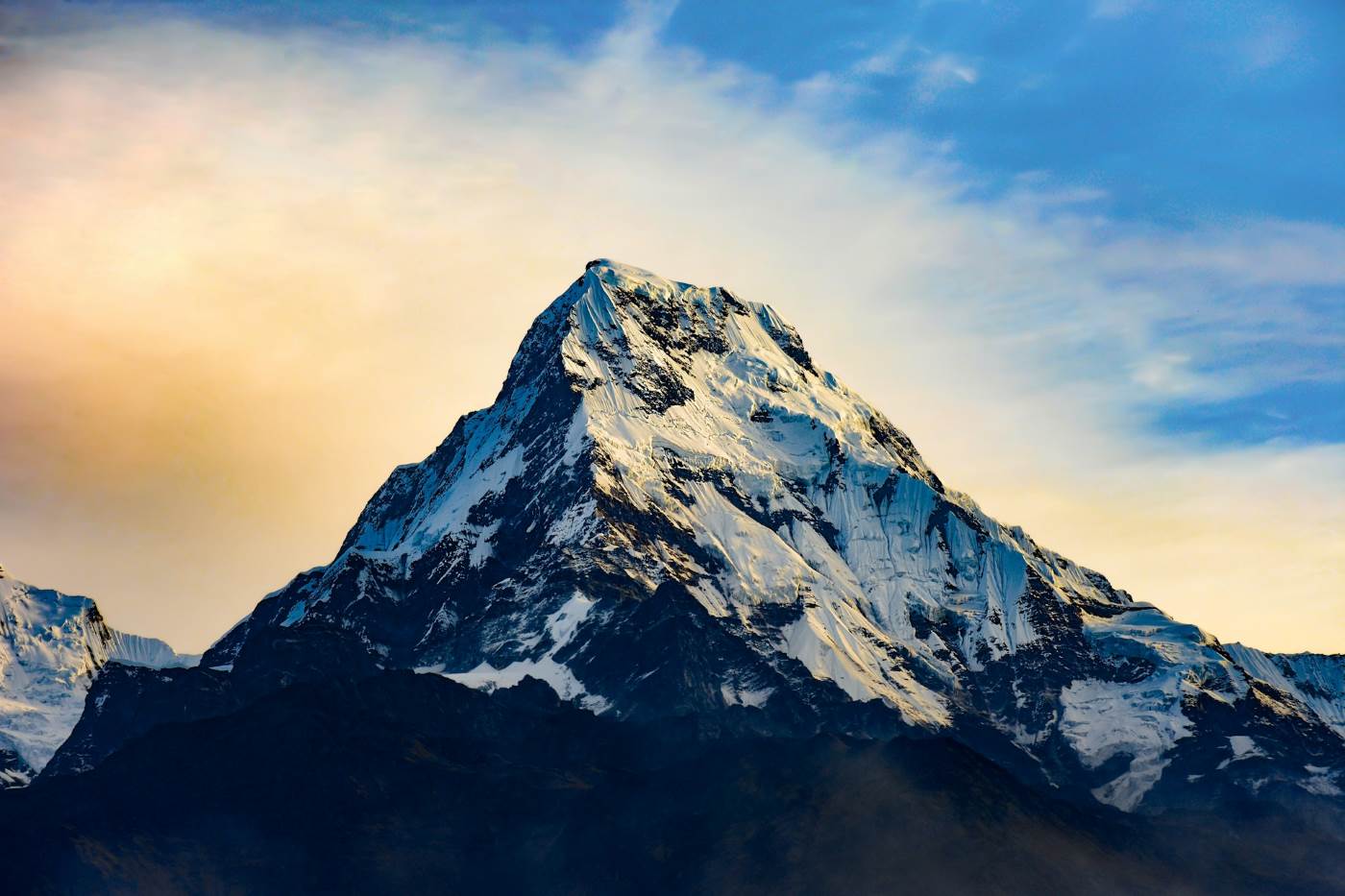
Annapurna
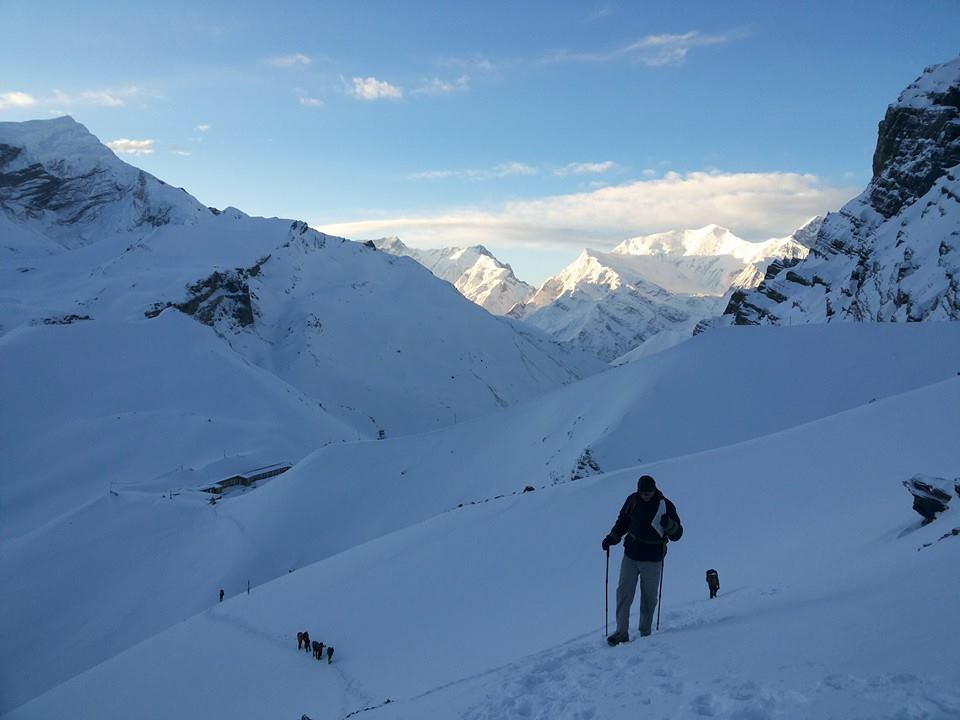
Annapurna Range Overview
The Annapurna Himalayan range features the iconic 8,000-meter pyramid of Annapurna I, along with thirteen peaks over 7,000 meters and sixteen peaks above 6,000 meters. The word "Annapurna" originates from Sanskrit, where "Anna" means food and "purna" means filled, symbolizing the Hindu goddess of food and nourishment. The streams flowing from the Annapurna ranges provide essential water for agricultural purposes in the lower regions.Trekking in the Annapurna Range
Exploring the Annapurna Mountain Range offers a journey through diverse landscapes, including alpine meadows, dense forests, and high-altitude deserts. Trekkers and mountaineers embarking on this adventure are not only greeted by the towering peaks but also by the warmth of local communities and the rich biodiversity that characterizes this unique corner of the world.Annapurna Base Camp and Beyond
The Annapurna Base Camp trek is a highlight for many, offering a gateway to the heart of the Annapurna Range. From the serene landscapes surrounding the base camp to the towering summits of Annapurna I, every step in this region encapsulates the allure of the Himalayas. The journey into the Annapurna Range is not just about conquering peaks but also about experiencing the magic of the mountains and the cultural richness of the local communities.Conclusion
In conclusion, the Annapurna Mountain Range beckons adventurers, nature lovers, and sight-seers from around the world to witness its towering peaks and breathtaking landscapes. Whether trekking through alpine meadows, exploring dense forests, or standing in awe of the majestic Annapurna I, every moment spent in this region is a tribute to the natural wonders of Nepal's Himalayas. This blog captures the essence of the Annapurna Mountain Range, inviting readers to embark on a journey that transcends mere exploration, delving into the heart of Nepal's most captivating natural marvels.Trekking Packages
Everest base camp trek
Annapurna base camp trek
Chulu west peak climbing
Everest three pass trekking
manaslu trek
Everest gokyo ri trek
Read more... Read less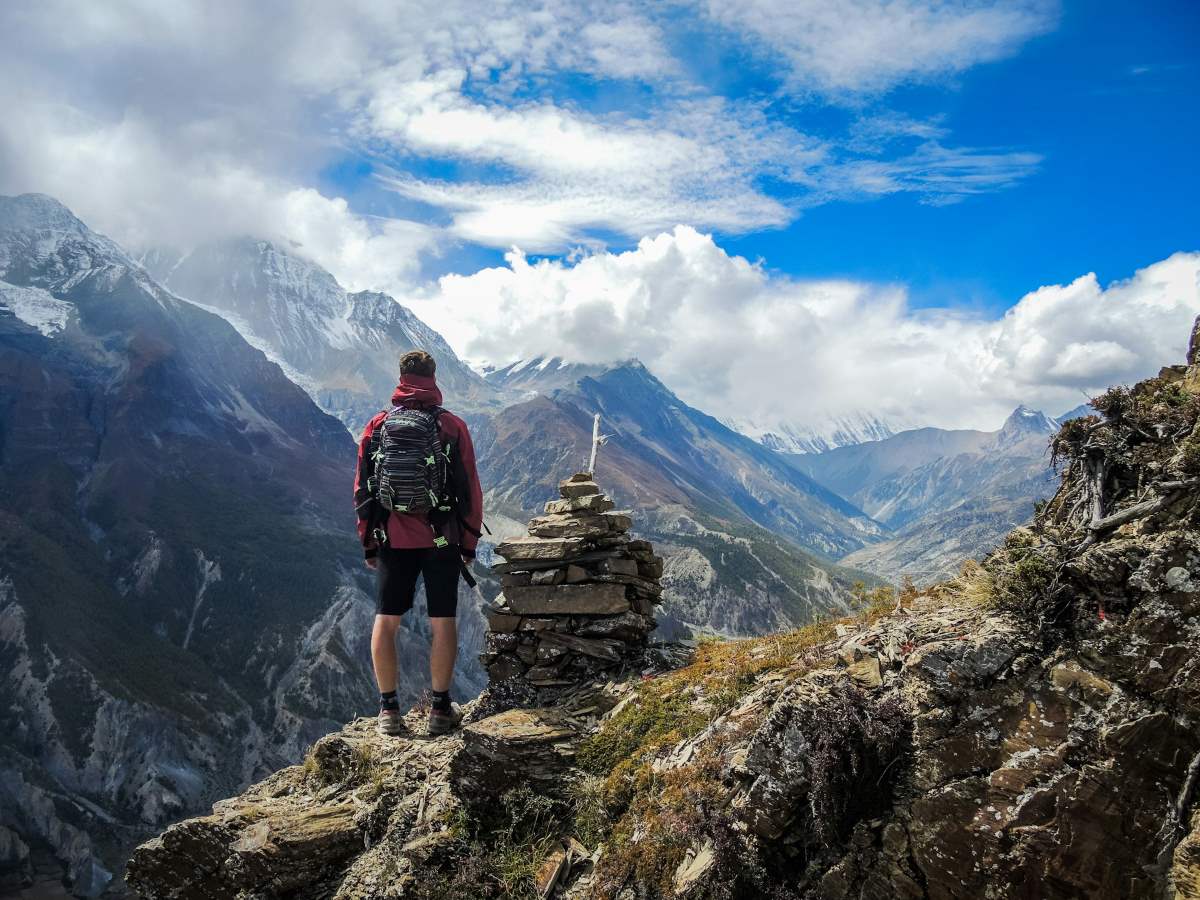
Places to see in Annapurna
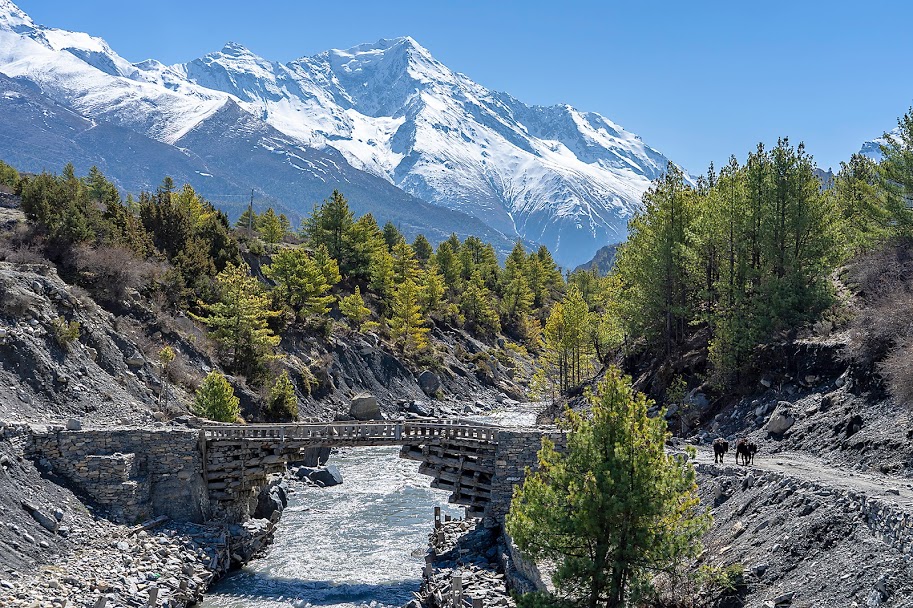 Pokhara is a paradise for thrill-seekers as well, providing an abundance of heart-pounding experiences like white-water rafting, zip-lining, and paragliding. Adventurers can enjoy an amazing experience of soaring over the city and the lakes below by paragliding from the neighboring Sarangkot hill, which is well-known for its expansive vistas. Pokhara is also the beginning point for hikes into the Annapurna region, where routes lead to well-known locations like the fabled Thorong La Pass and Annapurna Base Camp. Pokhara is known for its natural beauty and exciting adventure activities, but it's also known for its thriving cultural scene, with a large number of temples, monasteries, and museums scattered around the city. Pokhara's relaxed vibe, welcoming residents, and multitude of quaint cafés and eateries make it the ideal destination for relaxation and rejuvenation.
Chame
Nestled along the Annapurna Circuit trekking path in Nepal's Manang District, Chame is a charming village known for its serene atmosphere and breathtaking mountain views. At about 2,670 meters above sea level, Chame provides hikers with sweeping vistas of snow-capped mountains like Annapurna II and Lamjung Himal, providing an amazing setting for discovery. The village's tranquil beauty is enhanced by its surroundings, which include the Marsyangdi River meandering through the valley and an abundance of flora.
Chame, the district capital of Manang, has all the necessary facilities for hikers, including as teahouses, guesthouses, and supply stores. Chame has a rich cultural legacy that is visible in its traditional stone homes, Buddhist monasteries, and prayer wheels, in addition to its utilitarian products. Trekkers may experience the calm of the Himalayas while immersing themselves in the indigenous way of life by exploring Chame. Adventurers can rest and revitalize in the breathtaking scenery of nature at Chame, a noteworthy halt on the Annapurna Circuit trek, which is close to hot springs and waterfalls.
Pisang
Trekkers can find a peaceful haven in the heart of the breathtaking Himalayan scenery in Pisang, a little village tucked away along the Annapurna Circuit trekking trail in Nepal's Manang District. At 3,200 meters above sea level, Pisang enthralls tourists with its breathtaking mountain backdrop, which is dominated by peaks like Pisang Peak and Annapurna II. The village, which is separated into Upper and Lower Pisang, has traditional Tibetan-influenced architecture, and its rustic attractiveness is enhanced by prayer flags and stone buildings. Travelers' requirements are met by basic amenities including teahouses, guesthouses, and small shops, which create a cozy environment for relaxation and exploration.
Views of the surrounding mountains and friendly inhabitants are just two of the varied experiences that await visitors to Pisang. With hiking paths heading to places like Manang and Thorong La Pass, the town acts as a gateway to higher heights. Trekkers can immerse themselves in the rich culture and customs of the region while experiencing ever-changing vistas along the way, from verdant woods to desolate slopes. Pisang provides an unforgettable halt on the Annapurna Circuit hike, whether you choose to explore the village's winding lanes, take in the breathtaking peaks, or just relax and take in the peace and quiet.
Manang
Manang is a charming village in Nepal's Manang District that is well-known for its breathtaking mountain scenery, rich cultural history, and distinctive style of life influenced by Tibetan culture. At about 3,540 meters (11,614 feet) above sea level, Manang is a crucial destination on the Annapurna Circuit walking path and a springboard to higher altitudes in the Himalayas. Annapurna II, Gangapurna, and Tilicho Peak are just a few of the majestic peaks that encircle the settlement and provide an amazing setting for exploring. The untamed topography of Manang is typified by sheer cliffs, deep valleys, and glacial lakes scattered throughout the area. The valley's natural beauty is enhanced by the Marsyangdi River's flow.
Manang is well known for having a rich cultural history, much of which may be attributed to Tibetan Buddhism. Explore the historic stone homes, old monasteries, and prayer wheels strewn over the area to learn about the way of life there. In addition, the hamlet offers tourists the opportunity to fully immerse themselves in the distinctive customs and rituals of the Himalayan people through colorful festivals and events that honor the cultural traditions of the area. Manang is a haven for outdoor enthusiasts, offering a variety of sports like trekking, mountain biking, and rock climbing, in addition to its cultural attractions. Adventurers often choose to visit the neighboring Tilicho Lake, which is among the world's highest lakes, and the strenuous Thorong La Pass trip. For those seeking adventure and comfort in the heart of the highlands, Manang offers an amazing experience, whether it's trekking through the gorgeous Himalayas or discovering the village's cultural heritage.
Muktinath
Muktinath is a sacred pilgrimage site that is loved by both Buddhists and Hindus. It is located in Nepal's Mustang province. The main attraction of Muktinath is its historic temple devoted to Lord Vishnu, which is perched at an elevation of about 3,800 meters and features 108 stone water spouts and an eternal flame. With snow-capped peaks like Dhaulagiri and Nilgiri in the background, this holy location radiates a strong spiritual aura that draws pilgrims and visitors looking for consolation and blessings. The bleak hills and deserted terrain that surround the area add to the ethereal atmosphere and provide spectacular views that astound guests.
In addition to its religious significance, Muktinath is a starting point for adventurous treks that pass through quaint towns and untamed scenery. The trip to Muktinath combines an investigation of the distinctive culture and legacy of the Mustang region with a spiritual pilgrimage. Whether taking a dip in the holy waters, admiring the scenery, or setting off on a spiritual excursion, Muktinath offers a life-changing experience amidst the calm and gorgeous Himalayas.
Jomsom
Tucked away in the Mustang area of Nepal, Jomsom is a bustling centre surrounded by the peaceful Himalayas and accessible via the Annapurna Circuit trekking route. At 2,700 meters above sea level, this vibrant town provides visitors with amazing vistas of snow-capped peaks like Nilgiri and Dhaulagiri. The serene flow of the Kali Gandaki River through its stunning gorge further enhances the experience. Jomsom is a lonely place, yet it has all the necessary facilities, including shops, teahouses, and guesthouses, to meet the needs of both tourists and trekkers.
Jomsom, which is well-known for being the entry point to the Upper Mustang region, serves as a logistical hub thanks to its airport, which offers regular flights to and from Pokhara. Due to its accessibility, it is a well-liked place for trekkers to begin or end their journey, providing a practical substitute for strenuous hiking routes. Beyond its usefulness, Jomsom enthralls visitors with its rich Thakali culture, which is reflected in the town's numerous Buddhist monasteries, prayer wheels, and traditional stone homes. Take part in lively festivities that honor the region's history, sample delicious original Thakali food, and become fully immersed in the native way of life. In the heart of the captivating Himalayan Mountains, Jomsom offers an amazing experience whether you're trekking, exploring cultural landmarks, or just taking in the breathtaking mountain views.
Ghorepani
Nestled in the Annapurna region of Nepal, Ghorepani is a charming village known for its vivid rhododendron forests and breathtaking mountain views. Ghorepani, which is at an elevation of about 2,750 meters, is a well-liked trekking location along the paths leading to Annapurna Base Camp and the Annapurna Circuit. Poon Hill, a well-known viewpoint that provides expansive views of the whole Annapurna range at dawn, is one of its key draws. Hikers frequently set out on early morning hikes to experience the magnificent sight of the sun illuminating the snow-capped summits in a golden hue.
Beneath its picturesque exterior, Ghorepani serves as a cultural center for a variety of ethnic groups, including the Gurungs and Magars. Basic lodgings like teahouses and guesthouses provide guests genuine hospitality as well as traditional music and dance performances. The village's verdant rhododendron forests, which are especially colorful in the spring, contribute to its charm and provide hikers with a captivating display of vibrant flowers amid the untamed Himalayan landscape. For those looking for adventure and peace amidst the gorgeous Himalayas, Ghorepani guarantees an amazing experience, whether it's taking in the expansive mountain vistas, exploring the colorful forests, or fully immersing oneself in local culture.
Poonhill
In Nepal's Annapurna region, Poon Hill is a well-known viewpoint beloved for its breath-taking panoramic views of the Himalayan ranges. It is tucked away close to Ghorepani. Perched at an elevation of around 3,210 meters, it is a well-liked site for hikers hoping to witness the captivating sunrise over the Annapurna and Dhaulagiri mountain ranges. Trekkers can catch views of the beautiful peaks as they ascend the trail through lush rhododendron forests on the early morning trip to Poon Hill.
Visitors are met with a breathtaking view of snow-capped mountains lit by early light as soon as they reach the summit. Trekkers can enjoy a breathtaking view of Annapurna I, Annapurna South, Machhapuchhre (Fishtail), and Dhaulagiri, among other peaks that are visible from Poon Hill. Poon Hill offers a memorable and satisfying experience amid the breathtaking majesty of the Himalayas, making it a must-visit location along the Annapurna Circuit and Annapurna Base Camp treks due to its accessibility and compelling views.
ABC (Annapurna Base Camp)
Tucked away in Nepal's Annapurna Conservation Area is the popular hiking destination known as Annapurna Base Camp (ABC). At 4,130 meters (13,550 feet) above sea level, it provides trekkers with an unforgettable and immersive experience among the breathtaking Himalayan scenery. Usually, travel to Annapurna Base Camp starts in Pokhara, a charming Nepalese lakeside town. Trekkers then set out on a multi-day journey through a variety of landscapes, such as subtropical forests, terraced fields, and isolated villages home to Gurung and Magar ethnic populations. Trekkers are rewarded with breathtaking vistas of peaks covered with snow, gushing waterfalls, and vivid rhododendron forests throughout the route.
The scenery changes as hikers get deeper into the mountains; steep cliffs and alpine meadows are more common. Trekkers pass via famous locations like Machhapuchhre Base Camp (MBC), where they get a first look at the magnificent Machhapuchhre (Fishtail) mountain, en way to Annapurna Base Camp. Trekkers proceed through the rough Modi Khola valley until they eventually arrive at Annapurna Base Camp, which serves as a sanctuary. Trekkers are greeted by an amazing amphitheater of towering peaks at Annapurna Base Camp, including the fearsome Annapurna I, which rises to a height of 8,091 meters (26,545 feet). The campground itself is surrounded by high snow-covered peaks and glaciers, creating a tranquil and picturesque atmosphere. Trekkers can see breathtaking views of the Himalayas at sunrise and dusk, making lifelong memories against the backdrop of one of the world's most iconic mountain ranges. Read more...
Read less
Pokhara is a paradise for thrill-seekers as well, providing an abundance of heart-pounding experiences like white-water rafting, zip-lining, and paragliding. Adventurers can enjoy an amazing experience of soaring over the city and the lakes below by paragliding from the neighboring Sarangkot hill, which is well-known for its expansive vistas. Pokhara is also the beginning point for hikes into the Annapurna region, where routes lead to well-known locations like the fabled Thorong La Pass and Annapurna Base Camp. Pokhara is known for its natural beauty and exciting adventure activities, but it's also known for its thriving cultural scene, with a large number of temples, monasteries, and museums scattered around the city. Pokhara's relaxed vibe, welcoming residents, and multitude of quaint cafés and eateries make it the ideal destination for relaxation and rejuvenation.
Chame
Nestled along the Annapurna Circuit trekking path in Nepal's Manang District, Chame is a charming village known for its serene atmosphere and breathtaking mountain views. At about 2,670 meters above sea level, Chame provides hikers with sweeping vistas of snow-capped mountains like Annapurna II and Lamjung Himal, providing an amazing setting for discovery. The village's tranquil beauty is enhanced by its surroundings, which include the Marsyangdi River meandering through the valley and an abundance of flora.
Chame, the district capital of Manang, has all the necessary facilities for hikers, including as teahouses, guesthouses, and supply stores. Chame has a rich cultural legacy that is visible in its traditional stone homes, Buddhist monasteries, and prayer wheels, in addition to its utilitarian products. Trekkers may experience the calm of the Himalayas while immersing themselves in the indigenous way of life by exploring Chame. Adventurers can rest and revitalize in the breathtaking scenery of nature at Chame, a noteworthy halt on the Annapurna Circuit trek, which is close to hot springs and waterfalls.
Pisang
Trekkers can find a peaceful haven in the heart of the breathtaking Himalayan scenery in Pisang, a little village tucked away along the Annapurna Circuit trekking trail in Nepal's Manang District. At 3,200 meters above sea level, Pisang enthralls tourists with its breathtaking mountain backdrop, which is dominated by peaks like Pisang Peak and Annapurna II. The village, which is separated into Upper and Lower Pisang, has traditional Tibetan-influenced architecture, and its rustic attractiveness is enhanced by prayer flags and stone buildings. Travelers' requirements are met by basic amenities including teahouses, guesthouses, and small shops, which create a cozy environment for relaxation and exploration.
Views of the surrounding mountains and friendly inhabitants are just two of the varied experiences that await visitors to Pisang. With hiking paths heading to places like Manang and Thorong La Pass, the town acts as a gateway to higher heights. Trekkers can immerse themselves in the rich culture and customs of the region while experiencing ever-changing vistas along the way, from verdant woods to desolate slopes. Pisang provides an unforgettable halt on the Annapurna Circuit hike, whether you choose to explore the village's winding lanes, take in the breathtaking peaks, or just relax and take in the peace and quiet.
Manang
Manang is a charming village in Nepal's Manang District that is well-known for its breathtaking mountain scenery, rich cultural history, and distinctive style of life influenced by Tibetan culture. At about 3,540 meters (11,614 feet) above sea level, Manang is a crucial destination on the Annapurna Circuit walking path and a springboard to higher altitudes in the Himalayas. Annapurna II, Gangapurna, and Tilicho Peak are just a few of the majestic peaks that encircle the settlement and provide an amazing setting for exploring. The untamed topography of Manang is typified by sheer cliffs, deep valleys, and glacial lakes scattered throughout the area. The valley's natural beauty is enhanced by the Marsyangdi River's flow.
Manang is well known for having a rich cultural history, much of which may be attributed to Tibetan Buddhism. Explore the historic stone homes, old monasteries, and prayer wheels strewn over the area to learn about the way of life there. In addition, the hamlet offers tourists the opportunity to fully immerse themselves in the distinctive customs and rituals of the Himalayan people through colorful festivals and events that honor the cultural traditions of the area. Manang is a haven for outdoor enthusiasts, offering a variety of sports like trekking, mountain biking, and rock climbing, in addition to its cultural attractions. Adventurers often choose to visit the neighboring Tilicho Lake, which is among the world's highest lakes, and the strenuous Thorong La Pass trip. For those seeking adventure and comfort in the heart of the highlands, Manang offers an amazing experience, whether it's trekking through the gorgeous Himalayas or discovering the village's cultural heritage.
Muktinath
Muktinath is a sacred pilgrimage site that is loved by both Buddhists and Hindus. It is located in Nepal's Mustang province. The main attraction of Muktinath is its historic temple devoted to Lord Vishnu, which is perched at an elevation of about 3,800 meters and features 108 stone water spouts and an eternal flame. With snow-capped peaks like Dhaulagiri and Nilgiri in the background, this holy location radiates a strong spiritual aura that draws pilgrims and visitors looking for consolation and blessings. The bleak hills and deserted terrain that surround the area add to the ethereal atmosphere and provide spectacular views that astound guests.
In addition to its religious significance, Muktinath is a starting point for adventurous treks that pass through quaint towns and untamed scenery. The trip to Muktinath combines an investigation of the distinctive culture and legacy of the Mustang region with a spiritual pilgrimage. Whether taking a dip in the holy waters, admiring the scenery, or setting off on a spiritual excursion, Muktinath offers a life-changing experience amidst the calm and gorgeous Himalayas.
Jomsom
Tucked away in the Mustang area of Nepal, Jomsom is a bustling centre surrounded by the peaceful Himalayas and accessible via the Annapurna Circuit trekking route. At 2,700 meters above sea level, this vibrant town provides visitors with amazing vistas of snow-capped peaks like Nilgiri and Dhaulagiri. The serene flow of the Kali Gandaki River through its stunning gorge further enhances the experience. Jomsom is a lonely place, yet it has all the necessary facilities, including shops, teahouses, and guesthouses, to meet the needs of both tourists and trekkers.
Jomsom, which is well-known for being the entry point to the Upper Mustang region, serves as a logistical hub thanks to its airport, which offers regular flights to and from Pokhara. Due to its accessibility, it is a well-liked place for trekkers to begin or end their journey, providing a practical substitute for strenuous hiking routes. Beyond its usefulness, Jomsom enthralls visitors with its rich Thakali culture, which is reflected in the town's numerous Buddhist monasteries, prayer wheels, and traditional stone homes. Take part in lively festivities that honor the region's history, sample delicious original Thakali food, and become fully immersed in the native way of life. In the heart of the captivating Himalayan Mountains, Jomsom offers an amazing experience whether you're trekking, exploring cultural landmarks, or just taking in the breathtaking mountain views.
Ghorepani
Nestled in the Annapurna region of Nepal, Ghorepani is a charming village known for its vivid rhododendron forests and breathtaking mountain views. Ghorepani, which is at an elevation of about 2,750 meters, is a well-liked trekking location along the paths leading to Annapurna Base Camp and the Annapurna Circuit. Poon Hill, a well-known viewpoint that provides expansive views of the whole Annapurna range at dawn, is one of its key draws. Hikers frequently set out on early morning hikes to experience the magnificent sight of the sun illuminating the snow-capped summits in a golden hue.
Beneath its picturesque exterior, Ghorepani serves as a cultural center for a variety of ethnic groups, including the Gurungs and Magars. Basic lodgings like teahouses and guesthouses provide guests genuine hospitality as well as traditional music and dance performances. The village's verdant rhododendron forests, which are especially colorful in the spring, contribute to its charm and provide hikers with a captivating display of vibrant flowers amid the untamed Himalayan landscape. For those looking for adventure and peace amidst the gorgeous Himalayas, Ghorepani guarantees an amazing experience, whether it's taking in the expansive mountain vistas, exploring the colorful forests, or fully immersing oneself in local culture.
Poonhill
In Nepal's Annapurna region, Poon Hill is a well-known viewpoint beloved for its breath-taking panoramic views of the Himalayan ranges. It is tucked away close to Ghorepani. Perched at an elevation of around 3,210 meters, it is a well-liked site for hikers hoping to witness the captivating sunrise over the Annapurna and Dhaulagiri mountain ranges. Trekkers can catch views of the beautiful peaks as they ascend the trail through lush rhododendron forests on the early morning trip to Poon Hill.
Visitors are met with a breathtaking view of snow-capped mountains lit by early light as soon as they reach the summit. Trekkers can enjoy a breathtaking view of Annapurna I, Annapurna South, Machhapuchhre (Fishtail), and Dhaulagiri, among other peaks that are visible from Poon Hill. Poon Hill offers a memorable and satisfying experience amid the breathtaking majesty of the Himalayas, making it a must-visit location along the Annapurna Circuit and Annapurna Base Camp treks due to its accessibility and compelling views.
ABC (Annapurna Base Camp)
Tucked away in Nepal's Annapurna Conservation Area is the popular hiking destination known as Annapurna Base Camp (ABC). At 4,130 meters (13,550 feet) above sea level, it provides trekkers with an unforgettable and immersive experience among the breathtaking Himalayan scenery. Usually, travel to Annapurna Base Camp starts in Pokhara, a charming Nepalese lakeside town. Trekkers then set out on a multi-day journey through a variety of landscapes, such as subtropical forests, terraced fields, and isolated villages home to Gurung and Magar ethnic populations. Trekkers are rewarded with breathtaking vistas of peaks covered with snow, gushing waterfalls, and vivid rhododendron forests throughout the route.
The scenery changes as hikers get deeper into the mountains; steep cliffs and alpine meadows are more common. Trekkers pass via famous locations like Machhapuchhre Base Camp (MBC), where they get a first look at the magnificent Machhapuchhre (Fishtail) mountain, en way to Annapurna Base Camp. Trekkers proceed through the rough Modi Khola valley until they eventually arrive at Annapurna Base Camp, which serves as a sanctuary. Trekkers are greeted by an amazing amphitheater of towering peaks at Annapurna Base Camp, including the fearsome Annapurna I, which rises to a height of 8,091 meters (26,545 feet). The campground itself is surrounded by high snow-covered peaks and glaciers, creating a tranquil and picturesque atmosphere. Trekkers can see breathtaking views of the Himalayas at sunrise and dusk, making lifelong memories against the backdrop of one of the world's most iconic mountain ranges. Read more...
Read less
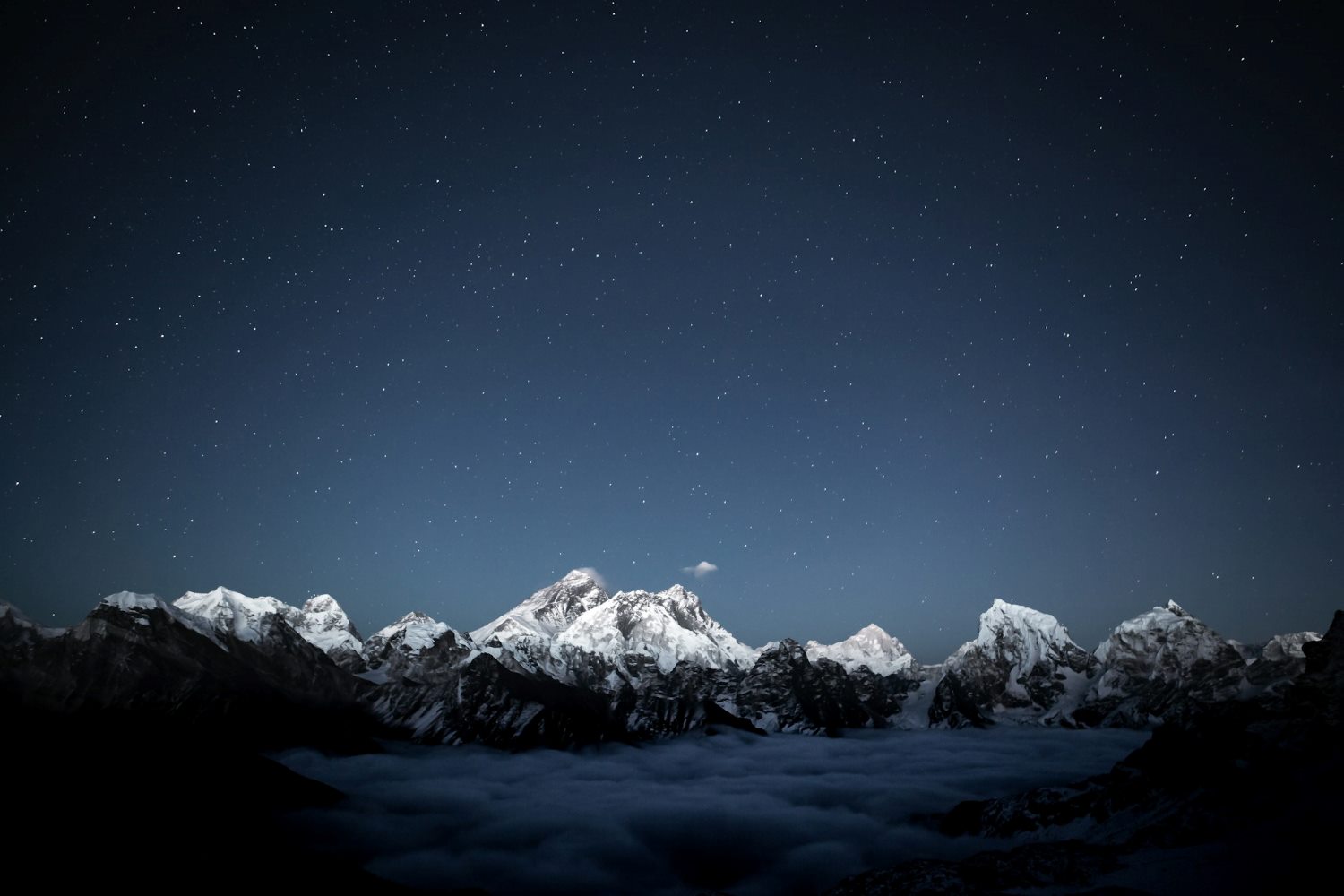
Where is Mount Everest?
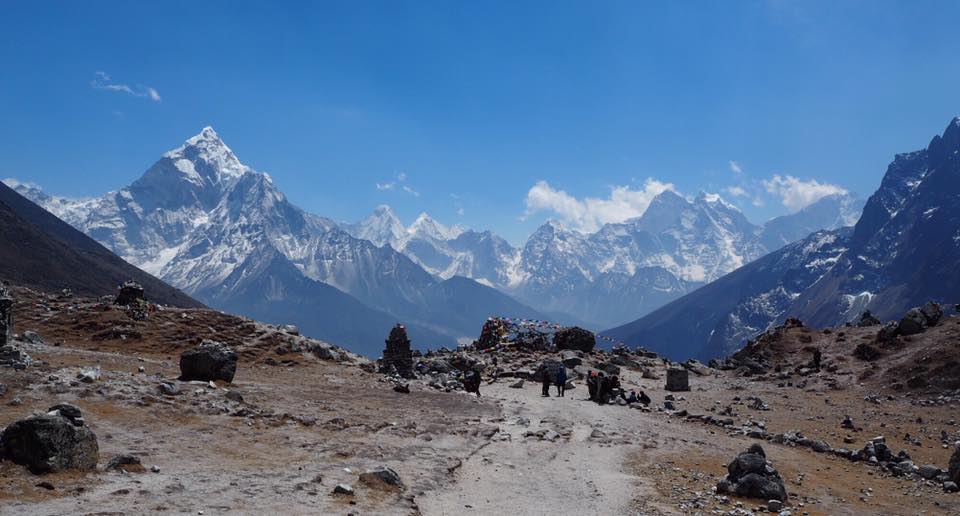 The higher elevation in the mountain region has a colder climate than that of the sea level. Mountains are more used for resource extraction and recreation such as climbing and skiing. There are three types of mountains: volcanic, fold, and block. When the piles of earth’s crust move, crumple, and dive it results in the formation of mountains.
Because of harsh weather mountains are less preferable for human habitation. The altitude at 5950m is the highest tolerable altitude and above that, there is less oxygen available for breathing. Above 8000m elevations is popular as the death zone as there is not enough oxygen to support human life. This is why Mountain summits are one of the riskiest activities in the world.
The higher elevation in the mountain region has a colder climate than that of the sea level. Mountains are more used for resource extraction and recreation such as climbing and skiing. There are three types of mountains: volcanic, fold, and block. When the piles of earth’s crust move, crumple, and dive it results in the formation of mountains.
Because of harsh weather mountains are less preferable for human habitation. The altitude at 5950m is the highest tolerable altitude and above that, there is less oxygen available for breathing. Above 8000m elevations is popular as the death zone as there is not enough oxygen to support human life. This is why Mountain summits are one of the riskiest activities in the world.
What Country is Mount Everest In?
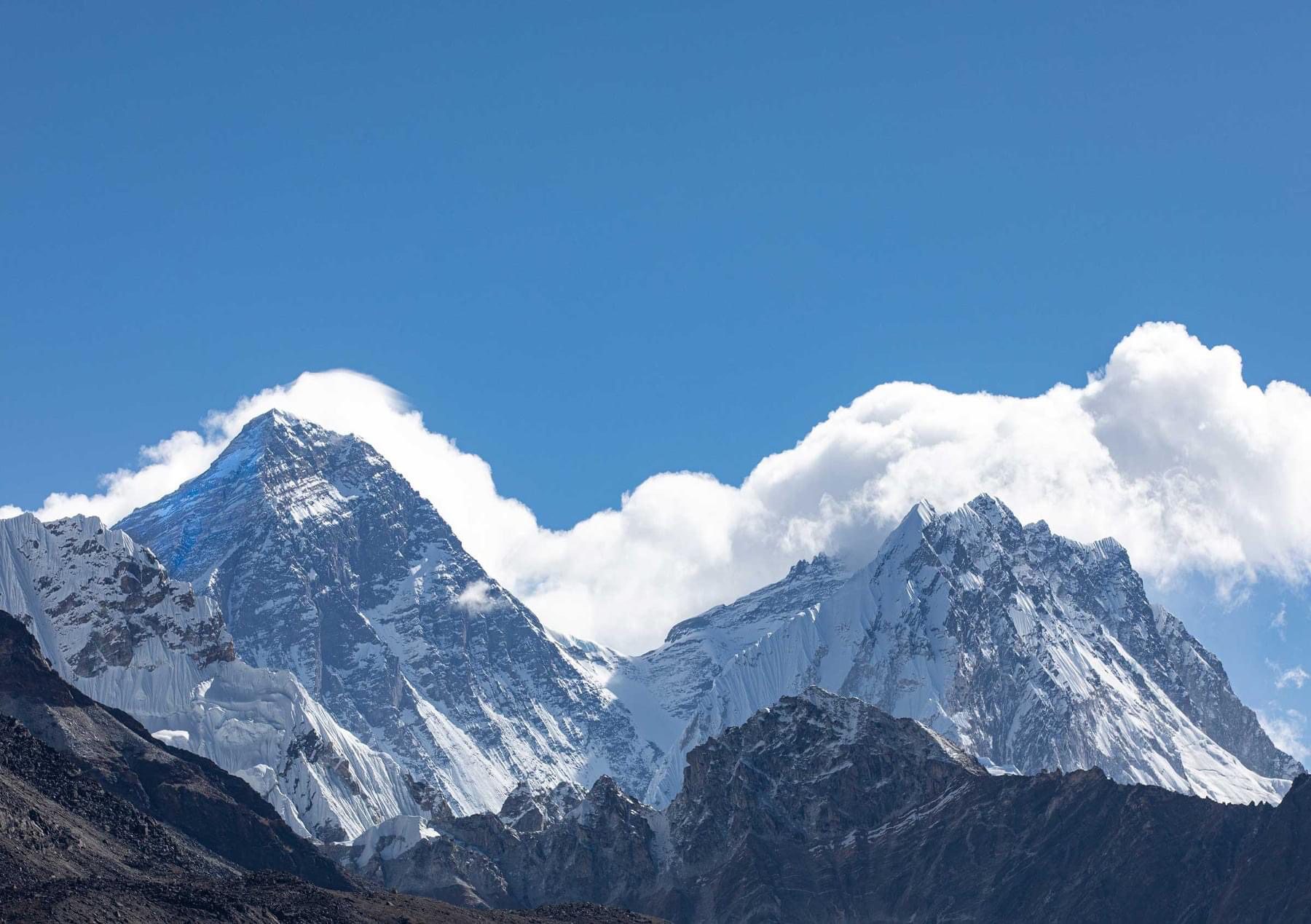
Well, the answer to both the questions: Where is Mount Everest and What Country is Mount Everest In is the same. The world-famous peak of Mount Everest resides in the tiny nation of Nepal. Popular for its overwhelming height, Mount Everest is the earth’s tallest mountain peak in the Himalayan mountain range. The Himalayan range in Asia consists of some of the tallest Himalayan peaks. These peaks separate the plains of the Indian subcontinent from the Tibetian plateau. These Himalayan ranges extend to major South Asian countries such as Nepal, China, India, Bhutan, Pakistan, Afghanistan, etc. The highest Himalayan peak stands tall between the border of Nepal and Tibet. The shape of Everest is like a three-sided pyramid. The three generally flat planes are the faces and the line that join the two faces is the ridge. The North face rises above Tibet and the North Ridge bounds it whereas the Southwest face rises above Nepal and the West Ridge and the Southeast Ridge bounds it.Nepal
Mount Everest, the world’s highest peak catches the attention of every mountaineer seeking something thrilling yet life-changing adventure. After getting the answer to the question “Where is Mount Everest?”, let’s know more about Everest from Nepal. Everest is one of the most challenging and lifelong dreams of many since the view and the recreation and Adventure add beauty to the journey. Some people are completely into a thrilling adventure. Those risky adventures become their name and fame. Still being the ultimate mountaineering adventure, only 5000 people have accomplished their journey to Everest since 1953. However, many are in the verse of trying. Therefore, people have set their eyes on Everest as one of the most popular adventures. Mount Everest lies in the Mahalangur Himal sub-range of the Himalayan range in southern Asia. Mount Everest is the mountain on the crest of the Great Himalayas in Southern Asia that is located on the border between Nepal and Tibet. The Sanskrit name for Everest is Sagarmatha which refers to “Peak of Heaven” whereas the Tibetan name for it is Chomolungma which means “Goddess Mother of the world”. However, The summit of Everest has two main climbing routes. One is from southeast Nepal and the other is approaching through the North in Tibet. The challenges that the climber has to face from both sides are altitude sickness, weather, wind, the routes, coldness, and other significant Hazards from the avalanches and the Khumbu icefalls. Despite its difficulties, Mount Everest is one of the popular destinations for those people seeking some extra challenges with extra thrilling adventure.How High is Mount Everest
This article is not just about “Where is Mount Everest?” Here we try to provide you with all the information and facts about Mount Everest. Mount Everest, is the earth’s tallest mountain peak. It is famous as the world’s highest mountain because of its highest elevation above sea level. There are previous records regarding the height of the Mountain peak. The elevation of Everest in 1955 was 8848m, both countries Nepal and China were okay with it. Later China re-confirmed this height in 1975. As there was a rapid evolution of technology from the 18th century to the 21st century. There were abundant tools and techniques to measure the exact height of Everest. The team measures the height of Mount Everest taking sea level as the base. However, the new official height of Everest was announced very recently. The new announcement puts an end to the decade-long debate on the height of Mount Everest.Where is Mount Everest ?- “Location of Mount Everest”
The exact location of Mount Everest lies on the border of 2 different countries in Asia, Nepal, and Tibet. It lies in the Mahalangur range of the Tibetian plateau known as Qing Zang Gaoyuan. On the other hand, In Nepal, lies in the Sagarmatha National Park in the Solukhumbu district. So, climbers can have access to the summit of Everest from both Nepal and Tibet. Yearly hundreds of people choose to summit Everest but very few get close to this almighty peak. Few of them make their summit from Nepal and half of them make their summit from Tibet. No matter where you decide to take the journey, the route is always challenging and the weather is pretty disturbing. So the location of Mount Everest is in Nepal. Everest indeed is the highest point above sea level but its summit is not the farthest from the earth’s center. The two countries in South Asia where Mount Everest touches its border area.Nepal
The country of the Himalayas, Nepal is the sovereign country in South Asia covering an area of 147181 sq. km. Nepal is a landlocked country. India borders this landlocked county in the east, south, and west while China borders it in the North. Nepal has a diverse geography and is a multi-ethnic country with Nepali as the official language. Nepal is home to 8 out of the world’s 10 tallest mountains including the world’s highest peak Mt. Everest. The base camp to Everest is one of the most popular trekking activities in Nepal. Besides, the Everest summit is another thrilling yet adventurous activity that many climbers prefer to do in Nepal. Nepal is also known as the land of the Himalayas and this title attracts the attention of climbers all over the world.China
The other country that borders Everest is Tibet which is an autonomous region of China. The Tibetan name for Everest is Chomolungma. China, officially the People’s Republic of China, is the most populous country with around 1.4 billion in the year 2019. It is the 3rd largest country in the world covering approximately 9.6 million sq. km. The landscape of China is vast, and diverse ranging from the Gobi and Taklamakan Deserts in the arid north to the subtropical forests in the South. China is among the few existing countries which are economically and culturally flourished in the earliest stage of the world’s civilization.
How to Get to Mount Everes
From Nepal
Now we are going to learn about how to get to Mount Everest from Nepal. The Nepal side of Mount Everest is in the South. It is the most popular side of the summit. The Nepal side of Everest is Sagarmatha National Park with one of the most popular trekking routes- the Everest Base Camp trail. Trekkers usually fly to Kathmandu and then fly from Kathmandu to Lukla then trek to Namche Bazaar which is the gateway for the Everest Basecamp trek. The base camp to Everest is at an altitude of 5,320m.From China
The China side of Everest is in the north. Foreigners require to travel to Everest in China with a Chinese travel agency itinerary and a Tibetian tour guide. China’s side of Everest is a wide valley in U-Shape. Trekkers usually fly to Lhasa or take a train via Xining. People even hire 4WD from Lhasa to Rongbuk Monastery, 5100m.How Old Is Mount Everest
Every year many climbers make their way to the Mount Everest summit. The world’s highest mountain recently got its new height of 8848.86m. It is quite famous for hosting many treks and climbs. There are many lingering questions relating to the actual age of Everest. About the actual geological age of Everest, there are many opinions from different Geologists. Practically speaking there are no exact records regarding the age of Mount Everest. However, according to the research done by Scientists, Mount Everest is around 50 to 60 million years old. As Everest is a part of the Himalayas, scientists believe that the Himalayas are formed due to the collision of the Indian and Eurasian plates. Therefore, the age of Everest is similar to the age of the Himalayas. On the other hand, a few years ago some scientists discover that around 500 million years ago there was a mountain range, even before the collision where now the Himalayas lie. So, an explanation was made that maybe 500 million years ago the mountain range was formed by the collision of the Indian plate. So, Everest can be 500 million years old too. Everest is composed of multiple layers of rock folded back on themselves and the rock on the lower elevations of the mountain consists of metamorphic schists and gneisses, topped by igneous granite.How Did Mount Everest Get its Name?
After acquiring knowledge on “Where is Mount Everest?”. We move forward to learn about how did Mount Everest get its name. Mount Everest is a peak in the Himalayas mountain range located between Nepal and Tibet, an autonomous region of China. For several years scientists have tried to establish the exact height of Mount Everest. Likewise, the name Everest has its history. In 1856, the peak got its name after British surveyor George Everest. In 1852 Radnanath Sikhdar, a mathematician working for the great Trigonometrical Survey, who has been mapping the Indian Subcontinent identified the world’s highest mountain in the world that lies on the border between Tibet and Nepal. The Tibetian already named it Chomolungma and Nepali called it Sagarmatha. So, the British referred to the peak as XV until Andrew Waugh, the surveyor-general of India, suggested that it be named for his predecessor, Sir George Everest. The peak was officially named Everest in 1865. Sir George Everest was born in Wales on July 4, 1790, and attended military schools in England before spending his adult life in India. He joined the Great Trigonometrical Survey in 1818 after working for the East India Company. He spent 25 years on this project working as superintendent in 1823 and then the surveyor-general of India in 1830. After that, he returned to Great Britain following his retirement in 1843. Sir George Everest always prefer a native name for the highest peak, despite Waugh’s proposal of naming the Highest peak in his honor. Despite the name was already given by the native countries, Waugh was unaware of the indigenous moniker which had barred the survey team from crossing the border. Waugh wrote the proposal to the Royal Geographical Society in 1856. However, Sir George Everest didn’t collaborate saying that the locals will have a problem pronouncing the name. Despite his arguments, society decides to dub the world’s tallest peak Mount Everest in 1865.First Person to Climb Mount Everest
Summit to Everest is difficult and risky. Yearly hundreds of people make their way to the summit of Everest. However, very few get close to this pinnacle site. Half of them halt their journey in the middle. Some even lose their life but it is the glory of the victory to those who have become successful. The summit of the world’s tallest peak requires days of preparation and months of extreme training. Simultaneously upon knowing “Where is Mount Everest?” or the location of Mount Everest. We now get information on the first person to climb Mount Everest. The very 1st person to reach the top of Everest was Sir Edmund Percival Hillary and Tenzing Norgay Sherpa. Sir Edmund Percival Hillary was a New Zealand mountaineer and explorer. He along with Sherpa mountaineer Tenzing Norgay became the first climbers to summit Everest on 29 May 1953.
Edmund Hillary
Sir Edmund Hillary has been interested in mountaineering since his secondary school days. So as his first attempt, he reaches the summit of Mount Ollivier in 1939. During world war II he served as a navigator in the Royal New Zealand Air Force and was wounded in an accident. He has also been part of the British reconnaissance expedition to the mountain in 1951. His attempt at climbing Cho Oyu was unsuccessful in 1952. Besides Everest, he reached the North Pole and the South Pole and became the first person to reach both poles. Then he set his eyes on the world’s highest peak. He starts assisting the Sherpa people of Nepal through the Himalayan Trust which was established himself. He had numerous honors conferred upon him, including the Order of the Garter in 1995. At 11:30 am on May 29, 1953, Edmund Hillary of Newzealand and Tenzing Norgay Sherpa from Nepal became the first explorers to reach the highest summit of 29,035 feet above sea level, Mount Everest. the news of their success broke out around the world on June 2. The first record of attempting to climb the summit of Everest was by a British expedition in 1921. However, a raging storm forced them to abort their ascent. Later A second British expedition featuring Mallory returned in 1922 reaching an impressive height of around 27000 feet. In another attempt made by Mallory, seven Sherpa porters were killed. The third Everest expedition was launched by the British in 1924 where the climber set the record of reaching 28128 feet without using artificial oxygen.Tenzing Norgay Sherpa
Four days later, Mallory and Andrew went for the summit but were never seen alive. However, Mallory’s body was found in 1999 with numerous broken bones. It is still a mystery whether or not they reach the summit. Several unsuccessful attempts were made from Tibet’s Northeast Ridge and after World War II Tibet was closed to foreigners. Nepal opened its door to foreign climbers in 1949 and several attempts were made to the summit by the British and Swiss. Many returned due to oxygen malfunctioning but there was no success rate until on May 28, Tenzing Norgay Sherpa and Sir Edmund Hillary set out for the Journey. After the sleepless night, cold the pair was successful in setting up the new record. They reach the south summit by 9 am and steep rocky steps, some 40 feet high about an hour later. Squeezing himself in the crack, Hillary inched himself up which was later known as Hillary Step. Hillary threw the rope down and Norgay followed. Like this, they were able to be at the top of the world by 11:30. The news of the success spread from the expedition base camp to the radio post at Namche Bazar. The news was then sent by a coded message to London which was the day of Queen Elizabeth’s coronation. The next day the news broke all over the world. So, they achieve their greatest dream and got various medals as rewards.Where To See the Everest from Nepal
Seeing Everest is the dream for many mountaineers and trekkers. After getting the location of Mount Everest, now let’s come to the topic “Where to See Everest from Nepal”. And the vision one sets in their mind when talking about Everest is the thick jacket, goggles on an ice-encrusted face after weeks of trekking. This scenario is more satisfying and appealing. Nepal can offer this kind of scenario of Everest. Besides, there are many other ways to enjoy the magnificent peak. For those who have limited time on their hands, they can view Everest by taking a mountain flight from Kathmandu. It is an hour-long flight that presents you with a panoramic view of Everest. The wonderful experience of flying above the sky with the magnificent view of the snow-capped peaks is heartwarming. It is for those who don’t want a hard journey to view Everest. On the other hand, if you are into adventure and hard climbing then you can trek to the base camp. Flying from Kathmandu to Lukla and trekking to Namche Bazar, the gateway to Everest can present you with a wonderful view of Everest. With a superb panorama of the Khumbu peaks and Everest, this can be the most embarking journey to Everest. From Namche, the next destination that can give you a stunning view is Kala Patthar. It is a unique place that offers a stunning view of the Himalayas including the highest one, Mt. Everest. Likewise, another way to get a wonderful view of Everest by experiencing the journey yourself is the Everest Summit. The difficult track, the cold weather, and the tiring walk can be exhausting but the real view of the mighty Everest is worth giving a try.The weather on Mount Everest
Let’s move towards the weather of Mount Everest after knowing the location of Mount Everest. The weather on Mount Everest is Extremely cold. January is the coldest month of the year when the temperature reaches low to -76 degrees Fahrenheit. The temperature in this region ranges from 19 degrees Fahrenheit which never rises above freezing. As bad weather can hit anytime in the Himalayan region so it is hard to predict the weather on Everest. In addition to the extremely cold climate, the wind and the snowy slippery routes present danger to the climbers. High winds carry sand, stones, and snow, and ice during storms. Even an unexpected storm can bring 10 feet of snow. The best season for climbing Mount Everest is April-May and from mid-June to August.
The Surrounding Locality Near Everest
Succeeding the info regarding the “Where is Mount Everest?” or location of Mount Everest. We now talk about the surrounding locality near Everest. The descendants around the Himalayan region are mostly Sherpas and Bhotes. While on your way to Everest, you will pass through the various village of Sherpas. Tibetian culture highly influences this region. You will get a glimpse of the monasteries and Gompas. Apart from the trek and summit of Everest presents you with stunning views of the landscapes as well as the exploration of the culture and tradition. You will explore the typical life of Sherpa people living within this area who has been climbers and guide for several years Conclusion Mount Everest is one of the valuable natural treasures of Nepal. Nepal is popular as the land of the Himalayas all over the world. Some even know Nepal as the country with Mount Everest. It is famous in the world and promotes Nepal to the world. People from all over the world make their attempt the sightsee the world’s highest peak. And Nepal does have various options for those cases. To those who have limited time, they can view Everest from the mountain flight which only takes an hour of your time. Besides those who are into touring and trekking, they can trek to the Base camp of Everest. On the other hand, someone who has a high interest in mountaineering can even climb the summit of this peak. There are various ways to explore Everest.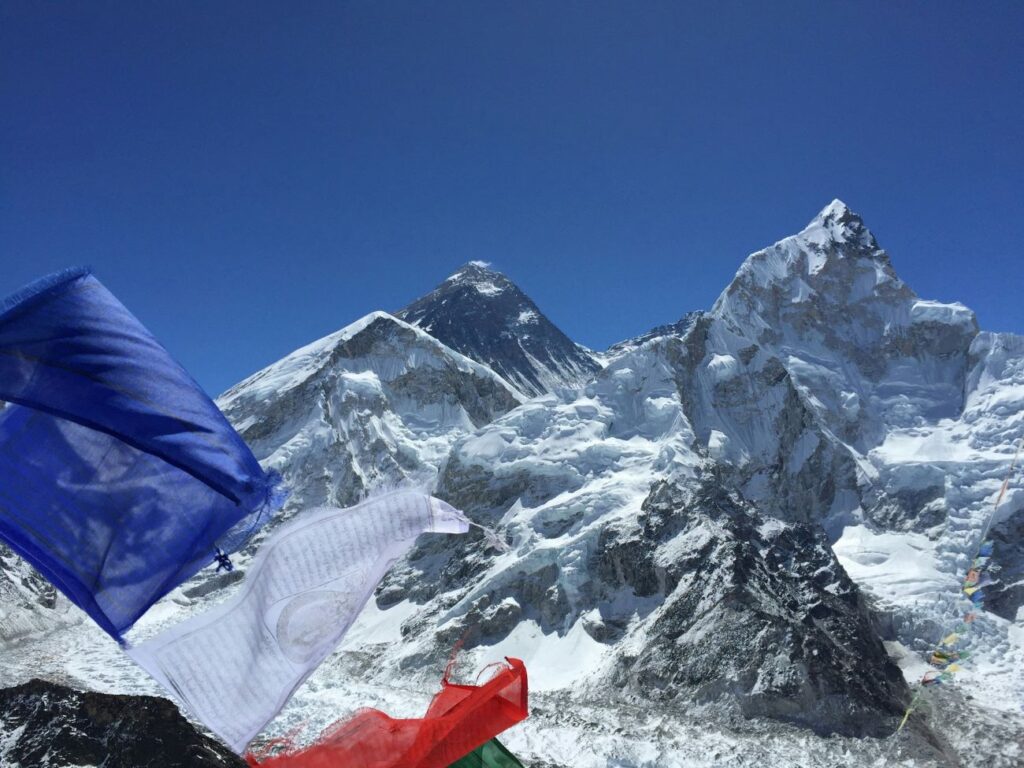
Here we provide several packages of treks in the Everest Region.
Base Camp Trek Panorama Trek Gokyo Ri Trek High Passes TrekTrekking Packages
Everest base camp trek
Annapurna base camp trek
Chulu west peak climbing
Everest three pass trekking
manaslu trek
Everest gokyo ri trek
Read more... Read less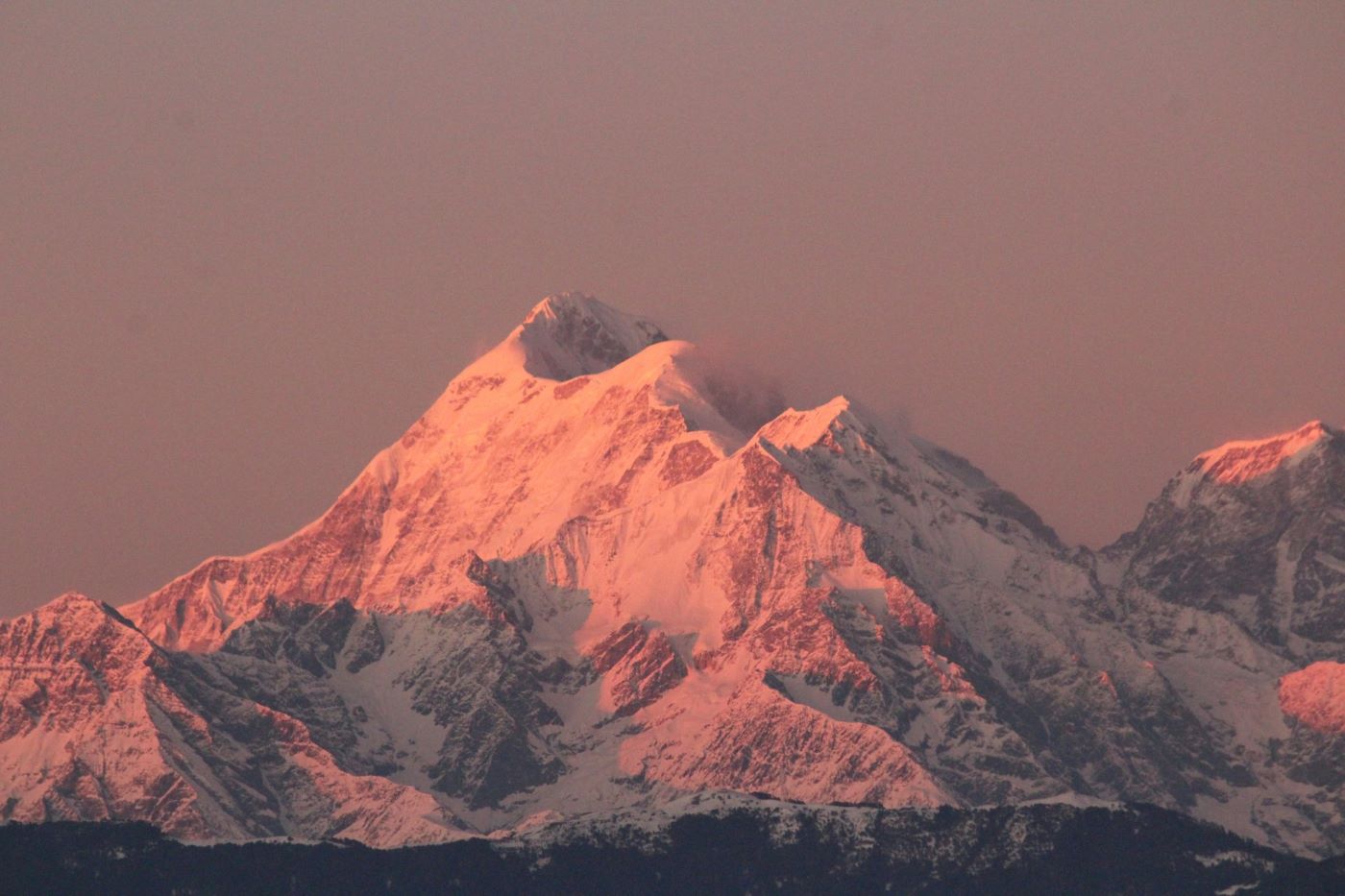
Everest base camp elevation
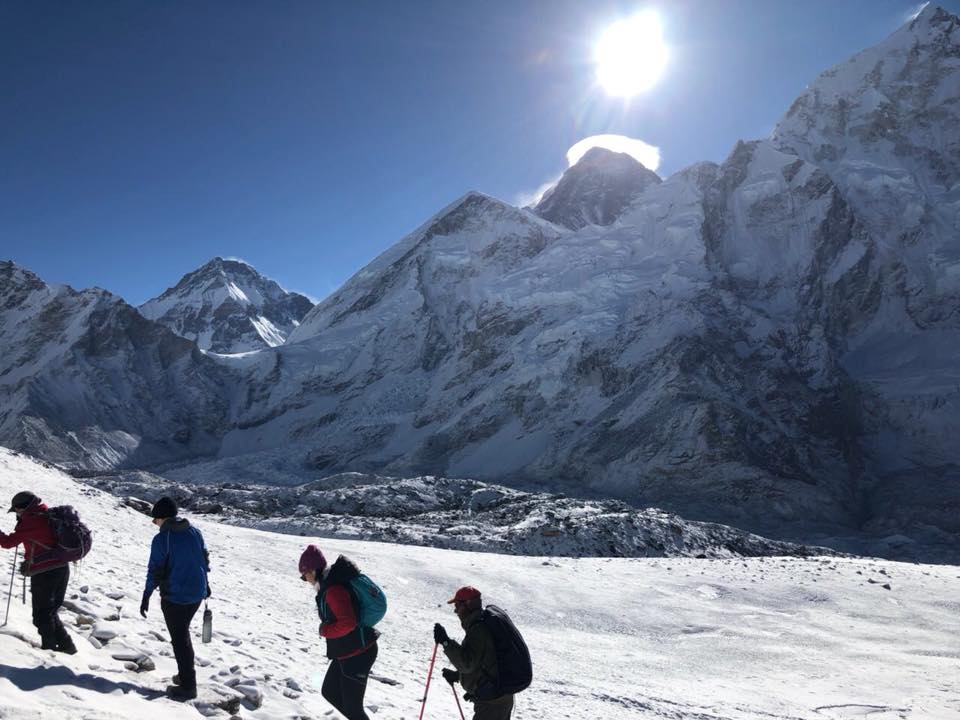 As the lifestyle and culture of the Himalayan region of Nepal are similar to that of Tibet so, you can have a slight taste of Tibetan culture as well. Likewise, one can have a significant view of the entire Himalayan range.
Everest Base Camp Elevation
The Everest Base Camp Trek is a once-in-a-lifetime experience. In this trek, one can fully experience the sublimation of nature with the stunning view of the natural landscapes, icefalls, panoramic mountain views, and massive glaciers. In an ideal world where people show interest in recreational activities, they would love to stand on the base camp of the world’s highest peak. Generally, people with good physical fitness and a strong mentality can make it to the base camp of the world’s highest peak. And among all, the views from the Kala Patthar are the most spectacular.- Stands at the base camp of the world’s highest peak at an elevation of 5364m.
- Witness the sunrise/sunset view from Kala Patthar, popular for the Everest viewpoint.
- A scenic flight to high altitude Hilary Tenzing airport at Lukla.
- Visit sherpa village and explore the culture which is similar to that of Tibet.
- Full-day exploration at Namche Bazar, the gateway to Everest Base camp trek.
- Visit Tengboche and Dingboche monasteries.
- Witness the stunning view of Khumbu Glacier and Khumbu Icefalls
- Pass through Sagarmatha National Park and explore the flora and fauna over there.
Mount Everest Details
Name: Mount Everest Tibetian name: Chomolungma Sanskrit name: Sagarmatha Elevation: 8848.86m Everest Base Camp Elevation: 5364m (17598 ft) Location: Nepal-Tibet( an autonomous China) border Temperature: -20 to -35 degree celsius 1st person to climb: Sir Edmund Hillary and Tenzing Norgay Sherpa Summit wind speed: up to 280km/h average of 1 hurricane every four daysFacts of Mount Everest
- The tallest mountain in the world
- Around 4000 attempts to the summit
- The number of successful attempts is 660
- The death rate at the Everest summit 142
- Height of the Everest is 8848.86m
- Countries visible from the summit: Nepal, Tibet, and India
- Tibetian name Chomolungmas whereas Nepalese name is Sagarmatha
- The Everest is named for George Everest, a British surveyor- General of India.
- It is believed that Everest is approximately 60 million years old
- Sir Edmund Hillary and Tenzing Norgay reached the summit in 1953.
- Eleven people died during spring expeditions in 1996.
Everest Base Camp Elevation (South)
The southern base camp is at an altitude of 5364m in Nepal. When trekkers are climbing via the southern ridge, they use the south base camp. South base camp has no proper access to road so supplies are shipped by porters, with the help of yaks. The Everest Base Camp Trek on the south at an elevation of about 17,900 feet, is one of the most preferable routes for the trekkers. More than 40000 people trek to the base camp every year. Trekkers usually fly from Kathmandu to Lukla and start their trek from Lukla to Namche Bazar, which is the gateway to the Everest Base Camp Trek. Trekkers rest here for a day and trek for another two days to Dingboche monastery. Another two or three days take them to the base camp of Everest via Gorakshep.Everest Base Camp Elevation (North)
If you want to visit the base camp from the north, you need a permit from the Chinese government and on top of the permit, you need to visit Tibet itself. However, access to the north base camp has been closed to tourists since 2019. Earlier, Lhasa could arrange such permits via travel companies as a part of a package. The north base camp is at an altitude of 5200m which can be easily accessible by bus or transportation.
Everest Base Camp Elevation in Meters and feet
The base camps to the world’s highest peak have the southern and northern sides. The southern side of the base camp is in Nepal at an altitude of 5364m (17598 ft), similarly, the Northern side of the base camp is in Tibet which is at an altitude of 5150m (16900 ft). Also, the southern base camp side is higher than that of the northern base camp side. Similarly, the southern base camp trek is popular among the trekkers where year 40000 trekkers make their trek to base camp from here. On the other hand, the base camp trek in China is located about halfway between Rongbuk Monastery and Rongbuk glaciers.Everest Base Camp Elevation Gain
There are a few major factors that trekkers need to consider before trekking to the Everest Base Camp Trek. If you combine the daily walking distance, the weight you will carry on the trek, and the lack of oxygen in your body, then you will be able to implement a correct training plan for your trek. Elevations gains are important to your training because by training you can make sure you are reaching these gains in your daily training. Here is a short breakdown of the elevation gains for the base camp trek to the world’s highest peak.Fly to Lukla
From Kathmandu, you will fly to Lukla airport. Lukla airport sits at an elevation of 2850m, (9350 ft). From the elevation of 1350m, you will be at an elevation of around 2800m. So you will gain a relatively higher elevation. From the airport, you will walk through the town and aim for Monjo but if we arrive late for the mountains we will rest at Phakding. The walking distance for the trek is around 13 km. There are lots of steps up and downs in this part of the trail.Namche Bazar
If you are trekking from Monjo, then you will start the hike with 2835m. Then you will gain an elevation of around 740m/2427ft uphill over a suspension bridge to Namche Bazaar. The shorts downhill sections will take approximately. 4 hours to reach Namche. After crossing through Jarsalle and Sagarmatha National park you will descend to a hill over another suspension bridge and hike alongside the river and ascend to the suspension bridge. From the bridge, it takes about two hours of walking up to the Namche. The walking distance for the trek is 8km.Acclimatization Day
To adjust properly to the higher altitude we will have an acclimatization day in Namche Bazaar. A Namche is at an elevation of around 3500m, we will hike up to 120m to the Sherpa museum to acclimatize. Furthermore, this is just a short 30 min hike. The team will enjoy the picturesque scenario from the museum for some hours and keep adapting to the lower level of oxygen. Similarly, one can even hike up to 460m to Sangbouche hill. The hike is all about making your body get adjusted to the new environment and low level of oxygen.Tengboche
Today we will hike from Namche Bazar and traverse the side of the mountain gaining an elevation of 260m/ 800ft. Then you will descend to 300m/984ft for lunch. After lunch, the trekking is towards the Tengboche hill which is at600m/ 1968ft. It takes around 2 hours to get to Tengboche whereas the total day trekking time is 6 hours including ascends and descends. This is another challenging trek for most people. The distance covered by the Trek is 12km.Dingboche
Today we will reach a new elevation at 4410m/ 14470ft. Starting the trek with 4410m we will first descend 110m/ 360ft to the riverside, the trail ascends to 518m/1673ft. The trail passes through Pangbouche and reaches Dingboche. The hike today takes about 6 hours covering a total distance of 12km.Acclimatization Day
Then you will have 2 days of acclimatization day in Dingboche. Today hike up to 490m/ 1600ft, spend some time there and back down to the point where you have started from. The trek takes about four hours and you will find that you are very close to the base camp. The mountains start to appear closer and in case of clear weather, you will be stunned by the view. Today, you will ascend to 3km.Lobuche
Today you will hike up to 510m/1700ft. Starting with Lobuche, you will stop at Tukla for your early lunch. After lunch, start the uphill trek which approximately takes about an hour. At the top of the Tukla pass, enjoy the break at the Everest Memorial. The incline is more uphill today. Likewise, the total hiking will be approximately 6 hours covering 12 km of the total distance.Everest Base Camp -Gorak Shep
Today is the day to start your journey to the base camp. You will be at an elevation of 5364m. You will home up 400m/ 1300ft to the Everest Base camp. The trek will be longer today. Similarly, leaving at 6 in the morning, you will be able to reach the base camp by 12 or 1 in the noon. Spend some time exploring the mountains over there. Then, from the base camp, hike back to Gorak Shep. The distance for today’s trek is 10km.Kala Patthar- Pheriche
Standing tall at Kalapatthar at an elevation of 5645m/ 18520ft, today is another special day for you. Waking up early, start the trek to Kala Patthar. You will hike up 365m/1200ft at Kala Patthar. Then descend 1127m/3700ft to Pherchie. The distance covered by the trek is 18km.Namche Bazaar
Hike down to 1000m/ 3280 ft to Namche Bazaar. The trek will be long today but will be easier because of the downhill.Lukla
Then finally hike down to 700m/2296ft and up 365m/ 1200ft to Lukla.Where is Everest Base Camp Located?
The world’s highest peak lies on the border of 2 different countries in Asia, Nepal, and China. It lies in the Mahalangur range of the Tibetian plateau known as Qing Zang Gaoyuan. On the other hand, In Nepal, lies in the Sagarmatha National Park in the Solukhumbu district. So, climbers can have access to the summit of Everest from both Nepal and Tibet. Yearly hundreds of people choose to summit Everest but very few get close to this almighty peak. So, people choose to at least make their way to the base camp where few choose their trek from Nepal as half of them choose their trek from China, Tibet. No matter where you decide to take the journey, the view offered from both sides is stunning and overwhelming. Everest Base Camp is a lifelong destination for trekkers all around the world. The base camps are major campsites at the base of the mountains. Many trekkers from all around the world who cannot make a summit to the peak directly tend to trek to the base camp. Thus, the base camp is the place from where the summit the peak begins. Likewise, the world’s highest peak has a base camp in two bordering countries Nepal and China.Nepal
Nepal is the sovereign country in South Asia covering an area of 147181 sq. km. Nepal is a landlocked country bordered by India in the east, south, and west and China in the North. Nepal has a diverse geography and is a multi-ethnic country with Nepali as the official language. Nepal is home to 8 out of the world’s 10 tallest mountains including the world’s highest peak Mt. Everest. Similarly, the basecamp to Everest is one of the most popular trekking activities in Nepal. Nepal is on the southern side of the base camp. The base camp in Nepal is at an altitude of 5364m (17598ft)China
The other country that borders Everest is Tibet which is an autonomous region of China. The Tibetan name for Everest is Chomolungma. China, officially the People’s Republic of China, is the most populous country with around 1.4 billion in the year 2019. It is the 3rd largest country in the world covering approximately 9.6 million sq. km. However, the landscape of China is vast, and diverse ranging from the Gobi and Taklamakan Deserts in the arid north to the subtropical forests in the South. China is on the Northern side of the base camp. The base camp in China is at an elevation of 5150m (16900ft).Everest Base Camp Elevation Altitude Sickness
Altitude sickness is known as acute mountain sickness occurs when people have difficulty adapting to a higher altitude where the level of oxygen is extremely low. Most cases of altitude sickness are mild that result in headaches, nausea, or dizziness. However, some people may face a fatal build-up of fluid that affects their brains and lungs. Acute altitude sickness can start from an elevation of above 2500m above sea level. Because of the risk of altitude sickness, humans need more time to acclimate themselves to a higher altitude. But because most of the travelers and trekkers are originally from lower altitudes. So, they need some time to acclimate to the higher altitude. Altitude sickness can happen to anyone and at any time above 2500m. That’s why the human body needs physical and mental fitness while trekking to a high altitude.Altitude Sickness on Northern And Southern Side
The base camps to the world’s highest peak, the southern and northern sides. The southern side of the basecamp is in Nepal at an altitude of 5364m (17598 ft). Similarly, the Northern side of the base camp is in Tibet which is at an altitude of 5150m (16900 ft). The southern base camp side is higher than that of the northern base camp side. Altitude sickness is a high-altitude area where the air is thin. If symptoms like nausea, vomiting fainting, rapid pulses, and extreme dehydration start showing you should immediately get medical help. Everest Base Camp is a very joyous and adventurous trek but it is equally dangerous as well. A person who has never been to an altitude more than 2500m, should be concerned about altitude sickness. As you go up higher, the vegetation starts to disappear slowly. Trekkers will start their journey at 1350m at Kathmandu and fly to Lukla airport at an altitude of 2800m. After Lukla, the trekkers have to pass through various places where the altitude is around 3800m, so there may be high chances of altitude sickness. Here are some of the trek that has been tried by experienced trekkers mountaineers to minimize the risk of altitude is sickness they are:Ascend Slowly
Our body needs some time to adjust to the new environment, therefore, walking slowly or ascending slowly helps the trekkers to get their bodies to acclimate.Proper Acclimatization Rest
Trek to a higher altitude must have two days of acclimatization day so that one can adjust to the surrounding environment. During accommodation day one can trek as high as they can and return to the lower altitude. This will keep your body get used to the new environment and minimize the risk of altitude sickness.Avoid Alcohol Cigarettes and Tobacco
Trekkers have to walk uphill and downhill in the Everest base camp which needs enormous physical fitness. However, consumption of alcohol, cigarettes, and tobacco can decrease water levels in the body and make you dehydrated. So it makes your heart slow and leads you to get caught by altitude sickness.Keep Yourself Hydrated
Keeping yourself hydrated is one of the best ways to minimize altitude sickness at higher altitudes. Water is the best remedy. It is recommended to hydrate your body with 500ml every half an hour while trekking.Eat Well and Plenty
Lots of people lose their appetite during the high-altitude trek. Losing appetite means constantly keeping your body weak. Eat liquid food more and having good food will increase your stamina which decreases the chances of altitude sickness.Be Physically and Mentally Prepared
Above all, you need to be physically and mentally prepared for the base camp trek. Your body is not used to the higher altitude. So keep the consequences and start trekking. Avoid negative thinking and enjoy the stunning scenario that the mountains offer.Everest Base Camp Elevation with Trekking Itinerary
Everest base camp is one of the dream destinations for trekkers all around the world. It is an ideal destination for those who want to enjoy nature and natural resources. The base camps to the world’s highest peak, the southern and northern sides. The southern side of the base camp is in Nepal at an altitude of 5364m (17598 ft). Similarly, the Northern side of the base camp is in Tibet which is at an altitude of 5150m (16900 ft).Itinerary to the Everest Base Camp from the south
Day 1: Arrival in Kathmandu Day 2: Kathmandu sightseeing Day 3: Fly from Kathmandu to Lukla, trek to Phakding Day 4: Phakding to Namche Bazar Day 5: Acclimatization day at Namche Day 6: Namche Bazaar to Tengboche Day 7: Tengboche to Dingboche Day 8: Acclimatization at Dingboche Day 9: Dingboche to Duglha Day 10: Duglha to Lobuche Day 11: Lobuche to Gorak Shep, visit Everest base camp Day 12: Gorak Shep to Kala Patthar to Pheriche Day 13: Pheriche to Namche Bazar Day 14: Namche Bazaar to Lukl Day 15: Fly to Kathmandu Day 16: Final Departure Please visit here for the detailed itinerary. The base camp to Everest is one of the most popular trekking destinations in Nepal. Many of the trekkers have set their eyes on the Everest Base Camp Trek. The base call to Everest provides a wonderful opportunity to explore the Himalayan region of Nepal as well as witness the Buddhist culture and monasteries. For those who want to explore nature and natural resources, the Everest base camp trek is one of the best destinations for them. On the base camp of the world’s highest peak, we experience astonishing mountains, get a glimpse of the mountain life of Nepal, enter Sagarmatha National park, visit Buddhist heritage sites as well as get a closet of Tibetan culture, and tradition. You will pass through various places such as Namche Bazaar, Tengboche, Dingboche, Duglha, Lobuche, etc. Get a stunning view of the Himalayan area and natural landscapes from Kala Patthar. Stand tall at an elevation of 5364m, and get close to Everest. Read more...
Read less
Read more...
Read less
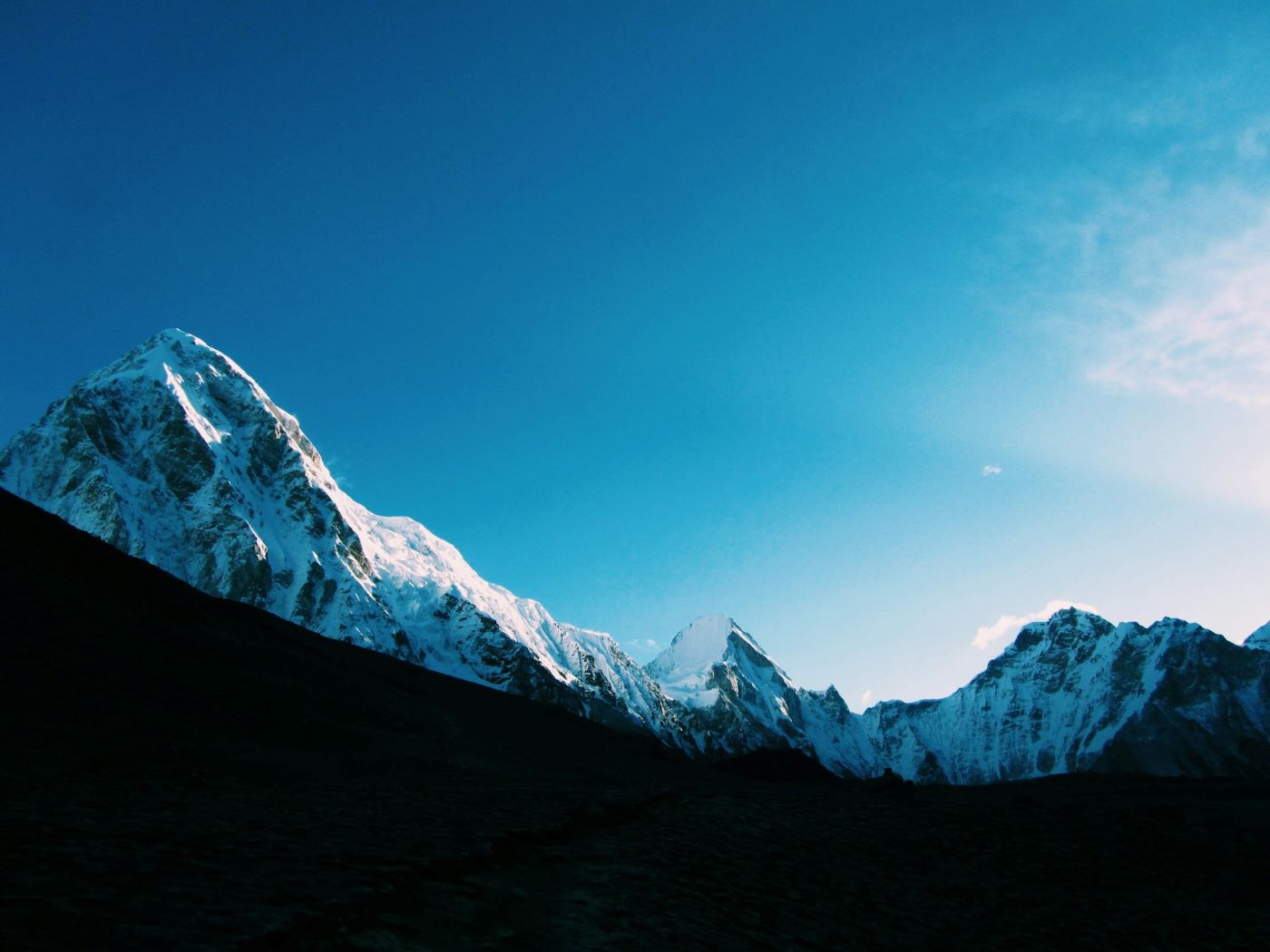
Rainbow Valley Everest
The Dark Side of Mount Everest: Rainbow Valley in Mount Everest
Rainbow Valley seems extremely intriguing and conjures up images of some exquisite and brilliant location on Mount Everest. It is a colorful valley, but it’s not as captivating as it could seem. Rainbow Valley The Death Zone of Sagarmatha is another name for Everest. Because more people die here, it is dubbed a dead zone. The area is littered with the dead bodies of those climbers who failed. Because it resembles a rainbow, the place was given the name Rainbow Valley. The dead bodies have been covered with vivid jackets of red, blue, green, and orange for a very long time. The different trash, bottles, tents, etc. In addition, the dead, appear colorful from a distance. Climbers travel to the Khumbu region every year in hopes of reaching the peak of the mighty Mount Everest. A few people never returned, while others came back after making some progress. The environment in Rainbow Everest Valley is unfavorable, with strong winds and low oxygen levels. The majority of those climbers perished close to Everest’s dead zone. Additionally, the paths leading to the peak are constrained, so a slight error sends you straight to the Rainbow Valley. Climbers must push the corpses off the trails because each step only accommodates one climber. Because recovering the dead is risky and expensive, the body count climbs as the number of fatalities does. Rainbow Valley Everest has evolved into a cemetery over time. As a result, climbers who cross Rainbow Valley Everest witness these bodies every time they pass. In the death zone, the bodies don’t decompose and are as fresh as ever thanks to the cold. However, from the initial expedition effort, people have been striving to reach the pinnacle of the All-Powerful.Everest Base Camp
Where is Death Zone In Everest
How was Rainbow Valley Formed
Why does a dead body keep sitting on Everest?
More than 200 bodies have so far taken up residence in the rainbow valley. Since the first effort to ascend Mount Everest, bodies have been piled up and are currently being piled up. Only after the Everest Expedition ends will the numbers stop increasing. The Rainbow Valley is currently getting busier and more vibrant until then. Many people wonder why the Everest death zone is filled with so many bodies. Although the solution may seem obvious, it is not feasible to save or bring the body back from Rainbow Valley. A still body must be transported safely from an altitude of 8000 meters to 5000 meters. Rescuers attempted to recover the bodies in several instances, but they never succeeded. The best course of action is to leave the body in the death zone.What is the main reason for death in the Death Zone of Everest
Overlooking all of the Himalayan mountains is the spectacular Mount Everest. Its renown as the tallest peak in the world draws climbers from all over the world. The paths live up to their infamous reputation of being dangerous and adventurous because a single mistake can quickly end a climber’s life. As a result, every step you take at an altitude of 8000 meters puts you on the verge of death. More than 5000 climbers have used the trails as of this writing, and more than 200 have perished. More of these fatalities have happened in Rainbow Valley than in any other location. The winds are strong, the oxygen level is low, and trails are narrow in the death zone. Most demises were due to avalanches (about 41.8%), Falls, AMS (about 22.2%), exhaustion, and many more. However, the death ratio has decreased from 2.2% (1970 to 1980s) to 1% (2019).What Happens to the dead bodies in the death zone on Everest
The dead bodies are permanently buried in Rainbow Valley. Although some might be recovered, about half are unrecoverable. Since the death zone is towards the peak and there is severe hurricane wind present, helicopter rescue is not suitable in this situation. It’s dangerous to bring down the corpses because of the dangerous weather, arid terrain, and winding trails. They are too strong for one person to take down, and there isn’t much room for multiple people to assist. Since recovering bodies is so impossible, the mound at Rainbow Valley Everest will only grow.The Stories of Everest Base Camp
During the Everest Expedition, climbers congregate in the base camp and make it their home for many weeks before commencing the ascent to Mount Everest; at that time, the base has a lively and enjoyable atmosphere. Climbers erected colorful tents and engaged in a variety of activities, including singing, dancing, sharing, and retelling tales. The majority of the old Everest legends that the locals have to share with the climbers center around the Rainbow Valley. The dead bodies are a recurring theme in the stories. The tales of Sleeping Beauty, Green Boots, and Hannelore Schmatz are all fascinating. Read on if you’re also intrigued by these tales:Hannelore Schmatz
German mountaineer Hannelore was the first woman to die while scaling Mount Everest. In 1979, she and her husband decided to climb the formidable Everest. They joined a team of six other climbers and five Sherpas to realize their goal of reaching the top of the tallest peak. Hannelore and American climber Ray Genet opted to spend the night with one of the Sherpas in the death zone after reaching the summit. The two climbers decided against joining the other climbers because they were too worn out. But it was a bad night because a severe snowstorm pounded their resting place. Ray Genet succumbed to hypothermia before dawn, but Hannah and the Sherpa survived the terrifying night. Though Hannah’s life had other plans, she never awoke after falling on her back at 8290 meters as they descended. Hannah’s body is still frozen, her eyes wide and her hair blowing. Years have passed since many tourists have passed by her body, yet a powerful wind has carried her over the ridge. There were reports that two climbers had attempted to rescue Hannah’s body five years after her passing, but they had also perished in the process.Sleeping Beauty
You must have remembered the fairy tale when you heard about the sleeping beauty. The fact that this narrative doesn’t have a happy ending makes it a little different. The life of Francys Arsentiev, the first American woman to summit Mount Everest without using oxygen, is told in the book Sleeping Beauty. With her spouse, she began their Everest Expedition on May 22, 1998. Like Hannah, she made it to the top, but she passed out as she descended. No one came to her aid, so she was left there for three days. A crew did eventually show up after three days, but by that point, she had developed frostbite and was in critical condition. After numerous unsuccessful attempts to tie a rope around her, they gave up and left her alone. As she lay on her back with Everest in the background, she took her final breath. She was given the nickname “sleeping beauty” by a climber because of the way she appeared to be lying down. Ian Woodall organized an expedition to find her remains and green boots in 2007. On May 23, 2007, Ian discovered her body. He performed a quick ritual before burying her remains. She resided in the Rainbow Valley from May 24, 1998, to May 23, 2007, or almost nine years, up until Ian. The climbers using the northern route can no longer see her body.Green Boots
People in EBC never fail to bring up the subject of Green Boots during story time. One of the real accounts of the Everest expedition, supported by the media as well, is this one. A cadaver wearing green boots and carrying an oxygen tank is lying on the northeast corner of the Everest trail. Yes, the name “remains” comes from his shoes. People believe that the remains belong to Indian climber Tsewang Paljor, who was reported missing in 1996. He made an effort to climb Mount Everest, but after leaving the base camp, nothing was heard from him. He was on the expedition with two other climbers, whose remains have not yet been discovered. On the other hand, as he was also climbing alone and wearing green boots, David Sharp, a Chinese mountaineer, is thought to be the person who died. But for years now, Green Boots’ body has been resting in the tiny cavern at the summit. It serves as a guide and a place to relax for other climbers. A well-known feature on the north Everest Trail is the body. French mountaineer Pierre Paper captured the first film of Green Boots on May 21, 2001. He is lying on his left side and facing the summit in the video.How long can you stay in the death zone of Everest?
Earth’s highest point is Mount Everest. Unbelievably, it climbs 29,035 feet (8850 meters) above sea level. Because of how high it is, if you stood at sea level and instantly transported yourself to the mountain’s summit, you would pass out and most likely die within 30 minutes.Some Facts About the Rainbow Valley in Mount Everest
- Since Tenzing Norgay and Edmund Hillary made the first verified ascent of Mount Everest in 1953, more than 200 climbers have perished on the mountain. In the death zone, the majority of them perished.
- An average person gets to breathe in only approximately 30% of the oxygen they typically get at sea level because of the drop in air pressure here.
- A person used to breathing at sea level will pass out in the Everest death zone without proper acclimatization in two to three minutes.
- Most climbers estimate that it will take up to 12 hours to trek the 1.72km distance between South Col and the summit of Everest due to the harsh survival conditions in the death zone.
- “Profound weariness and late times in reaching the peak are early factors related with a subsequent fatality,” according to the descriptive research “Mortality on Mount Everest.”
- Retinal hemorrhages can happen to 1 in 4 Everest climbers. Even though it normally gets better when you descend to a lower altitude, it can still be fatal in the death zone.
- One in 20 climbers who reach the summit of Everest passes away while returning to the base camp, according to an article in the ABC Catalyst.
- Most of the over 120 bodies that are frozen on the mountain are located in the Everest death zone.
- Over the years, climbers have managed to escape the danger zone and return from Everest despite these hardships.
- Where is Nepal
- 10 of the Best Everest Trekking Routes
- Why do Everest Base Camp Trek in 2023
- Kathmandu Valley Tour
Conclusion
The Rainbow Valley and Death Zone are two of Mount Everest’s negative features. Like anything else, Mount Everest has a dark side. Overthinking them may have negative effects on your mental well-being and motivation. Accept the truth and get mentally and physically ready since it will only prevent you from accomplishing your goals. Since the beginning, Rainbow Valley Everest has existed in the region. Many climbers have reached the top of Everest via Rainbow Valley, so you can too. Professional climbers who have reached other peaks but not Everest are undoubtedly losing out on an incredible trip. Read more...
Read less
Read more...
Read less
Mount Everest sleeping beauty
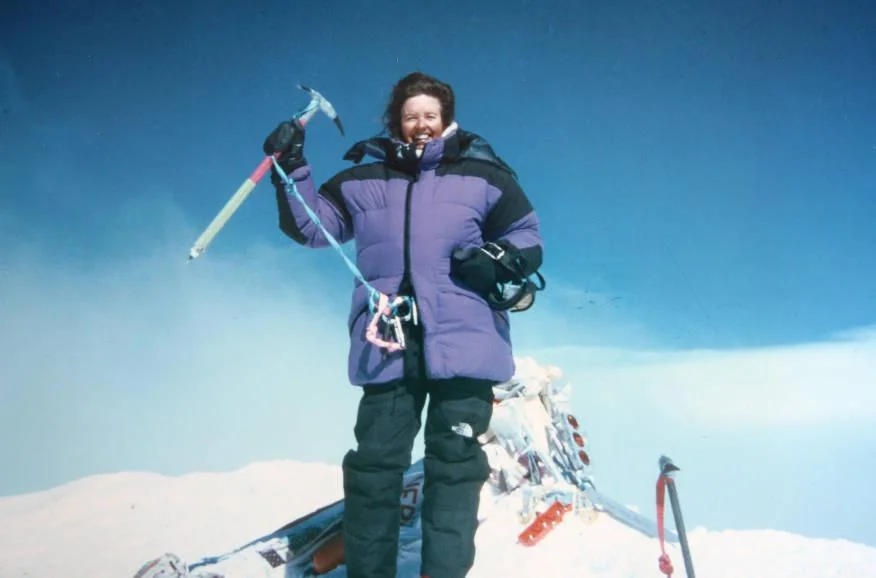 The highest peak on the list of ardent mountaineers globally is Mt. Everest (8848.86m). One of the mountaineering world’s most remarkable accomplishments is climbing the majestic summit. There are numerous uplifting accounts of successful ascents of the imposing summit. There are, however, a lot of eerie, terrible stories about the mountain. Similarly, in this article, we will be talking about the tragic death of Mount Everest Sleeping Beauty.
These accounts primarily concern climbers who have died while attempting to scale Everest. The terrible tale of Francys Arsentiev stands out among other tragic tales. Francys Arsentiev, an American mountain climber who passed away on Mount Everest in 1998, was also known as the mountain’s Sleeping Beauty.
She succeeded in ascending the highest mountain in the world, but she passed away on the way back to the base camp. The Everest climbers affectionately referred to Francys as the “sleeping beauty.” On May 22, 1998, she successfully ascended Mount Everest, becoming the first American woman to do so without the use of supplemental oxygen. Sergei Arsentiev, her spouse, was also a member of the Everest expedition crew.
On the way back, the weather in the Everest region deteriorated dramatically. Since she had not brought extra oxygen, their shortage of oxygen was the main factor in their demise. She was unable to descend due to the poor weather, and she was forced to stay on the mountain for several days. The unfortunate incident also resulted in Sergei’s passing a day later.
Additionally, the climbers in the area should take note of this catastrophe. The tale is now widely shared among mountaineers. This tale teaches students about the dangers and pitfalls they need to watch out for in the Himalayas. It would also enable them to take the proper safety measures when climbing Everest.
The highest peak on the list of ardent mountaineers globally is Mt. Everest (8848.86m). One of the mountaineering world’s most remarkable accomplishments is climbing the majestic summit. There are numerous uplifting accounts of successful ascents of the imposing summit. There are, however, a lot of eerie, terrible stories about the mountain. Similarly, in this article, we will be talking about the tragic death of Mount Everest Sleeping Beauty.
These accounts primarily concern climbers who have died while attempting to scale Everest. The terrible tale of Francys Arsentiev stands out among other tragic tales. Francys Arsentiev, an American mountain climber who passed away on Mount Everest in 1998, was also known as the mountain’s Sleeping Beauty.
She succeeded in ascending the highest mountain in the world, but she passed away on the way back to the base camp. The Everest climbers affectionately referred to Francys as the “sleeping beauty.” On May 22, 1998, she successfully ascended Mount Everest, becoming the first American woman to do so without the use of supplemental oxygen. Sergei Arsentiev, her spouse, was also a member of the Everest expedition crew.
On the way back, the weather in the Everest region deteriorated dramatically. Since she had not brought extra oxygen, their shortage of oxygen was the main factor in their demise. She was unable to descend due to the poor weather, and she was forced to stay on the mountain for several days. The unfortunate incident also resulted in Sergei’s passing a day later.
Additionally, the climbers in the area should take note of this catastrophe. The tale is now widely shared among mountaineers. This tale teaches students about the dangers and pitfalls they need to watch out for in the Himalayas. It would also enable them to take the proper safety measures when climbing Everest.
You May Be Interested In:
- How To Plan An Everest Base Camp Trek
- Solo Everest Base Camp Trekking
- Best Luxury Treks In Everest Region
- Everest Panorama Trek
- Everest Three Passes Trekking
- Everest Gokyo Chola Trek
Who Is Mt. Everest, Sleeping Beauty
What’s More
The expedition was difficult because of the numerous weather difficulties they faced. The team had to repeatedly postpone their trip due to the strong gusts they faced. Due to the lack of clear weather, they were forced to remain on the mountain. They were so exhausted from the lack of air that they had lost all mental capacity. They had to spend a total of 3 days above 8000 meters, also referred to as the danger zone. There being separated on the way to the base camp was another problem. Framcys’ husband left for the base camp, and she lost her way. Sergey returned to look for her while armed with oxygen this time. Additionally, the Uzbek team, who was also on an excursion to Mount Everest, discovered Francis’ body. She was found to be only partially cognizant. She ended herself in these circumstances because of the low oxygen levels and the frostbite. They made an effort to assist her and carried her a short distance, but they were unable to help her get to the base camp. In addition, two more mountaineers discovered them but were unable to risk their lives in an attempt to save them. They were unable to assist her because of the still difficult and chaotic weather. Due to these unfortunate circumstances, Everest Sleeping Beauty passed away nearby. Sergei also perished while returning to find Francis when he fell off a cliff. The climbers nicknamed Francys “Mt. Everest Sleeping Beauty” because of how pure white she appeared as a result of frostbite.People Also Ask
Why Do We Need Supplemental Oxygen For Climbing Everest?
The Mount Everest trip is a strenuous Himalayan adventure. You get the nicest views of the snow-capped mountains from the lovely walk. Everest Peak, which is located above 8000 meters, has very little oxygen and air pressure. Therefore, to reach the summit safely, climbers must carry extra oxygen. For the high-altitude ascent, you will require the right oxygen, even though you will acclimate along the way. You’ll be able to breathe normally and avoid getting acute mountain sickness thanks to the oxygen. If acute mountain sickness is not treated promptly, it can be severe and even fatal. Some climbers experience cognitive decline and develop the inability to reason. Sherpas and others who climb mountains can travel without oxygen. Due to the climate, they have an innate capacity that allows them to accomplish this. On the other hand, climbers require this extra oxygen as they make their way to the summit of the highest mountain in the world.Do Many Climbers Climb Without Supplementary Oxygen?
Everest expeditions have a history of ascending Mount Everest’s summit without using oxygen. These trips are also undertaken to establish benchmarks and keep records. However, not all climbers will find this to be optimal or advised. Until you safely descend, the expedition to Mount Everest is unsuccessful. Many climbers have perished while attempting to reach the top without additional oxygen.What Led To The Death Of Francys Arsentiev Or Mt. Everest’s Sleeping Beauty?
The harsh weather conditions on the summit of Mount Everest made the team of Francys unable to descend. Hence, she had to stay in the summit area for long hours leading to hypothermia and frostbite. Francys Arsentiev suffered from a slow death for several nights. The lack of oxygen in the high-altitude region diminished her cognitive abilities significantly. Hence, Francys perished on her way down to the base camp of Mount Everest. Francys Arsentiev, an American mountain climber who passed away on Mount Everest in 1998, was also known as the Mount Everest Sleeping Beauty.What Is Everest Graveyard?
The tallest Himalayan mountain peak in the world, Mount Everest, is a magnificent mountain peak. However, since it became accessible to mountaineers in 1977, more than 300 climbers have perished. On the mountain itself, perhaps 30 of them are dead. As a result, the mountain is frequently referred to as a vertical cemetery. On Mount Everest, avalanches, snowstorms, blizzards, and earthquakes are the main killers.What Is The Mount Everest Death Zone?
What Is Rainbow Valley Everest?
Spectrum Valley Everest is not as joyful as it may seem. The term is derived from the brightly colored tents, boots, and jackets used by the climbers who perished on Everest. Since the body doesn’t decompose at high altitudes beyond 8000 meters, They continue to be undamaged and visible to other climbers as a result. Because of these factors, this area is sometimes referred to as Rainbow Valley Everest.What Happens To The Corpses On Everest?
The mountaineers’ bodies are immovably buried in the mountain. Helicopters are unable to fly above Mount Everest because it is difficult to recover the bodies. There are many difficulties, such as ferocious gale-force winds and others. No one can bring the bodies while putting their lives in danger. Additionally, it costs about USD 70,00 to retrieve deceased bodies off the mountain. On rescue missions, many climbers have also perished. As a result, the bodies are still on Everest.What Is The Primary Cause Of Death On Mount Everest?
The Everest region is renowned for its severe weather patterns and climatic conditions. Climbers are in hazardous conditions with uncertain weather. Life-or-death scenarios can arise from even the smallest error. Avalanches and falls are the main causes of death on Mount Everest. The following conditions are frostbite and hypothermia.Everest Base Camp Trek And Everest Expedition
Everest Trek
Another amazing mountain climbing excursion in the area is the Everest trek. The stunning landscapes provide you with an incredible peak-climbing trip. All ardent climbers have it on their bucket lists to scale the highest mountain peak in the world. Before reaching the top of Mount Everest, you must pass through several camps. You get the most scenic view of the Everest Mahalangur Himalayas on the trek. To finish their trek without difficulty, climbers must acclimate and train properly. The greatest trekking supplies and gear should be purchased by the climbers for their ascent of Mount Everest. We provide Everest expedition programs as well as the Everest Base Camp trek. With these packages, you can have a secure and convenient Himalayan vacation through Unique Path Treks and Expeditions.Last Words Of Francys Arsentiev’s
The final words of Francys Arsentiev, “Don’t leave me,” would haunt them for the rest of their lives. Don’t leave me, please. They had little choice but to continue on the perilous terrain of the world’s highest mountain in minus 30 degrees Celcius temperature.World Tallest Mountain Peaks:
How tall might “Mount Everest” possibly be? Yes, it is the highest peak on Earth. It is situated in the Mahalangur Himal sub-range of the Himalayas and has an elevation (snow height) of 8,848.86 m, or 29,031.7 ft, above sea level. It is situated between the Chinese autonomous province of Tibet and Nepal. And the proper answer to the question of how long it takes to climb Mount Everest is that it takes roughly 50 to 65 days of adventure to conquer Everest. Up until 1852, it was believed that Kangchenjunga, which is located in a region of the Himalayas and has an elevation of 8,586 meters (28,169 feet), was the highest mountain in the world. However, in 1856, this assumption was disproved, and “Mount Everest” was formally recognized as the highest mountain in the world. However, Kangchenjunga is currently ranked as the third-highest mountain peak in the world. In the Karakoram Range in Northern Jammu and Kashmir, close to the Pakistani and Chinese borders, there is one more mountain summit. With an elevation of 8,611 meters, this is the second-tallest mountain peak on the entire planet (28,252.69 ft). Because it was the second peak to be detected in this range, it is also known as K2. It also goes by the name “Dapsang.” Henny Haversham Godwin-Austen, an English geographer, was the first to map this area in the 19th century; as a result, it bears his name. In the parent mountain ranges of the Himalayas, Godwin-Austen, the second-highest mountain peak in the world after “Mount Everest,” was obtained in this way.The Real Journey Of Climbing Mount Everest:
It was May 1998, and the two of them Francys Arsentiev and her husband Sergei Arsentiev arrived at the base camp of Mount Everest. Furthermore, on May 17, they had begun their real mission towards Mount Everest and ascended from the Advance base camp to the North Col on the next day, they covered a distance of 7700 m i.e. (25,262 ft). On May 19, they made a few more steps upward and reached 8,200 meters or 27,000 feet. They stayed at Camp 6 after this. On that day, Sergei said over the radio that they were prepared and would start their final task on May 20 at one in the morning. The following day, May 20, they attempted their highest point endeavor after spending the night at Camp 6, but sadly they had to turn back because their headlamps had failed. On May 21, they were only able to climb 50–100 meters more before returning to Camp 6.During This Journey
On this journey, they completed two failed missions including the summit attempt to conquer Mount Everest without the use of additional oxygen. However, it’s likely that everything happens for a reason, which we refer to as the “Game of God.” Just imagine for a moment how it may be if you were on such a high mountain top, climbing, and surrounded by ice with doubtful weather conditions, little available oxygen, and no suitable food, but you are continuing to fulfill your fantasy by battling nature. Without oxygen and at high elevations, ascending was incredibly risky. They both went slowly and had to spend one night at more than 8000 meters because of oxygen issues (26,000 feet). However, in the evening they were divided and alone. The following morning, Sergei returned down to the camp to check on his wife. He also understood that she could have to live in a risky location at a high peak, so he also came to seek her oxygen and medication. From that point on, what exactly transpired is unknown, although an Uzbek mountaineering team that attempted to conquer Everest on May 23 claimed to have contacted Francis Arsentiev and discovered her in a semi-conscious state. She was unable to move on her own due to frostbite and a lack of oxygen. The Uzbek crew looked after her and made attempts to assist her up until they ran out of oxygen. Francys Arsentiev, an American mountain climber who passed away on Mount Everest in 1998, was also known as the Mount Everest Sleeping Beauty.What’s More
The Uzbek squad transported Francis Arsentiev to camp that evening when Sergei Arsentiev was still alive, but that was the last time Sergey was seen alive. Francis Arsentiev was still alive at the moment. On their journey to the summit of Everest on the morning of May 24, British climber Ian Woodall, South African Cathy O’Dowd, and a few more Uzbeks ran into Francys Arsentiev. The Uzbek team had left her there the previous evening, but she was now there. But even though Sergei Arsentiev’s ice ax and rope were found nearby, he was mysteriously nowhere to be found. Both Woodall and O’Dowd abandoned their summit attempts for more than an hour to assist Francys Aresntiev. She was in extremely bad shape at the time, but they had to abandon her and return to camp because of the icy weather and dangerous altitude. They found her lying on her side with the guideline still attached, and she had already passed dead. At the age of 40, she abandoned her only son. Her body earned the moniker “Sleeping Beauty of Mount Everest” as a result. Jack Norton, a mountaineer from the “Meloreand Ervin” expedition, discovered Sergei’s body underneath the hill’s face a year later, in 1999. They claim Sergei died after falling while attempting to shield Francis from danger. Read more... Read less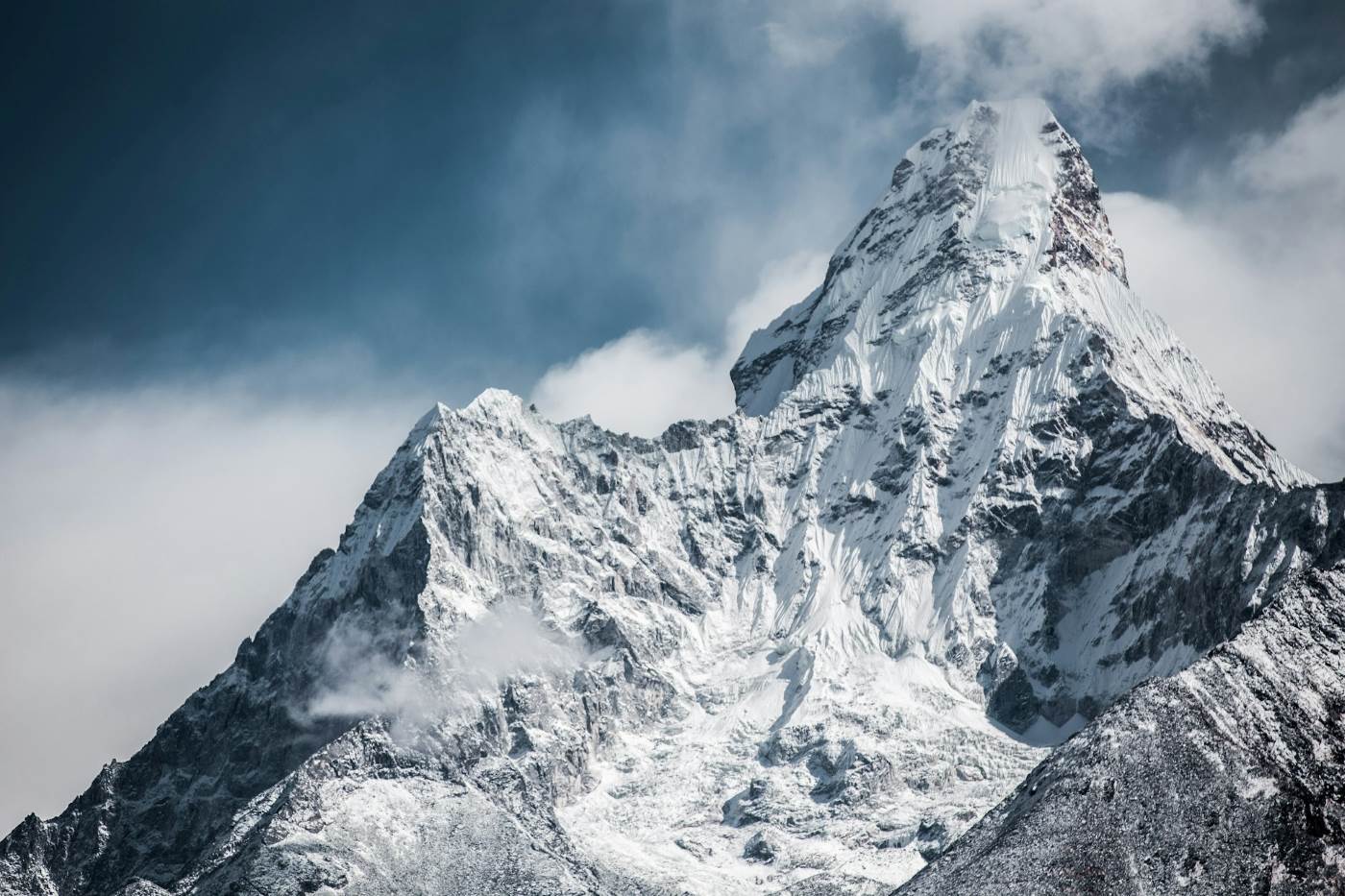
Everest base camp
Overview of Everest Base Camp
The Everest Base Camp trek is a bucket-list experience for trekkers and mountaineers alike. Located in the Khumbu region of Nepal, the trek offers stunning views of Himalayan giants like Everest, Lhotse, Nuptse, and Ama Dablam. Trekkers traverse through diverse terrain, from lush forests and picturesque villages to rugged mountain passes and glacial moraines, all while immersing themselves in the rich Sherpa culture and hospitality.Highlights of the Trek
- Scenic Beauty: The trek starts from Lukla, where a thrilling flight lands you amidst breathtaking mountain vistas. As you hike through the Sagarmatha National Park, you'll encounter rhododendron forests, suspension bridges adorned with prayer flags, and panoramic views of snow-capped peaks.
- Namche Bazaar: This bustling Sherpa town is a cultural hub along the trekking route. Explore its markets, monasteries, and museums to learn about Sherpa history and traditions.
- Tengboche Monastery: Perched atop a hill with Everest looming in the background, Tengboche Monastery offers a serene setting for spiritual contemplation and stunning sunrise views.
- Everest Base Camp: The ultimate destination, Everest Base Camp (5,364 meters), provides a close-up view of the Khumbu Icefall and a sense of accomplishment as you stand at the foot of Everest.
- Kala Patthar: A side trip to Kala Patthar (5,550 meters) rewards trekkers with arguably the best panoramic view of Everest and surrounding peaks, especially at sunrise.
Logistics and Itinerary
The typical Everest Base Camp trek itinerary spans around 12-14 days, allowing for acclimatization and enjoyment of the journey. Key stops include Phakding, Namche Bazaar, Dingboche, Lobuche, Gorak Shep, and finally, Everest Base Camp. Accommodation options range from basic teahouses to more comfortable lodges, providing essential amenities for trekkers.Best Time to Trek
The best time to trek to Everest Base Camp is during the pre-monsoon (spring) season from March to May and the post-monsoon (autumn) season from late September to November. These periods offer stable weather, clear skies, and excellent visibility, ideal for mountain views and comfortable trekking conditions.Safety and Preparation
Safety is paramount during the Everest Base Camp trek. Adequate physical fitness, proper gear including sturdy trekking boots, warm clothing layers, and a good quality sleeping bag are essential. Acclimatization days are built into the itinerary to prevent altitude-related issues. Hiring an experienced guide ensures navigation through challenging terrain and adds cultural insights to your journey.Conclusion: A Life-Changing Adventure
In conclusion, the Everest Base Camp trek is a life-changing adventure that combines natural beauty, cultural immersion, and personal achievement. Whether you're a seasoned trekker or a first-time explorer, the journey to Everest Base Camp promises unforgettable experiences and lasting memories in the heart of the Himalayas.Trekking Packages
Everest base camp trek
Annapurna base camp trek
Chulu west peak climbing
Everest three pass trekking
manaslu trek
Everest gokyo ri trek
Read more... Read less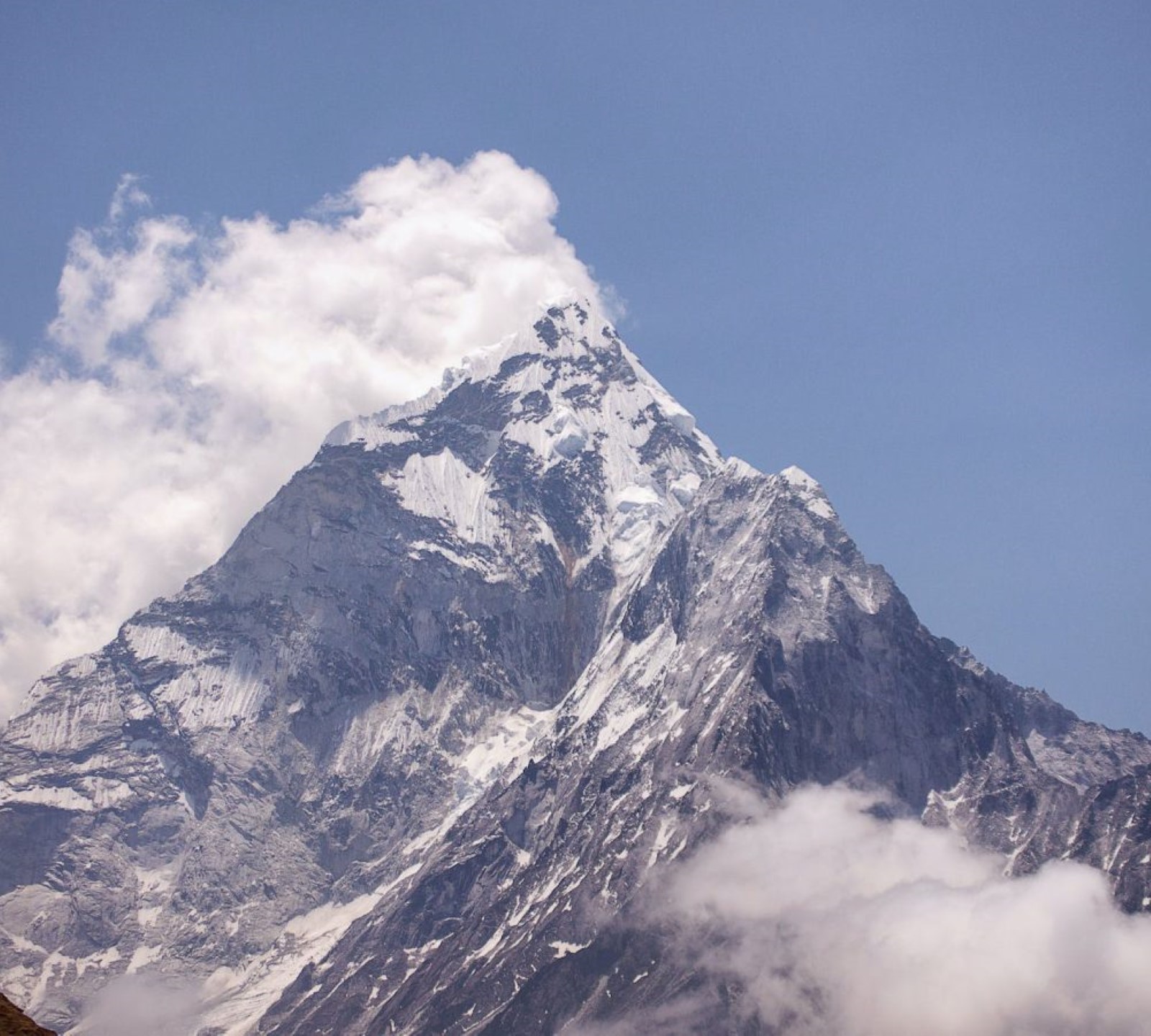
Everest Base Camp Trek: A Complete Guide-2024
Introduction:
Welcome to the exhilarating world of the Everest Base Camp Trek, a captivating journey that beckons adventurers from far and wide. Nestled amidst the awe-inspiring Himalayan range, this iconic trek offers a once-in-a-lifetime opportunity to witness the grandeur of Mount Everest, the tallest peak on the planet. Nepal, with its stunning landscapes and Himalayan charm, has long been a magnet for trekkers and mountaineers seeking to immerse themselves in the natural splendor of the region.The Route and Itinerary:
Embarking on the Everest Base Camp Trek is a mesmerizing journey that unfolds day by day, immersing trekkers in the breathtaking landscapes and cultural wonders of the Khumbu region. Here’s a detailed day-by-day itinerary that highlights key locations and landmarks along the route:Day 1: Arrival in Kathmandu
The journey begins in Kathmandu, Nepal’s vibrant capital city. After arrival, trekkers have a chance to explore the city’s cultural heritage, visiting ancient temples, bustling markets, and vibrant streets.Day 2: Fly to Lukla and Trek to Phakding

Day 3: Trek to Namche Bazaar

Day 4: Acclimatization Day in Namche Bazaar
This day is dedicated to acclimatization. Trekkers can explore the town, visit the local markets, and hike to nearby viewpoints, gaining altitude gradually to adapt to the thinning air.Day 5: Trek to Tengboche
The trail winds through rhododendron forests and crosses suspension bridges en route to Tengboche. This picturesque village houses the famous Tengboche Monastery, offering breathtaking panoramic views of Everest, Ama Dablam, and other peaks.Day 6: Trek to Dingboche

Day 7: Acclimatization Day in Dingboche
Another acclimatization day allows trekkers to explore Dingboche’s surroundings and hike to Nangkartshang Peak for mesmerizing views of Everest, Lhotse, and Makalu.Day 8: Trek to Lobuche

Day 9: Trek to Gorak Shep, Visit Everest Base Camp

Day 10: Hike to Kala Patthar and Descend to Pheriche
The early morning hike to Kala Patthar presents a stunning sunrise view over Everest and the surrounding peaks. After capturing the breathtaking scenery, trekkers descend to Pheriche for a well-deserved rest.Day 11: Trek to Namche Bazaar
The return journey commences, taking trekkers back to Namche Bazaar through picturesque landscapes and charming villages.Day 12: Trek to Lukla
The final leg of the trek leads back to Lukla, where trekkers bid farewell to the mountains and celebrate the completion of an unforgettable adventure.Day 13: Fly to Kathmandu
A morning flight from Lukla brings trekkers back to Kathmandu, where they can reflect on the incredible journey and relish the memories of their Everest Base Camp Trek. The Everest Base Camp Trek is a wondrous blend of natural beauty, cultural encounters, and personal triumphs, making it a once-in-a-lifetime experience for adventurers seeking to conquer the roof of the world.Preparation and Packing:
Embarking on the Everest Base Camp Trek requires meticulous preparation and packing to ensure a safe and enjoyable journey. Here’s a comprehensive guide to the essential gear, clothing, and health considerations for this awe-inspiring adventure:Essential Gear and Equipment:
- Sturdy and comfortable hiking boots with good ankle support are crucial for the varied terrain.
- A well-fitted backpack with a capacity of 30-40 liters to carry personal belongings and essentials.
- Sleeping bag rated for cold temperatures to ensure a comfortable rest at higher altitudes.
- Trekking poles provide stability and reduce strain on knees during steep ascents and descents.
- High-quality headlamp with spare batteries for navigating in the dark and early morning starts.
- Water purification tablets or a water filtration system to ensure safe drinking water throughout the trek.
- Durable and waterproof duffel bags protect gear from moisture during domestic flights and porters’ transport.
Packing Tips for Clothing and Accessories:
- Layering is key to managing varying weather conditions. Pack moisture-wicking base layers, insulating mid-layers, and a waterproof and windproof outer shell.
- Quick-drying trekking pants and convertible pants are versatile options for varying temperatures and terrain.
- Thermal gloves, a warm hat, and a buff or neck gaiter to protect against cold and windy conditions.
- Sunglasses with UV protection and sunscreen with a high SPF to shield from intense mountain sun.
- A wide-brimmed hat or cap to shield from the sun during long hours of trekking.
- Comfortable and moisture-wicking socks to prevent blisters and keep feet dry.
- High-altitude trekking requires warm clothing. Pack down jackets, down vests, and fleece layers for added warmth.
- Lightweight and compact rain gear to stay dry during unexpected rain showers.
Health and Fitness Preparations:
- Consult with a healthcare professional before embarking on the trek to ensure that you are in good physical health for high-altitude trekking.
- Regular cardiovascular exercises such as hiking, jogging, or cycling can help improve stamina and endurance.
- Practice hiking with a loaded backpack to simulate the conditions of the trek and build strength.
- Acclimatization is essential for a successful trek. Plan for acclimatization days during the journey to adjust to higher altitudes gradually.
- Carry a basic first-aid kit with essential medications and supplies like pain relievers, blister pads, and antiseptic creams.
Best Time to Trek:
Trekking in the Everest region is a year-round possibility, but the timing of your journey can significantly impact your overall experience. Each season offers unique advantages and challenges, making it essential to consider the different trekking seasons before planning your Everest Base Camp adventure:Spring Season (March to May)
Spring is one of the most popular and favorable seasons for the Everest Base Camp Trek. Additionally, the months of March to May bring mild temperatures, blooming rhododendron forests, and clear skies, offering trekkers breathtaking views of the surrounding peaks. Moreover, the advantages of trekking in spring include pleasant weather, ideal trekking conditions, and vibrant landscapes. However, being the peak trekking season, trails and teahouses may be crowded, and advance bookings are recommended.Autumn Season (September to November)
Autumn is another favored season for the Everest Base Camp Trek. September to November brings stable weather, crisp air, and excellent visibility, making it perfect for capturing stunning mountain vistas. Trekkers can enjoy comfortable temperatures during the day and clear skies, which enhances the overall trekking experience. However, like spring, autumn is also a busy season, and popular teahouses can fill up quickly.Monsoon Season (June to August)
The monsoon season brings heavy rainfall to the Everest region, making it the least preferred time for trekking. The disadvantages of trekking during monsoon include slippery trails, leeches, and limited mountain views due to cloudy skies. Landslides and flight cancellations can also disrupt travel plans. While this season is not ideal for trekking, it can be an excellent time to explore the lush landscapes and unique cultural experiences of the lower altitudes.Winter Season (December to February)
Winter brings cold temperatures and occasional snowfall to the Everest region. The advantages of trekking in winter include fewer crowds and a quieter atmosphere along the trails. However, the cold temperatures can make high-altitude trekking challenging, and certain passes might be closed due to heavy snow. Winter trekkers must be well-prepared for freezing conditions and be cautious of potential hazards.Recommended Months
For a comfortable and safe Everest Base Camp Trek experience, the best months are generally spring (March to May) and autumn (September to November). These seasons offer stable weather, pleasant temperatures, and breathtaking views, creating an ideal environment for an unforgettable journey. However, if you prefer a less crowded trek or wish to experience the monsoon landscapes, other months may also be considered. Before setting out on the trek, always check the latest weather forecasts and trail conditions, and plan accordingly. Remember, the best time to trek is a personal choice, and each season has its unique charm in the ever-changing landscape of the Everest region.Challenges and Safety:
The Everest Base Camp Trek is a thrilling adventure, but it also comes with its fair share of challenges. Trekkers must be well-prepared to face the high-altitude environment and unpredictable weather conditions. Here’s a comprehensive overview of the potential challenges and essential safety measures to ensure a safe and successful journey:High Altitude and Acclimatization:
One of the most significant challenges of the Everest Base Camp Trek is the high altitude. Furthermore, as trekkers ascend, the air becomes thinner, resulting in lower oxygen levels. Consequently, this can lead to Acute Mountain Sickness (AMS), a condition that affects trekkers differently. Therefore, it is crucial to include acclimatization days in the itinerary to give the body time to adapt to higher altitudes gradually.Unpredictable Weather:
The weather in the Himalayas can be highly unpredictable, especially in higher altitudes. Sunny days can quickly turn into rain or snow showers. Trekkers must be prepared for changing weather conditions and always carry waterproof and windproof clothing to stay dry and warm.Physical Endurance and Stamina:
The Everest Base Camp Trek involves long hours of walking on rugged terrain, including steep ascents and descents. Trekkers must have adequate physical endurance and stamina to cover daily distances and overcome challenging sections along the trail.Remote and Limited Facilities:
The trek takes trekkers into remote mountain regions where facilities can be basic. Access to medical facilities may be limited in higher altitudes, so carrying a well-stocked first-aid kit is essential.Safety Measures and Precautions:
To ensure a safe and enjoyable Everest Base Camp Trek, trekkers should keep the following safety measures in mind:- Acclimatization: Plan acclimatization days at higher altitudes to allow the body to adjust to reduced oxygen levels gradually.
- Hydration: Stay well-hydrated throughout the trek, as proper hydration helps reduce the risk of AMS.
- Listen to Your Body: Pay attention to any signs of altitude sickness, such as headaches, dizziness, or nausea. Descend to a lower altitude if symptoms persist or worsen.
- Stay on the Designated Trail: Follow the marked trekking trail and avoid shortcuts or unmarked paths to reduce the risk of getting lost.
- Trek with a Guide or Group: Hiring a licensed guide or trekking with a group can enhance safety and provide valuable support and knowledge throughout the journey.
- Dress in Layers: Layer your clothing to adapt to changing weather conditions, ensuring you stay warm and dry.
Information about Acute Mountain Sickness (AMS):
AMS is a potential concern during the Everest Base Camp Trek, especially as trekkers reach higher altitudes. It is caused by the body’s inability to adapt quickly to reduced oxygen levels at high elevations. Symptoms of AMS include headaches, nausea, fatigue, and shortness of breath. Prevention of AMS involves proper acclimatization, staying hydrated, and avoiding rapid ascents. If symptoms of AMS develop, it is crucial to descend to a lower altitude immediately. Carrying medications such as Diamox can be helpful, but it should only be used as a preventive measure under the guidance of a healthcare professional.Cultural and Natural Highlights:
The Everest Base Camp Trek is not only a journey through stunning landscapes but also a cultural immersion into the unique heritage of the Sherpa people and the natural wonders of the Sagarmatha National Park. Let’s delve into the rich cultural and natural highlights that make this trek an unforgettable experience:Rich Culture and Traditions of the Sherpa People:
The Everest region is deeply intertwined with the rich culture and traditions of the Sherpa community. Additionally, as trekkers traverse through charming Sherpa villages, they are greeted with warm smiles and a sense of hospitality that reflects the heart of the Himalayas. Moreover, Sherpas are renowned for their mountaineering prowess and have been essential guides and climbers on Everest expeditions for decades. Furthermore, trekkers have the opportunity to witness firsthand the Sherpa way of life, experience their traditional dance and music, and gain insight into their Buddhist practices and beliefs.Significant Monasteries and Religious Sites:
The trail to Everest Base Camp is adorned with numerous monasteries and religious sites that hold deep spiritual significance for the local communities. Furthermore, the Tengboche Monastery is one such prominent site, perched atop a hill with panoramic views of Everest and Ama Dablam. Moreover, trekkers may have the opportunity to witness the daily rituals and ceremonies performed by the resident monks, adding a spiritual dimension to the journey.Diverse Flora and Fauna in Sagarmatha National Park:
The Sagarmatha National Park, a UNESCO World Heritage Site, is home to a diverse range of flora and fauna that thrives in this pristine high-altitude environment. As trekkers ascend through the park, they encounter lush rhododendron forests, silver fir, juniper, and blue pine trees. The region is also known for its elusive wildlife, including the Himalayan Thar, musk deer, and various species of pheasants. Birdwatchers can spot colorful avian species like the Danphe (Nepal’s national bird) and the majestic Lammergeier.Unique Alpine Flora:
As trekkers approach higher elevations, they enter the realm of the unique alpine flora, where only resilient plant species can survive. These alpine meadows burst with vibrant hues during the spring, carpeting the landscape with wildflowers and dwarf rhododendron blooms.Pristine Glacial Lakes:

Guided vs. Solo Trek:
The choice between joining a guided group and trekking solo is a crucial decision that can greatly impact your Everest Base Camp experience. Each option offers unique advantages and challenges, and it ultimately depends on your preferences, experience level, and comfort with the unknown. Let’s explore the pros and cons of both choices and share the personal experiences of trekkers who have opted for each option:Guided Trek:
Pros:
- Safety and Support: Joining a guided group provides an added layer of safety and support. Experienced guides are well-versed in the terrain, weather conditions, and potential risks, ensuring a safer trekking experience.
- Local Knowledge and Insights: Trekking with a guide offers the opportunity to gain insights into local culture, traditions, and wildlife from someone intimately familiar with the region.
- Group Camaraderie: Being part of a guided group fosters a sense of camaraderie among trekkers, providing a support system during challenging sections of the trek.
- Logistical Convenience: The trekking company takes care of logistics, permits, accommodations, and meals, allowing trekkers to focus on the journey without worrying about the details.
Cons:
- Limited Flexibility: Being part of a guided group may mean adhering to a fixed itinerary, leaving less room for spontaneous detours or additional exploration.
- Cost: Guided treks generally come at a higher cost due to the inclusion of services and support.
Solo Trek:
Pros:
- Complete Freedom: Trekking solo offers the freedom to set your own pace, itinerary, and rest days, allowing you to fully immerse yourself in the experience at your own leisure.
- Personal Challenge: Solo trekking can be a deeply personal and rewarding challenge, pushing you to rely on your own skills and decision-making abilities.
- Cultural Immersion: Traveling alone often opens up opportunities for deeper connections with local communities, fostering a more authentic cultural immersion.
Cons:
- Safety Risks: Trekking solo carries inherent safety risks, especially in remote and high-altitude areas. Quick access to help or assistance may be limited in case of emergencies.
- Logistics and Planning: Organizing permits, accommodations, and meals can be more challenging and time-consuming without the support of a trekking company or guide.
- Loneliness: Trekking alone can sometimes be lonely, particularly during long stretches of solitude on the trail.
Personal Experiences:
Some trekkers who have chosen guided groups share that having a guide offered peace of mind, as they felt safer and more informed about the surroundings. Tips for Choosing the Right Trekking Company or Guide:- Research and Reviews: Look for reputable trekking companies with positive reviews and testimonials from previous clients.
- Experience and Expertise: Choose guides with extensive experience in leading Everest Base Camp treks and ample knowledge of the region.
- Safety Measures: Inquire about the safety protocols and emergency procedures followed by the trekking company.
- Group Size: Consider the group size and ensure it aligns with your preferences for group dynamics and personal attention.
- Budget and Inclusions: Compare the costs and services offered by different trekking companies to find the best fit for your budget and needs.
Budget and Cost:
The Everest Base Camp Trek is a dream journey for many, but understanding the expenses involved is crucial for planning a successful and affordable trip. Here’s a breakdown of the expenses for the Everest Base Camp Trek, along with a cost comparison between guided and solo treks, and tips for budget-conscious travelers:Breakdown of Expenses for the Everest Base Camp Trek:
- Flights: The major expenses for international travelers are flights to Kathmandu, Nepal, and a domestic flight from Kathmandu to Lukla, the starting point of the trek.
- Permits: Trekkers need two permits – the Sagarmatha National Park Permit and the TIMS (Trekkers’ Information Management System) Card.
- Accommodation: Tea houses along the trek route provide basic lodging facilities at varying costs.
- Meals: Food expenses include breakfast, lunch, and dinner at tea houses or lodges. Prices increase as you ascend to higher altitudes due to transportation costs.
- Guide and Porter (if applicable): Hiring a licensed guide or porter incurs an additional cost, but they provide valuable support and assistance during the trek.
Cost Comparison between Guided and Solo Treks:
- Guided Trek: The cost of a guided trek typically includes permits, domestic flights, accommodation, meals, guide fees, and sometimes, porter fees. Guided treks can range from $1200 to $2500 or more, depending on the services offered, group size, and duration of the trek.
- Solo Trek: Solo trekkers have more control over their expenses, but they still need to cover the costs of permits, domestic flights, accommodation, meals, and any additional gear or equipment. Solo treks can cost anywhere from $800 to $1500 or more, depending on personal preferences and choices.
Tips for Budget-Conscious Travelers:
- Plan in Advance: Booking flights and accommodations early can help secure better deals and save costs.
- Travel in Shoulder Season: Consider trekking in the shoulder seasons of spring (March to May) or autumn (September to November) when the weather is favorable, and the trails are less crowded.
- Skip Expensive Extras: Avoid unnecessary expenses and opt for standard meals and accommodations instead of luxury options.
- Carry Snacks and Water Purification: Bringing snacks and water purification tablets can save money on tea house meals and bottled water.
- Share Costs: If trekking with others, consider sharing costs for guides and porters, which can reduce individual expenses.
Experiences and Stories:
The Everest Base Camp Trek is a transformative journey. It leaves trekkers with indelible memories and a profound sense of achievement. Let’s explore some real-life experiences and testimonials that capture the essence of this extraordinary adventure:Testimonial
“My journey to Everest Base Camp was a life-altering experience. Additionally, the raw beauty of the Himalayas, the warmth of the Sherpa community, and the camaraderie among fellow trekkers created an indelible mark on my heart. Moreover, standing at the base of the world’s highest peak was an awe-inspiring moment that words cannot fully describe.”A Serendipitous Encounter
During the trek, I met a seasoned mountaineer named Raj, who had summited Everest multiple times. He generously shared his wisdom and insights, making the journey even more meaningful. Our chance meeting was serendipitous, as he inspired me to push my boundaries and embrace the mountains with newfound fervor.Finding Inner Strength
As the trail got steeper and oxygen scarcer, doubts crept into my mind. But with the support of our encouraging guide, Tenzing, and the resilience of my fellow trekkers, I tapped into a well of inner strength I never knew existed. Each step became a triumph, and I learned that true strength lies in perseverance and a steadfast spirit.Overcoming Fears
Crossing the treacherous Khumbu Icefall was a daunting prospect. But with expert guidance and determination, I mustered the courage to navigate through the icy labyrinth. Conquering that fear instilled a newfound sense of self-belief, empowering me to tackle challenges beyond the mountains. The Everest Base Camp trek was a rollercoaster of emotions, pushing me to my limits and beyond. The memories of this extraordinary adventure will forever remain etched in my soul. It will inspire me to embrace life’s greatest adventures fearlessly.Inspiration for Readers:
The Everest Base Camp Trek is more than just a physical journey; it’s an odyssey of self-discovery, connection, and perseverance. The experiences and stories of trekkers highlight the transformative power of the mountains, inspiring readers to undertake their own adventures. Furthermore, the mountains beckon, inviting you to embrace the unknown, challenge your limits, and discover the strength within. Additionally, the Everest Base Camp Trek is a canvas where dreams are painted and souls are ignited. Moreover, from the majestic peaks to the warm smiles of the Sherpa people, every step unveils a new chapter of the journey. Whether you seek adventure, personal growth, or a chance to forge lifelong friendships, the mountains have something extraordinary in store for you. You May Be Interested In:- Gokyo Lake Trek Difficulty
- Can you fly to Everest Base Camp?
- Is Helicopter to Mount Everest Possible?
- Solo Everest Base Camp Trekking
Conclusion
In conclusion, the Everest Base Camp Trek is a remarkable journey that captivates the hearts of adventurers from around the world. From the majestic peaks to the rich Sherpa culture, every step of the trek offers a tapestry of experiences that stay etched in the memories of those who embark on this extraordinary adventure. Whether you choose to join a guided group or trek solo, the mountains provide a backdrop for personal growth, connection, and self-discovery. As trekkers stand at the base of the world’s highest peak, a sense of awe and accomplishment envelops them. Additionally, this leaves them forever transformed by the grandeur of the Himalayas. Moreover, the Everest Base Camp Trek is not just a destination; it’s a profound journey of the soul. Furthermore, it is inspiring each traveler to embrace the unknown and savor the triumphs that lie beyond the horizon.Trekking Packages
Everest base camp trek
Annapurna base camp trek
Chulu west peak climbing
Everest three pass trekking
manaslu trek
Everest gokyo ri trek
Read more... Read less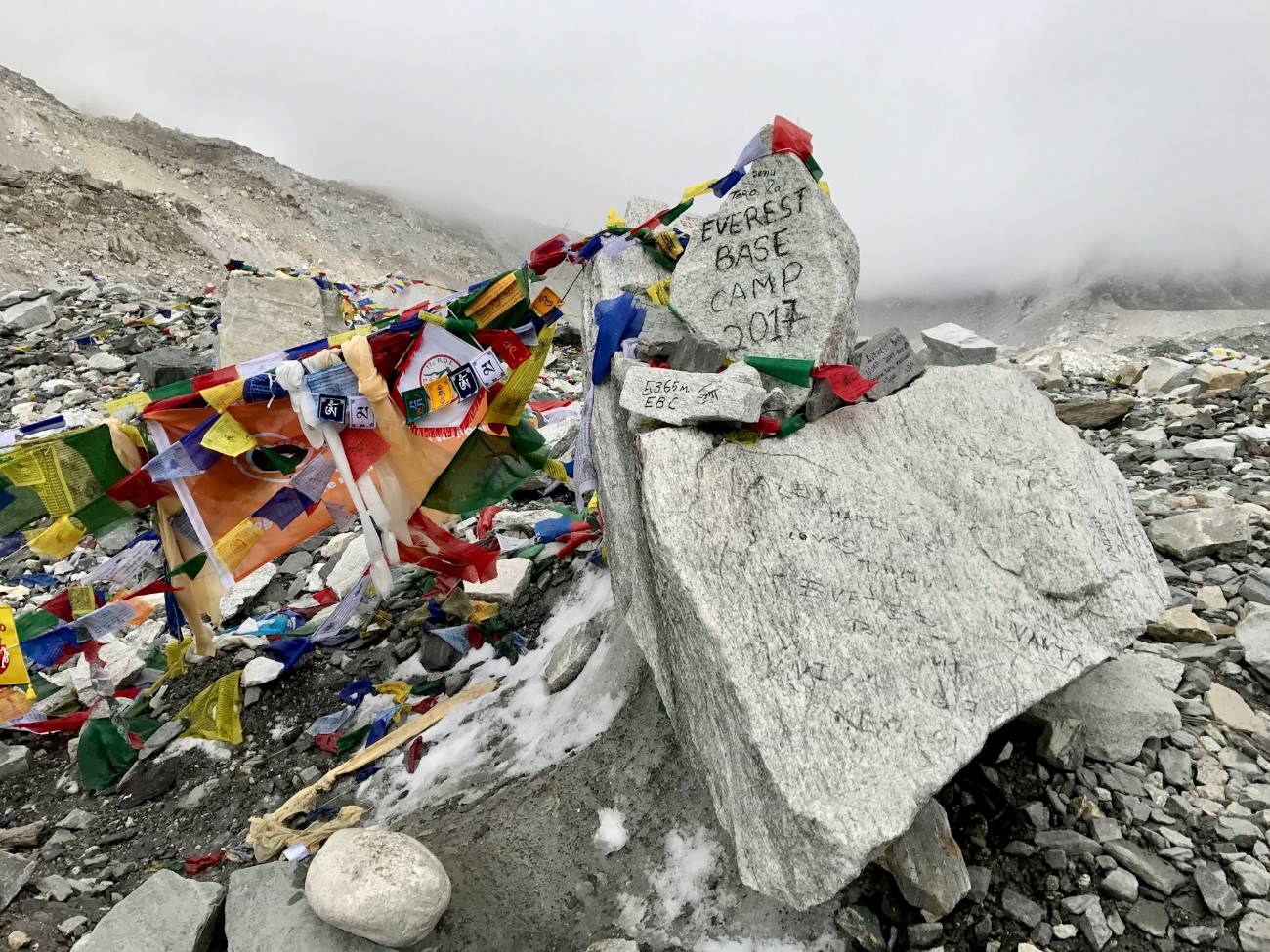
Best time for ebc trek
Everest Base Camp (EBC) beckons adventurers with its majestic beauty and challenging trails. But before you embark on this unforgettable journey, selecting the perfect time is crucial. This blog delves into the insights to unveil the seasons that offer the most favorable conditions for your EBC trek.
Peak Season Splendor: March to May and September to November
- Clear Skies and Pleasant Temperatures: These months boast minimal rainfall, making the trails clear and minimizing the risk of encountering monsoon downpours.
- Moderate Temperatures: Temperatures hover around comfortable levels, ensuring a pleasant trekking experience without the bone-chilling cold of winter.
- Unveiling the Majestic Himalayas: Clear skies present breathtaking panoramic views of the Himalayas, including the crown jewel, Mount Everest.
Understanding the Nuances of Each Peak Season:
- Spring (March to May): Witness the landscape come alive with vibrant wildflowers and witness the pre-monsoon lushness. Be prepared for slightly higher chances of encountering occasional rain showers.
- Autumn (September to November): Embrace the crisp mountain air and the postcard-perfect dry season. This period is generally considered the most popular trekking window due to the exceptional visibility.
Choosing Your Ideal Season:
- Favor moderate temperatures and blooming landscapes? Opt for the spring season.
- Prioritize crystal-clear skies and the classic autumnal charm? Plan your trek for the fall months.
Beyond the Peak Seasons:
- Winter (December to February): While the trails witness fewer crowds, the temperatures plummet significantly, demanding proper winter gear and potentially encountering challenging weather conditions. This season is best suited for experienced trekkers who can navigate the harsher conditions.
- Summer (June to August): The monsoon season brings heavy rainfall, making the trails muddy and potentially treacherous. However, the lower number of trekkers can be appealing to some. Just be sure to come prepared for the wet conditions.
Remember: Regardless of the chosen season, be prepared for unpredictable mountain weather. Packing layers and versatile clothing is essential for adapting to sudden temperature changes.
Pro Tip: Consult a professional trekking company for personalized recommendations and insights based on your preferences and fitness level. Their expert guides can answer your questions and help you choose the itinerary that best suits your needs.
Embrace the Adventure:
With the right planning and the knowledge of the ideal season, your EBC trek can be a truly transformative experience. Lace up your boots, choose your perfect season, and get ready to conquer the world's most awe-inspiring mountain base camp!
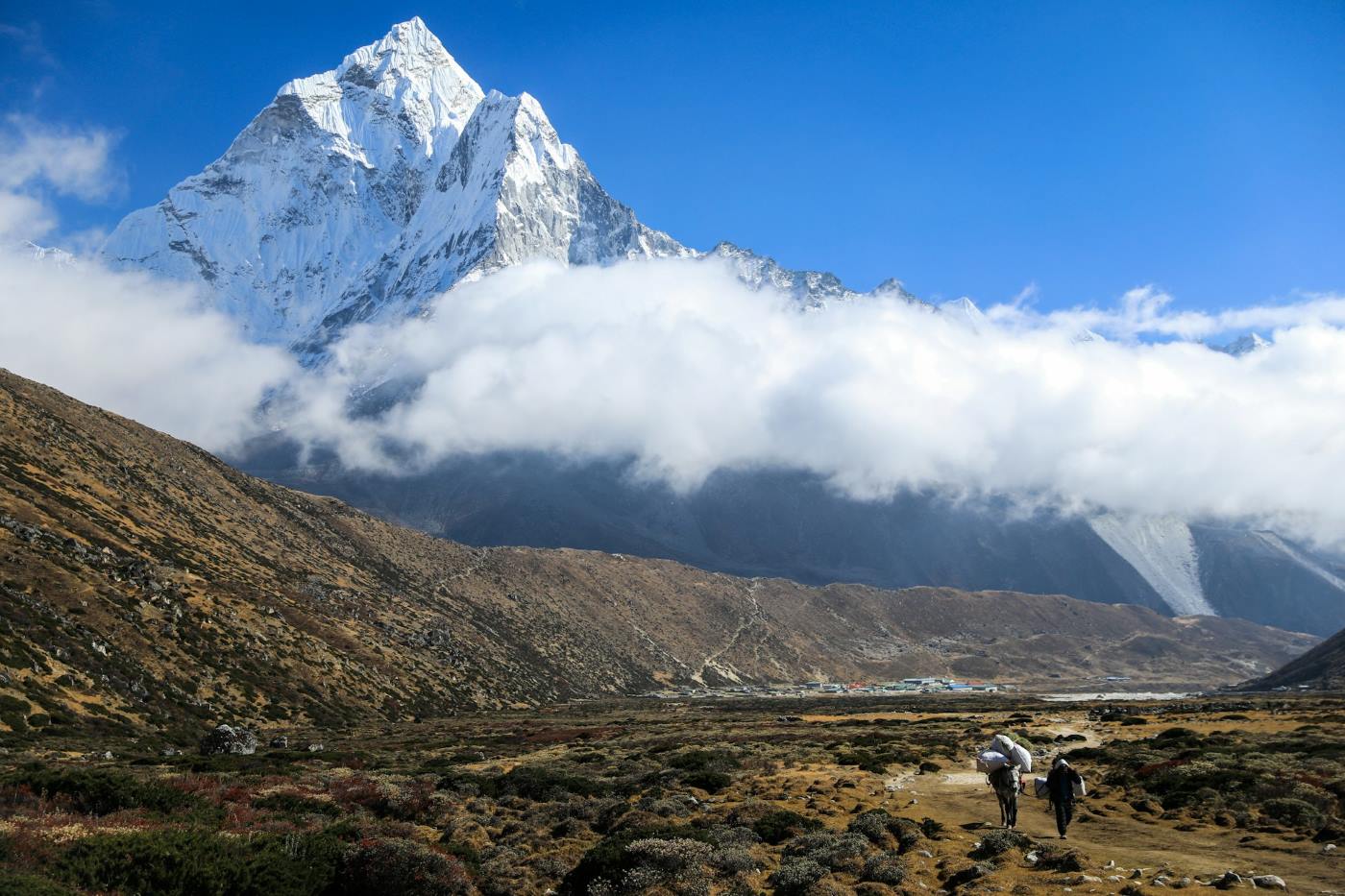
Places to see in everest
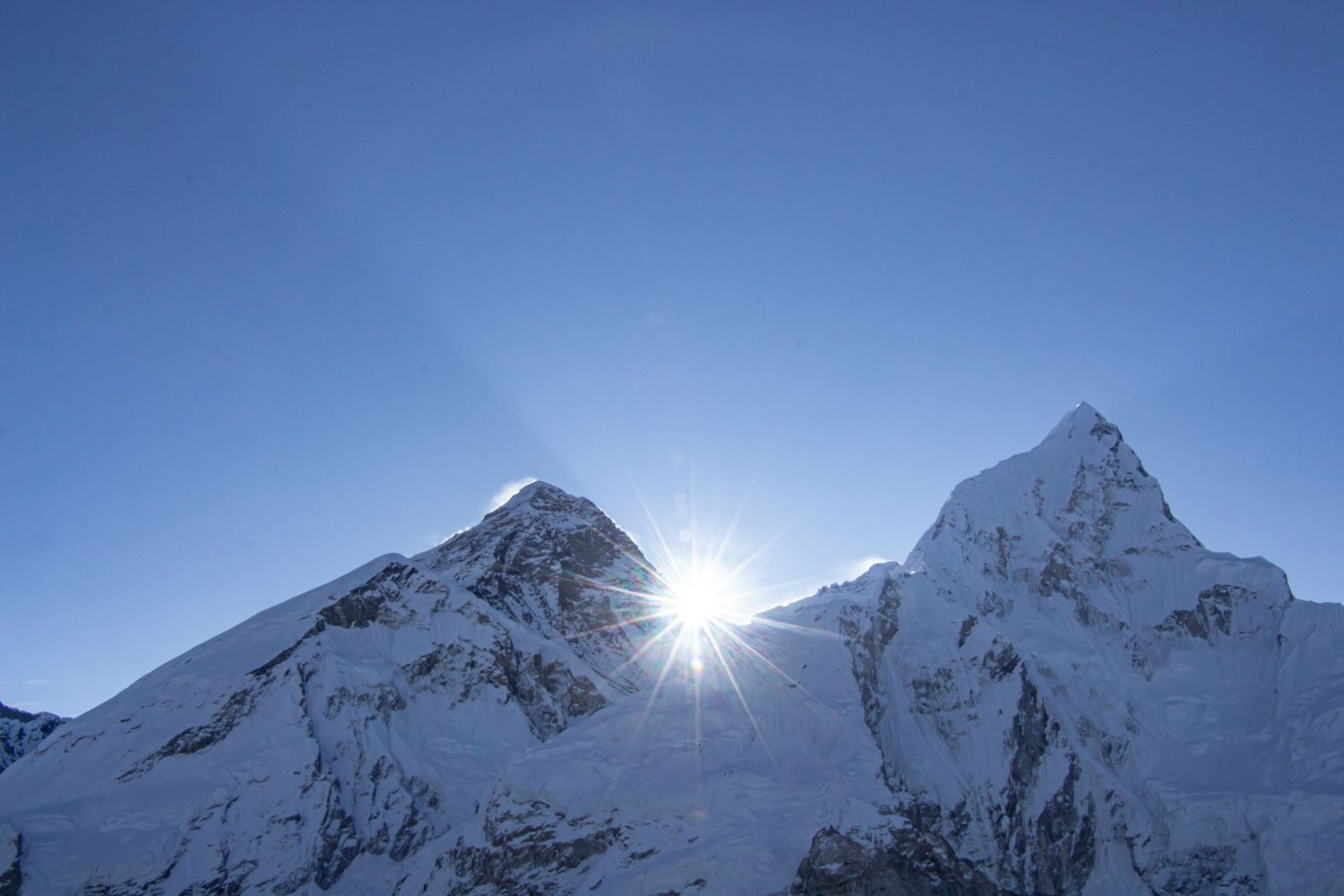 FAQ
FAQ
abc trekking
ac trekking
everest base camp
Trekking Packages
Everest base camp trek
Annapurna base camp trek
Chulu west peak climbing
Everest three pass trekking
manaslu trek
Everest gokyo ri trek
Read more... Read less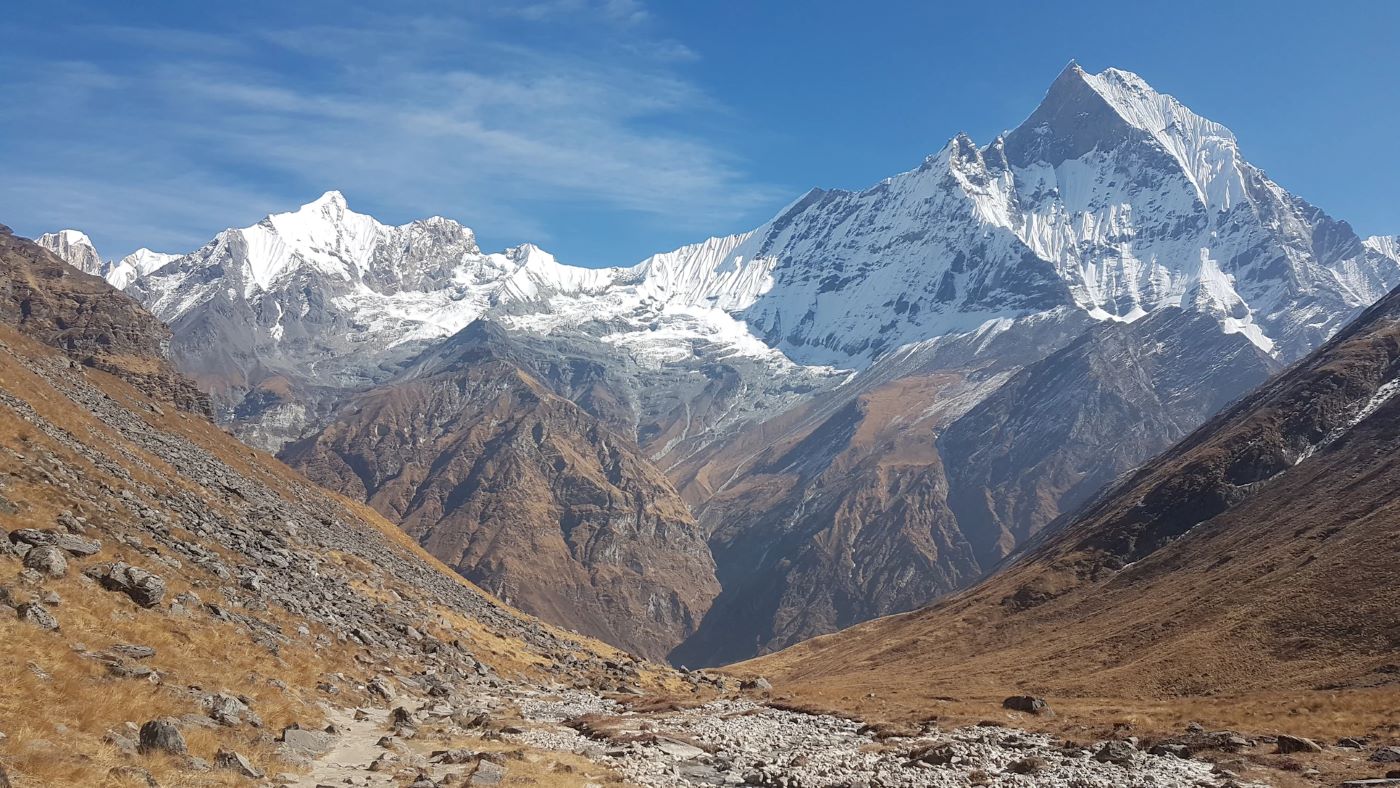
Ac trekking
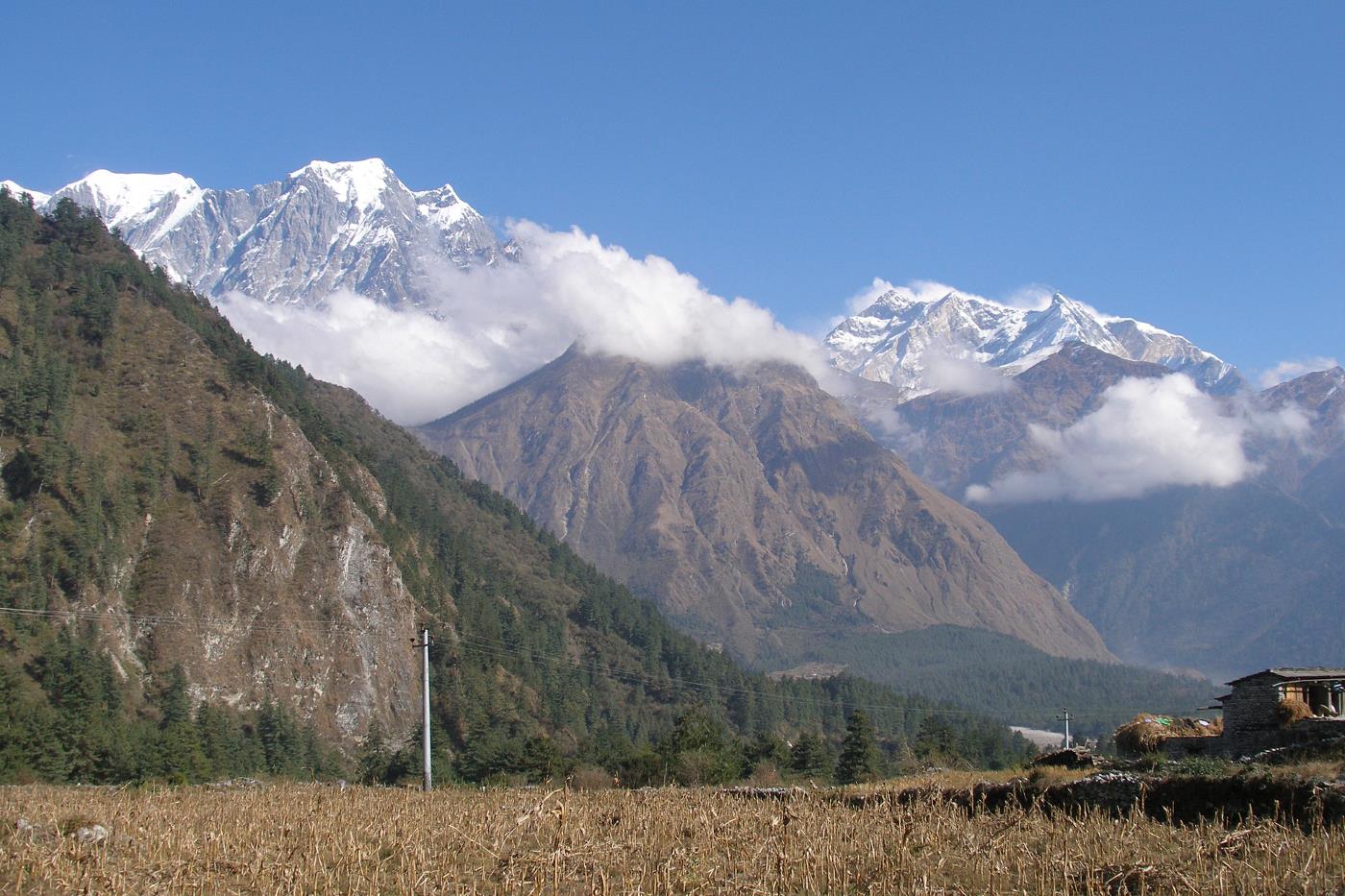
FAQs
Q.How difficult is the Annapurna Circuit trek? The Annapurna Circuit trek may lie in a remote region of the Himalayas making it challeinging but achievable and absolutely worth your time. Q.Is Annapurna Base Camp harder than Everest? Everest Base Camp treks are usually above 5,000m are thus making it more challenging than the Annapurna Base Camp trek. In Higher altitudes region there is lower oxygen levels therefore hikes must be careful and always talk to their guide if any problem occurs. Temapurture is also colder as you move through higher altitude. Q.What is the difference between Annapurna Circuit and ABC trek? The Annapurna Base Camp trek is shorter as it only take 7 to 9 days to complete .Which makes the Annapurna Circuit is longer and more challenging than the Annapurna Base Camp trek. Q.Can a beginner climb Annapurna? Well, now is the time to make a plan and set the goal. With some training, preparation and a good team around you, it's a goal that's achievable for so many. If you want to get started on an “easier” trip, we think that Annapurna Base Camp is the perfect trek for beginners. similar blogs abc trekking famous peaks in nepalTrekking Packages
Everest base camp trek
Annapurna base camp trek
Chulu west peak climbing
Everest three pass trekking
manaslu trek
Everest gokyo ri trek
Read more... Read less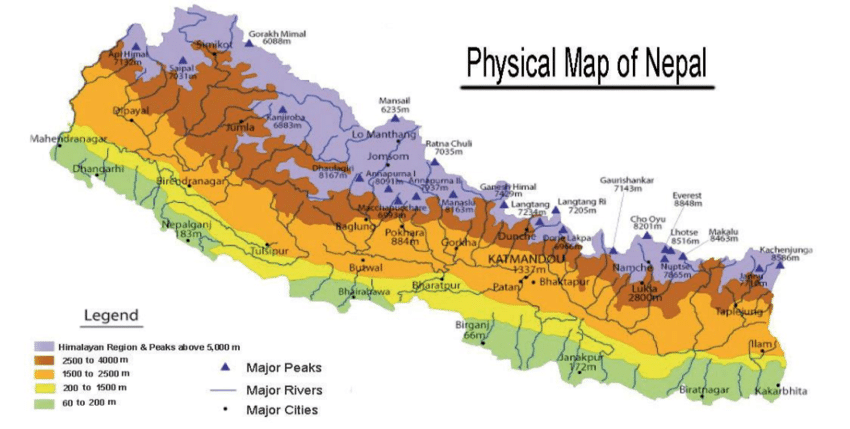
Travelling in Nepal
Nepal, situated in the lap of Himalayas, is a serene landlocked country in South Asia. Nepal is well renowned all over the world for its natural diversity, cultural richness, breathtaking landscapes, tall towering peaks and ancient architectural monuments. Nepal, the home of eight of the world's fourteen highest peaks, including the recognizable Mount Everest, is widely associated with the powerful Himalayas. In addition to drawing hikers and mountaineers, this hilly landscape provides an amazing setting for the nation's distinct fusion of spirituality and customs. Beyond the Himalayas, the nation's natural beauty may be found in its verdant forests, placid lakes, and wildlife sanctuaries. With hiking, mountaineering, white-water rafting, paragliding, and other activities, Nepal is a paradise for adventure seekers. Travelers from all over the world are treated to a singular and immersive experience that is sure to stay with them forever - the breathtaking scenery and the inviting hospitality of the Nepalese people.
Nepal's numerous ethnic groups, each with its own language, festivals, and customs, demonstrate the country's rich cultural diversity. People of all diverse religion and castes are seen residing in Nepal with religious harmony. This tolerance is reflected in the cultural landscape of the nation, where churches, mosques, stupas, and temples coexist side by side. Sacred locations like Pashupatinath, Swayambhunath, and Lumbini are frequented by pilgrims of several religions, demonstrating tolerance and respect for diverse religious customs. Nepal offers a captivating travel experience through a region of varied landscapes, vibrant culture and warm hospitality. Here are some recommended travel destinations for the visitors to make the best out of their possible time in Nepal:
Kathmandu Unveiled: A Tour into the Heart of Nepal’s Cultural Haven
Kathmandu, the capital city of Nepal, is located in the country’s centre. Kathmandu, being one of the busiest and populated cities in Nepal, is a stunning valley encircled by the towering Himalayas on all sides. Kathmandu valley is easily accessible for the visitors because of Tribhuvan National Park. The favorable seasons for visiting Kathmandu are considered to be during September to November with a pleasant weather, excellent view of the mountains and a variety of Nepalese festivals being celebrated during this period or during spring with a moderate temperature and a great visibility of the mountains. Three important cities can be found within the valley of Kathmandu: Kathmandu, Lalitpur, and Bhaktapur. The Chandragiri Hills, Pulchowki, Shivapuri Hills, Nagarjun, Champadevi, and other hills surround the Kathmandu Valley. The native population of the Kathmandu Valley is known as the Newars. But as of right now, it appears to be home to a wide variety of communities, including Brahmins, Chhetris, Tamangs, Gurungs, and Magars. Therefore, a broad variety of culinary options are available to tourists in the Kathmandu Valley, such as popular Tibetan meals like Thukpa, laphing, Thakali set, Nepali thali set, and so forth, as well as Newari cuisine items like Bara, Yomari, Yela, Aila, Gundruk, and Newari Khaja set. As the capital of Nepal, Kathmandu provides a huge range of lodging options, including hotels, lodges, guesthouses, and resorts, to suit any traveler's demand and budget. These are the valley's must-see locations and activities. The highlights of this tour, with valley’s must-see locations and activities include:
- Explore the magnificent Newari architecture at the well-preserved Patan Durbar Square after starting your adventure at Kathmandu Durbar Square, a UNESCO World Heritage Site.
- Experience the spiritual atmosphere of Nepal's largest stupa, Boudhanath Stupa, and see Hindu cremation customs at the revered Pasupatinath Temple by the banks of the Bagmati River.
- Climb the stairs of Swayambhunath Stupa to get a broad view of the Kathmandu Valley and to see the playful monkey population. Afterward, ride the cable car to Chandragiri Hills to see breathtaking vistas and the revered Chandragiri Temple, devoted to Lord Shiva.
- Take in Newari delicacies like momos and bara, stroll through the colorful alleyways of Thamel for shopping and a bustling atmosphere, and take in the historic grandeur of Bhaktapur Durbar Square, which is well-known for its Juju Dhau, a unique variety of curd.
- Relax in the serene ambiance of the neoclassical European-style Garden of Dreams after taking a hiking excursion to Shivapuri National Park to see butterflies, leopards, and Himalayan Black Bears.
- Discover the rich cultural and archeological legacy of Nepal by visiting Hanuman Durbar Square, Narayanhiti Palace, and The National Museum, which features a wide range of relics and historical objects.
- Take a leisurely boat journey to the calm Barahi Temple located in the center of Phewa Lake.
- Indulge in spirituality and embrace the sacred atmosphere of Bindhyabasini Temple.
- See the stunning dawn over the Himalayas from the well-known Sarangkot viewpoint.
- Enjoy thrilling adventures such as zip-lining, paragliding, and bungee jumping to elevate your adrenaline levels.
- Visit architectural marvels like the World Peace Pagoda and the International Mountain Museum, as well as natural wonders like Devi's Fall, Gupteshwari Gupha, and Chameri Gupha.
- Indulge in adventurous and enthralling jungle safaris through various ways including elephant safaris, jeep safaris, and guided walks.
- Immerse into the rich Tharu culture engaging in vibrant Tharu dances, music and feasts along with the exploration of traditional lifestyle and architecture of Tharu community.
- Engage in an adventurous canoe ride or a boat tour in Rapti river along with rafting, cycling and ziplining.
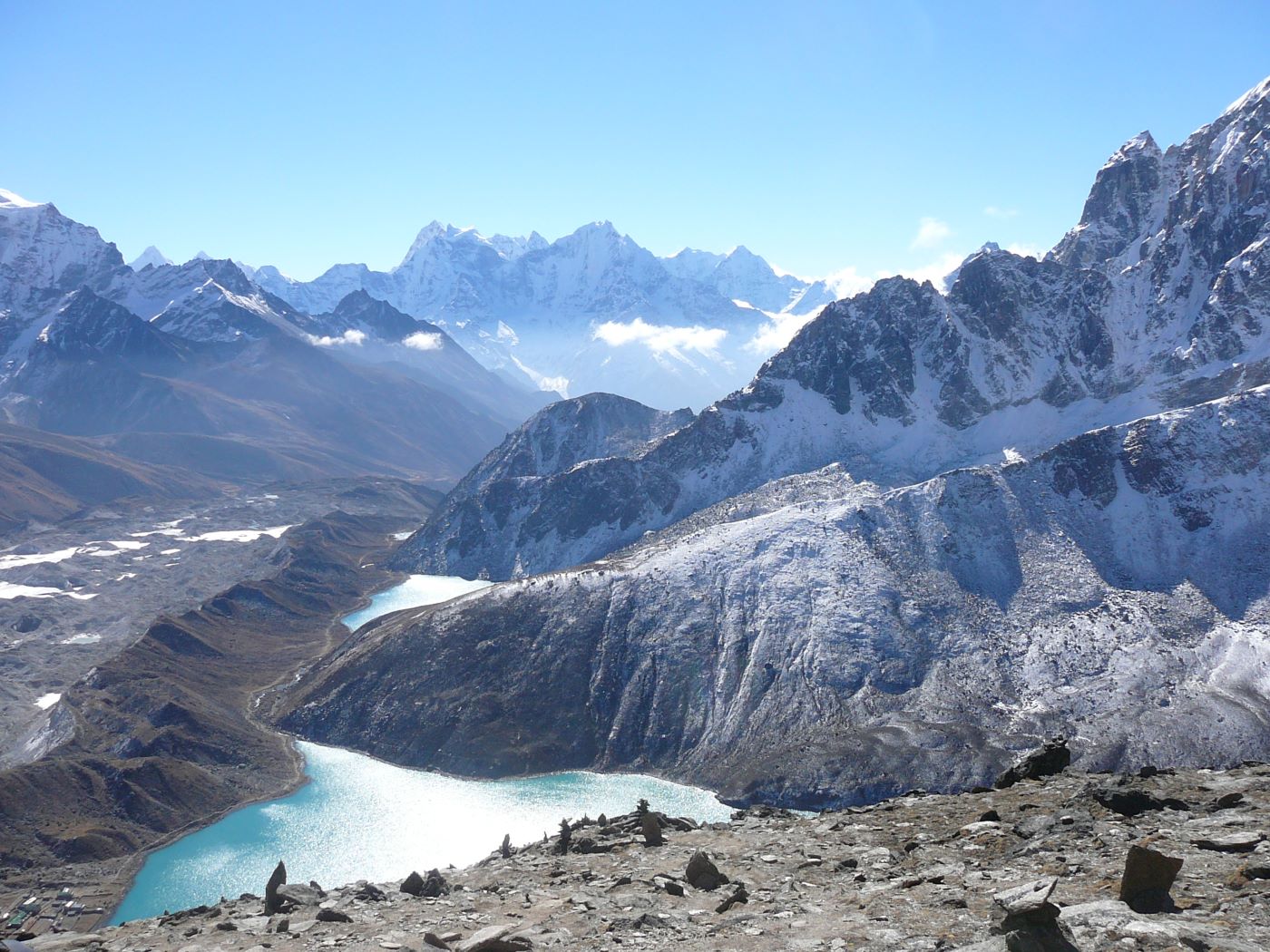
Famous Peaks in Nepal
Trekking Packages
Everest base camp trek
Annapurna base camp trek
Chulu west peak climbing
Everest three pass trekking
manaslu trek
Everest gokyo ri trek
Read more... Read less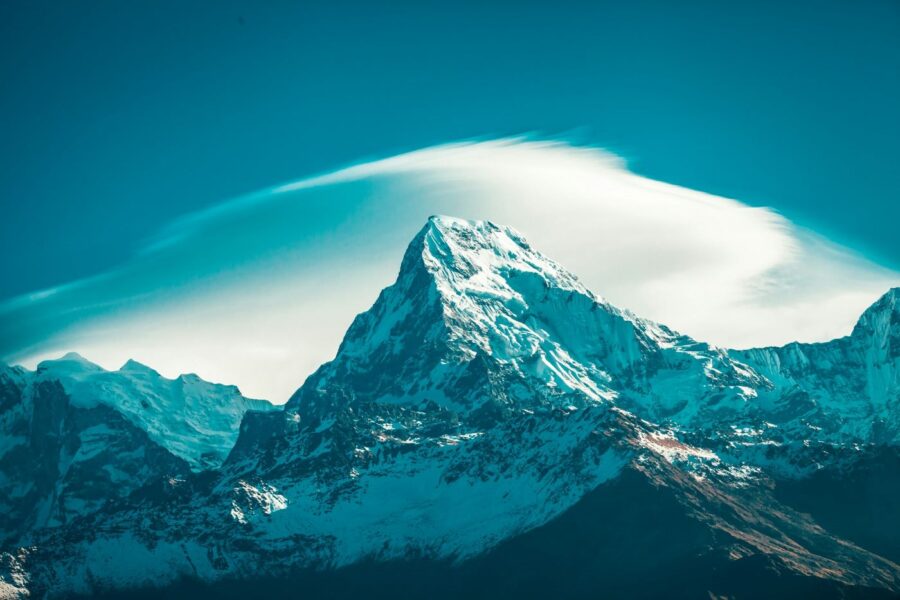
Abc trekking
Conquer the Annapurna Base Camp Trek: A Budget-Friendly Adventure (5-6 Days)
The Annapurna Base Camp (ABC) Trek is one of the most renowned adventures in the Himalayas. Nestled amidst towering peaks, the trek offers breathtaking panoramas and a chance to immerse yourself in Nepal's rich culture. But what if you're on a budget and worried about the cost?
This blog post dives into the exciting world of the 5-6 day Annapurna Base Camp Trek, focusing on a budget-friendly option from us. We'll explore the itinerary, costs, and what's included to help you decide if this incredible adventure is for you.
The Trek in a Nutshell
The 5-6 day ABC trek is a whirlwind adventure, taking you through charming villages, rhododendron forests, and finally to the base camp itself. Prepare for stunning mountain vistas of Annapurna I, Machapuchare (better known as the Fishtail), and other giants of the Himalayas.
Budget-Friendly Trekking with US
We offers a compelling option for budget-conscious trekkers. Here's a breakdown of their pricing and inclusions:
- Cost:
- Solo Trekker: USD 799
- Two People: USD 699 per person (cheaper the bigger the group!)
- Inclusions:
- Professional Guide
- Meals (breakfast, lunch, and dinner)
- Tea house accommodation
- Porter/Sherpa services
- Annapurna Conservation Area Permit (ACAP)
- Trekkers' Information Management System (TIMS) card
- Local taxes
What to Expect on the Trek
The 5-6 day itinerary will likely cover some of the most popular villages on the ABC trek route, including:
- Nayapul: The trek's starting point, a bustling town with shops and restaurants.
- Ghorepani/Poon Hill: Offering stunning sunrise views over the Annapurna range.
- Chomrong: A traditional Gurung village nestled amidst rice terraces.
- Machhapuchhre Base Camp: A chance to get closer to the iconic Fishtail peak.
- Annapurna Base Camp: The trek's ultimate destination, surrounded by towering mountains.
Keeping Costs Down
While our package covers most essentials, here are some ways to keep your overall ABC trek costs down:
- Pre-Trek Gear Rental: Consider renting some gear in Kathmandu instead of buying new.
- Tipping: While not mandatory, tipping your guide and porters is a thoughtful way to show appreciation for their hard work. Budget accordingly.
- Souvenirs: Haggling is common in Nepali marketplaces. Shop around and negotiate for better prices.
Important Considerations
- Fitness: The ABC trek involves moderate to challenging ascents. Ensure you're in good physical condition before embarking on this adventure.
- Altitude Sickness: Be aware of altitude sickness and its symptoms. Ascend gradually and acclimatize properly.
- Travel Insurance: Invest in travel insurance to cover medical emergencies or unexpected trip cancellations.
The Final Verdict
The Annapurna Base Camp Trek is an achievable dream for budget travelers. With our package and some smart planning, you can conquer this iconic trek without breaking the bank. Remember, the memories you create amidst the majestic Himalayas will be priceless.
Everest base camp trek
Annapurna base camp trek
Chulu west peak climbing
Everest three pass trekking
manaslu trek
Everest gokyo ri trek
Read more... Read less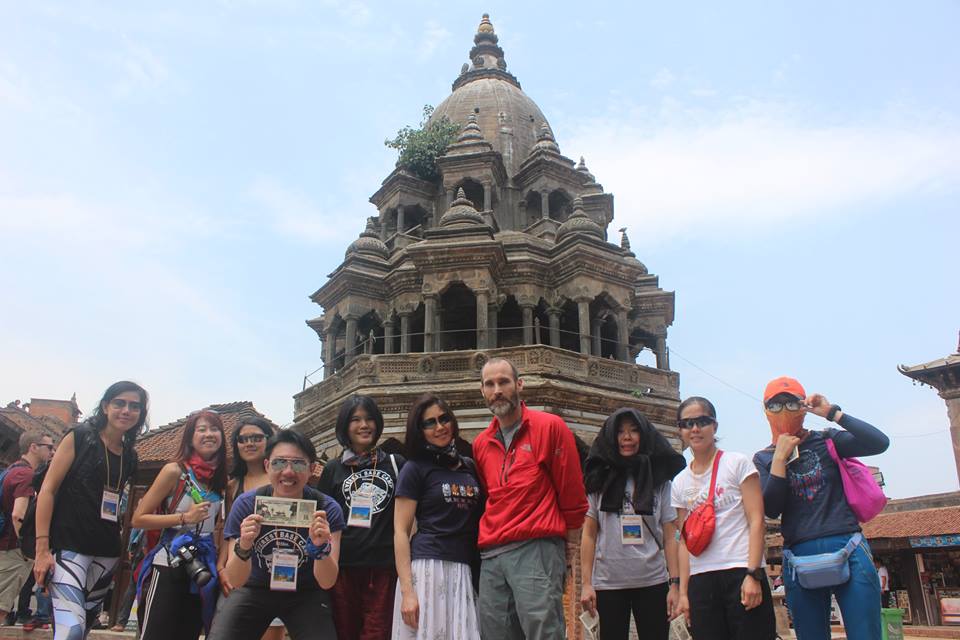
Tours in Nepal
Below, you can see the 5 best tours in Nepal that will take you through the most amazing experiences that Nepal has to offer:
A Spiritual Tour to Lumbini:
Located in Nepal's Rupandehi district, Lumbini is a revered pilgrimage site. It is well known around the world for being the birthplace of Gautam Buddha, also known as the Asian Light. Lumbini, with its religious and architectural richness, attracts millions of domestic pilgrims as well as international tourists. This sacred expedition starts by taking a flight from Tribhuvan International Airport to Gautam Buddha International Airport, located in Siddhartha Nagar which is 22 km away from Lumbini, followed by a local bus ride. Similarly, one may also opt out for an enthralling road trip from Kathmandu to Sunauli which is 30 km away, followed by a local taxi drive. The area has developed to cater to the needs of the visitors over the years, offering a range of culinary options and accommodation facilities. Numerous lodges, hotels, motels, and restaurants are strategically positioned throughout the area, offering a diverse range of options to cater to the discerning needs of visitors. The best time to visit Lumbini is during Buddha Jayanti, when the birth of Lord Buddha is celebrated, usually in the months of April and May.
The architecture of Lumbini is diverse, reflecting the contributions of various countries and Buddhist communities that have undertaken projects to develop and enhance the sacred birthplace of Siddhartha Gautama (Buddha). Travelers can find structures representing different Buddhist traditions from around the world, as well as architectural elements that reflect the local culture and heritage. Here are some sites that hold significance in representing the rich art and history of Lumbini:
- Mayadevi Temple and Puskarini Pond: Mayadevi Temple is situated at the centre of the Lumbini Sacred Garden. It is dedicated to Queen Mayadevi and holds a importance history since it is believed that Queen Mayadevi gave birth to Siddhartha Gautam holding onto a Sal tree in the exact same place. Similarly, Puskarini Pond is located just adjacent to the Mayadevi Temple. Queen Mayadevi is believed to have taken a bath in that pond before giving birth to Siddhartha Gautam.
- Ashoka Pillar: Ashoka Pillar stands near the Mayadevi Temple which is believed to be construted by the Great Emperor of India King Ashoka. The pillar bears inscriptions claiming Lumbini as the birthplace of Buddha.
- Bodhi Tree: A descendant of the Bodhi Tree under which Buddha gained enlightenment in Bodh Gaya, India is located near the Mayadevi Temple.
- Lumbini Museum: The Lumbini Museum is a modern architectural structure which consists of artifacts and exhibits related material to the life of Buddha and history of Buddhism, offering insights into the archaeological findings in the region.
- Monastic Zones: Lumbini has a monastic zone with monasteries built by various countries and Buddhist communities around the world. Monasteries like Myanmar Gloden Monastery, Dae Sung Shakya (Korean Temple), Royal Thai Monastery, Manang Samaj Stupa, The Thrangu Maonastery, etc can be found in this zone with rich architecture. Amongst them the World Peace Pagoda ( Shanti Stupa), built by the architectural contribution of the Japanese Buddhists, is a must see in the site with its strong Japanese architectural features.
- Eternal Peace Flame: Eternal Peace Flame, located at the southern end of the canal in Lumbini, is a major tourist attraction. The flame was bought from the United States of America (USA) to promote global peace and harmony. The flame flickers 24 hours a day.
- Tilaurakot: For the further understanding of life of Gautam Buddha, consider extending the trip to tilaurakot, where Siddhartha Gautam spent his childhood. This tour can be concluded within 2-3 days, with the exploration of Lumbini within 4-5 hours of time.
- Jungle Safari: Visitors to Chitwan can indulge themselves in adventurous and enthralling jungle safaris, allowing them to explore the wildlife in their natural habitat. The modes of jungle safari include elephant safari, jeep safari and guided walks as well.
- Tharu Culture Experience: Visitors can immerse themselves in the rich culture of Tharu community and experience their traditional lifestyle and architecture, allowing them to have a memorable and fun experience with Tharu dances, music and feasts.
- Adventurous Activities: Visitors can make their trip adventurous by engaging in adventurous activities like a canoe ride or a boat tour along the Rapti River, rafting, cycling and ziplining.
- Elephant Breeding Centre: Visitors can visit Elephant Breeding Centre to gain insights into the breeding practices of elephants and observe the young baby elephants.
- Bird Watching: Visitors can indulge themselves into bird watching ad it is a home to a wide variety of bird species.
- Boating on Phewa Lake: Relax with a pleasant and calming boat ride to the middle of Phewa Lake to visit the Barahi temple, dedicated to goddess Barahi.
- Bindhyabasini Temple Visit: Immerse into the religious and spiritual experience at Bindhyabasini temple.
- Sunrise at Sarangkot: Experience the breathtaking view of sunrise over the Himalayas from Sarangkot, which is a popular viewpoint.
- Adventurous escapades: Experience an adrenaline rush by engaging in Bungee jumping and Zip-lining.
- Paragliding: Soar through the skies of Pokhara Valley for a thrilling adventure and a beautiful aerial view of the mountain ranges and Phewa Lake.
- Captivating Exploration: Immerse into the beauty of Pokhara by the exploration of natural caves like Devi’s fall, Gupteshwari Gupha, Mahendra Gupha, Chameri Gupha, religious site like World Peace Pagoda. Visit International Mountain Museum to peek into the mountaineering history and Himalayan culture.
- Visitors can also indulge themselves into an adventurous rafting experience in Seti river.
- If the visitors aren’t in short of time, it is highly recommended for them to visit Ghandruk and a plan a trekking or hiking trip to Annapurna Base Camp or Poon Hill. The visitors are also recommended for a Ghandruk Stay and Pundikot Shiva Temple visit, which is trending amongst the tourists nowadays and is a great sight to explore.
- Explore the ancient walled city of Lo Manthang
- A beautiful sight of the Kali Gandaki River, which holds religious significance
- Visit ancient monasteries like Thubchen Gompa and Jampa Gompa
- Visit Marpha village, renowned for its apple orchards
- Visit Kagbeni, a village rich in religion and history
- Immerse yourselves in the Local Tibetan lifestyle
- Traverse through the beautiful valleys adorned with oaks and Rhododendrons
- Discover the unexplored ancient kingdoms of Nepal
- Explore the historic sky caves of upper mustang
- Visit Muktinath Temple, a significant pilgrimage site for both tourists and Buddhists
- Admire the majestic Rupse waterfall on your way back
- Admire the impressive Red Cliffs, a natural wonder in the area
- Visit Kathmandu Durbar Square, a historic ancient monument included in the UNESCO world heritage site.
- Experience the spiritual atmosphere of the Boudhanath Stupa, which is considered to be one of the largest Stupas in Nepal.
- Visit Pasupatinath temple, a sacred Hindu temple which is listed as UNESCO World Heritage Site, situated at the bank of Bagmati River and witness the hindu cremation ritual.
- Climb the stairs of Swayambhunath stupa for the panoramic view of whole Kathmandu valley and encounter the monkey population of the valley.
- Visit the well-preserved Patan Durbar Square, a UNESCO World Heritage Site showcasing the equisite Newari architecture.
- Take a cable car ride to the Chandragiri Hills for stunning views of the valley and witness the sacred Chandragiri temple of Lord Shiva.
- Wander through the vibrant and busy streets of Thamel for shopping, dining and lively atmosphere.
- Wake up early to witness the breathtaking view of sunrise over the Himalayas from Nagarkot hill station.
- Indulge yourselves in the Newari culture with newari culinary delights like momos, bara, yomari, etc.
- Explore the ancient city of Bhaktapur Durbar Square, known for its medieval architecture and juju dhau, a type of curd.
- Enjoy a hiking trip to Shivapuri National Park to explore the wildlife of Nepal including a variety of butterflies, leopard, jungle cat, Himalayan Black Bear and so on.
- Unwind in the peaceful atmosphere of the Garden of Dreams, a garden reflecting the neoclassical European architectural style and a serene environment.
- Raom through the beautiful Hanuman Durbar Square showcasing Nepal’s royal legacy and cultural heritage.
- Immerse yourself through the royal history of Nepal through a visit to Narayanhiti Palace.
- Explore the diverse artifact, art and historical objects representing Nepal’s cultural and archaeological heritage by a visit to The National Museum.
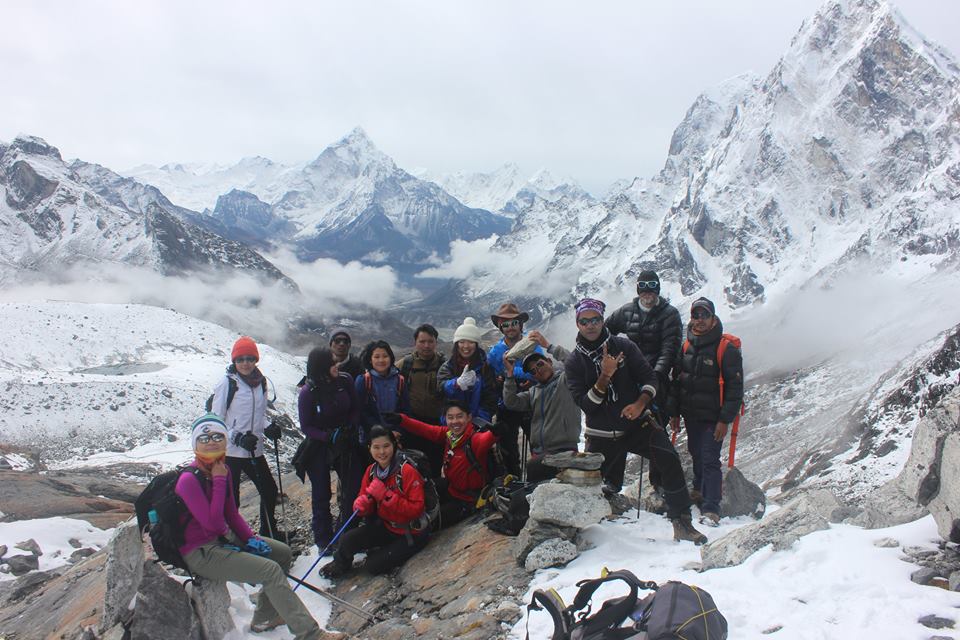
10 Best Treks in Nepal
- Annapurna Base Camp Trek: Also referred to as ABC trek, the Annapurna Base Camp Trek is an iconic trekking trail in Nepal, renowned for its breathtaking beauty and mountainous landscapes. The adventurous journey of ABC trek starts from the beautiful city of Pokhara, accessible either by a flight from Kathmandu along with a two-hour drive to Nayapul or an eight hour long drive from Kathmandu to Nayapul. This trek typically takes around 15-20 days, covering a distance of 160-230 kilometers (approx), based on the route chosen. The best seasons to visit ABC trek are either during spring (March to May) when rhododendrons bloom or during autumn (late September to early December) with clear skies and pleasant temperature. The temperature on the trek usually decreases upto 17-20 degree celsius. However, the weather remains unpredictable because of the increasing altitude. The average height of the trial peaks upto 4130 meters, providing an opportunity for the trekkers to trek through the beautiful sceneries of Chomrong Village, Poon Hill, Deurali, Machhapuchre Base Camp, Tadapani, and rejuvenate and cleanse themselves in a natural hot spring in Jhinu Dada and Tatopani. Accommodation during this trek typically include tea houses and lodges where the trekkers can peek into the typical gurung and magar culture of Nepali villages and connect with fellow travelers on the way. ABC trek is considered as a moderately difficult trek, offering the trekkers with a beautiful scenery of towering peaks of Annapurna I, Machapuchre, and Hinchuli and cultural richness.
- Upper Mustang Trek: The Upper Mustang Trek is one of the popular trekking trails in Nepal guiding to the forbidden kingdom of Nepal. The Upper Mustang Trek commences from Kagbeni, jomsom which is accessible by two connecting flights from Kathmandu to Pokhara and then from Pokhara to Jomsom. Covering a distance of about 160-170 kilometers based on the chosen route and travel itinerary, it usually takes 12-18 days for this entire enthralling and adventurous trek. Elevated upto a maximum altitude of 3800 meters (approx), this trek usually culminates in Lo Manthang-the capital of Upper Mustang-which surrounds the mystery of forbidden kingdom. The trekkers can enjoy the breathtaking views of the sky-scaring mountain peaks like fishtail Annapurna South, Annapurna II, Dhaulagiri, Dhaulagiri II, Nilgiri and Damodar. The best season for this trek is spring and fall. Tiji festival-a 3 day fascinating festival, usually celebrated in the month of April or May amongst the Tibetan people-is a must see for the trekkers. Thakali, Gurungs and Tibetans are the local residents of lower and upper Mustang Area. Trekkers can reside in tea houses and lodges where they are provided with basic yet comfortable stay and authentic Nepali cuisines. It is advisable for the trekkers to try some local cuisines like Tibetan bread, Khapse, Marpha, Local tea, etc. The dazzling architecture of Lo Manthang, the Shaligrams of Kaligandaki river, and a pony ride are a must do for the trekkers for a fun experience along their trek.
- Lantang Valley Trek: The Lantang Valley Trek is considered as one of the best treks in Nepal, commences from Syabru Besi, easily accessible by a 9 hours of long drive to the north of Kathmandu valley. Depending upon the specific itinerary and trekker’s pace, this trek can be completed in 7 to 9 days covering a distance of approximately 80-90 kilometers. The altitude in this trek gradually increases upto the maximum height of 4,600 meters above sea level which is the Kyanjin Ri Hill. This trek offers the breathtaking views of mountain peaks like Lantang Lirung, Gang Chhenpo, Dorje Lakpa and Ganesh Himal along with the traditional tamang villages and their cultures and beautiful monasteries and traditionally built stone houses. Along the way, there are guest houses—also referred to as tea houses—where hikers can stay comfortably and eat hot meals. The meals typically include thakali cuisine like dhido and gundruk, sel roti, yak cheese, and nepalese curd called yum, thukpa along with other nepali cuisines. The best time for the Lantang Valley Trek is during the spring and fall when the weather is stable.
- Everest Base Camp Trek: The thrilling Everest Base Camp trip, sometimes referred to as the EBC trip, takes participants to the base of Mount Everest, the highest peak in the world. The exciting helicopter ride to Tenzing-Hillary airport, one of the world's most dangerous and high-altitude airports, begins the exciting EBC trek adventure in the Lukla village in the Khumbu district of Nepal. The 35-minute helicopter ride provides breathtaking views of the surrounding mountainous landscape. The EBC trek is regarded as one of the more difficult treks, taking 10 to 15 days to complete and spanning 130 miles, depending on the route and level of physical ability. March through May or mid-September through November are the ideal times to visit the EBC Trek. During the EBC trip, the elevation progressively rises, with hikers reaching a maximum elevation of 5,364 meters. Trekkers must therefore take the necessary pauses in Namche Bazaar, Dinboche, and Gorak Shep in order for their bodies to acclimate to the rising altitude and stay in good health throughout the entire journey. These rest periods give the hikers the chance to see a Sherpa village, learn about their customs, and visit stunning monasteries along the way. During these vacations, lodging options often consist of lodges and tea houses that provide delicious meals and a cozy stay. Along the way, you should sample Nepali delicacies like momos (dumplings), tsampa (roasted barley flour), and dal bhat tarkari (lentils, rice, and vegetables). Important locations on the journey include the Tengboche Monastery, a center of spirituality.
- Manasalu Circuit Trek: The Manasalu Circuit Trek takes place in the Manasalu Conservation Area, renowned for its stunning landscapes , diverse culture and challenging trials. This trek begins from Soti Khola which is an 8 hour drive from Kathmandu valley. It takes around 13-18 days for the trekkers to complete this trek, covering up a distance of about 117 kilometers. Larkya La Pass-which is at the altitude of 5160 meters-is the highest point on this trek. This trekking traill winds through the remote villages inhabited by the diverse ethnic groups of Gurungs, Tamangs and Tibetan-influenced communities, providing an opprtunity to peek into their unique cultures, traditions and ancient monasteries. This trek encircles Mt. Manasalu, the eight highest peak in the world. During this trek, trekkers can enjoy the glorious and awe inspiring mountain panoramasm like Himlung Himal, Hiunchuli, Ngadi, Cheo Himal, Kanguru, Siringi, Ganesh Himal and Annapurna II. Trekkers can stay in tea houses and lodges where they can enjoy a comfortable sleep along with authentic Nepali delicacies like dal bhat tarkari. The manasalu trek is one of the challenging and less trodden path amongst the trekking trials in Nepal. Spring and autumn are considered to be the best seasons for this trek.
- Gokyo Lake Trek: Gokyo Lake Trek is considered to be one of the best treks in Nepal, leading trekkers to the home of glacial lakes-Gokyo Valley. The Gokyo Lake Trek, situated in the Everest region of Nepal, within the Sagarmatha National Park, commences from Lukla, accessible by a 30 minutes flight from Kathmandu Valley. This trek usually takes around 12 days to complete, covering a distance of 92 kilometers. Gokyo Ri is the highest peak in this trekking trail-elevated at the altitude of 5,357 meters- provides a spectacular view of Everest, Makalu, Lhotse and Cho Oyu. Trekkers are provided with a cozy stay at tea houses and lodges, offering Nepali dishes like dal bhat tarkari, where trekkers can engage with the friendly Sherpa and ethnic commuinties. The ideal trekking seasons for this trek are spring (March to May) and autumn (September to November). One of the key highlights of this trek include Nozumpa Glacier which is the largest glacier in the himalayas. The Gokyo Lake Trek is a challenging trek that can be substituted for the standard Everest Base Camp trek.
- Upper Dolpo Trek: The Upper Dolpo Trek is one of the remote and one of the most challenging trekking adventures located in the Dolpa District of Nepal. The trek usually begins with a flight from Kathmandu to Nepalgunj, followed by a short flight to Jhupal. This trek approximately covers a distance of approximately 10 to 12 kilometers and can be completed within 8-27 days based on the travel itinerary. The key highlight of Upper Dolpo Trek includes crossing the challenging passes of Kang La Pass which is elevated at a height of 5,151 meters and the Numa La Pass at an altitude of 5,190 meters. These passes offer the breathtaking views of the towering peaks of world-renowned 8000-meter mountain Dhaulagiri and Annapurna, dolpo peak, Mt. Kanjirowa, Mt. Putha Hiuchuli peak, Chureni Himal, Guraj Himal, and many more. The accommodations during this trek are limited due to the remote and isolated nature of the region with trekkers relying on their own camping gear including tents, sleeping bags and cooking equipment. The best time to undertake the Upper Dolpo Trek is during the spring (March to May) and autumn (September to November) seasons.
- Mardi Himal Trek: The Mardi Himal Trek is a compelling and relatively unknown trekking route in the Annapurna region of Nepal, which normally starts from the picturesque city of Pokhara where the trekkers drive to Kande to begin their exciting journey. It takes about 5-12 days to complete this trek based on the chosen route and travel itinerary. At an elevation of about 4,500 meters, the Mardi Himal Base Camp is the highest point reached during the Mardi Himal Trek. Trekking up Annapurna Himal, Dhaulagiri Himal, Manaslu Himal, and other nearby summits in the region provides breathtaking vistas of pristine landscapes and mountain ranges. Trekkers are likely to encounter friendly Gurung and Magar Communities along the trial offering an insight into their culture and traditions. Trekkers will find tea houses and lodges, providing a basic and comfortable facility for night stays along the route and can enjoy Nepali cuisines like dal bhat tarkari. Spring and autumn seasons are preferred for this trek when the weather is mostly stable, with clear skies and moderate temperatures.
- Kanchenjunga Base Camp Trek: The Kanchenjunga Base Camp Trek is an extraordinary and challenging adventure, leading trekkers to the base of Mount Kanchanjunga, the world’s third highest peak. The trek usually begins with a flight from Kathmandu to Biratnagar, followed by a drive to Taplejung. It usually takes 16-30 days for this trek, covering a distance of 220 km based on the chosen route and travel itinerary. Pangpema viewpoint, elevated at the altitude of 5,143 meters, is the highest point of this trek. This trek takes the travellers through the Kanchanjungha Conservation Area along with the panoramic view of towering peak of Mt.Kumbhakarna, Kanchenjunga I, Kanchenjunga II, Kanchenjunga south, Kiratchuli, Pathivara Chuli and many other peaks. The Kanchenjunga region is inhabited by a mixed community of Sherpa, Rai, Limbu, and Gurung, which provides an opportunity for trekkers to understand their culture and lifestyle. The accommodations provided along the trail are simple, with shared rooms, basic facilities of bed, blankets and hot meals which include typical nepali dishes dal bhat and tarkari, momos and noodles. The preferred seasons for this trek are considered to be the spring (March to May) and autumn (September to November) seasons, when the weather is relatively stable, offering clear views of the mountains and comfortable trekking conditions.
- Ghorepani Poonhill Trek: The Ghorepani Poonhill Trek is a popular and relatively easy trekking route in the Annapurna region in Nepal which takes about 4 to 5 days to complete, covering a distance of about 35 to 40 kilometers depending on the specific route taken. The trek usually starts from Nayapul, which is easily accessible by a drive from Pokhara. The highlight of the Ghorepani Poon Hill Trek is reaching Poon Hill, located at an altitude of approximately 3,210 meters (10,532 feet). Poon Hill is renowned for its stunning sunrise views over the Annapurna and Dhaulagiri mountain ranges and the scenic views of mountain peaks such as the Annapurna I, Annapurna South, Machhapuchhre (Fishtail), and Dhaulagiri. The route passes through picturesque settlements like Tikhedhunga, Ulleri, and Ghorepani where trekkers can witness the traditional lifestyle of the local friendly Gurung communities.Trekkers can enjoy comfortable accommodations in teahouses, enjoy local cuisines and immerse themselves into the traditional gurung culture. Spring (March to May) and autumn (September to November) are considered to be the best seasons for this trek.
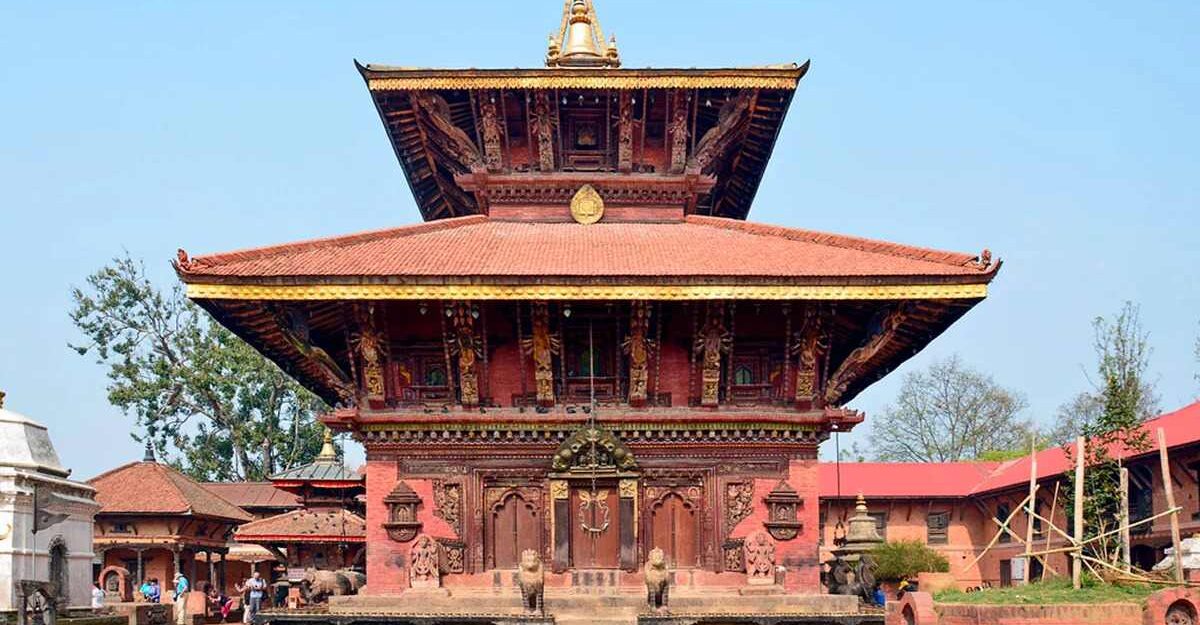
World Heritage Day Tour of Kathmandu Valley
Here are some of the World Heritage Site Tour of Kathmandu Valley
Bhaktapur Durbar Square
Changu Narayan Temple
Likewise, there is a report that this two-story Vishnu temple was not constructed in the pagoda or shikhara styles. But it’s designed like a pagoda. The history of the Lichhavi dynasty is preserved in this traditional temple in the Nepali style up to the present day. In addition, it and Bhaktapur Durbar Square were inducted as UNESCO World Heritage Sites in 1979. This well-known shrine is situated atop Bhaktapur, a hill station in the north. It is around seven miles away from Kathmandu. In 464 C.E., the inscriptions and sculptures found in this temple are thought to be the oldest. It is therefore believed to have been founded by King Manadeva, one of the Lichhavi kingdom’s greatest kings. Four doors, one facing each direction, are part of the temple’s construction. A pair of lions, Sarabhas, Gryphons, and elephants stand watch at each of the entrances.Pashupatinath Temple
Similarly, the most significant Hindu temple in Nepal is situated beside the sacred Bagmati River and is encircled by a busy marketplace with religious vendors selling items such as glass lingams, Mt. Meru models, incense, rudraksha beads, conch shells, marigolds, and pictures of Hindu deities and temples. Built-in the 17th century in the shape of a pagoda, the Pashupatinath Temple is a well-known holy icon for Hindus in Nepal. Many centuries preceded the construction of the temple, the Pashupatinath mandir had a rich history. Whether or not you practice Hinduism, there are a lot of interesting legends associated with this region. One of the seven UNESCO World Heritage Sites in the Kathmandu Valley of Nepal is the Pashupatinath temple.Boudhanath Stupa
11 kilometers to the northeast of Central Kathmandu is where Boudhanath is located. Since the fifth century, it has steadily dominated the skyline with its purity and beauty. It is the biggest spherical stupa in Nepal and among the biggest in all of Asia. Tourists travel in large numbers to Boudhanath. In addition to the numerous Buddhist pilgrims and Tibetan refugees that reside nearby, the stupa complex is surrounded by more than fifty monasteries. The monasteries were built with inspiration from Tibetan exiles. One may experience good vibrations because of the place’s calm and pristine atmosphere. The scent of incense in many varieties fills the air surrounding Boudhanath. Because of the different Tibetan chants and mantras performed by Buddhist pilgrims and monks, the atmosphere appears more pure, spiritual, and courteous.Best Things to Do in Kathmandu during the World Heritage Day Tour of Kathmandu Valley
Momo Treat
A tourist visiting Kathmandu won’t have to look far to understand the significance of momos for day-to-day living. The equivalent of dumplings in Nepal, momos are steamed buns stuffed with a choice of cheeses, veggies, or meats. When visiting Nepal, they are a mainstay of most visitors’ meals. Momo stores in Kathmandu respond to the yearning for more momos by throwing a one-day fiesta every year. This fun event in Kathmandu includes free beverages, live music, a momo-eating competition, and an endless supply of momos.Visit Guhyeshwari Temple
Go to Taleju Temple
The goddess Taleju Bhawani, the patroness of the Malla Kings who ruled Nepal from the 12th to the 18th century, is the subject of Taleju Temple. A golden figure of the ten-armed goddess herself, watched over by stone lions at the gates, is housed inside the three-story temple. Within the Kathmandu Valley, there are three Taleju Temples: the first is in Bhaktapur, the second is in Patan Durbar Square, and the third is in Kathmandu Durbar Square. Located in Kathmandu Durbar Square near the Hanuman Dhoka Palace, which was constructed by King Mahendra Malla in 1564, is the primary and most significant Taleju Temple. Every year on the ninth day of the Dashain festival, the temple is open for business. Moreover, you can even visit here during your World Heritage Day Tour of Kathmandu Valley. The temple is closed to the public on other days. Be cautious if you intend to visit the temple on that day as there will be numerous animal sacrifices taking place nearby. While there is no admission charge to the Taleju Temple, foreign visitors must pay a ticket to enter Kathmandu Durbar Square.Enjoy in Central Zoo
Visit Patan
Patan is the third-largest city in Nepal and is situated in the Lalitpur district. Rich Newar customs, culture, and history envelop the city. Patan Durbar Square, one of the three Durbar Squares in the Kathmandu Valley, is the center of Lalitpur. Durbar Square is surrounded by numerous temples and other architectural sites, but its primary purpose was to serve as the Malla Kings of Lalitpur’s home. The Krishna Mandir, situated in the courtyard of Patan Durbar Square, was constructed in 1,637 using stones. The temple is three stories high, with a distinct meaning on each level. The Mahabharata is told on the first floor, Lord Shiva is honored on the second, and Lokeshwor is honored on the third. Only Hindus are permitted entry into the temple, where morning and evening prayers are held. Similarly, you can even visit here during your World Heritage Day Tour of Kathmandu Valley. Within Patan Durbar Square are three other temples dedicated to Hindu gods: Bhimsen Temple, Vishwanath Temple, and Taleju Bhawani Temple.Shopping in Kathmandu
Everyone has made shopping in Kathmandu a top priority. Whether they are looking to buy textiles, paintings, arts and crafts, souvenirs, or traditional clothing. Nepal is well-known for its exquisite cashmere wool or pashmina. Pashmina is used to make shawls and scarves, and one should surely think about bringing one home. There are no pashminas like the ones found in Nepal. There are a variety of colors and styles available. Many tourist destinations, including Thamel, New Road, Patan, and Bhaktapur, sell pashmina. When purchasing, haggling is important unless the things have a set price. Thus, be sure to hone your negotiating techniques and be ready for some friendly rivalry. One of the most well-known shopping areas in Kathmandu is New Road. There are plenty of retail stores and souvenir sellers. Along with a variety of traditional clothing options including sarees and Lenghas. This is the ideal place for all of them. Just be mindful of the throng—the streets can get extremely congested.Conclusion
The best places to purchase mementos, such as handcrafted items and artwork, are Patan and Bhaktapur. A distinctive selection of traditional showpieces made of clay or metal is available for purchase.Some Similar Posts
Trekking Packages
Everest base camp trek
Annapurna base camp trek
Chulu west peak climbing
Everest three pass trekking
manaslu trek
Everest gokyo ri trek
Read more... Read less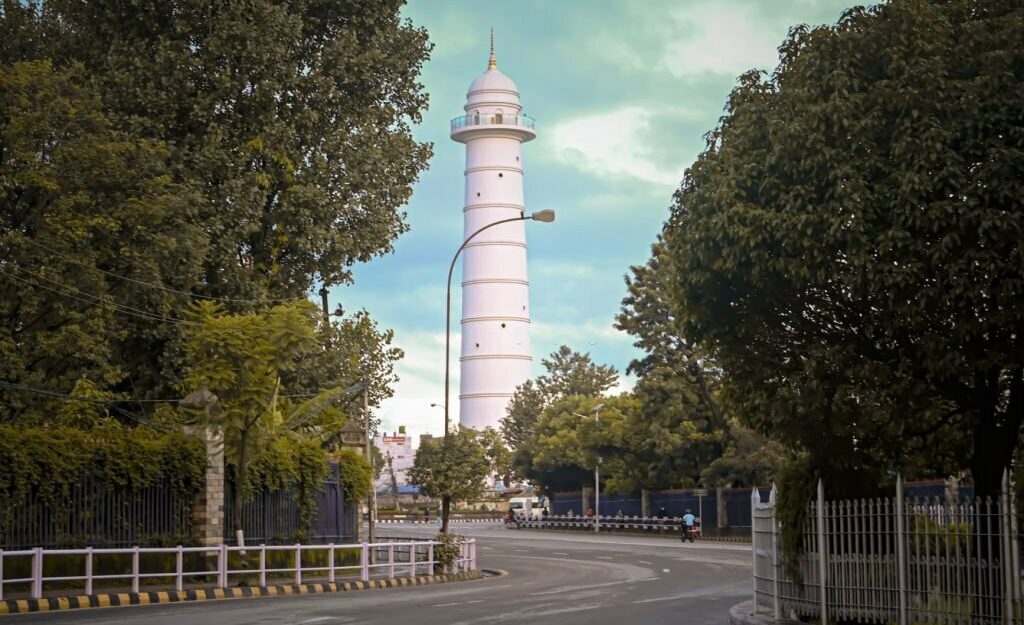
Places to Hang out in Kathmandu
Best places to Hang out in Kathmandu
There are various places to hang out in Kathmandu for any purpose, such as going on a short or long climb, spending the evening with friends, or simply exploring and taking in some of the city’s gorgeous architecture. We’ve selected 20 different places to hang out below based on your mood and interests. Let’s have a look at those top choices down below.Thamel
Narayanhiti

Bouddha Stupa
The Boudha Stupa in Kathmandu, one of the world’s largest stupas and a UNESCO World Heritage Site, is an important Buddhist and architectural site. Similarly, the Stupa is revered for containing Kassapa Buddha’s mortal remains and is unquestionably one of the best sites to come in Kathmandu for kora, casual sightseeing, and wonderful Tibetan Nepali food.Garden of Dreams
The Garden of Dreams, also known as Swapna Bagaicha in Nepalese, was built in the 1920s and is also known as the Garden of Six Seasons. With its stunning amphitheater, urns, gorgeous pavilions, paved surrounding paths, pergolas, and ponds, the park attracts both locals and tourists. The Austrian government has lovingly repaired this location and reintroduced it to the public for casual hangouts.Kumari Bahal
Kumari Bahal is a three-story traditional building made of wood and red bricks that houses Nepal’s living goddess. It contains ornately carved windows, doorways, and balconies, as well as a large chariot that transports Kumari around the city during the annual Indra Jatra event. Jaya Prakash Malla built this structure in the mid-eighteenth century. Moreover, the tremendous earthquake that rocked Nepal in 2015 caused only minor damage to the Bahal while devastating the surrounding countryside. This is apparently some type of sign that the locals attribute to the Kumari’s strength.Kathmandu Durbar Squares
Kathmandu Durbar Square, one of Nepal’s three Durbar squares, is located in Basantapur. Moreover, Kathmandu Durbar Square also depicts the front facade of the previous Kathmandu Kingdom’s old royal palace. As a result, UNESCO has designated Durbar Square as a World Heritage Site. On April 25, 2015, a large earthquake rocked Nepal, destroying several historical structures in Kathmandu Durbar Square. The main edifice, a tall structure, preserves the country’s history and architecture.Namo Buddha
The Buddhist monastery Namobuddha represents an ancient narrative of a Prince named “Mahasatta” who fed himself to a tigress and her offspring. Furthermore, the stupa in Namobuddha exudes peace at its best. It’s also a route that winds through the forest, making the trip to Namo Buddha very peaceful. Taxis, bicycles, and even walking are all feasible forms of mobility.Pashupatinath Temple
Pashupatinath, the holiest site for Hindus worldwide, is recognized as one of the grandest temples ever built and one of Kathmandu’s most famous tourist destinations. The complex has long been designated as a UNESCO World Heritage Site. The huge Hindu temple complex houses a plethora of Shiva-related monuments, inscriptions, ashrams, and temples.Swayambhu
Shivapuri Nagarjun National Park
Shivapuri Nagarjun National Park is located in the mid-hills on the northern fringes of the Kathmandu Valley at a height of 2,732 m (8,963 ft). It encompasses an area of 159 km2 (61 sq mi) and borders 23 Village Development Committees in the districts of Kathmandu, Nuwakot, and Sindhupalchowk. The protected area extends westward to the Dhading District and is one of the most picturesque hiking and camping destinations in the area.Best Foods to try in Kathmandu
Food has become an identity of a given site over the years, serving as a bridge to link guests with the local culture, historical background, and availability of natural ingredients. The taste of street meals, unmatched by an expertly prepared restaurant dinner, permeates no matter where you go in the world. However, there are situations when you order a dish without understanding the names or components and later regret it.Thakali Khana Set

- Price: NRS 600
- Eat in one of the best places to hang out in Kathmandu, the Lazimpat Area.
MO:MO
The Nepalese enthusiasm for MOMO has no bounds, and as a result, signs proclaiming “MOMO is available here” can be found on every corner of the street. MOMO is a steam bun filled with minced veggies and meat fillings that are also known as dumplings and dim sum in various regions. A single plate of MOMO, usually accompanied by tomato chutney, is never enough for MOMO lovers. Over the course of the year, Nepal has served a wide range of MOMO, including Chocolate Momo, Sadheko Momo, Kothey Momo, Open Momo, Tandoori Momo, and Chilly Momo, as well as the juicy Steam Momo. When the enticing MOMO pieces are dipped into the surprisingly rich taste of the chutney, the combination goes beyond yum, making you fall in love with the meal until your stomach exclaims, “I am full,” joking aside. Leaving Kathmandu without trying MOMO will undoubtedly make your trip incomplete. So, on your next visit, try these flavor combinations.- Price: NRS. 300-400
- Eat in one of the best places to Hang out in Kathmandu, Basantapur Area
Sel Roti
The Nepali doughnut, Sel roti, is made from sweetened rice flour and deep-fried until reddish brown. The crispy ring-shaped sweet bread is consumed as a morning or afternoon snack in many households. To make it crunchy and crispy, the soaked rice is ground into a thick batter and then combined with sugar and ghee before being deep-fried in hot oil. The crunchy taste of the Roti makes this a delectable snack, which is available at Kathmandu’s sweet stores. Hindus also cook Sel Roti as a Prasad for the Gods and Goddesses at big events such as weddings and festivals such as Dashain and Tihar.- Price: NRS. 60 preserving
- Eat in one of the best places to Hang out in Kathmandu, New Road area
Lassi
No Nepali will pass past Indra Chowk without trying the famed Indrachowk ko Lassi, even if it is raining or a frigid winter day. Although there are several businesses in the valley that sell Lassi, no one beats the flavor of the Lassi available in Indrachowk. The sweet lassi at the Indra Chowk is thick and creamy, with the ideal sweetness enhanced by the added toppings of raisins, pistachios, and cashew nuts. Lassi is served chilled and is made by combining thick curd with water and sugar. However, because this is street cuisine, you will have to wait in line before enjoying its great taste by standing alongside the locals.- Price: NRS 60 Small Glass/ 150 Big Glass
- Eat in one of the best places to Hang out in Kathmandu, New Road area
Conclusion
Kathmandu is well-known for its holy monuments. The city’s terrain is dotted with temples, monasteries, and stupas, particularly the Pashupatinath Temple and the Changu Narayan, both of which are known for their gorgeous, detailed religious artworks. And, in Kathmandu, there are many places to Hang out in Kathmandu and eat food.Some Similar Posts:
- 7 Days in Nepal
- Chitwan National Park
- Is the Gosaikunda Trek challenging? what is the ideal time to visit?
- Best Luxury Treks in Nepal





