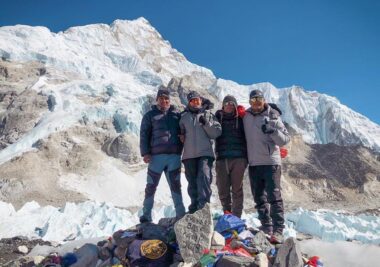
Beyond Base Camp: The Ultimate Guide to the Everest Three Passes Trek
For many adventurers, standing at Everest Base Camp is a bucket-list dream. But as peak trekking seasons grow more crowded, seasoned hikers are looking for something deeper, wilder, and more physically demanding. If you want to escape the highway of tourists, push your physical limits, and experience the Khumbu region from raw, unedited vantage points, there is only one definitive answer.
Welcome to the Everest Three Passes Trek.
Consistently rated as one of the most challenging and rewarding high-altitude loops in the world, this trek is a grand Himalayan circuit. Rather than retracing your steps, it loops together the classic Everest trail with the remote, pristine valleys of Bhotekoshi, Gokyo, and Imja Tse.
What is the Three Passes Trek?
Unlike the traditional “out-and-back” route to Everest Base Camp, the Three Passes Trek is a comprehensive, counter-clockwise (or clockwise) circular journey. Over the course of 16 to 19 days, you will traverse four distinct high-altitude valleys and conquer three grueling mountain passes, each towering well above 5,000 meters.
What sets this route apart is that it doesn’t just bypass the main highlights—it absorbs them. This trek seamlessly integrates Everest Base Camp (5,364 m), the iconic sunrise viewpoint of Kala Patthar (5,545 m), and the breathtaking Gokyo Ri (5,360 m) into a single, epic itinerary.
The Three Giants You Will Conquer
-
1. Kongma La Pass (5,535m / 18,159 ft)
-
The Vibe: The highest, most isolated, and physically taxing of the three.
-
The Terrain: Rocky scree, steep boulders, and an unforgiving incline. Because there are absolutely no teahouses or water sources between Chhukung and Lobuche, you must carry full rations and water for an intense 8-to-10-hour push. It rewards you with an intimate, face-to-face look at Nuptse and Lhotse.
-
-
2. Cho La Pass (5,420m / 17,782 ft
-
The Vibe: The most technical and weather-dependent pass.
-
The Terrain: Connecting the Khumbu valley to the Gokyo valley, Cho La requires traversing a literal, active glacier. Depending on the season, you will navigate slippery ice, hard-packed snow, and areas prone to rockfalls. Microspikes/crampons are highly recommended here to safely negotiate the steep, icy descent into Dzongla.
-
-
3. Renjo La Pass (5,360 m / 17,585 ft)
-
The Vibe: The grand finale and the most visually stunning viewpoint in Nepal.
-
The Terrain: While the stone staircases on the western descent can be tough on the knees, the climb up from Gokyo is a steady, rhythmic grind. The reward at the top is a legendary, postcard-perfect panorama that frames the third turquoise Gokyo Lake in the foreground with Everest, Lhotse, Makalu, and Cho Oyu dominating the skyline.
-
Essential Trekking Metrics
To help you gauge if this trek fits your experience level, here is a quick overview of what to expect logistically and physically:
| Metric | Details |
| Total Distance | Approximately 166 km (103miles) for the full loop |
| Average Daily Hiking | 6 to 8 hours (extends to 9–11 hours on pass days) |
| Accommodation | Local Sherpa teahouses (basic twin-sharing rooms, communal dining) |
| Required Permits |
1. Sagarmatha National Park Permit
2. Khumbu Pasang Lhamu Rural Municipality Permit |
| Navigation | High risk of getting lost in heavy fog/snow; hiring a licensed guide is strongly advised |
The Verdict: Is it Right for You?
The Three Passes Trek is fundamentally more demanding than the standard Everest Base Camp route. The sheer amount of time spent sleeping and exerting yourself above 4,500 m puts immense stress on the body, meaning excellent cardiovascular fitness and prior high-altitude trekking experience are mandatory.
However, if you have the stamina, the rewards are unmatched. You will step away from the commercialized, crowded trails and enter a world of quiet glacial lakes, remote Sherpa communities like Thame, and pristine mountain solitudes that few travelers ever get to see.
The Ultimate 17-Day Itinerary Outline
While shorter variations exist, mountain safety experts heavily advise a steady, conservative schedule. Pushing too fast above the tree line is a recipe for Acute Mountain Sickness (AMS). A well-acclimatized, structurally sound counter-clockwise itinerary looks like this:
Phase 1: The Approach & Acclimatization
-
Day 1: Flight to Lukla (2,830 m) & Trek to Phakding (2,610 m) * The Trail: A thrilling, scenic flight into Tenzing-Hillary Airport is followed by an easy, net-downhill trek past hand-carved Mani stones and spinning prayer wheels alongside the roaring Dudh Koshi River.
-
Day 2: Trek to Namche Bazaar (3,440 m) * The Trail: Enter the Sagarmatha National Park at Monjo, cross the iconic, suspension-bridge marvel that is the Hillary Bridge, and tackle the infamous, grueling pine-forest zigzag climb up to the Sherpa capital.
-
Day 3: Strategic Acclimatization Day in Namche * The Trail: Adhere to the “climb high, sleep low” rule. Take an active recovery hike to the Everest View Hotel (3,880 m) for your first glimpse of Everest and Ama Dablam, then explore the local trading hub.
-
Day 4: Trek to Tengboche (3,867 m) * The Trail: Drop down to the riverbed before climbing steeply through lush rhododendron forests to reach Tengboche Monastery, the spiritual epicenter of the Khumbu.
-
Day 5: Trek to Dingboche (4,260 m) * The Trail: The landscape shifts dramatically from sub-alpine forests to a raw, exposed alpine shrubland. Cross the Imja Khola and pass under the looming shadow of Ama Dablam.
-
Day 6: Second Acclimatization Day in Dingboche * The Trail: A vital rest day before hitting the extreme altitudes. Take a rigorous 4-hour side trip up the ridge of Nagarjuna Hills (5,100 m) to witness a jaw-dropping view of Mt. Makalu (8,463 m) and Lhotse.
Phase 2: The Heart of the High Circuit
-
Day 7: Trek to Chhukung (4,750 m) * The Trail: A short, gradual incline into the glacier-locked Imja valley. Use this afternoon to rest, check your gear, and prep your water reserves for the next day’s massive pass.
-
Day 8: Cross Kongma La Pass (5,535 m) to Lobuche (4,940 m) * The Trail: An intense 8-to-10-hour day. You will scramble up steep, shifting scree slopes to the highest pass, then cross the moving ice and shifting boulders of the Khumbu Glacier to arrive in Lobuche.
-
Day 9: Trek to Gorak Shep (5,164 m) & Everest Base Camp (5,364 m) * The Trail: Walk along the rocky moraine of the Khumbu Glacier to Gorak Shep. Drop your heavy packs, then push onward to the prayer-flag-strewn boulder marking Everest Base Camp. Return to Gorak Shep to sleep.
-
Day 10: Hike Kala Patthar (5,545 m) & Trek to Dzongla (4,830 m) * The Trail: A pre-dawn climb up Kala Patthar for the absolute best, unobstructed sunrise view over Everest’s massive black pyramid. Head down, pack up, and trek to the tiny outpost of Dzongla to position for the next pass.
-
Day 11: Cross Cho La Pass (5,420 m) to Thagnak (4,700 m) * The Trail: A highly technical day requiring microspikes. You’ll ascend a steep rock face, traverse the slippery, gently sloping Cho La glacier, and negotiate a steep, loose rockfall zone on the descent to Thagnak.
-
Day 12: Trek to Gokyo Lakes (4,790 m) * The Trail: A shorter, gentler trek crossing the massive Ngozumpa Glacier—the longest glacier in the Himalayas—to reach the stunning, deep-turquoise third lake of Gokyo.
-
Day 13: Gokyo Ri Hike (5,360 m) & Rest * The Trail: Climb the steep, grassy hill of Gokyo Ri for an elite, sweeping perspective of four of the world’s fourteen 8,000-meter peaks simultaneously: Everest, Lhotse, Makalu, and Cho Oyu.
Phase 3: The Final Pass & The Descent
-
Day 14: Cross Renjo La Pass (5,360 m) to Marlung (4,210 m) or Thame * The Trail: A steady climb reveals a legendary backward look at the Gokyo lakes framed by Everest. The descent takes you down stone staircases into the pristine, wild Bhotekoshi Valley, a historic Tibetan trade route.
-
Day 15: Trek from Marlung/Thame back to Namche Bazaar (3,440 m) * The Trail: Follow the river downstream through ancient, less-visited Sherpa villages, completing your magnificent high-altitude loop as you rejoin the main trail at Namche.
-
Day 16: Trek from Namche Bazaar back to Lukla (2,830 m) * The Trail: A long, knee-pounding final day down the steep Namche hill, crossing the suspension bridges one last time to celebrate your achievement in Lukla.
-
Day 17: Fly from Lukla back to Kathmandu * The Trail: A morning mountain flight back to the capital, leaving you with an afternoon to unwind and recover.
How Difficult is It? (3 Passes vs. Standard EBC)
To put it plainly: the Three Passes Trek is an entirely different beast than the standard Everest Base Camp trek. “`
Standard EBC Trek: [Lukla] ═══(Main Trail)═══> [Base Camp] ═══(Retrace Steps)═══> [Lukla]
Three Passes Trek: [Lukla] ───(Kongma La)───> [Base Camp] ───(Cho La)───> [Gokyo] ───(Renjo La)───> [Lukla]
1. Distance & Duration
The standard EBC trek covers roughly 130 km (80 miles) over a linear, well-trodden, out-and-back trail. The Three Passes Trek expands that into a massive 166 km (103 miles) loop. Expect to be actively hiking for 16 to 19 days instead of the typical 12 to 14 days required for the classic base camp route.
2. Terrain Complexity
While the standard EBC route stays on a wide, clearly defined mountain trail, the Three Passes Trek drops you right into raw backcountry. You will navigate loose, slippery scree slopes, rockfall-prone channels, and uneven moraines where the route shifts constantly over moving glacial ice and boulder fields.
3. Sustained Altitude & Atmosphere
On a standard EBC trek, you cross the 5,000-meter mark only twice (at Everest Base Camp and Kala Patthar). On the Three Passes Trek, you cross it six separate times (all three passes plus Base Camp, Kala Patthar, and Gokyo Ri).
At 5,500 meters, the atmospheric pressure drops significantly, meaning each breath gives you roughly 50% less oxygen than at sea level. This extreme environment drastically amplifies physical exertion, slows down muscle recovery, and exposes you to freezing temperatures, harsh alpine winds, and sudden whiteout blizzards. Prior multi-day high-altitude trekking experience is highly recommended.
Highlights of the Trail
Authentic Sherpa Culture
While parts of the main EBC trail can feel highly commercialized, this loop takes you directly into the quiet, everyday life of the Khumbu. You’ll stay in traditional, family-run eco-teahouses, visit historic monasteries like Tengboche and Thame, and cross paths with local yak caravans that serve as the lifeline for these remote high-altitude communities.
Unrivaled Himalayan Vantage Points
Standard trekkers typically only get a glimpse of Everest from Kala Patthar. This circuit, however, grants you 360-degree views from three entirely distinct angles. Standing atop the passes feels like sitting in an arena of giants, offering unparalleled close-ups of Everest, Lhotse, Nuptse, Ama Dablam, Cholatse, and Makalu.
Deep Wilderness Solitude
Because of its demanding reputation, the Three Passes loop sees only a small fraction of the tourist traffic that jams the main trail. You’ll experience long, quiet hours of pristine mountain wilderness all to yourself—just you, the crisp alpine air, and the massive scale of the Himalayas.
When to Go?
Timing your trek perfectly is essential for ensuring the high-altitude passes are safely clear of snow and passable without mountaineering gear.
-
Spring (March to May): A spectacular time to visit. The lower valleys are filled with blooming red and pink rhododendrons, and the weather is generally stable. The trails are alive with energy as global mountaineers set up camp at EBC for their summit bids.
-
Autumn (September to November): The absolute prime window for clear photography. Dry trails, minimal dust, and crisp, post-monsoon skies offer unparalleled visibility of the big peaks.
Seasonal Warning:
-
Winter (December to February) brings extreme sub-zero cold and heavy snow that frequently blocks the passes, making crossings dangerous or impossible without advanced mountaineering skills and equipment.
-
Summer Monsoon (June to August) brings heavy rain, slick mud, high landslide risks, and thick cloud cover that completely obscures mountain views and disrupts flights into Lukla.
Final Thoughts
The Everest Three Passes Trek is the ultimate mountain journey for adventurers who want to see the Everest region in its entirety. It tests your stamina, takes you far off the beaten path, and treats you to some of the most spectacular landscapes on Earth. If you have the physical fitness, the time, and the spirit for a true mountain challenge, this legendary loop is calling.