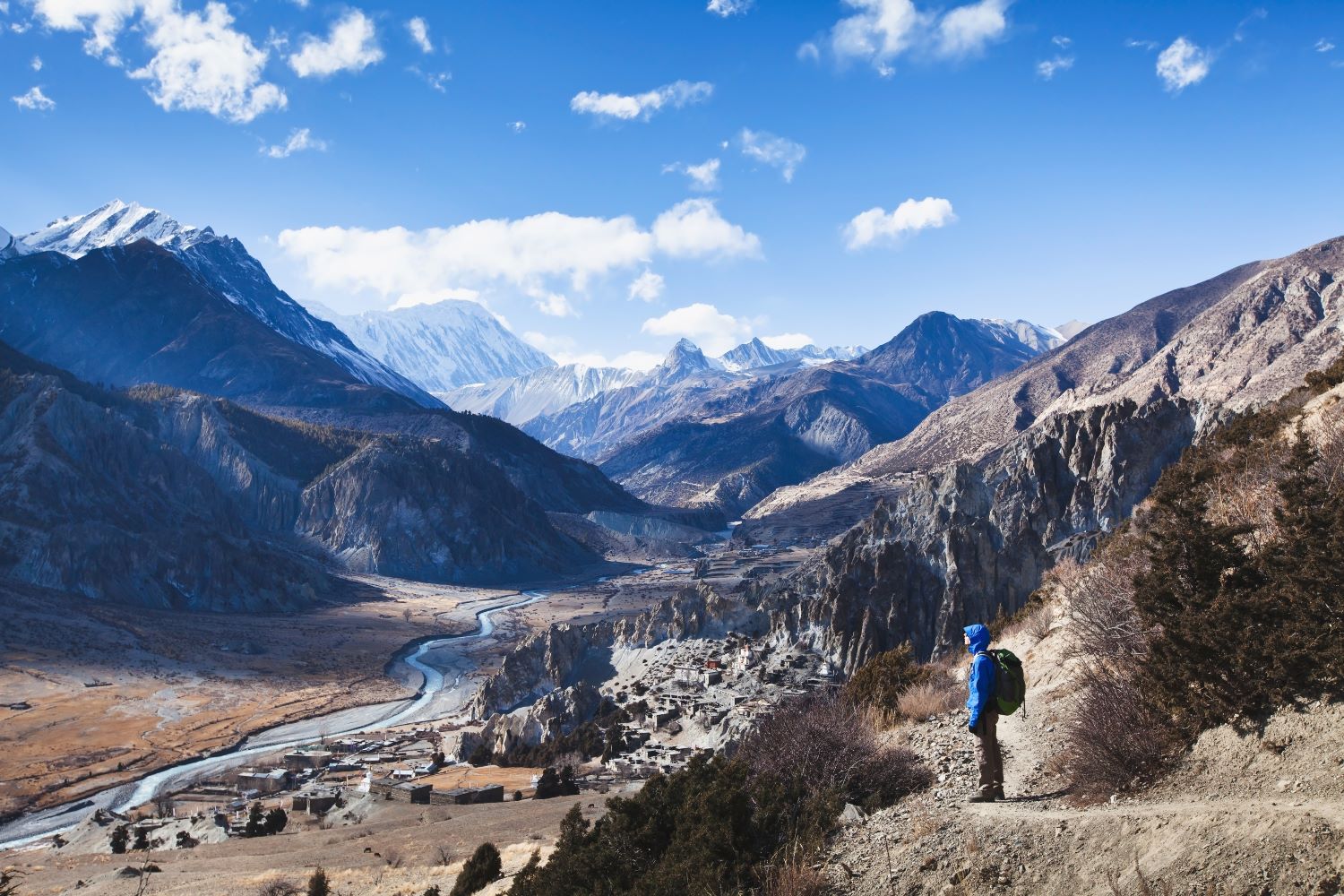
The Ultimate Guide to Trekking Annapurna: The Himalayan Highlights Reel
For many hikers around the world when they hear about Nepal , in their mind they usually think about the beautiful silhouette of the mystical giants located in the Himalayas of Nepal. Most of the hikers will only think about Everest when they are asked about mountains in Nepal and will be on most of the headlines and news on various travel related channel and blogs . Due to this Annapurna might be less popular but it also bring memorable memories for all trekkers who walk through its trail while enjoying beautiful sights along the way of trail .
Located in north-central Nepal, the Annapurna massif is a 55km-long wall of rock and ice that contains one peak over 8,000m (Annapurna I), thirteen peaks over 7,000m, and sixteen more over 6,000m. To trek here is to walk through a “Himalayan highlights reel”—a journey that transitions from subtropical rice paddies and lush rhododendron forests to high-altitude alpine deserts and glacial basins.
Whether you are aiming for the full loop of the Annapurna Circuit or the deep mountain immersion of the Annapurna Sanctuary, here is everything you need to know to plan your adventure.
1. About the Annapurna Region: The Basics
The Annapurna region is protected by the Annapurna Conservation Area Project (ACAP), the largest protected area in Nepal.
Geography & Peaks
The massif is anchored by Annapurna I (8,091m), the 10th highest mountain in the world and famously the first 8,000m peak ever summited (by Maurice Herzog and Louis Lachenal in 1950). To its west lies the Kali Gandaki Gorge, the deepest gorge in the world, which separates Annapurna from Dhaulagiri (8,167m). To the south sits the vibrant lakeside city of Pokhara, the gateway for most treks in the region.
The Name
“Annapurna” is derived from Sanskrit, meaning “Goddess of the Harvests” or “The Provider of Nourishment.” In Hindu tradition, she is the goddess of food and cooking, and the fertility of the valleys below these peaks is a testament to the life-giving waters that flow from their glaciers.
2. Choosing Your Route: Circuit vs. Sanctuary
The two most famous routes in the region offer vastly different experiences. Choosing between them depends on your time, fitness level, and what you want to see.
The Annapurna Circuit
The Circuit is a world-renowned “thru-hike” that circles the entire Annapurna massif.
-
Duration: 12–22 days (depending on side trips and transport).
-
Max Altitude: 5,416m (Thorong La Pass).
-
Difficulty: Challenging.
-
The Vibe: High diversity. You start in the lush lowlands and end in the arid, Tibetan-influenced landscape of Mustang. Because it is a loop, the scenery changes every single day.
The Annapurna Sanctuary (Annapurna Base Camp)
This route heads straight into the heart of the mountains rather than around them.
-
Duration: 10–13 days.
-
Max Altitude: 4,130m (Annapurna Base Camp).
-
Difficulty: Moderate to Strenuous.
-
The Vibe: Peak immersion. You hike into a natural amphitheater surrounded by a ring of giants. It is an “out-and-back” route, meaning you’ll retreat along some of the same paths, but the views of Machhapuchhre (Fishtail) and Annapurna South are unparalleled.
3. The Annapurna Circuit: Core Route Details
The “Classic” Circuit traditionally begins in Besisahar and ends in Nayapul. However, due to road construction, many modern itineraries are being reimagined.
The Ascent: From Jungle to Alpine
The first few days are spent following the Marshyangdi River. You’ll walk through terraced fields and Hindu villages like Tal and Dharapani. As you gain altitude, the air cools, the jungle thins into pine forests, and the culture shifts toward Tibetan Buddhism.
Manang and Acclimatization
Manang (3,540m) is the critical hub of the trek. Most hikers spend at least two nights here to acclimatize. It’s a medieval-feeling village with stone houses and spectacular views of the Annapurna range. Popular side hikes include Gangapurna Lake or the grueling climb to Ice Lake to prepare your lungs for what’s coming next.
The Crux: Thorong La Pass
Standing at 5,416m (17,769ft), Thorong La is the highest point of the trek and the ultimate physical challenge. The “Pass Day” usually involves a 3:00 AM start from Thorong Phedi or High Camp. It is a slow, rhythmic trudge through snow and thin air, rewarded by prayer flags fluttering at the summit and a staggering 1,600m descent into the sacred village of Muktinath.
4. Alternative Annapurna Hikes
If you don’t have three weeks, the region offers shorter “highlight” treks that are just as rewarding.
The Poon Hill-Ghorepani Trek
If you only have 4–5 days, this is the gold standard. It culminates in a sunrise hike to the top of Poon Hill (3,210m), offering a panoramic view of both the Dhaulagiri and Annapurna ranges. It is famous for its “rhododendron forests,” which bloom in brilliant pinks and reds during the spring.
Lake Tilicho
For those on the Circuit who want an extra challenge, the detour to Lake Tilicho (4,919m) is legendary. It is one of the highest lakes in the world, sitting in a stark, glacial bowl. It adds about 2-3 days to the Circuit but offers some of the most dramatic “lunar” landscapes in the Himalayas.
5. Planning and Logistics
When to Go
-
Autumn (Oct–Nov): The most popular time. The monsoon has washed the dust away, the air is crystal clear, and the views are at their sharpest.
-
Spring (Mar–May): The second peak season. Temperatures are warmer, and the rhododendrons are in full bloom.
-
Winter (Dec–Feb): Cold and quiet. Thorong La Pass may be closed due to heavy snow, but lower treks like Poon Hill are beautiful and crowd-free.
-
Monsoon (Jun–Sep): Not recommended for most, though the Mustang region (north of the mountains) sits in a “rain shadow” and remains dry.
New 2023 Guide Requirements
As of April 1, 2023, the Nepal Tourist Board mandated that all foreign trekkers must be accompanied by a licensed guide. Solo trekking is no longer permitted in most mountain regions, including Annapurna. This change aims to improve safety and support the local economy.
Permits
You need two main permits for this region:
-
ACAP (Annapurna Conservation Area Permit): Roughly $30 USD.
-
TIMS Card (Trekkers’ Information Management System): Roughly $20 USD. Note: Your guide or trekking agency will usually handle these for you.
Avoiding the Roads
One of the biggest complaints about the Annapurna Circuit is the encroachment of roads. To stay off the dust, look for the NATT (New Annapurna Trekking Trails) markers. These are color-coded (usually red/white or blue/white) and lead you away from the jeep tracks and back onto traditional footpaths.
6. Life on the Trail: Teahouses and Food
The Annapurna region is famous for its Teahouse Culture. You don’t need to carry a tent or a week’s worth of food.
-
Accommodation: Teahouses are basic mountain lodges. You’ll typically get a twin room with wooden beds and foam mattresses. Above 3,000m, rooms are unheated, so a high-quality sleeping bag is essential.
-
The Food: The “national fuel” of the trek is Dal Bhat (lentil soup, rice, and vegetable curry). It is usually “bottomless,” meaning you can get refills until you’re full. Most teahouses also serve pasta, pancakes, and even “yak burgers” in lower elevations.
-
Connectivity: Many teahouses now offer Wi-Fi (for a small fee) and solar charging for electronics. However, expect these to become less reliable the higher you go.
7. Packing Essentials
-
Footwear: Broken-in, waterproof hiking boots are non-negotiable.
-
Layers: A “system” is key. Think moisture-wicking base layers, a warm fleece mid-layer, and a heavy down jacket for the evenings.
-
The “Hot Water Bottle” Trick: Bring a metal water bottle (like a Sigg). At night, you can fill it with boiling water at the teahouse, shove it in your sleeping bag to keep your feet warm, and then drink the (now purified) room-temperature water in the morning.
-
Medical: Carry water purification tablets, high-SPF sunscreen, and a basic first-aid kit including blister pads and Diamox (for altitude).
8. Safety: Altitude and Acclimatization
Altitude sickness (AMS) is the primary risk on the Annapurna Circuit. The rule is simple: Walk slow, drink more water than you think you need, and never skip an acclimatization day.
If you experience a persistent headache, nausea, or dizziness, do not go higher. The only “cure” for severe altitude sickness is descent. Most organized tours build in extra days for safety, which is why the 16-night duration is often recommended over “speed-running” the route.
9. Frequently Asked Questions
How Many Summits Does Annapurna Have?
The Annapurna massif is composed of six major summits. Annapurna I is the crown jewel at 8,091m (26,545ft), followed by its siblings: Annapurna II, III, IV, Annapurna South, and Gangapurna. Together, these peaks create a formidable wall of rock and ice that dominates the Himalayan horizon.
How Difficult is the Annapurna Circuit Trek?
The trek is generally classified as challenging. You should expect to hike between five and seven hours daily over several consecutive days, culminating in the high-altitude crossing of the Thorong La Pass at 5,416m (17,769ft).
However, “difficulty” is subjective and influenced by several factors:
-
Fitness & Mentality: Your physical preparation and mental resilience are just as vital as previous trekking experience.
-
Modern Short-cuts: The expansion of dirt roads now allows trekkers to use jeeps to skip the lower sections, effectively shortening the trek.
-
Route Choice: Many hikers opt for traditional mountain trails to avoid the dusty roads, which adds time but increases the scenic reward.
-
Support: Hiring a porter to carry your heavy gear significantly reduces the physical strain. If you do hire support, ensure you use a reputable local guide to guarantee the porters are fairly paid, well-trained, and adhere to safe weight limits.
Why is Annapurna I Considered So Dangerous?
Annapurna I holds a dual legacy in mountaineering history. It was the first 8,000m peak ever summited (by Maurice Herzog’s French team in 1950), but it also carries the highest fatality rate of all fourteen “eight-thousanders.” With a tragic ratio of approximately 34 deaths for every 100 successful summits, it remains a peak that most adventurers prefer to admire from the safety of the circuit below rather than attempt to climb.
How Long Does It Take to Walk the Annapurna Circuit?
The duration typically ranges from 12 to 22 days, covering a distance of 99 to 143 miles (160km–230km).
-
The Traditionalist Route: Sticking strictly to the footpaths while avoiding the modern roads usually takes around 19 days.
-
The Modern Route: Utilizing vehicle transport for certain sections can condense the trip into roughly two weeks.
How High is Annapurna Base Camp?
Annapurna Base Camp (ABC) sits at an elevation of 4,130m (13,550ft). This is the ultimate destination of the Annapurna Sanctuary trek, providing hikers with a 360-degree view from the floor of the glacial basin.
Final Thoughts
Trekking in the Annapurna region is more than just a physical challenge; it is a cultural pilgrimage and a lesson in perspective. As you stand at the top of a 5,000m pass, surrounded by peaks that have stood for millions of years, the stresses of modern life tend to evaporate.
Whether you choose the 360-degree journey of the Circuit or the intimate sanctuary of the Base Camp, Annapurna remains one of the greatest adventures on Earth. Pack your bags, find a local guide, and prepare for the walk of a lifetime.