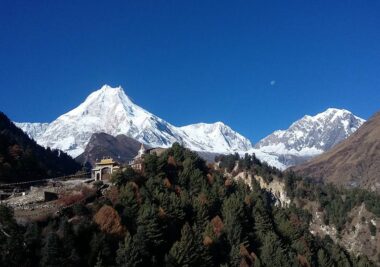
Major Mountain Views and Highlights of Manaslu Circuit Trek
The Manaslu Circuit Trek is one of Nepal’s most rewarding Himalayan adventures, offering an incredible combination of towering mountains, dramatic landscapes, traditional mountain villages, and fascinating cultural experiences. Located in the Gorkha district of north-central Nepal, this spectacular trekking route circles Mount Manaslu, the world’s eighth-highest mountain at 8,163 meters (26,781 feet).
What makes this journey particularly special is the variety of scenery along the trail. Trekkers begin their adventure beside the rushing Budhi Gandaki River, walk through green forests and terraced farmland, explore traditional settlements, and gradually enter the impressive alpine environment of the Manaslu Himalayas. As the elevation increases, magnificent snow-covered peaks become increasingly visible.
The mountain views on the Manaslu Circuit Trek are among its biggest attractions. From the impressive presence of Mount Manaslu around Lho and Shyala to the breathtaking panoramas from Larkya La Pass, every section offers a different perspective of the Himalayan landscape.
Beyond the mountains, the trek introduces visitors to traditional Tibetan-influenced communities, ancient Buddhist monasteries, glacial lakes, suspension bridges, and peaceful valleys. These experiences make Manaslu much more than a mountain trekking destination.
Whether you are a passionate photographer, an experienced trekker, or someone looking for an authentic Himalayan adventure, the Manaslu Circuit offers plenty of memorable experiences.
Let’s explore the major mountain views and highlights that make this trek one of Nepal’s most remarkable trekking destinations.
1. Magnificent Views of Mount Manaslu (8,163 m)
Mount Manaslu is the main attraction of the Manaslu Circuit Trek. Standing at 8,163 meters above sea level, it is the eighth-highest mountain in the world and dominates the surrounding Himalayan landscape.
The name Manaslu comes from the Sanskrit word Manasa, commonly associated with the mind or spirit. The mountain is also known as the Mountain of the Spirit.
Although Mount Manaslu is visible from different sections of the trekking route, the views become particularly impressive as trekkers approach Namrung, Lho, Shyala, and Samagaon.
The mountain gradually reveals its enormous snow-covered slopes, glaciers, and rugged ridges. From Shyala Village, trekkers can enjoy particularly impressive views of the Manaslu massif surrounded by several neighboring Himalayan peaks.
Early morning is generally one of the best times to photograph Mount Manaslu. When sunlight reaches the upper mountain slopes, the snow-covered summit and surrounding ridges create a beautiful contrast against the blue Himalayan sky.
For many trekkers, seeing Mount Manaslu up close is one of the most unforgettable moments of the entire journey.
2. Himalchuli (7,893 m): A Stunning Himalayan Giant
Himalchuli is another impressive mountain visible during the Manaslu Circuit Trek. Rising to approximately 7,893 meters, this magnificent peak forms part of the spectacular Himalayan skyline surrounding the Manaslu region.
Its massive ridges and snow-covered slopes create a dramatic mountain landscape, particularly around the higher villages.
Himalchuli is especially noticeable from the Shyala area, where it contributes to the panoramic mountain scenery alongside Mount Manaslu and Ngadi Chuli.
Unlike some mountains that appear only briefly along the route, Himalchuli remains an important part of the surrounding landscape as trekkers move through the upper Manaslu Valley.
Its impressive appearance makes it an excellent subject for landscape photography, especially during clear mornings when the mountain’s snow-covered ridges are sharply visible.
3. Ngadi Chuli (7,871 m): The Impressive Peak 29
Ngadi Chuli, also called Peak 29, is one of the remarkable mountains surrounding the Manaslu region. With an elevation of approximately 7,871 meters, it is among the prominent Himalayan giants visible from parts of the trekking route.
The mountain adds considerable beauty to the landscape around Shyala and the upper Budhi Gandaki Valley.
Ngadi Chuli is particularly impressive when viewed together with Mount Manaslu and Himalchuli. These three enormous mountains create a spectacular Himalayan panorama that makes the Shyala area one of the most memorable scenic locations on the trek.
For photographers, the changing sunlight on the mountain faces provides excellent opportunities to capture different colors and textures throughout the day.
The surrounding landscape of alpine meadows, traditional settlements, and snow-covered peaks makes this section especially rewarding.
4. Sringi Himal (7,161 m): Beautiful Mountain Scenery Near Namrung
Sringi Himal is another spectacular mountain that contributes to the beauty of the Manaslu trekking region.
Standing at approximately 7,161 meters, this impressive Himalayan peak is particularly noticeable around the Namrung and Lho sections of the route.
As trekkers climb beyond Namrung, the landscape gradually changes. Dense forests become thinner, traditional villages appear, and the surrounding mountains become more prominent.
Sringi Himal provides a magnificent backdrop to this transition.
The combination of traditional stone houses, Buddhist prayer flags, green hillsides, and distant snow-covered mountains makes this part of the trek particularly attractive.
It is also a wonderful opportunity to experience the gradual transformation of the landscape from subtropical river valleys to the higher Himalayan environment.
5. Shyala Village: One of the Best Mountain Viewpoints
Shyala Village is widely regarded as one of the most beautiful scenic stops on the Manaslu Circuit Trek.
Situated at approximately 3,500 meters, this traditional mountain settlement offers an impressive panoramic view of the surrounding Himalayan peaks.
The village is surrounded by spectacular mountains, including Mount Manaslu, Himalchuli, and Ngadi Chuli. Their enormous snow-covered slopes create an unforgettable mountain setting.
Unlike narrow valleys where mountains are visible only from limited angles, Shyala provides a more open landscape. This makes it an excellent place to appreciate the scale and beauty of the Manaslu Himalayas.
Trekkers often spend additional time enjoying the scenery, taking photographs, and exploring the village.
The peaceful atmosphere, traditional architecture, and surrounding alpine landscape make Shyala one of the most rewarding places to experience the natural beauty of the Manaslu region.
6. Birendra Lake: A Beautiful Glacial Lake Below Manaslu
Birendra Lake, also known as Birendra Tal, is one of the most attractive natural highlights of the Manaslu Circuit Trek.
Located near Samagaon at approximately 3,691 meters, this beautiful glacial lake is fed by water from the surrounding glaciers of Mount Manaslu.
The lake is particularly famous for its striking turquoise-colored water and spectacular mountain surroundings.
On calm days, the surface of Birendra Lake can reflect the nearby mountain landscape, creating wonderful photography opportunities. Its peaceful setting offers a refreshing contrast to the demanding walking sections of the trek.
The lake is accessible through a short side excursion from Samagaon, making it a worthwhile addition to the acclimatization day.
Visitors should remember that this is a sensitive glacial environment. It is important to respect local traditions, avoid leaving rubbish, and follow the guidance of local trekking staff.
For travelers who appreciate natural landscapes, Birendra Lake is one of the most beautiful places to visit during the Manaslu Circuit Trek.
7. Pungyen Gompa: Spiritual Beauty Beneath Mount Manaslu
Pungyen Gompa is an important cultural and scenic attraction in the upper Manaslu region.
Located above Samagaon, this Buddhist monastery provides an opportunity to experience the spiritual traditions of the local communities while enjoying magnificent mountain scenery.
The monastery is surrounded by rugged hills, open alpine landscapes, and impressive views of Mount Manaslu.
The journey to Pungyen Gompa is also a rewarding experience. Trekkers pass through peaceful mountain surroundings before reaching the monastery, where prayer flags, traditional religious structures, and the quiet atmosphere create a special Himalayan experience.
Pungyen Gompa is particularly meaningful for visitors interested in Tibetan Buddhist culture and mountain spirituality.
The excursion can also provide a valuable opportunity to spend more time at altitude before continuing toward the higher sections of the Manaslu Circuit.
8. Larkya La Pass (5,106 m): The Ultimate Trekking Highlight
Crossing Larkya La Pass is one of the most exciting and challenging experiences of the Manaslu Circuit Trek.
At approximately 5,106 meters (16,752 feet), Larkya La is the highest point of the standard Manaslu Circuit route.
The journey toward the pass usually begins early in the morning from the Dharamsala area. Trekkers walk through high-altitude terrain, rocky trails, and glacial landscapes before reaching the summit.
The effort is rewarded with breathtaking panoramic views of the surrounding Himalayan mountains.
Some of the prominent peaks visible from the pass and its surrounding viewpoints include:
- Himlung Himal
- Cheo Himal
- Kang Guru
- Annapurna II
- Other surrounding snow-covered Himalayan peaks
The landscape around Larkya La is dramatically different from the lower sections of the trek. Green forests and traditional villages have been replaced by rocky slopes, glaciers, frozen terrain, and enormous snow-covered mountains.
Reaching the top of the pass is a major achievement for trekkers. It represents not only the highest elevation of the journey but also one of the most memorable moments of the entire adventure.
Weather conditions can change quickly at this altitude, so proper preparation, suitable clothing, acclimatization, and an experienced guide are essential.
9. Dharamsala: A Gateway to the High Himalayan Landscape
Dharamsala, also commonly called Larkya Phedi, is an important overnight stopping point before crossing Larkya La Pass.
Situated at approximately 4,460 meters, this high-altitude settlement provides basic accommodation for trekkers preparing for the challenging pass crossing.
The surrounding landscape is characterized by rocky hills, mountain ridges, and impressive views of the surrounding Himalayan environment.
As the elevation increases, vegetation becomes increasingly limited, and the landscape takes on a rugged alpine appearance.
Dharamsala is not simply a place to spend the night. It is an important part of the overall trekking experience because it gives trekkers time to rest and prepare for the next day’s demanding journey.
The cold temperatures and thin air make proper preparation particularly important.
10. Budhi Gandaki River: Scenic Trails Through Deep Valleys
The Budhi Gandaki River is one of the most recognizable natural features of the Manaslu Circuit Trek.
The river accompanies trekkers through several lower and middle sections of the route, creating a beautiful landscape of deep valleys, rocky cliffs, waterfalls, and forested hillsides.
In the lower elevations, the trail passes through green agricultural areas and subtropical vegetation. As trekkers move higher, the river flows through increasingly dramatic mountain gorges.
One of the interesting aspects of trekking beside the Budhi Gandaki is the changing environment.
Trekkers cross numerous suspension bridges, walk along narrow mountain paths, and experience the sound of rushing water below the trail.
The river also provides a visual connection between the different landscapes of the Manaslu region.
From warm lower valleys to cold alpine environments, the journey alongside the Budhi Gandaki demonstrates the remarkable geographical diversity of Nepal.
11. Traditional Mountain Villages and Tibetan Buddhist Culture
The Manaslu Circuit Trek is not only about mountain scenery. Its traditional villages and cultural heritage are equally important highlights.
Several settlements along the route preserve traditional architecture, Buddhist religious practices, and lifestyles influenced by Tibetan culture.
Some of the most interesting villages include:
Jagat
Jagat is an important settlement along the lower Manaslu trekking route. It features traditional houses, stone-paved paths, and beautiful surroundings beside the Budhi Gandaki River.
Deng
Deng is a peaceful mountain village surrounded by forested hills and dramatic valley scenery. It offers an opportunity to experience the traditional lifestyle of communities living in the Manaslu region.
Namrung
Namrung is known for its traditional architecture, Buddhist cultural features, and beautiful views of surrounding mountains. It also marks an important transition toward the higher Himalayan landscape.
Lho
Lho is one of the most scenic villages on the route. The settlement is particularly famous for its impressive views of Mount Manaslu and the nearby Ribung Gompa.
Samagaon
Samagaon is one of the largest and most culturally significant villages in the upper Manaslu region. Located below Mount Manaslu, it is an important acclimatization stop and the starting point for several scenic side trips.
Visiting these villages allows trekkers to learn about traditional Himalayan life, local customs, Buddhist traditions, and the hospitality of mountain communities.
12. Ribung Gompa: A Cultural Landmark in Lho Village
Ribung Gompa is an important Buddhist monastery located in Lho Village.
Surrounded by traditional mountain houses and impressive Himalayan scenery, the monastery is one of the most recognizable cultural landmarks along the Manaslu Circuit.
The monastery provides a wonderful setting to understand the Buddhist traditions practiced by local communities.
Colorful prayer flags, religious decorations, and the peaceful surroundings contribute to its spiritual atmosphere.
One of the most attractive aspects of visiting Ribung Gompa is the mountain scenery. Mount Manaslu rises dramatically behind the village, creating a beautiful combination of natural and cultural attractions.
For trekkers interested in both Himalayan landscapes and local traditions, Lho and Ribung Gompa deserve a place among the major highlights of the journey.
13. Diverse Landscapes: From Green Forests to Alpine Wilderness
One of the biggest attractions of the Manaslu Circuit Trek is the remarkable variety of landscapes encountered along the route.
The journey begins in relatively warm, green river valleys and gradually moves into the colder alpine environment of the Himalayas.
During the lower sections, trekkers encounter:
- Terraced agricultural fields
- Bamboo and subtropical forests
- Waterfalls and natural streams
- Suspension bridges
- Traditional hillside villages
As the route gains elevation, the environment changes to include:
- Pine and rhododendron forests
- Open mountain meadows
- Rocky cliffs and ridges
- Alpine grasslands
- Glacial valleys and snow-covered mountains
This gradual transformation makes the Manaslu Circuit particularly attractive to nature lovers and photographers.
Each trekking day offers a different landscape, ensuring that the journey remains visually interesting from beginning to end.
14. Explore the Sacred Tsum Valley
Tsum Valley is a beautiful and culturally significant region located in the northern part of the Manaslu area.
Although it is not included in every standard Manaslu Circuit itinerary, trekkers can extend their journey to explore this remarkable valley.
Often associated with its traditional Tibetan Buddhist heritage, Tsum Valley is known for ancient monasteries, peaceful villages, dramatic mountain landscapes, and a strong connection to traditional Himalayan culture.
Some of the notable attractions include:
- Mu Gompa
- Rachen Gompa
- Traditional Buddhist villages
- Ancient monasteries and religious sites
- Spectacular views of Ganesh Himal and surrounding mountains
The valley offers a different experience from the main Manaslu Circuit route.
Instead of focusing primarily on crossing a high mountain pass, visitors can spend more time exploring traditional settlements, religious landmarks, and remote Himalayan landscapes.
Adding Tsum Valley requires additional trekking days and appropriate restricted-area permits, but it can make the overall Manaslu adventure even more rewarding.
15. Less Crowded Trails and a Peaceful Himalayan Experience
Compared with some of Nepal’s more popular trekking destinations, the Manaslu Circuit generally offers a quieter and more remote trekking experience.
The region’s restricted-area status helps regulate tourism and preserve its natural and cultural character.
As a result, trekkers can enjoy a greater sense of wilderness along many sections of the route.
The peaceful environment allows visitors to appreciate the sounds of nature, the beauty of mountain villages, and the impressive surrounding landscapes without the same level of foot traffic found on some busier trails.
However, the Manaslu Circuit is becoming increasingly popular, particularly during the spring and autumn trekking seasons.
Its combination of spectacular mountain views, cultural heritage, and challenging terrain continues to attract adventure travelers from around the world.
Best Time to Enjoy Mountain Views on Manaslu Circuit Trek
Choosing the right season is important for enjoying clear mountain views and comfortable trekking conditions.
The two most popular trekking seasons are spring and autumn.
Spring (March to May)
Spring is an excellent time for the Manaslu Circuit Trek.
During this season, temperatures gradually become warmer, forests begin to bloom, and rhododendron flowers add color to the lower sections of the trail.
The weather is generally suitable for trekking, although occasional clouds and snowfall can occur at higher elevations.
Spring is particularly attractive for nature lovers who want to enjoy both mountain scenery and flowering landscapes.
Autumn (September to November)
Autumn is generally considered one of the best seasons for the Manaslu Circuit Trek.
After the monsoon, the atmosphere often becomes clearer, providing excellent opportunities to enjoy distant Himalayan mountain views.
The surrounding landscapes appear fresh, and the visibility is frequently excellent during stable weather conditions.
October and November are especially popular months for trekkers.
Winter (December to February)
Winter brings colder temperatures and challenging conditions to the higher sections of the Manaslu Circuit.
Heavy snowfall can affect the Larkya La Pass, and extreme cold may make the crossing difficult or unsafe.
Winter trekking is possible only with careful planning and suitable weather conditions.
Monsoon (June to August)
The monsoon season brings heavy rainfall to many lower sections of the Manaslu region.
Trails may become slippery, landslides can occur, and cloud cover frequently limits mountain visibility.
Although the landscape becomes lush and green, this is generally a less favorable season for the standard Manaslu Circuit Trek.
Tips for Enjoying the Best Mountain Views During the Trek
To make the most of the mountain scenery, trekkers should consider a few practical suggestions.
1. Start walking early: Morning conditions often provide clearer mountain views before clouds develop later in the day.
2. Allow enough acclimatization time: Spending sufficient time at higher elevations helps your body adjust and makes the trekking experience safer.
3. Carry a good camera: The Manaslu region offers excellent photography opportunities, from mountain panoramas to traditional villages and glacial lakes.
4. Choose the right season: Spring and autumn generally provide the most favorable conditions for enjoying Himalayan scenery.
5. Spend extra time in scenic villages: Places such as Lho, Shyala, and Samagaon offer some of the most impressive mountain landscapes along the route.
6. Hire an experienced trekking guide: A knowledgeable local guide can help identify mountain peaks, explain local culture, and manage the challenges of the route.
7. Pack suitable clothing: Temperatures can change significantly with elevation, so warm layers, waterproof clothing, and good trekking boots are essential.
Frequently Asked Questions About Mountain Views on Manaslu Circuit Trek
1. Which mountains can you see on the Manaslu Circuit Trek?
The major mountains visible during the trek include Mount Manaslu (8,163 m), Himalchuli (7,893 m), Ngadi Chuli (7,871 m), Sringi Himal (7,161 m), and several other peaks in the surrounding Himalayan ranges.
2. Is Mount Manaslu visible throughout the trek?
No. Mount Manaslu is not continuously visible from every section of the route. The mountain becomes particularly impressive around Lho, Shyala, and Samagaon, where trekkers can enjoy closer views of the Manaslu massif.
3. Which village offers the best mountain views on the Manaslu Circuit?
Shyala is among the best places for panoramic mountain views. It offers impressive scenery of Mount Manaslu, Himalchuli, and Ngadi Chuli. Lho and Samagaon are also excellent locations for enjoying the Himalayan landscape.
4. What is the highest point of the Manaslu Circuit Trek?
The highest point of the standard Manaslu Circuit Trek is Larkya La Pass, which stands at approximately 5,106 meters (16,752 feet) above sea level.
5. Can you see Mount Manaslu from Larkya La Pass?
The Larkya La crossing offers spectacular views of several surrounding Himalayan peaks. However, it is not the primary viewpoint for the close-up panorama of Mount Manaslu. The best views of the Manaslu massif are generally enjoyed around Shyala, Lho, and Samagaon.
6. Is Birendra Lake worth visiting during the Manaslu Circuit Trek?
Yes. Birendra Lake is one of the most beautiful natural attractions near Samagaon. Its turquoise glacial water and surrounding mountain landscape make it an excellent side trip for nature lovers and photographers.
7. Can beginners enjoy the mountain views on the Manaslu Circuit Trek?
Beginners with good physical fitness and proper preparation can undertake the trek with an experienced guide. However, the route is challenging because of its long walking days, remote location, and high-altitude terrain. Previous trekking experience is beneficial.
8. What is the best month for mountain views on the Manaslu Circuit Trek?
October and November are among the best months for clear mountain views. March, April, and May are also excellent trekking months, offering beautiful mountain scenery and spring landscapes.
9. Do I need a guide for the Manaslu Circuit Trek?
Yes. The Manaslu restricted area has specific trekking regulations, including requirements for a licensed guide, an authorized trekking agency, and the applicable restricted-area permits. Trekkers should check current permit and group requirements before departure.
10. Can I combine the Manaslu Circuit Trek with Tsum Valley?
Yes. Tsum Valley can be combined with the Manaslu Circuit Trek by extending the itinerary. This provides additional opportunities to explore ancient monasteries, traditional villages, and remote Himalayan landscapes.
Conclusion
The Manaslu Circuit Trek is an outstanding Himalayan adventure that combines spectacular mountain scenery, cultural heritage, and diverse natural landscapes. From the impressive presence of Mount Manaslu to the panoramic views of Himalchuli, Ngadi Chuli, and Sringi Himal, the region offers countless opportunities to appreciate the beauty of the Nepalese Himalayas.
The journey becomes even more rewarding with visits to Shyala Village, Birendra Lake, Pungyen Gompa, and the traditional settlements of Lho and Samagaon. Crossing the challenging Larkya La Pass adds another unforgettable dimension to the experience.
Whether you are interested in photography, mountain exploration, cultural discovery, or remote trekking adventures, the Manaslu Circuit offers an exceptional opportunity to experience the Himalayas.
With proper preparation, a suitable trekking season, and an experienced local guide, you can enjoy one of Nepal’s most memorable mountain journeys.