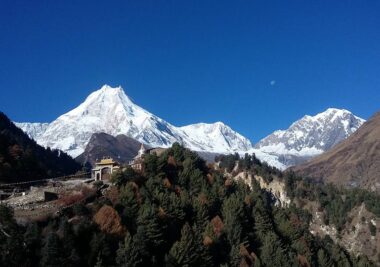
Manaslu Circuit Trek: The Most Spectacular Viewpoints in Nepal
Nepal is famous around the world for its spectacular Himalayan trekking routes, but some trails offer a much quieter and more authentic experience than the country’s busiest trekking destinations. The Manaslu Circuit Trek is one of them.
Located in the Mansiri Himal range of west-central Nepal, the Manaslu Circuit takes trekkers around Mount Manaslu (8,163 m), the eighth-highest mountain in the world. The journey combines dramatic mountain scenery with traditional Himalayan villages, Buddhist monasteries, forests, glaciers, alpine valleys, and the challenging crossing of Larkya La Pass, which rises above 5,100 meters.
What makes this trek particularly memorable is the variety of landscapes. Within a single journey, you can move from green river valleys and subtropical forests to dry, Tibetan-influenced highlands surrounded by enormous snow-covered peaks.
For photographers, nature lovers, cultural explorers, and adventure seekers, the Manaslu Circuit provides countless opportunities to stop, look around, and appreciate the Himalayas.
Why the Manaslu Circuit Has Such Incredible Views
The Manaslu region stands out because its scenery changes dramatically as you gain altitude. Lower sections of the trail feature forests, rivers, terraced fields, and traditional villages. Higher elevations gradually become more rugged, dry, and alpine.
Mount Manaslu remains the dominant mountain throughout much of the journey, but it is far from the only peak worth watching. The surrounding panorama includes Himalchuli (7,893 m), Ngadi Chuli (7,871 m), Cheo Himal (6,820 m), Kang Guru (6,891 m), and Annapurna II, with views toward the Ganesh Himal range in various sections.
The cultural landscape adds another dimension. Stone houses, mani walls, prayer flags, monasteries, prayer wheels, and traditional villages appear alongside the mountain scenery.
Because the Manaslu region is a restricted trekking area, the route generally feels less crowded than some of Nepal’s more established trekking destinations. This gives the journey a more peaceful and exploratory character.
1. Larkya La Pass: The Ultimate Manaslu Viewpoint
If you had to choose one viewpoint that represents the Manaslu Circuit, Larkya La Pass would be an obvious choice.
The pass reaches approximately 5,106–5,160 meters, depending on the source, and represents the highest point of the classic Manaslu Circuit. Reaching it requires a demanding ascent, often beginning early in the morning when temperatures are extremely cold.
As daylight appears, the surrounding mountains gradually become visible. The combination of snow, glaciers, rocky ridges, and distant Himalayan peaks creates an unforgettable high-altitude landscape.
From Larkya La, trekkers can see Larkya Peak, Cheo Himal, Kang Guru, Ganesh Himal, and Annapurna II, along with impressive views toward the Manaslu region.
The prayer flags at the pass add a strong cultural element to the otherwise stark landscape.
Photography tip: Early morning is particularly rewarding because the first sunlight can create beautiful colors across the snowy peaks. A wide-angle lens is useful for capturing the enormous scale of the landscape.
2. Birendra Lake: A Himalayan Mountain Mirror
Near Samagaun lies Birendra Lake, an alpine lake associated with the Punhyen Glacier. Its high-altitude setting provides a completely different visual experience from the dramatic mountain passes.
When the weather is calm, the lake’s surface can reflect the surrounding mountains, creating a striking mirror-like scene. Early morning is generally the best time to experience this effect before wind disturbs the water.
The lake is commonly visited as a side trip during acclimatization in Samagaun. The excursion takes roughly two hours each way according to the supplied material, making it a worthwhile addition for trekkers who have sufficient time and energy.
Photography tip: Visit early when the water is calm. Rocks and alpine vegetation near the shoreline can provide natural foreground elements for landscape photographs.
3. Lho Village: Traditional Culture Beneath Manaslu
At approximately 3,180 meters, Lho is one of the most visually appealing traditional villages on the Manaslu Circuit.
The village features stone houses, narrow paths, prayer wheels, and Buddhist architecture. One of its most recognizable landmarks is Ribung Monastery, which provides an excellent cultural setting against the Himalayan backdrop.
One of the most memorable aspects of Lho is the relationship between the village’s Buddhist architecture and the mountains behind it. From suitable viewpoints, Manaslu rises dramatically beyond the monastery.
The atmosphere becomes particularly beautiful around sunset when warm light falls across the village while the distant mountains take on cooler shades.
Photography tip: Look for compositions that combine the monastery, prayer flags, traditional buildings, and Manaslu in the same frame.
4. Shyala Village: A Panoramic Himalayan Balcony
Shyala, situated at approximately 3,400 meters, is often regarded as one of the best locations on the circuit for broad mountain views.
The village sits in an open landscape with relatively unobstructed views in several directions. From here, trekkers can enjoy views of Manaslu, Himalchuli, Ganesh Himal, and Samdo Peak.
During spring, rhododendron flowers add bright colors to the surrounding hillsides. The combination of colorful vegetation, traditional buildings, prayer flags, and snow-covered mountains makes Shyala especially attractive to photographers.
Sunrise is one of the best times to appreciate the scenery. As the sun reaches the higher summits, the mountains gradually brighten above the valley.
Photography tip: For sunrise, find an elevated position with the village or prayer flags in the foreground to give the image depth.
5. Samdo: Dramatic Landscapes Near the Tibetan Border
At around 3,875 meters, Samdo offers a dramatic change in scenery.
The green landscapes of the lower Manaslu region gradually disappear, replaced by dry slopes, exposed rocks, stone houses, and rugged mountain ridges. The environment feels distinctly Tibetan in character.
The open terrain around Samdo allows trekkers to appreciate the vastness of the high Himalayas. The Tibetan Plateau lies toward the north, while several major Himalayan peaks dominate other directions.
Trekkers looking for additional adventure can consider excursions toward Samdo Ri (5,177 m) or Rui La Pass (4,998 m), depending on their itinerary, conditions, and guide’s advice.
Photography tip: The sparse landscape works particularly well for photographs emphasizing texture, scale, sky, and open space.
6. Pungyen Gompa: Where Culture Meets the Mountains
Pungyen Gompa, located at approximately 3,800 meters, is another memorable viewpoint in the Manaslu region.
The monastery can be reached by a detour from Sama Gaon. The route provides impressive views of surrounding mountains, valleys, and glacier-fed landscapes.
Beyond the scenery, Pungyen Gompa offers an opportunity to experience the spiritual side of the region. Prayer flags, Buddhist structures, prayer wheels, and the peaceful surroundings create an atmosphere that is very different from the more physically demanding sections of the trek.
For visitors interested in both Himalayan landscapes and Buddhist culture, this is one of the more meaningful side trips.
Photography tip: Vertical compositions can emphasize the dramatic difference between the monastery, deep valley, and surrounding mountains.
7. Bhimtang Valley: Beautiful Scenery After Larkya La
After crossing Larkya La, the landscape changes again as trekkers descend toward Bhimtang Valley, around 3,720 meters.
The valley provides a welcome contrast to the rocky and snowy environment around the pass. Broad grassy areas, streams, glacial features, and distant peaks create a more open and peaceful landscape.
Mountains such as Punka Danda and Lamjung Himal contribute to the surrounding panorama, while shepherd shelters and grazing animals add life to the valley.
Bhimtang is particularly attractive later in the day when sunlight creates warm tones across the surrounding mountains.
Photography tip: Use natural elements such as yaks, stone structures, streams, or grazing areas in the foreground to show the scale of the valley.
8. Namrung: The Beginning of the High-Mountain Drama
At approximately 2,630 meters, Namrung represents an important transition point on the Manaslu Circuit.
The village is located in the Nubri Valley and is surrounded by traditional architecture, terraced fields, mani walls, and prayer flags. As trekkers continue higher, the Himalayan scenery becomes increasingly dramatic.
Namrung provides some of the earlier opportunities to appreciate the larger mountain panorama, including views toward Manaslu and Ganesh Himal.
The village is also a good place to slow down and appreciate the cultural character of the region before entering the higher alpine environment.
Photography tip: Sunset photography works particularly well here because the terraces and traditional buildings create several layers between the camera and distant mountains.
9. Manaslu Base Camp: Close to the Eighth-Highest Mountain
For trekkers who have additional time and energy, a side trip to Manaslu Base Camp, at approximately 4,800 meters, provides a much closer perspective of Mount Manaslu.
From the base camp area, the mountain no longer appears as a distant peak. Instead, its glaciers, rocky ridges, and enormous slopes dominate the surrounding landscape.
The journey from Samagaun can be physically demanding, particularly because of the altitude. However, the dramatic views of the Manaslu Glacier and surrounding peaks make it an attractive option for experienced trekkers following a properly acclimatized itinerary.
The environment is also remarkably quiet, allowing visitors to appreciate the immense scale of the mountain.
10. Tsum Valley: A Cultural Extension of the Manaslu Region
Although Tsum Valley is a side journey rather than part of the main Manaslu Circuit, it deserves consideration for trekkers interested in culture and less-visited Himalayan landscapes.
Often described as a hidden valley, Tsum is known for its Tibetan Buddhist heritage, traditional villages, monasteries, chortens, and mani walls.
Important cultural sites include Mu Gompa and Rachen Gompa. The valley’s relative remoteness contributes to its peaceful atmosphere and provides opportunities to experience traditional Himalayan communities.
For travelers who want more than mountain scenery, extending a Manaslu journey toward Tsum Valley can add a strong cultural dimension.
Best Time to Enjoy Manaslu Circuit Viewpoints
According to the supplied information, the two most favorable trekking periods are spring (March to May) and autumn (September to November).
Spring: March to May
Spring combines generally favorable trekking conditions with colorful landscapes. Rhododendrons bloom across many lower and middle-altitude areas, adding color to mountain views.
Autumn: September to November
Autumn is especially attractive for mountain photography because stable weather and clearer skies can provide excellent Himalayan visibility.
Regardless of season, conditions can change quickly at high elevations, so trekkers should remain prepared for cold, wind, snow, and reduced visibility.
Acclimatization on the Manaslu Circuit
Many of the best viewpoints are located at significant elevations, making acclimatization an important part of the trek.
Rest days around Samagaun or Samdo can help trekkers adjust to altitude while also allowing time for side trips such as Birendra Lake, Pungyen Gompa, or Manaslu Base Camp.
The goal should not simply be to reach viewpoints quickly. Proper pacing, adequate rest, hydration, and attention to symptoms are essential when trekking at high altitude.
Photography Tips for the Manaslu Circuit
The Manaslu Circuit is ideal for landscape photography, but high-altitude conditions require some preparation.
- Shoot around sunrise and sunset: Soft light often creates the most dramatic mountain scenes.
- Carry a wide-angle lens: Useful for large Himalayan panoramas.
- Consider a telephoto lens: It can isolate distant peaks and compress layers of mountains.
- Use natural foregrounds: Prayer flags, rocks, villages, yaks, monasteries, and trails can add scale.
- Protect your equipment: Cold, moisture, dust, and changing weather can affect cameras and lenses.
- Be flexible: Clouds and changing weather can sometimes create more atmospheric photographs than completely clear skies.
Most importantly, photography should never come before safety. Avoid unstable edges, icy sections, and exposed terrain simply to capture a photograph.
Manaslu Circuit Safety Tips
The Manaslu Circuit combines long trekking days with significant elevation gain, so preparation is important.
Keep these points in mind:
- Ascend gradually and follow your itinerary’s acclimatization schedule.
- Drink enough water throughout the day.
- Start early when appropriate to take advantage of better morning conditions.
- Watch for symptoms of altitude sickness and immediately inform your guide if they occur.
- Carry suitable clothing for rapidly changing mountain weather.
- Avoid rushing on steep, icy, or exposed sections.
- Follow the advice of your local trekking guide, especially around high passes and side trips.
Why You Should Trek the Manaslu Circuit
The Manaslu Circuit is much more than a mountain trek. Its appeal comes from the combination of spectacular Himalayan scenery, traditional villages, Buddhist culture, challenging high-altitude terrain, and quieter trails.
From the first mountain views around Namrung and Lho to the wide panorama of Shyala, the alpine landscapes of Samdo, the spiritual atmosphere of Pungyen Gompa, and the dramatic crossing of Larkya La, the scenery continuously changes.
Birendra Lake offers peaceful reflections, Manaslu Base Camp brings trekkers close to the mountain itself, and Bhimtang provides a beautiful sense of reward after crossing the pass.
For travelers searching for a Himalayan adventure that combines impressive landscapes with cultural depth and a stronger sense of exploration, the Manaslu Circuit Trek is an excellent choice.
Every section of the trail has something different to offer. The mountains may be the main attraction, but the villages, people, monasteries, valleys, and quiet moments along the trail are what turn the journey into a lasting Himalayan experience.