Discover the Langtang Valley, an off-the-beaten trail paradise. Explore Kyanjin Gompa, spot the red panda, and witness the majestic Langtang Lirung. Start your adventure today
Have you ever wondered if it’s still possible to find a slice of the Himalayas that feels like a well-kept secret? While the trails to Everest and Annapurna continue to buzz with crowds, the Langtang Valley remains a sanctuary of peace, offering an off-the-beaten trail experience just a few hours north of the bustling Kathmandu City.
Imagine waking up to the sight of Langtang Lirung piercing a cloudless sky, its icy slopes glowing in the early morning light. This is a place where nature and unique culture don’t just coexist—they thrive. Whether you are seeking an adrenaline rush on the ascent to Kyanjin Ri or a quiet moment of reflection inside the ancient walls of Kyanjin Gompa, this region delivers a trekking experience that feels both grand and deeply personal.
But what is it that truly sets this journey apart? Is it the chance to spot a rare red panda nestled in the birch trees of Langtang National Park, or the legendary hospitality of the Tamang people who have called this valley home for centuries? As we dive into the heart of the “Valley of Glaciers,” you’ll discover why this adventure is the perfect blend of rugged wilderness and soulful tradition. Are you ready to lace up your boots and explore a world where the mountains touch the sky and time seems to stand still?
Spectacular Himalayan Panoramas
Have you ever stood at the base of a giant and felt completely small, yet entirely alive? That is the magic of the Langtang Valley. As you move deeper into the heart of the region, the horizon shifts from lush greenery to a theater of jagged white peaks that seem to defy gravity. But what truly makes these views world-class?
The Giants that Guard the Valley
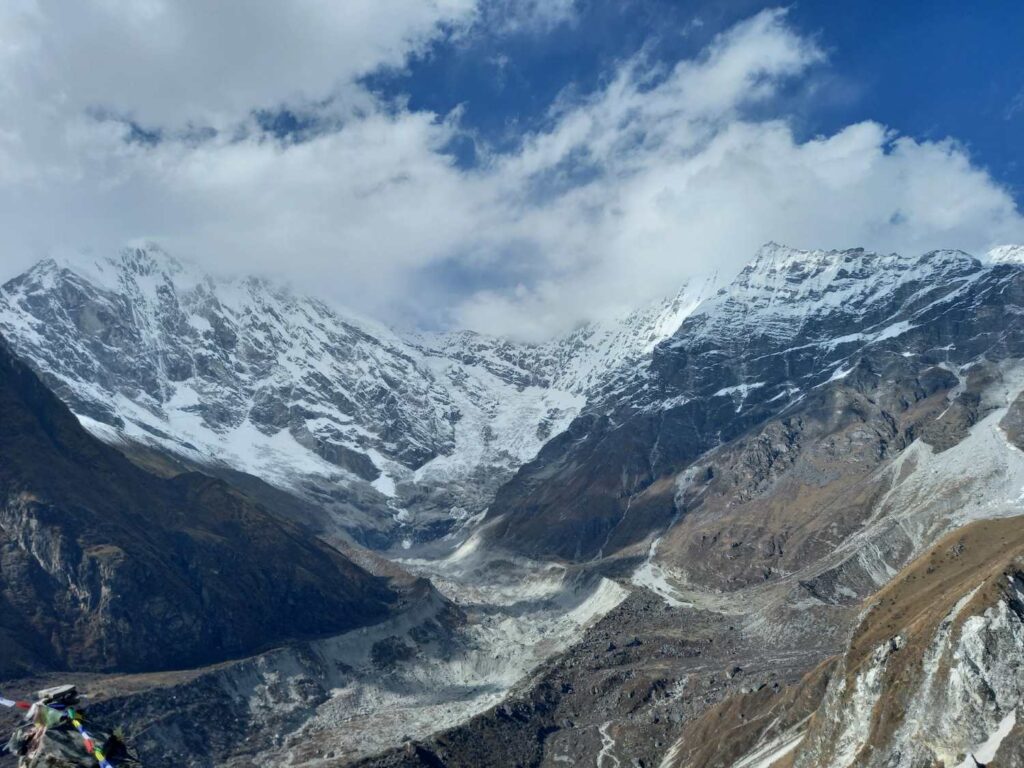
The skyline here is dominated by the Langtang Lirung, the highest peak in the Langtang Himal range. Rising to an impressive $7,227\text{m}$, its massive ice flutes and hanging glaciers create a backdrop that follows you throughout your trekking journey.
However, the panorama isn’t just about one peak. To get the most out of your trekking experience, you have to look for the layers:
-
Langshisha Ri: A sharp, stunning peak that marks the eastern end of the valley.
-
Kimshung: A neighbor to Lirung that offers some of the most dramatic glacial views in the park.
-
Yala Peak: A popular trekking peak that serves as a perfect introduction to high-altitude climbing.
Why You Shouldn’t Skip the Climbs
Are you looking for that ultimate adrenaline rush? While the valley floor is beautiful, the true reward lies in the vertical gain. Many trekkers ask, “Is the extra climb worth it?” The answer is a resounding yes.
-
Kyanjin Ri ($4,773\text{m}$): This is often the first “big” viewpoint for trekkers. From the top, you get a bird’s-eye view of the winding Langtang Glacier and the surrounding amphitheater of rock and ice.
-
Tserko Ri ($4,984\text{m}$): If you are craving a more rugged adventure, this is your summit. It provides a $360^{\circ}$ view that includes the distant peaks of Tibet and the sprawling expanse of the Langshisha Kharka below.
The Power of Moving Ice
It’s not just about the summits; it’s about the valleys they’ve carved. Watching the sunlight hit the blue ice of the Langtang Glacier is a humbling reminder of the power of nature. These glaciers are the lifeblood of the region, feeding the rivers and shaping the very off-the-beaten trail you walk upon.
As you stand at these high vantage points, surrounded by thin air and silence, you realize this isn’t just a hike—it’s a front-row seat to the earth’s most dramatic architecture.
Rich Cultural Immersion and Heritage
Have you ever wondered what gives a trail its soul? While the mountains draw you in, it is the unique culture of the people living in their shadows that will capture your heart. This region isn’t just a park; it is a living museum of Tamang and Sherpa heritage, where every stone and prayer flag tells a story of resilience and faith.
The Spiritual Heart: Kyanjin Gompa
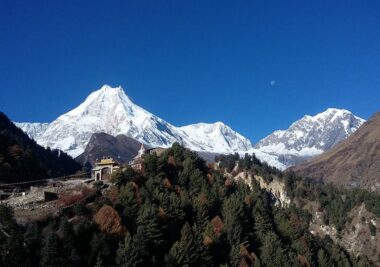
As you reach the upper stretches of the valley, the golden spire of Kyanjin Gompa emerges against the white peaks. This isn’t just a landmark; it’s the spiritual anchor for the entire community.
-
Ancient Murals: Stepping inside the monastery, you’ll find vibrant murals depicting Buddhist deities and cosmic mandalas that have survived the test of time.
-
A Moment of Zen: There is something deeply grounding about listening to the low hum of monks chanting while the wind whistles outside. Can you feel the pace of life slowing down already?
-
Sacred Pathways: As you walk, you’ll encounter long Mani walls—stones intricately carved with mantras. Remember to always pass these to your right, a small gesture of respect for local traditions.
Living History in Tamang Villages
The Tamang people are the traditional guardians of this valley. Their history is woven into the very fabric of the landscape. Unlike the more commercialized routes of the Helambu Trek, the villages here offer a raw, authentic look at Himalayan life.
-
Resilience in Action: Many villages, like Mundu and the new Langtang village, have been rebuilt with incredible strength. Staying here allows you to contribute directly to their local economy.
-
Shared Stories: One of the best parts of any trekking experience is sitting around a wood-burning stove in a teahouse, swapping stories with your hosts over a cup of salt-butter tea.
-
Architectural Beauty: Notice the wood carvings on the windows and the stack of firewood—a sign of wealth and preparation in the high mountains.
A Tapestry of Traditions
What makes this cultural encounter so special is that it feels unforced. You aren’t just a tourist; you are a guest in a home that spans generations. Whether you are observing a local festival or simply watching the rhythmic daily life of high-altitude farmers, the sense of community is palpable.
By choosing this off-the-beaten trail, you’re doing more than seeing the world—you’re connecting with a way of life that has remained steadfast for centuries.
Diverse Flora and Fauna of Langtang National Park
Have you ever felt the thrill of knowing a pair of eyes might be watching you from the bamboo thickets? Entering Langtang National Park is like stepping into a sprawling, high-altitude sanctuary where the wild things are. As Nepal’s first Himalayan national park, this region is a treasure trove of nature that transforms with every thousand feet you climb.
The Crown Jewels of Himalayan Wildlife
The park is famous for its biodiversity, but there are a few “celebrities” that every trekker hopes to glimpse. Are you keeping your binoculars ready?
-
The Elusive Red Panda: Often found in the temperate bamboo forests, this shy creature is the star of the park. Spotting one is a rare privilege that defines a true off-the-beaten trail adventure.
-
The Ghost of the Mountains: While incredibly rare, the snow leopard roams the high rocky ridges above the tree line.
-
Himalayan Black Bear: Often seen in the lower forested areas, these powerful mammals add a sense of raw wilderness to your trekking experience.
-
Langur Monkeys: Watch them swing through the treetops as you navigate the lower sections of the trail.
A Botanical Wonderland
The flora and fauna change dramatically as you ascend. One day you are walking through dense, humid forests, and the next, you are in a stark, alpine desert. It’s this variety that keeps your camera shutter clicking.
-
Rhododendron Forests: If you trek in the spring, you’ll find yourself in a sea of pink, red, and white blooms. It’s not just a walk; it’s a floral parade.
-
Lush Oak and Pine: The lower trails offer deep shade and the earthy scent of ancient pine needles, providing a cool sanctuary before the sun hits the open valley.
-
Alpine Meadows: Above $4,000\text{m}$, the trees give way to “Kharkas”—vast pastures where hardy wildflowers bloom and yaks graze peacefully under the peaks.
Why Biodiversity Matters
Why should you care about the moss on the trees or the birds in the sky? Because in Langtang, everything is connected. The health of the forest determines the clarity of the rivers, and the presence of the Himalayan Black bear or the red panda is a sign of a thriving, protected ecosystem.
As you walk silently through these woods, you realize you aren’t just a visitor—you’re a witness to an ancient biological harmony. Do you feel that connection to the earth yet? It’s hard not to when the air is this pure and the forest is this alive.
Unique High-Altitude Flavors
Can you taste the difference between a mass-produced snack and something crafted by hand at 12,000 feet? One of the most surprising delights of the Langtang Valley isn’t found on a map, but on your plate. After days of burning calories on the trail, the local culinary scene offers a trekking experience that nourishes the soul as much as the body.
The Legendary Kyanjin Yak Cheese Factory
You haven’t truly experienced the valley until you’ve visited the famous Yak cheese factory in Kyanjin Gompa. Established with Swiss assistance decades ago, this humble facility produces some of the most sought-after artisanal cheese in Nepal.
-
Farm-to-Table, Elevated: The cheese is made from the milk of “Nak” (the female yak) that graze on high-altitude medicinal herbs and wildflowers.
-
The Perfect Trail Snack: Salty, dense, and packed with protein, a block of fresh cheese is the ultimate fuel for your push toward Kyanjin Ri.
-
A Local Economy Booster: Every bite supports the local herders who maintain these ancient grazing traditions in the Langtang National Park.
Himalayan Comfort Food: More Than Just Fuel
When the temperature drops and the Himalayan mist rolls in, what could be better than a steaming bowl of local specialty? The food here reflects a blend of Tamang and Tibetan influences, designed to keep you warm and energized.
-
Authentic Tibetan Bread: Deep-fried and fluffy, it’s the perfect companion to a morning coffee while you watch the sunrise over Langtang Lirung.
-
The Power of Dal Bhat: As the saying goes, “Dal Bhat Power, 24 Hour!” This lentil soup and rice combo is the backbone of Himalayan nature treks, often served with organic greens grown in the village patches.
-
Salt-Butter Tea: It’s an acquired taste, but this savory, buttery tea is the traditional way to stay hydrated and prevent altitude sickness.
A Toast to Your Adventure
Have you ever noticed how food tastes better when you’ve earned it? Whether it’s sharing a plate of spicy Momos (dumplings) with your guide or sampling a local seabuckthorn juice—packed with more Vitamin C than an orange—these flavors are inseparable from the adventure.
These meals are more than just sustenance; they are a gateway into the unique culture of the mountains. They represent the hospitality of the people who call this rugged landscape home. So, are you ready to put down the protein bars and try something truly authentic?
Practical Adventure Highlights
Is there anything more satisfying than an adventure that feels remote but is surprisingly easy to start? One of the biggest perks of choosing the Langtang Valley is how accessible it is compared to its famous cousins, Everest and Annapurna. You don’t need to board a tiny mountain plane; instead, a scenic drive from Kathmandu City to Syabrubesi puts you right at the trailhead.
Designing Your Perfect Itinerary
The beauty of this region lies in its flexibility. Depending on your timeline and fitness, you can tailor your trekking experience to be as short as a week or as long as a fortnight.
-
The Classic Valley Route: A 7–9 day trip that takes you to the heart of the valley and back, perfect for those who want a “sweet and short” mountain fix.
-
The Tamang Heritage Trek Extension: Looking for more culture? Add this loop to visit ancient villages like Gatlang and Tatopani for a deeper look at the Tamang way of life.
-
The Holy Gosaikunda Trek: For a spiritual challenge, cross the Laurebina Pass (4,610m) to witness the sacred glacier lakes. It’s a strenuous but life-changing addition.
Essential Gear and Preparation
Are you packed and ready to go? Before you leave the city, make sure your kit is up to the task. Even though this is a teahouse trek, the weather in Langtang National Park can be unpredictable.
-
Layer Up: Temperatures can swing from 20 C in the lower forests to 10 C at night in Kyanjin. Bring a high-quality down jacket and thermal base layers.
-
Permits and Regulations: As of 2026, solo trekking is no longer allowed. You must be accompanied by a licensed guide. Your agency will help you secure your Langtang National Park entry permit and TIMS card.
-
Physical Training: While it’s a moderate trek, don’t underestimate the steady climbs. Incorporate cardio and stair-climbing into your routine a few weeks before your flight.
Why 2026 is the Year to Visit
There has never been a better time to visit. The trails have seen significant improvements, and the local teahouses are more resilient and welcoming than ever. By choosing this off-the-beaten trail, you are directly supporting the recovery of communities that have worked incredibly hard to preserve their heritage.
Whether you are pushing for the summit of Yala Peak or simply enjoying a sunset from a teahouse balcony, this region offers a sense of discovery that is becoming rare in the modern world. Are you ready to see why we call this the “Valley of Glaciers”?
Frequently Asked Questions (FAQ)
Whether you are planning your first adventure or are a seasoned pro looking for an off-the-beaten trail experience, you likely have questions about the Langtang Valley. Here are the essential answers to help you prepare for your journey.
1. How do I get to the Langtang Valley from Kathmandu City?
The journey begins in Kathmandu City with a scenic (and often bumpy) drive to Syabrubesi, the gateway to the valley. You can choose between a local bus, which takes about 8–10 hours, or a private jeep, which cuts the time down to roughly 6–7 hours.
2. Is a guide mandatory for the Langtang Valley Trek in 2026?
Yes. To ensure safety and support the local culture, the Nepal Tourism Board now requires all foreign trekkers in Langtang National Park to be accompanied by a licensed guide. This “Organized Exploration” model helps with navigation and provides vital assistance in case of altitude-related issues.
3. What wildlife can I expect to see in the park?
Langtang National Park is a biodiversity hotspot. While exploring the dense forests, keep an eye out for:
-
Red Panda: Often spotted in bamboo-rich areas.
-
Himalayan Black Bear: Occasionally seen in the lower forested sections.
-
Snow Leopard: Extremely rare, but they inhabit the high rocky ridges.
-
Flora and Fauna: You’ll also encounter langur monkeys, Himalayan Tahr, and various species of colorful pheasants.
4. Which is better: Kyanjin Ri or Tserko Ri?
Both offer a massive adrenaline rush, but they serve different purposes:
-
Kyanjin Ri ($4,773\text{m}$): A shorter, steep climb from Kyanjin Gompa that offers a perfect panoramic view of Langtang Lirung and the Langtang Glacier.
-
Tserko Ri ($4,984\text{m}$): A more demanding full-day hike that rewards you with $360^{\circ}$ views of Langshisha Ri, Kimshung, and even peaks across the border in Tibet.
5. Can I combine this with other treks like the Gosainkunda Trek?
Absolutely! Many trekkers choose to extend their trekking experience by connecting the Langtang Valley with the Gosainkunda Trek to see the sacred glacier lakes. If you have more time, you can also explore the Tamang Heritage Trek for deeper cultural immersion or the Helambu Trek for a lush, lower-altitude finish.
6. Is the famous Yak cheese factory still open?
Yes! Located near Kyanjin Gompa, the Yak cheese factory is a highlight for many. You can see the traditional production process and buy fresh cheese to fuel your hike up to Langshisha Kharka or the challenging Ganja La Pass.