Jungle Safari in Nepal: Chitwan, Bardia, Best Time, Wildlife & Travel Guide
Nepal is famous around the world for its Himalayan peaks, trekking routes, and mountain villages, but there is another side of the country that deserves just as much attention. Down in the warm Terai plains, Nepal’s national parks offer an entirely different adventure—jungle safaris.
A safari in Nepal can take you through dense forests, open grasslands, riverbanks, and wetlands where you may encounter one-horned rhinoceroses, Bengal tigers, wild elephants, crocodiles, deer, and hundreds of bird species. Unlike a mountain trek, a jungle safari lets you explore Nepal at a slower pace while watching wildlife in its natural habitat.
Among Nepal’s wildlife destinations, Chitwan National Park and Bardia National Park are the two most popular choices. Chitwan is easier to reach and works particularly well for first-time visitors, while Bardia offers a quieter and more remote experience for travelers who want to spend more time looking for tigers and other wildlife.
This guide explains how the two parks compare, the best season for a safari, what animals you can realistically expect to see, sample itineraries, and how to choose a responsible safari operator.
Why Go on a Jungle Safari in Nepal?
A jungle safari is an excellent addition to a Nepal trip, particularly if you want to experience something beyond trekking and mountain scenery.
There are several reasons safari travel has become increasingly popular:
- Wildlife diversity: Nepal’s lowland parks are home to rhinos, tigers, elephants, crocodiles, deer, monkeys, and numerous bird species.
- Short travel time: A safari can be completed in two to five days, making it easy to add to a longer Nepal itinerary.
- Different landscapes: The Terai’s forests, rivers, grasslands, and wetlands contrast dramatically with the Himalayas.
- Cultural experiences: Many safari programs include visits to local villages and opportunities to learn about Tharu culture.
- Photography opportunities: Wildlife and bird photography are major attractions, particularly in Bardia and Chitwan.
- Nature and conservation: Visiting national parks with responsible operators can contribute to local employment and conservation efforts.
For travelers combining a trek with a wildlife holiday, a short safari can be a rewarding way to finish a Nepal adventure.
Chitwan vs Bardia: Which Safari Is Better?
Choosing between Chitwan and Bardia largely depends on your available time and what you want from the experience.
Chitwan National Park: The Convenient Classic
Best for: First-time safari travelers, families, short holidays, and visitors who want easy access.
Chitwan National Park is Nepal’s best-known wildlife destination and one of the easiest parks to include in a standard Nepal itinerary.
Its accessibility is a major advantage. Travelers can reach the Chitwan area by road from Kathmandu or Pokhara, while flights to Bharatpur provide a faster alternative.
Chitwan Safari Highlights
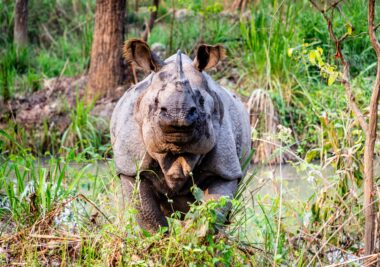
One-horned rhinoceros: Rhinos are one of Chitwan’s biggest attractions, and sightings are relatively common, particularly during the dry season when vegetation is easier to see through.
Bengal tiger: Tigers live in Chitwan, but seeing one is never guaranteed. Your chances can improve during hotter months when wildlife tends to spend more time around water sources.
Other wildlife: Depending on the season and location, you may encounter spotted deer, sambar deer, wild boar, crocodiles, monkeys, and other mammals.
Birdlife: Chitwan is also excellent for birdwatching, with a wide variety of resident and migratory species.
Safari activities: Visitors can choose from jeep safaris, canoe trips, guided jungle walks, birdwatching, and cultural excursions.
How Long Should You Stay in Chitwan?
A 2-night/3-day Chitwan safari is a practical minimum for travelers with limited time. Staying for three nights gives you more opportunities to explore different areas and increases your chances of seeing a wider variety of wildlife.
Bardia National Park: A Quieter Wilderness Experience
Best for: Wildlife enthusiasts, photographers, repeat visitors to Nepal, and travelers who prefer fewer tourists.
Bardia National Park provides a more remote and peaceful safari experience. Compared with Chitwan, it generally receives fewer visitors, which can mean quieter trails and fewer safari vehicles.
Bardia is particularly attractive to travelers whose main goal is wildlife rather than simply adding a safari to their Nepal holiday.
Bardia Safari Highlights
Bengal tigers: Bardia is widely regarded as one of Nepal’s important tiger habitats. The possibility of encountering a tiger is one of the main reasons wildlife enthusiasts choose the park.
Wild elephants: The park is also known for wild Asian elephants, and visitors may encounter elephants moving through forests and grasslands.
Babai Valley: The valley combines open grassland and forest habitats and is an important area for wildlife viewing.
Fewer crowds: The lower number of visitors gives Bardia a more secluded atmosphere than Chitwan.
The Disadvantages of Bardia
The biggest disadvantage is accessibility. Getting to Bardia normally requires a flight to Nepalgunj followed by a road transfer, or a considerably longer overland journey.
There are also fewer accommodation choices compared with the Chitwan area, although good-quality eco-lodges and wildlife-focused properties are available.
How Long Should You Stay in Bardia?
A 3- to 4-night stay is more suitable for Bardia. Because reaching the park takes more time, staying longer allows you to make better use of your travel investment and gives you more wildlife-viewing opportunities.
Chitwan or Bardia: Make Your Choice
Choose Chitwan if:
- You are visiting Nepal for the first time.
- You have only two or three days available.
- You are traveling with children or family.
- You want an easy addition to a Kathmandu or Pokhara itinerary.
- Seeing rhinos is one of your priorities.
Choose Bardia if:
- Wildlife is one of the main reasons for your Nepal trip.
- You want to focus more heavily on tiger sightings.
- You prefer quieter safari routes.
- You are interested in wildlife photography.
- You do not mind spending additional time traveling to a remote park.
Best Time for Jungle Safari in Nepal
The season can make a major difference to both wildlife sightings and your comfort.
In general, the dry months from October to May are the most useful period for safari travel, although each part of the season offers something different.
October to March: Comfortable Safari Season
The period from October through March is generally comfortable for jungle activities.
The weather is cooler, the skies are often clearer, and vegetation becomes less dense after the monsoon. These conditions can make animals easier to spot.
This period is particularly suitable for travelers who want a balance between pleasant temperatures and good wildlife-viewing conditions.
Best for:
- First-time safari visitors
- Families
- Rhino sightings
- General wildlife viewing
- Combining safari with autumn or spring trekking
March to May: Hot Weather and Better Tiger Opportunities
April and May can become extremely hot in Nepal’s Terai region. Afternoon temperatures may be uncomfortable, but the heat can also create interesting wildlife-viewing conditions.
As water becomes scarcer, animals may gather around remaining water sources. Early morning and late afternoon are therefore usually preferable for safari activities.
Best for:
- Tiger-focused trips
- Wildlife photographers
- Experienced safari travelers
- Visitors who can handle hot weather
June to September: Monsoon Season
The monsoon brings heavy rainfall to the Terai. Roads and safari tracks can become muddy, vegetation becomes thick, and flooding may affect access to some areas.
Some safari businesses and park facilities also operate on reduced schedules during this period.
For a conventional wildlife holiday, the monsoon is generally not the most practical season.
What Animals Can You See on a Nepal Jungle Safari?
One of the most important things to understand before booking a safari is that wildlife sightings can never be guaranteed.
National parks are not zoos. Animals move freely, and sightings depend on weather, season, habitat, luck, and the skill of your guide.
Wildlife in Chitwan
Chitwan is particularly famous for:
- One-horned rhinoceros
- Bengal tiger
- Spotted deer
- Sambar deer
- Wild boar
- Sloth bear
- Gharial crocodile
- Mugger crocodile
- Monkeys
- Numerous bird species
Rhinos are among the easiest large animals to encounter in Chitwan. Tigers are much more elusive, so visitors should treat a tiger sighting as a fortunate highlight rather than an expectation.
Wildlife in Bardia
Bardia offers opportunities to see:
- Bengal tiger
- Wild Asian elephant
- One-horned rhinoceros
- Swamp deer
- Nilgai
- Wild boar
- Hyena
- Various reptiles
- A wide range of birds
Bardia’s quieter environment and extensive habitat make it particularly attractive to dedicated wildlife watchers and photographers.
Popular Jungle Safari Activities in Nepal
A jungle safari does not have to mean spending every hour in a jeep. Depending on the park and local regulations, visitors can experience the landscape in several ways.
Jeep Safari
Jeep safaris are the most convenient option for covering larger areas. They allow visitors to travel deeper into the park while accompanied by experienced guides.
Canoe Ride
River and canoe excursions provide opportunities to observe crocodiles, birds, and other wildlife from the water.
Guided Jungle Walk
A guided walk provides a completely different experience from a jeep safari. You move more slowly and become much more aware of sounds, tracks, vegetation, and smaller animals.
Birdwatching
Nepal’s Terai is an excellent destination for bird lovers. Early mornings are particularly rewarding because birds are generally more active.
Tharu Village and Cultural Experiences
A safari can also introduce travelers to the culture and traditions of communities living around the national parks. Tharu cultural experiences are especially associated with the Chitwan region.
Sample 3-Day Chitwan Jungle Safari Itinerary
A short Chitwan itinerary works well for travelers who are already visiting Kathmandu or Pokhara.
Day 1: Arrive in Chitwan
Travel to the Chitwan area and check into your lodge.
Depending on your arrival time, you can take a nature walk, visit a nearby village, explore the surroundings, or enjoy a canoe experience.
Day 2: Full-Day Wildlife Exploration
Start early with a jungle activity when wildlife is more active.
Spend the day exploring different habitats by jeep and take a break during the hottest part of the afternoon. A second safari or birdwatching activity can be arranged later in the day.
Day 3: Morning Safari and Departure
Enjoy one final morning nature activity before leaving Chitwan for Kathmandu, Pokhara, or your next destination.
Sample 4-Day Bardia Wildlife Itinerary
Because Bardia requires more travel time, a longer itinerary is recommended.
Day 1: Nepalgunj to Bardia
Fly to Nepalgunj and continue by road to your lodge near Bardia National Park.
After checking in, take a short orientation walk or relax at the lodge.
Day 2: Wildlife Safari
Begin with an early morning safari. Spend time exploring forest and grassland habitats and looking for rhinos, deer, elephants, birds, and other wildlife.
Day 3: Full-Day Wildlife Exploration
Use another full day for wildlife activities. Depending on local conditions, you may explore areas known for tiger habitat or combine jeep travel with other guided nature experiences.
Day 4: Final Morning and Departure
Take a final morning activity before returning to Nepalgunj for your onward flight.
How to Choose a Responsible Safari Operator
Choosing the cheapest package is not always the best approach. The quality of your guide, safety standards, and attitude toward wildlife can significantly affect your experience.
Before booking, look for an operator that provides:
- Experienced and knowledgeable naturalist guides.
- Properly maintained safari vehicles.
- Clear safety instructions.
- Respectful distances from wildlife.
- Transparent information about park fees and inclusions.
- Local staff and community involvement.
- Sensible waste and plastic-management practices.
- A genuine commitment to conservation.
A good guide should help you understand animal behavior rather than simply trying to get you as close as possible to an animal for a photograph.
Safari Practices to Avoid
Be cautious of operators who:
- Offer suspiciously cheap packages without explaining what is included.
- Encourage drivers to chase animals.
- Drive too close to wildlife.
- Ignore park regulations.
- Promote guaranteed tiger or other wildlife sightings.
- Fail to explain entrance fees and other charges.
- Prioritize photographs over animal welfare.
Responsible tourism is particularly important in wildlife destinations. A memorable safari should not come at the expense of the animals you came to see.
How to Make Your Nepal Jungle Safari More Enjoyable
A little preparation can make your safari significantly more comfortable.
Bring suitable clothing: Lightweight, breathable clothing works well in warm weather, while mornings can be cooler during winter.
Carry binoculars: Many animals and birds will not be close enough to see clearly with the naked eye.
Protect yourself from the sun: Sunglasses, sunscreen, a hat, and adequate water are useful during outdoor activities.
Be patient: Wildlife does not appear on demand. Sometimes the most rewarding experience is simply sitting quietly and observing the forest.
Listen to your guide: Experienced guides can identify animal tracks, calls, movement, and signs that visitors might easily miss.
Avoid excessive noise: Keeping quiet improves your chances of observing wildlife and reduces disturbance.
Frequently Asked Questions
Is jungle safari in Nepal worth it?
Yes. A jungle safari offers a completely different experience from trekking in the Himalayas. Chitwan and Bardia provide opportunities to see rhinos, tigers, elephants, crocodiles, deer, and numerous birds.
Which is better, Chitwan or Bardia?
Chitwan is generally better for convenience, short trips, families, and first-time safari visitors. Bardia is better suited to travelers who want a quieter, more remote wildlife experience and are willing to spend more time traveling.
What is the best month for a jungle safari in Nepal?
The best month depends on your priorities. October through March generally offers comfortable conditions and good overall wildlife viewing, while March through May can be particularly interesting for travelers focused on tigers and willing to tolerate higher temperatures.
Can I see a tiger in Nepal?
Yes, Bengal tigers live in both Chitwan and Bardia. However, no responsible safari operator can guarantee a sighting because tigers are wild and elusive animals.
How many days do I need for a Nepal jungle safari?
For Chitwan, 2 nights and 3 days can provide a worthwhile experience. For Bardia, 3–4 nights is more practical because of the additional travel involved.
Is Nepal suitable for a family safari?
Yes. Chitwan is particularly convenient for families because it is relatively accessible and offers several types of activities. Families should choose activities according to the age and comfort level of children.
Final Thoughts
A jungle safari adds another dimension to a trip to Nepal. Instead of following mountain trails, you can explore riverbanks, forests, and grasslands while looking for some of South Asia’s most fascinating wildlife.
Chitwan National Park is the practical choice for travelers who want accessibility, a short itinerary, and a strong chance of seeing rhinos. Bardia National Park is better for those who prefer a quieter environment and want to dedicate more time to wildlife watching, particularly tiger tracking.
Whichever park you choose, keep your expectations realistic. A successful safari is not simply about ticking animals off a list. It is about experiencing wildlife in its natural environment, learning from local guides, respecting the ecosystem, and supporting responsible tourism.
For travelers combining trekking, cultural sightseeing, and wildlife experiences, a Nepal jungle safari can be the perfect way to discover a completely different side of the country.