The Everest Panorama Trek: World-Class Views Without the Base Camp Burnout
For many, locking eyes with the world’s highest peak is the ultimate bucket-list dream. However, the legendary 14-day slog to Everest Base Camp (EBC)—with its punishing altitude of 5,364 meters, sub-zero nights in glacial winds, and the infamous “EBC cough”—can be a dealbreaker for first-time hikers, families, or those with limited vacation time.
Fortunately, there is a perfect, high-reward compromise: The Everest Panorama Trek (often marketed as the Everest View Trek). This shorter itinerary delivers jaw-dropping, 360-degree panoramas of the world’s most iconic 8,000-meter giants—Everest, Lhotse, Nuptse, and Ama Dablam—without ever forcing you to breach the 4,000-meter (13,123-foot) mark, significantly slashing the risk of Acute Mountain Sickness (AMS).
Here is why this trek is the ultimate “first taste of the Himalaya,” offering a richer, more comfortable experience than the base camp grind:
1. The Sweet Spot of Altitude & Comfort
While EBC trekkers spend multiple nights above 4,500 meters (where oxygen levels drop by nearly 50%), the Panorama Trek’s highest point is typically Kyangjuma Hill (3,850m) or the famous Hotel Everest View (3,880m) —the highest-altitude luxury hotel in the world. This lower ceiling allows you to sleep soundly, drastically reduces headaches and nausea, and means you can enjoy a hot shower and a private room with an en-suite bathroom at most tea houses, luxuries that disappear entirely on the Base Camp trail.
2. The Flight of a Lifetime
Your adventure begins with one of the most spectacular commercial flights on Earth: a 35-minute hop from Kathmandu to Tenzing-Hillary Airport in Lukla (2,860m) . Perched on a cliffside, this tiny airstrip offers vertigo-inducing views out the cockpit window. From here, you bypass the dusty, lower-altitude villages and fly directly into the heart of Sherpa country, saving you 3 days of walking just to reach the scenic zone.
3. The “Living Museum” of Sherpa Culture
Unlike the EBC route, which becomes a single-minded march toward a glacier, the Panorama Trek allows for deep cultural immersion. You will spend two nights in Namche Bazaar (3,440m) , the bustling, horseshoe-shaped trading hub known as the “Gateway to Everest.” Here, you can:
-
Visit the Sherpa Culture Museum and the Himalayan Mountaineering Center to learn about the 1953 first ascent.
-
Hike to the Khunde Hospital, founded by Sir Edmund Hillary, to see his lasting legacy in community healthcare.
-
Sip chang (local millet beer) in a traditional wooden lodge while listening to elderly Sherpas recite stories of legendary summiteers.
4. The Ultimate Sunrise Show (Without the 3 AM Start)
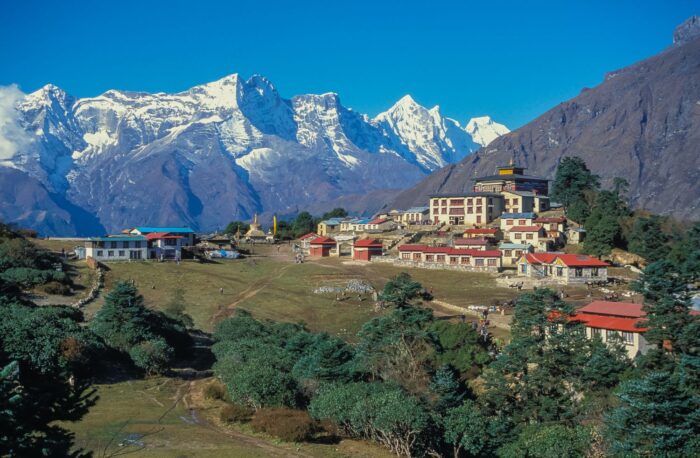
The itinerary is perfectly paced for sunrise photography. A short, 45-minute pre-dawn hike from Namche to the Syangboche Viewpoint rewards you with the famous “golden hour” where the sun strikes the southwest face of Everest in a blaze of orange and pink. For an even more dramatic perspective, you will trek to the iconic Thyangboche Monastery (3,867m) —a spiritual gem framed by the majestic peak of Ama Dablam. The monks’ morning prayers here, accompanied by conch shells and chanting, are as unforgettable as the mountain views.
5. A Glimpse of the High-Altitude Lifestyle
If you are feeling energetic, the itinerary includes a strenuous but rewarding day-hike to Kala Patthar (5,545m) ? No. This is the common misconception. Instead, you hike to the quaint village of Khumjung, where you can view the legendary Yeti Scalp preserved in the local monastery. Alternatively, you can take the gentle, forested trail to Kyangjuma, where you will have a front-row seat to the world’s highest-ever “ridge walk”—a view that is often considered more beautiful than Base Camp itself because you see the peaks in their symmetrical, unfettered glory, rather than from the rubble-strewn glacier floor.
6. Perfect for Every Demographic
-
Time-Savers: The full trek is completed in just 7 to 9 days, making it possible to fit into a single week of leave plus two weekends.
-
Families & Seniors: The trails are well-maintained, with fewer steep, rocky moraines. Children over 10 and active seniors in their 70s frequently complete this trek with smiles.
-
Acclimatization Easy Mode: Because you stay below 4,000m, you only need one dedicated acclimatization day in Namche (versus the 3-4 required on the EBC route), leaving more time to simply relax and soak in the views.
In Short: The Everest Panorama Trek is not a “consolation prize”—it is a smarter, more luxurious, and culturally richer alternative. You still get the iconic snapshot of Everest from the iconic stupa at Thyangboche, you still sleep in cozy lodges with Wi-Fi and bakeries, and you still fly into the world’s most dramatic airstrip. You simply skip the frostbite, the endless rock scrambles, and the sleepless nights, returning to Kathmandu with a camera full of once-in-a-lifetime shots and your energy intact—ready to plan your next adventure.
The Basics: Distance, Elevation, and Duration
While a standard full-package holiday—including your international arrival, a night in Kathmandu, the domestic flight to Lukla, and your return—spans about 9 to 10 days, your actual boots-on-the-ground hiking time is a manageable 7 days. Here is the precise breakdown of what that looks like:
-
Total Round-Trip Distance: 32–36 miles (51–58 km) . This is deceptively gentle; because the trail undulates constantly (you descend into river valleys and climb back out each day), your total vertical gain over the week is actually over 10,000 feet—comparable to a strenuous week of hill walking, just spread over a longer period.
-
Daily Hiking Average: 4 to 6 hours per day, covering roughly 4–6 miles. This leaves ample afternoons for side-excursions, photography, or simply sitting in a teahouse sunroom with a mug of chiya (spiced milk tea) while watching the afternoon clouds roll in.
-
Highest Point: 3,860 meters (12,664 feet) , reached at the famed Tengboche Monastery. However, you will actually sleep slightly lower, at 3,800 meters, which is the golden rule of altitude acclimatization: “climb high, sleep low.” For comparison, the EBC trek requires sleeping at 5,100 meters—a 1,200-meter difference that has a profound impact on your physiology.
-
Total Ascent/Descent: You will climb roughly 2,400 meters (7,900 feet) cumulatively from Lukla to Tengboche, and descend the same back down. The steepest single section is the infamous “Namche Hill” —a relentless 2.5-hour, 600-meter (2,000-foot) climb out of the Dudh Kosi River valley on Day 2. It is tough, but after that, the trail eases into gentler forest switchbacks.
-
Difficulty Rating: Easy to Moderate (Grade 2-3 on a 5-point hiking scale). This trek is suitable for anyone with a basic level of fitness—think regular weekend walks of 5–6 miles, or the ability to climb a few flights of stairs without getting winded. No technical mountaineering or prior trekking experience is required. The biggest physical challenge is the altitude, not the distance.
-
Accommodation: Warm, wood-paneled mountain teahouses run by multi-generational Sherpa families. Unlike the basic, dormitory-style bunkhouses found higher up on the EBC route, these lodges often feature:
-
Private twin/double rooms (no more sharing a room with 10 strangers).
-
Attached bathrooms with flush toilets (a luxury that disappears above 4,200 meters).
-
Common dining halls with pot-bellied stoves, where you can charge your devices (for a small fee) and swap stories with trekkers from around the world.
-
Wi-Fi access via local Everest Link satellite networks (available in Namche, Tengboche, and most villages), though it is slow—best used for sending a quick “I’m safe!” WhatsApp, not for streaming.
-
Best Seasons: March to May (spring, for blooming rhododendron forests and clear skies) and October to November (autumn, for the most stable weather and crystal-clear, post-monsoon visibility). Winter (Dec-Feb) is bitterly cold but gloriously empty, while summer/monsoon (June-Sept) brings leeches, mud, and clouded-out views.
Why Choose the Panorama Trail over Everest Base Camp?
If you are torn between the two, here is a frank, side-by-side comparison that goes beyond marketing hype. The Panorama Trail is not a “lesser” version of EBC—it is an entirely different, often superior, experience for the majority of travelers.
1. Lower Altitude = Better Sleep, Stronger Body
-
The EBC Reality: On the Base Camp route, you spend three consecutive nights above 4,600 meters (at Lobuche and Gorak Shep). At this altitude, your blood oxygen saturation can drop to 75-80% (normal is 95-100%). This triggers periodic breathing (Cheyne-Stokes respiration), causing you to wake up gasping for air 5–10 times per night. Most trekkers report getting only 3–4 hours of fractured, restless sleep.
-
The Panorama Advantage: Because you never sleep above 3,800 meters, your oxygen saturation stays around 88-90% . Your body can actually enter REM sleep, meaning you wake up genuinely rested. You also sidestep the most common AMS symptoms—throbbing headaches, nausea, and loss of appetite—which affect over 50% of trekkers above 4,000 meters. This allows you to actually enjoy your evenings, eating hearty meals (try the dal bhat—rice and lentil soup—which is all-you-can-eat) and socializing rather than lying in a dark room with a headache.
2. Superior Viewpoints (You Actually See Everest!)
-
The EBC Irony: Here is the secret that guides don’t always tell you: You cannot see the summit of Everest from Everest Base Camp itself. From the famous glacier rubble, the peak is completely obscured by the colossal bulk of Nuptse (7,861m) and the West Shoulder. The only reason trekkers go there is for the prestige of standing on the glacier—the view itself is actually quite underwhelming (a grey, rocky moraine).
-
The Panorama Advantage: This route is meticulously designed for viewing. From the Everest View Hotel (3,880m) balcony, you get a postcard-perfect, completely unobstructed panorama: Everest (8,848m) rising behind the dark ridge of Nuptse, Lhotse (8,516m) to its right, and the impossibly sharp, shark-tooth spire of Ama Dablam (6,812m) directly in front of you—so close you can see the crevasses glinting. The sunrise from Tengboche Monastery is arguably the most photographed mountain vista on Earth; the golden light strikes the summit of Everest a full 20 minutes before it hits the valley floor, creating a surreal, ethereal glow.
3. Enhanced Comfort & Infrastructure
-
The EBC Reality: Above Dingboche (4,410m), teahouses become spartan. Toilets are often non-flush, outdoor pit latrines; hot water is scarce and costs a premium ($5-7 for a bucket); rooms are unheated, and temperatures inside can drop to -5°C (23°F) at night. You will be sleeping in your down jacket.
-
The Panorama Advantage: Because you stay in the lower, more established villages (Lukla, Phakding, Namche, Tengboche), the teahouses benefit from better supply chains. Solar-powered hot water is more reliable—you have a 70-80% chance of getting a real hot shower every other day. Most rooms have electric blankets or thick, down duvets. You will even find bakeries in Namche selling fresh apple pie, cinnamon rolls, and espresso coffee—creature comforts that are wholly absent on the upper EBC trail.
4. Time Efficiency & Cost Effectiveness
-
The EBC Reality: The full EBC trek demands a minimum of 12-14 days of hiking, meaning you need nearly 3 weeks off work when you factor in international travel. This also means higher costs: permits, guide fees, extra accommodation, and the inevitable helicopter rescue if you get altitude sickness.
-
The Panorama Advantage: The entire experience fits into 9 days total (including your arrival and departure days). You can fly into Kathmandu on a Friday, start trekking Saturday, and be back in the capital by the following Sunday—making it achievable with just 7 days of leave from work. Financially, you save on extra guide days, higher-altitude food costs (which double above 4,000m), and the mandatory travel insurance with helicopter evacuation coverage (which is cheaper because the risk is lower).
5. A Richer Cultural Experience
-
On the EBC route, the trail becomes a single-minded procession of summit-bound climbers and speed-trekkers. The Panorama Trail, however, allows for genuine cultural pauses. You have time to:
-
Visit the weekly Saturday market in Namche, where Tibetan traders cross the border to sell yak butter, cheese, and hand-woven rugs.
-
Take a side-hike to Khumjung village to see the Hillary-founded school and the local monastery’s famed Yeti scalp (a fascinating piece of Himalayan folklore).
-
Attend the evening prayer ceremony at Tengboche Monastery, where you can sit with the monks as they chant, their voices echoing off the wooden pillars with the massive bulk of Ama Dablam watching through the window—a spiritual moment that Base Camp trekkers, rushing for their summit push, often miss entirely.
In summary: The Panorama Trail offers you 90% of the photographic glory with 50% of the physical strain. It is not a compromise; it is a strategic choice for the traveler who values comfort, culture, and quality sleep as much as the summit view. You return from this trek not exhausted and haggard, but invigorated—with your lungs tested, your camera full, and your appetite for the Himalaya thoroughly whetted for future adventures.
-
Optional Side-trip: If you still have energy, hike 20 minutes to the small village of Syangboche (not the airstrip) for a final farewell view of Everest before it disappears behind the ridge.
-
Overnight: Enjoy a well-earned hot shower (you’ll likely get one here, unlike in Tengboche), and splurge on a steak dinner or a slice of chocolate cake at the “Himalayan Café” in Namche.
Day 7: The Final Push – Namche to Lukla (2,860m)
-
The Trek (6–7 hours, 14 km / 8.7 miles, net descent of 580m): The last day is the longest in terms of distance. You will cruise through the pine forests, re-cross the massive Hillary Bridge (this time, going down the infamous Namche Hill, which is surprisingly hard on your toes—tighten your boot laces to avoid black toenails).
-
Final Views: As you approach Lukla in the late afternoon, turn around for one last, nostalgic look back at the distant white peaks—they will seem impossibly far away now.
-
Celebration: In Lukla, you will share a celebratory farewell dinner with your local guides and porters. Do: Treat your team to a round of *chang* (local millet beer) and tip them directly—the standard rate is 10-15% of your total trek cost, split between guide and porter.
Best Time to Go & Practical Tips
The Golden Windows:
-
Autumn (October – November): The undisputed best season. The skies are crystal-clear, with zero haze, and temperatures are pleasant during the day (15°C / 59°F) but cold at night (0°C to -5°C / 23°F). The trail is busy but not overcrowded on this route.
-
Spring (March – May): Milder temperatures and the spectacular rhododendron bloom transform the forests into a colorful tapestry. Expect some afternoon cloud buildup, which can obscure summit views until early morning, but the floral beauty more than compensates.
The Shoulder & Off-Seasons:
-
Winter (December – February): The trails are snow-capped, the lodges are half-empty, and the silence is profound. However, nights drop to -15°C (5°F) , and some teahouses close down. Only for the cold-hardy and solitude-seekers.
-
Monsoon (June – September): Heavy rain, leeches, mudslides, and almost guaranteed cloud cover over Everest. Not recommended unless you enjoy mist and slippery trails.
What to Pack (The Essentials)
-
The “Layer System”: Base layer (merino wool or synthetic, no cotton), mid-layer (fleece or light puffy jacket), and outer shell (windproof/waterproof jacket). You will add/remove these 5-6 times per day as you climb and descend.
-
Sleeping Bag: A 3-to-4-season comfort-rated bag (at least -10°C / 14°F). Teahouses provide blankets, but they are often thin. Rent one in Kathmandu for $1-2 per day rather than lugging yours from home.
-
Footwear: Worn-in, waterproof, high-ankle hiking boots with thick soles. Crucial: Break them in for at least 3 weeks before arriving—blisters are the #1 trek-ender.
-
Power & Connectivity: A high-capacity power bank (20,000 mAh) . Teahouses charge 200–500 NPR ($1.50–$4 USD) to charge your phone/camera, and plugs are scarce. Electricity is solar-dependent; it may go out after 9 PM.
-
Water Purification: Do not buy bottled water (plastic waste is a huge problem). Bring a SteriPen, purification tablets, or a Sawyer filter—you can fill up from village taps and glacial streams for free.
-
First-Aid Kit: Include Diamox (altitude sickness medication—consult your doctor), blister plasters (Compeed), ibuprofen, and rehydration salts (ORS).
Fueling Up: The Trekker’s Menu
-
Dal Bhat (The Himalayan Powerhouse): The ultimate fuel—a platter of lentil soup, steamed rice, and vegetable curry (often with pickles). The magical words are “Dal Bhat power, 24-hour!” —it is all-you-can-eat, and you will need the carbs.
-
Momos: Steaming vegetable or buffalo-milk-dumplings, served with a spicy tomato chutney. The perfect après-hike snack.
-
Breakfast: Porridge with honey is the traditional start; it releases energy slowly. Pancakes or Tibetan bread (fried dough) with jam are also excellent options.
-
Drinks:*Chiya* (spiced milk tea) is comforting; *Jhangi* (local barley beer) is a celebratory treat; and garlic soup is a Sherpa remedy believed to thin the blood and help with acclimatization—order it even if you don’t feel sick, just as a preventative.
Final Thoughts
You do not need to push your body to its absolute breaking point to experience the magic of the Himalaya. The Everest Panorama Trek strikes the perfect balance—delivering the jaw-dropping, close-up vistas of the world’s highest peaks; offering a deep, unhurried dive into living Sherpa culture; and giving you the thrill of Himalayan trekking, all while keeping the journey accessible, safe, and profoundly enjoyable. You return to Kathmandu not as an exhausted survivor, but as an inspired traveler, already planning your next “first step” into the mountains.