The Ultimate Guide to Annapurna Trek Routes: 7 Detailed Trails for Every Adventurer
The Annapurna region of Nepal is one of the most diverse trekking destinations in the world. Stretching across central Nepal, this vast Himalayan landscape offers trekkers an extraordinary journey through dense rhododendron forests, terraced farmlands, glacial valleys, alpine meadows, and high-altitude deserts that resemble the Tibetan Plateau. Home to some of the tallest mountains on Earth, including Annapurna I (8,091m), Machhapuchhre (6,993m), and Dhaulagiri (8,167m), the region attracts adventurers from every corner of the globe.
What makes the Annapurna region truly unique is its incredible diversity. Within a single trek, hikers can experience dramatic climatic changes, rich cultural traditions, ancient monasteries, remote mountain villages, and panoramic Himalayan views. The region is also considered one of the most accessible trekking destinations in Nepal, with routes ranging from short 4-day hikes to challenging multi-week expeditions.
Managed under the Annapurna Conservation Area Project (ACAP), Nepal’s largest protected area, the region is famous not only for its mountains but also for its biodiversity. Trekkers often encounter Himalayan wildlife, waterfalls, suspension bridges, and traditional Gurung, Magar, and Thakali communities that have preserved their unique cultures for generations.
Below is a detailed breakdown of the two most iconic trekking routes in the Annapurna region.
1. Annapurna Circuit Trek (The Classic Himalayan Journey)
Trek Overview
- Maximum Altitude: 5,416m (Thorong La Pass)
- Difficulty Level: Challenging
- Average Duration: 14–20 Days
- Best Seasons: Spring (March–May) and Autumn (September–November)
- Estimated Budget: USD 800–1,300
- Required Permits:
- TIMS Card
- Annapurna Conservation Area Permit (ACAP)
The Annapurna Circuit Trek is often described as one of the greatest long-distance trekking routes in the world. Unlike many Himalayan treks that follow a single valley and return along the same path, this route completes a dramatic circuit around the Annapurna Massif. The trek combines breathtaking mountain scenery, varied ecosystems, remote Himalayan culture, and one of Nepal’s most famous mountain passes.
Why the Annapurna Circuit Is Special
The Annapurna Circuit stands out because of its unmatched geographical and cultural diversity. During the trek, you gradually transition from lush subtropical valleys filled with waterfalls and rice terraces to dry, wind-swept valleys that resemble the landscapes of Tibet.
The route also crosses several ethnic regions, allowing trekkers to experience the traditions of Gurung, Manangi, and Thakali communities. Ancient monasteries, prayer wheels, mani walls, and colorful prayer flags line the trail, reflecting the strong Tibetan Buddhist influence in the higher regions.
Route Breakdown
Kathmandu to Dharapani
The journey usually begins with a scenic drive from Kathmandu to Besisahar, followed by an off-road jeep ride to Dharapani. This section introduces trekkers to rural Nepal, passing through rivers, waterfalls, terraced farms, and hillside villages.
Dharapani to Chame
The lower section of the trail follows the Marsyangdi River through pine and fir forests. The climate remains relatively warm, and trekkers pass traditional stone-built villages with stunning mountain backdrops.
Chame to Manang
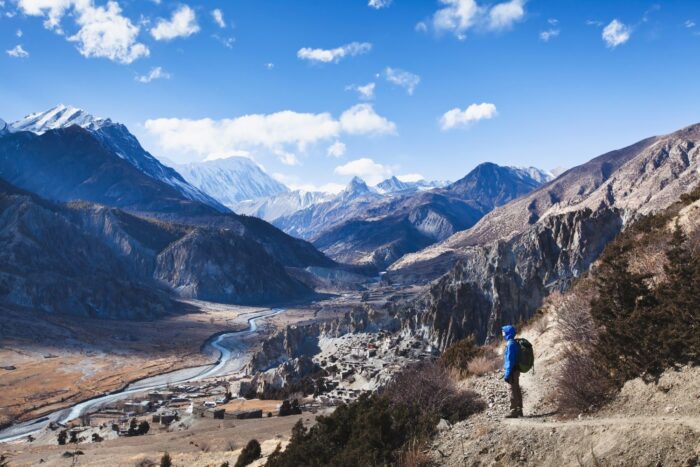
As the elevation increases, the landscape transforms dramatically. Dense forests slowly disappear, replaced by rocky cliffs and open valleys. Trekkers begin to see spectacular views of Annapurna II, Annapurna III, Pisang Peak, and Gangapurna.
The village of Manang is one of the most important acclimatization stops on the trek. Most trekkers spend at least one extra day here to adapt to the altitude before ascending further.
Acclimatization in Manang
Acclimatization is essential to prevent Acute Mountain Sickness (AMS). Popular acclimatization hikes around Manang include:
- Gangapurna Lake
- Ice Lake (Kicho Tal)
- Praken Gompa
- Gangapurna Glacier viewpoint
Symptoms of altitude sickness can include headache, nausea, dizziness, fatigue, and shortness of breath. Trekking slowly and staying hydrated are critical for safety.
Thorong La Pass – The Highest Point
The crossing of Thorong La Pass (5,416m) is the highlight of the Annapurna Circuit Trek. Trekkers typically start before sunrise from Thorong Phedi or High Camp to avoid strong afternoon winds.
Crossing the pass is physically demanding due to the thin air, freezing temperatures, and steep ascent. However, the reward is extraordinary panoramic views of the Annapurna and Dhaulagiri ranges.
Because the pass is prone to snowstorms and avalanches during winter and monsoon seasons, trekking is strongly recommended during spring or autumn.
Muktinath – A Sacred Pilgrimage Site
After crossing Thorong La, the trail descends into the Mustang region and reaches Muktinath, one of Nepal’s most sacred pilgrimage destinations.
Muktinath is revered by both Hindus and Buddhists:
- Hindus believe bathing in the 108 water spouts cleanses sins.
- Buddhists associate the site with Guru Rinpoche (Padmasambhava).
The region also marks a dramatic environmental transition into the dry, desert-like landscapes of Lower Mustang.
Jomsom and the Kali Gandaki Valley
The trail from Muktinath to Jomsom now follows a motorable road, and many trekkers choose jeep transportation to avoid dust and heavy traffic. However, those who continue trekking can explore:
- Kagbeni village
- Apple orchards of Marpha
- Traditional Thakali settlements
- The Kali Gandaki Gorge, considered one of the world’s deepest gorges
Side Trips and Extensions
Trekkers can customize the Annapurna Circuit with several popular extensions:
Tilicho Lake Extension
Tilicho Lake (4,919m) is one of the world’s highest lakes and adds 2–3 days to the itinerary. The turquoise alpine lake surrounded by snow-covered peaks is one of the most spectacular side trips in Nepal.
Poon Hill Extension
Many trekkers finish the circuit by trekking through Ghorepani and hiking to Poon Hill for a famous sunrise panorama over Annapurna and Dhaulagiri.
Accommodation and Food
The Annapurna Circuit is a tea house trek, meaning accommodation and meals are available throughout the route.
Typical meals include:
- Dal Bhat (traditional Nepali meal)
- Fried rice
- Tibetan bread
- Noodles and soups
- Pancakes and porridge
Accommodation becomes more basic at higher elevations, especially beyond Yak Kharka.
Difficulty and Preparation
The Annapurna Circuit is considered challenging primarily due to:
- Long trekking days
- High altitude
- Thorong La Pass crossing
- Rapid weather changes
Trekkers should prepare with:
- Cardiovascular training
- Multi-day hiking practice
- Proper trekking gear
- Layered clothing for extreme temperature variation
Best Time to Trek
Spring (March–May)
- Blooming rhododendron forests
- Stable weather
- Warm daytime temperatures
- Excellent visibility
Autumn (September–November)
- Crystal-clear mountain views
- Dry trails
- Comfortable temperatures
- Most popular trekking season
Winter trekking is possible but risky due to heavy snowfall at Thorong La Pass.
2. Annapurna Base Camp Trek (The Annapurna Sanctuary Experience)
Trek Overview
- Maximum Altitude: 4,130m (Annapurna Base Camp)
- Difficulty Level: Moderate
- Average Duration: 7–14 Days
- Best Seasons: Spring and Autumn
- Estimated Budget: USD 700–1,200
- Major Highlight: Overnight stay inside the Annapurna Sanctuary
The Annapurna Base Camp (ABC) Trek is one of Nepal’s most iconic trekking adventures. Unlike the Annapurna Circuit, which circles the mountain range, this trek takes trekkers deep into the heart of the Annapurna Sanctuary — a massive glacial basin surrounded by towering Himalayan peaks.
The experience of standing at Annapurna Base Camp while surrounded by mountains rising above 7,000 and 8,000 meters is unforgettable.
What Makes the ABC Trek Special?
The Annapurna Base Camp Trek combines stunning mountain scenery with rich cultural experiences and relatively accessible trekking conditions.
Key highlights include:
- Close-up views of Annapurna I
- Machhapuchhre (Fishtail Mountain)
- Annapurna South
- Hiunchuli
- Traditional Gurung villages
- Dense bamboo and rhododendron forests
- Natural hot springs at Jhinu Danda
Unlike Everest Base Camp, where the highest peaks often appear distant, ABC places trekkers directly beneath the massive Himalayan walls.
Standard Route via Poon Hill (10–12 Days)
Pokhara to Nayapul
Most ABC treks begin with a scenic drive from Pokhara to Nayapul or nearby trailheads.
Trek Through Gurung Villages
The lower section passes through beautiful villages such as:
- Tikhedhunga
- Ulleri
- Ghorepani
- Tadapani
- Chomrong
These villages are inhabited mainly by Gurung and Magar communities known for their hospitality, traditional stone houses, and rich cultural heritage.
Poon Hill Sunrise Viewpoint
One of the trek’s biggest highlights is the early morning hike to Poon Hill (3,210m).
From the viewpoint, trekkers can witness a spectacular sunrise over:
- Dhaulagiri I
- Annapurna South
- Annapurna I
- Machhapuchhre
- Nilgiri
- Hiunchuli
During spring, the surrounding hills are covered with blooming rhododendron forests, creating one of Nepal’s most scenic trekking landscapes.
Chomrong – Gateway to the Sanctuary
Chomrong is the last large settlement before entering the Annapurna Sanctuary.
Beyond this point, the trail becomes more remote and follows steep stone staircases, dense forests, and river valleys.
Bamboo Forests and Avalanche Zones
The route between Bamboo, Deurali, and Machhapuchhre Base Camp passes through narrow valleys and avalanche-prone sections. Trekkers should remain cautious during heavy snowfall or poor weather.
The environment becomes increasingly alpine as the forest line disappears.
Machhapuchhre Base Camp (MBC)
Machhapuchhre Base Camp offers incredible views of the sacred Fishtail Mountain. Climbing Machhapuchhre itself is prohibited because the mountain is considered sacred by local communities.
The sunset and sunrise views from MBC are among the most memorable moments of the trek.
Annapurna Base Camp (ABC)
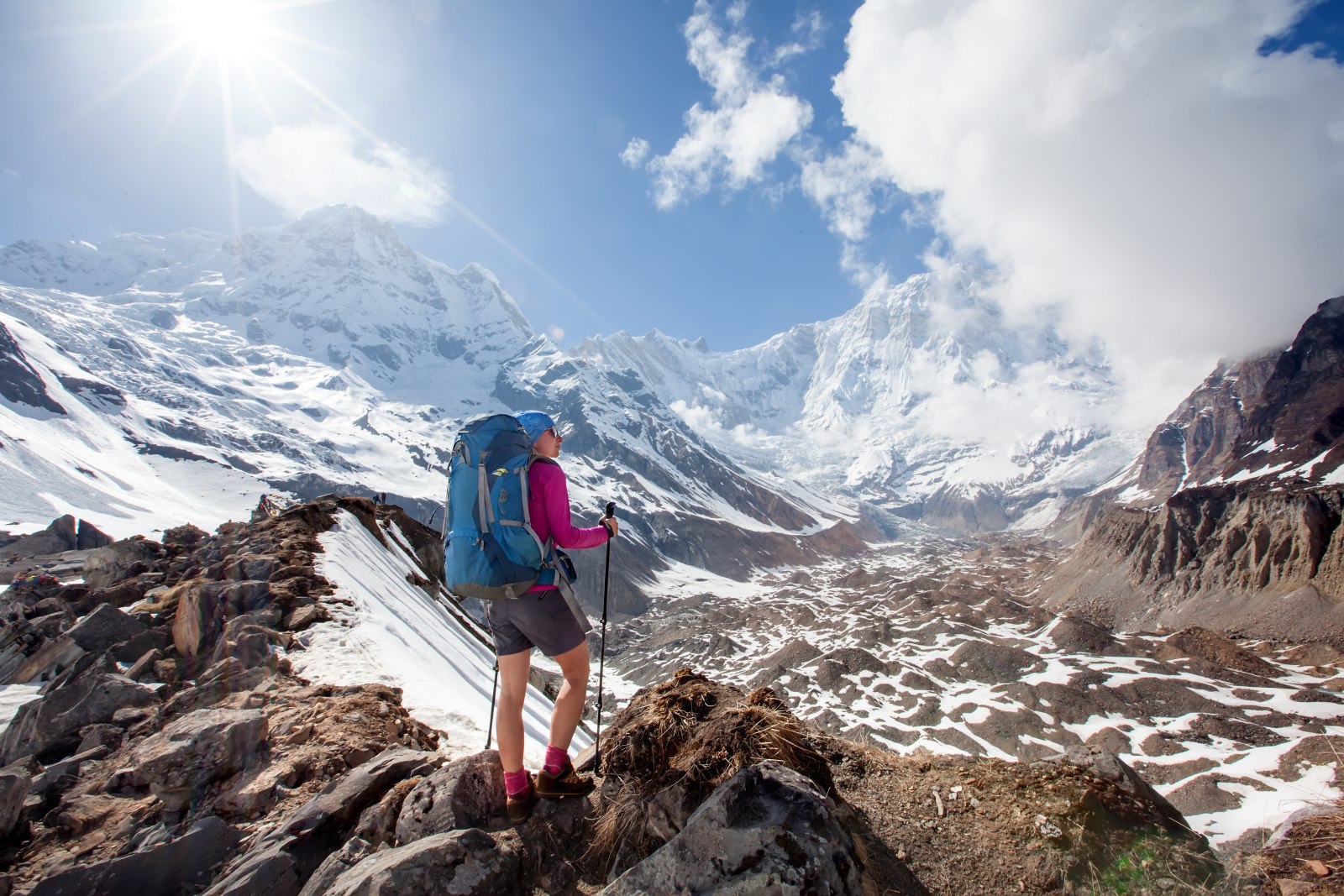
At 4,130m, Annapurna Base Camp sits in the center of a giant natural amphitheater surrounded by Himalayan giants.
The panoramic scenery includes:
- Annapurna I
- Annapurna South
- Hiunchuli
- Baraha Shikhar
- Machhapuchhre
- Tent Peak
During sunrise, the golden light reflecting off the snowy peaks creates a magical atmosphere.
Direct Short Route (6–7 Days)
Trekkers with limited time can skip the Poon Hill section and drive directly closer to Chomrong.
A shorter itinerary may follow:
Pokhara → Jhinu Danda/Matque → Chomrong → Bamboo → Deurali → MBC → ABC
This version reduces trekking days while still reaching the sanctuary.
Cultural Experience
The Annapurna Base Camp Trek offers a strong cultural component.
Trekkers encounter:
- Traditional Gurung hospitality
- Buddhist monasteries and prayer flags
- Hindu shrines
- Local farming lifestyles
- Traditional music and dances during festivals
The coexistence of Hindu and Buddhist traditions is especially visible in villages such as Ghandruk and Chomrong.
Food and Accommodation
Tea houses along the ABC route are generally comfortable and well-developed.
Popular food options include:
- Dal Bhat
- Momos
- Garlic soup
- Fried noodles
- Pancakes
- Tea and coffee
Accommodation becomes more basic at higher elevations, particularly at Deurali and ABC.
Difficulty Level
The ABC Trek is considered moderate because:
- Daily walking hours are manageable
- Altitude is lower than many high Himalayan passes
- Trails are well established
However, trekkers should still prepare for:
- Continuous stone staircases
- Cold temperatures at higher elevations
- Possible altitude-related symptoms
Best Time to Trek
Spring (March–May)
- Rhododendron blooms
- Mild temperatures
- Excellent mountain views
Autumn (September–November)
- Stable weather
- Dry conditions
- Clear skies
Monsoon trekking is possible but trails can become slippery and leech-infested.
Essential Packing List for Annapurna Treks
Regardless of the route, trekkers should carry:
- Waterproof trekking boots
- Warm down jacket
- Sleeping bag
- Trekking poles
- Layered clothing
- Headlamp
- Water purification tablets
- Sunscreen and sunglasses
- First aid kit
- Rain protection
Both the Annapurna Circuit Trek and Annapurna Base Camp Trek provide world-class Himalayan experiences, yet each offers a completely different adventure.
- The Annapurna Circuit is ideal for trekkers seeking diversity, long-distance trekking, and high mountain passes.
- The Annapurna Base Camp Trek is perfect for those wanting close-up Himalayan scenery within a shorter timeframe.
No matter which route you choose, trekking in the Annapurna region delivers unforgettable landscapes, rich cultural immersion, and some of the finest mountain experiences on Earth.
3. Ghorepani Poon Hill Trek (The Best Short Trek in Nepal)
Trek Overview
- Maximum Altitude: 3,210m (Poon Hill)
- Difficulty Level: Easy to Moderate
- Average Duration: 4–6 Days
- Best Seasons: Spring and Autumn
- Estimated Budget: USD 500–740
- Required Permits: TIMS Card and Annapurna Conservation Area Permit (ACAP)
The Ghorepani Poon Hill Trek is one of Nepal’s most popular short treks and is often recommended for beginners, families, solo travelers, and trekkers with limited time. Despite its relatively low altitude and short duration, the trek delivers some of the finest panoramic Himalayan views in the country.
Unlike high-altitude expeditions such as the Annapurna Circuit or Everest Base Camp, this route does not involve serious altitude risks, making it ideal for first-time trekkers.
Why the Poon Hill Trek Is Famous
Poon Hill is widely considered one of the best sunrise viewpoints in Nepal. The early morning hike from Ghorepani village to the summit takes approximately 45 minutes to 1 hour, following a stone staircase trail through forested hills.
As the sun rises, golden light gradually illuminates a vast Himalayan panorama stretching over 70 kilometers.
Major Peaks Visible from Poon Hill
- Dhaulagiri I (8,167m)
- Annapurna I (8,091m)
- Annapurna South
- Machhapuchhre (Fishtail)
- Hiunchuli
- Nilgiri
- Manaslu on clear days
The combination of snow-capped peaks, rolling green hills, and colorful sunrise skies creates one of Nepal’s most iconic mountain experiences.
Historical Importance of the Trail
The Ghorepani route historically formed part of the ancient Trans-Himalayan salt trade route connecting Nepal and Tibet. Traders once carried salt, wool, and grains along these mountain paths using mule caravans.
The name “Ghorepani” itself translates roughly to “horse water,” referring to an important resting point where traders watered their horses and mules.
Forests and Natural Beauty
One of the trek’s biggest attractions is its beautiful rhododendron forest.
During spring (March to May), the hills burst into vibrant shades of:
- Red
- Pink
- White
- Purple
Rhododendron is Nepal’s national flower, and the forests around Ghorepani are among the most spectacular in the Himalayas.
Trekkers also pass through:
- Oak forests
- Bamboo groves
- Waterfalls
- Terraced farmlands
- Traditional mountain villages
Birdwatchers may spot Himalayan pheasants, eagles, and colorful forest birds along the trail.
Typical Route
A standard itinerary includes:
Day 1:
Pokhara → Nayapul → Tikhedhunga/Ulleri
Day 2:
Trek through rhododendron forests to Ghorepani
Day 3:
Early morning sunrise hike to Poon Hill → Trek to Tadapani
Day 4:
Descend to Ghandruk → Drive to Pokhara
Some itineraries also include Jhinu Danda hot springs for relaxation after trekking.
Cultural Experience
The route passes through traditional Gurung and Magar villages where trekkers experience authentic mountain hospitality.
Cultural highlights include:
- Stone-roofed houses
- Traditional farming lifestyles
- Buddhist prayer flags
- Local museums in Ghandruk
- Gurung cultural performances
Ghandruk village is especially famous for its preserved architecture and spectacular Annapurna views.
Accommodation and Food
The Poon Hill Trek has excellent tea house infrastructure.
Popular meals include:
- Dal Bhat
- Tibetan bread
- Pancakes
- Momos
- Noodle soup
- Apple pie
Most lodges provide comfortable rooms, hot showers, charging facilities, and Wi-Fi in lower elevations.
Best Time for the Trek
Spring (March–May)
- Rhododendron blooms
- Pleasant temperatures
- Colorful landscapes
Autumn (September–November)
- Clear mountain views
- Stable weather
- Peak trekking season
Winter is also possible due to the relatively low altitude, though mornings can be cold.
4. Mardi Himal Trek (The Hidden Gem of Annapurna)
Trek Overview
- Maximum Altitude: Approximately 4,500m (Mardi Himal Base Camp)
- Difficulty Level: Moderate
- Average Duration: 4–7 Days
- Estimated Budget: USD 650–850
- Required Permits: ACAP and TIMS
The Mardi Himal Trek is one of Nepal’s fastest-growing trekking routes and is often described as a quieter alternative to the Annapurna Base Camp Trek. Opened to foreign trekkers only in recent years, the trail remains far less crowded than other Annapurna routes.
Located east of the Annapurna Sanctuary, the trek climbs a spectacular ridge directly beneath the sacred Machhapuchhre (Fishtail Mountain).
Why Mardi Himal Is Special
The greatest appeal of Mardi Himal lies in its solitude and close-up mountain scenery.
Unlike the crowded ABC route, Mardi Himal offers:
- Quiet forest trails
- Remote tea houses
- Peaceful ridge walks
- Dramatic alpine scenery
The trek provides unusually close views of:
- Machhapuchhre
- Annapurna South
- Hiunchuli
- Annapurna I
- Dhaulagiri
Many trekkers describe the ridge section as “walking above the clouds.”
The Trail Experience
Forest Camp Section
The lower trail passes through dense forests filled with:
- Rhododendron
- Moss-covered trees
- Oak forests
- Bamboo vegetation
The environment often feels mystical, especially during foggy mornings.
High Camp to Base Camp
Beyond High Camp, vegetation disappears and the landscape becomes rugged and alpine.
Trekkers follow a narrow ridge with steep drop-offs on both sides. The final ascent to Mardi Himal Base Camp offers breathtaking panoramic views across the Annapurna range.
This section can be windy and cold, particularly before sunrise.
Machhapuchhre – Nepal’s Sacred Mountain
Machhapuchhre, also called “Fishtail Mountain,” dominates the entire trek.
The mountain is sacred to local people and officially closed to climbers. Its perfectly symmetrical shape makes it one of the most recognizable peaks in Nepal.
At sunrise, the changing colors on Machhapuchhre create unforgettable photography opportunities.
Difficulty Level
The Mardi Himal Trek is considered moderate because of:
- Continuous uphill sections
- Steep stone staircases
- Narrow ridgeline trails
- Cold temperatures near Base Camp
However, the relatively short duration makes it achievable for reasonably fit trekkers.
Accommodation and Facilities
Tea houses on the Mardi route are more basic compared to ABC or Poon Hill.
Facilities may include:
- Shared bathrooms
- Limited electricity
- Simple meals
- Minimal Wi-Fi
The remoteness is part of the trek’s charm.
Best Time for Mardi Himal Trek
Spring (March–May)
- Rhododendron blooms
- Warm temperatures
- Clear mountain views
Autumn (September–November)
- Stable weather
- Dry trails
- Excellent visibility
Winter trekking is possible but snow can block the ridge route.
5. Tilicho Lake Trek (Journey to One of the World’s Highest Lakes)
Trek Overview
- Maximum Altitude: 4,919m (Tilicho Lake)
- Difficulty Level: Challenging
- Average Duration: 10–14 Days
- Estimated Budget: USD 1,000–1,280
- Main Challenge: Landslide and rockfall zones
Tilicho Lake Trek is one of the most adventurous high-altitude journeys in the Annapurna region. Although traditionally a side trip of the Annapurna Circuit, Tilicho Lake has become a major trekking destination on its own.
The lake is considered one of the world’s highest alpine lakes and holds both geological and spiritual significance.
The Landscape
The trek gradually transitions from green valleys into a barren alpine wilderness.
The environment includes:
- Rocky cliffs
- Glacial valleys
- Snow-covered peaks
- Dry Himalayan deserts
The scenery becomes increasingly dramatic after Manang.
The Dangerous Landslide Section
One of the most notorious parts of the trek lies between Tilicho Base Camp and the lake.
Trekkers must cross a steep slope vulnerable to:
- Rockfalls
- Landslides
- Loose scree
- Falling ice
Guides strongly recommend crossing this section early in the morning before strong winds increase the danger.
Tilicho Lake – The Reward
The lake itself is breathtaking.
Surrounded by towering grey cliffs and snow-covered mountains, the turquoise water changes color depending on sunlight and weather conditions.
On calm days, Tilicho Peak reflects beautifully on the lake surface.
Religious Importance
Tilicho Lake holds sacred importance for both Hindus and Buddhists.
According to Hindu mythology, the lake is connected to the ancient epic Ramayana. Pilgrims visit the lake seeking spiritual purification and blessings.
6. Khopra Ridge Trek (The Peaceful Alternative to Poon Hill)
Trek Overview
- Maximum Altitude: 3,660m (Khopra Ridge)
- Optional Extension: Khayar Lake (~4,500m)
- Difficulty Level: Moderate
- Average Duration: 5–7 Days
- Estimated Budget: USD 900–1,150
The Khopra Ridge Trek is one of the best off-the-beaten-path treks in Nepal. It offers panoramic Himalayan scenery similar to Poon Hill but with significantly fewer trekkers.
Why Khopra Is Unique
Unlike Poon Hill, which is mainly a single sunrise viewpoint, Khopra Ridge provides continuous panoramic mountain scenery for several days.
Trekkers walk along exposed ridges with uninterrupted views of:
- Dhaulagiri
- Nilgiri
- Annapurna South
- Fang Peak
- Hiunchuli
The peaceful atmosphere makes it ideal for trekkers seeking solitude and photography opportunities.
Khayar Lake Side Trip
Many itineraries include a challenging day hike to Khayar Lake, a sacred alpine lake located high above the ridge.
The route crosses remote yak pastures and rugged alpine terrain rarely visited by tourists.
Community-Based Tourism
Khopra is famous for its community-managed lodges, where tourism income directly supports local villages and schools.
This makes the trek a strong example of sustainable tourism in Nepal.
7. Nar Phu Valley Trek (The Forbidden Himalayan Kingdom)
Trek Overview
- Maximum Altitude: Approximately 5,300m (Kang La Pass)
- Difficulty Level: Very Challenging
- Average Duration: 14–18 Days
- Estimated Budget: USD 1,300–1,550+
- Special Requirement: Restricted Area Permit
The Nar Phu Valley Trek is one of Nepal’s most remote and culturally preserved trekking adventures. Opened to foreigners only in 2003, the region remains largely untouched by modernization.
Located near the Tibetan border, the valley offers a rare glimpse into ancient Himalayan life.
The Landscape
Unlike the green hills of lower Annapurna, Nar Phu features:
- Dry canyons
- Rocky cliffs
- High-altitude deserts
- Ancient cave systems
- Wind-eroded landscapes
The scenery strongly resembles Tibet.
Unique Tibetan Culture
The villages of Nar and Phu preserve ancient Tibetan Buddhist traditions.
Cultural highlights include:
- Ancient monasteries (Gompas)
- Prayer wheels
- Chortens
- Yak caravans
- Stone villages
- Traditional Tibetan clothing
Many homes still rely on yak herding and subsistence farming.
Kang La Pass
Crossing Kang La Pass is physically demanding but incredibly rewarding.
From the top, trekkers enjoy panoramic views of:
- Annapurna II
- Gangapurna
- Tilicho Peak
- The remote Nar Valley
Because of the altitude and remoteness, the trek is recommended only for experienced trekkers.
Practical Information: Weather & Trekking Seasons
| Season | Months | Conditions | Best For |
|---|---|---|---|
| Autumn | Sep–Nov | Clear skies, stable weather, cold nights | All Annapurna treks |
| Spring | Mar–May | Warm weather, rhododendron blooms | ABC, Poon Hill, Mardi |
| Winter | Dec–Feb | Snowfall at high elevations | Lower altitude treks |
| Monsoon | Jun–Aug | Heavy rain and slippery trails | Rain-shadow regions like Nar Phu and Mustang |
Final Word: Which Annapurna Trek Is Right for You?
Best for Beginners
Ghorepani Poon Hill Trek
- Easy trails
- Comfortable tea houses
- Low altitude risk
Best for Scenic Photography
Mardi Himal Trek
- Dramatic ridgelines
- Close-up mountain views
- Fewer crowds
Best Bucket-List Adventure
Annapurna Circuit Trek
- Thorong La Pass
- Diverse landscapes
- Full Himalayan experience
Best for Solitude
Khopra Ridge or Nar Phu Valley
- Remote trails
- Authentic culture
- Peaceful trekking experience
Best Spiritual and Natural Experience
Tilicho Lake Trek
- Sacred alpine lake
- Extraordinary scenery
- High-altitude adventure
Important Permit Information
Most Annapurna treks require:
- ACAP (Annapurna Conservation Area Permit)
- TIMS (Trekkers’ Information Management System)
Combined permit costs generally range between USD 40–50 depending on nationality and trekking regulations.
Restricted regions such as Nar Phu Valley require additional special permits and a licensed guide.
Permits can be arranged through trekking agencies in Kathmandu or Pokhara.