Guide to the Annapurna Base Camp (ABC) Trek 2026
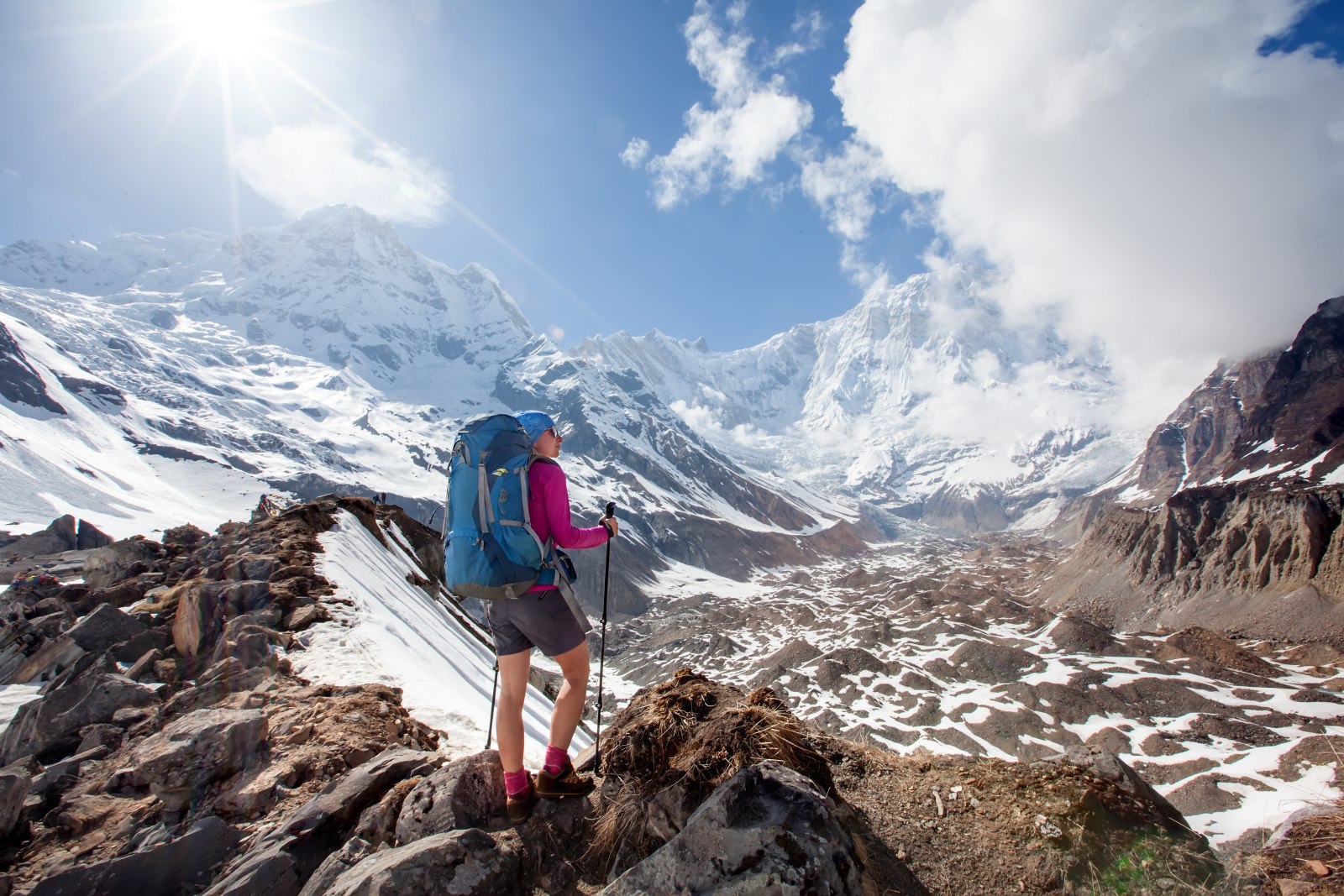
The Annapurna Base Camp Trek is a premier Himalayan journey leading to the foot of Annapurna I (8,091m), the world’s tenth-highest peak. Situated at an elevation of 4,130 meters (13,550 feet), the base camp sits within the “Annapurna Sanctuary”—a natural amphitheater of towering glacial peaks.
This trek is celebrated for being more accessible than the Everest Base Camp Trek, offering a diverse landscape of rhododendron forests, terraced fields, and traditional Gurung culture.
Trek Essentials at a Glance
| Feature | Details |
| Max Altitude | 4,130 meters (13,550 feet) |
| Difficulty | Moderate (Suitable for beginners with good fitness) |
| Duration | 5 to 12 days (Depending on the route) |
| Start Point | Nayapul, Kimchi, or Kande (near Pokhara) |
| Accommodation | Traditional mountain teahouses |
| Key Peaks | Annapurna I, Annapurna South, Machapucchre (Fishtail) |
Major Stops Along the Way
The trail winds through several iconic villages and camps, each offering a unique glimpse into Himalayan life:
-
Cultural Hubs: Ghandruk, Chhomrong, and Jhinu Danda (famous for its natural hot springs).
-
The Ascent: Sinuwa, Bamboo, Dovan, and Deurali.
-
The Sanctuary: Machapucchre Base Camp (MBC) serves as the final gateway before reaching Annapurna Base Camp.
Choosing Your Route
The duration of your trek depends heavily on your starting point and physical condition:
-
The Express Route (5 Days): Starts from Kimchi/Ghandruk. This is the fastest way to reach ABC if you are short on time and physically fit.
-
The Classic Route (9–10 Days): Starts from Nayapul or Tikhedhunga. This route is highly recommended as it includes Poon Hill, a famous sunrise viewpoint, and passes through the lush rhododendron forests of Ghorepani.
-
The Scenic Approach: Starting from Kande takes you through the Australian Camp and quieter Gurung villages like Pothana and Landruk.
Essential Travel Tips
-
Acclimatization: While “moderate,” the trek reaches high altitudes. Ascend slowly and stay hydrated to prevent altitude sickness.
-
Best Time to Go: Weather in the Himalayas is unpredictable. Spring (March-May) and Autumn (September-November) offer the clearest skies.
-
Terrain: Expect a mix of well-trodden paths, steep stone staircases, and rocky glacial moraines.
The Spirit of the Sanctuary: To the local Gurung people, the Annapurna Sanctuary is a sacred realm. As you ascend from the fertile valleys into the thin, silent air of the high peaks, the journey often feels less like a hike and more like a pilgrimage into the heart of the Great Mother.
The Legacy and Allure of Annapurna Base Camp
The journey to Annapurna Base Camp (ABC) is more than just a trek; it is a walk through history and a deep dive into Himalayan spirituality. From its roots as an ancient trail to its status as a world-class trekking destination, ABC offers a unique blend of heritage and natural wonder.
A Storied History: From Pilgrims to Mountaineers
-
Ancient Roots: Long before modern tourism, these trails served as sacred pilgrimage routes. Hindus and Buddhists journeyed to the Annapurna Sanctuary to seek the blessings of Annapurna Mata, the Goddess of Nourishment. It also functioned as a vital trade artery between Nepal and Tibet.
-
A Mountaineering Milestone: In 1950, the region made global headlines when a French expedition led by Maurice Herzog summited Annapurna I. This was the first successful ascent of an 8,000-meter peak in history—achieved three years before the conquest of Everest.
-
The Trekking Era: By the 1960s, the first organized trekking groups arrived, transforming the ancient paths into the well-maintained trails enjoyed by thousands today.
Unforgettable Highlights
| Feature | Why It’s Special |
| The Night Sky | High altitude and zero light pollution offer crystal-clear views of the Milky Way. |
| Jhinu Danda | Home to natural hot springs; a perfect riverside spot to heal tired muscles. |
| The Suspension Bridge | Cross the Kaski district’s longest bridge (287m long) suspended 135m over the Modi River. |
| Machhapucchre (Fishtail) | Trek past the base of this sacred, unclimbed peak, considered a deity by the Gurung people. |
| Gurung Culture | Stay in traditional stone-and-clay teahouses and experience the famous hospitality of the local mountain communities. |
Planning Your Arrival: The Gateway to ABC
Pokhara serves as the essential launchpad for all Annapurna adventures. You can reach Pokhara from Kathmandu via a 30-minute scenic flight or a 7–8 hour drive along the Prithvi Highway.
Starting Your Trek
Once in Pokhara, you have two primary options to begin your foot journey:
-
The Classic Start (Nayapul): * Drive from Pokhara: ~1.5 hours.
-
Best for: Those who want the full experience, starting at a lower elevation (1,070m) and passing through Birethanti.
-
-
The Shortened Start (Ghandruk/Kimchi): * Drive from Pokhara: 3 to 6 hours (depending on road conditions).
-
Best for: Trekkers looking to save time. Starting at 1,940m cuts a full day off the itinerary and bypasses some of the initial heavy climbing.
-
Note: While the trek involves significant stair climbing and steep sections, it requires no technical mountaineering skills—just a good pair of boots and a steady pace!
Understanding the Challenge: ABC Trek Difficulty & Logistics
The trek to Annapurna Base Camp is a rewarding balance of physical effort and breathtaking scenery. While it is widely considered moderately challenging, understanding the specific demands and administrative requirements is key to a successful journey.
Assessing the Difficulty
You don’t need to be an elite athlete or a technical climber to reach ABC, but you should be prepared for the following:
-
The “Thousand Stairs”: The trail is famous for its long stretches of stone staircases. These demand significant leg endurance, especially during steep descents that can be tough on the knees.
-
Altitude & Pacing: Reaching 4,130 meters (13,547 feet) means the air is significantly thinner. Proper pacing and hydration are vital to prevent Altitude Mountain Sickness (AMS).
-
Distance & Duration: You will likely cover roughly 110 kilometers (68 miles) over 7 to 11 days. Expect to trek for 5 to 7 hours daily.
-
Variable Weather: Even in peak season, conditions can shift from warm sunshine in the valleys to freezing winds or snow at the base camp.
Pro-Tip: Train by hiking on uneven terrain with a weighted backpack 4–6 weeks before your trip to build the necessary stamina.
Permits and Regulations (2025/2026 Update)
To enter the protected regions of the Himalayas, you must carry the correct documentation. As of recent regulations, the requirements are streamlined:
1. Annapurna Conservation Area Permit (ACAP)
This is the primary mandatory permit. It supports local environmental conservation and infrastructure.
-
Foreign Nationals: NPR 3,000 (approx. USD $23–$25)
-
SAARC Nationals: NPR 1,000 (approx. USD $8)
-
Where to get it: Nepal Tourism Board offices in Kathmandu or Pokhara. You will need your passport and two passport-sized photos.
2. TIMS Card Update
As of April 2023, the traditional TIMS (Trekkers’ Information Management System) card is no longer required for the Annapurna region. However, always verify current status with your local guide, as Nepalese trekking regulations can be updated seasonally.
The Role of Guides and Porters
While some experienced trekkers go solo, hiring local professionals is highly recommended for several reasons:
-
Safety: Guides are trained to spot early signs of altitude sickness and know the terrain intimately.
-
Physical Relief: Porters carry the bulk of your gear, allowing you to focus on the trail and your breathing.
-
Cultural Connection: A guide acts as a bridge, helping you interact with Gurung villagers and understand local customs.
Essential Checklist Before You Step Out
| Item | Status |
| ACAP Permit | Obtained in Kathmandu/Pokhara (Carry physical copy) |
| Travel Insurance | Must cover emergency heli-evacuation up to 5,000m |
| Cash (NPR) | Carry enough Nepalese Rupees; ATMs are non-existent on the trail |
| Passport Photos | Carry at least 4 extra copies for permits and local SIM cards |
🛡️ Essential Travel Insurance: Your Himalayan Safety Net
The Annapurna region is remote, and the nearest hospital could be a helicopter flight away. Standard travel insurance often excludes “mountaineering” or high-altitude trekking, so your policy must explicitly cover the following:
1. High-Altitude & Medical Coverage
-
Altitude Limit: Ensure your policy covers trekking up to 5,000 meters. Even though ABC is at 4,130m, many standard policies cut off at 2,500m or 3,000m.
-
AMS Treatment: Coverage for Acute Mountain Sickness (AMS), including clinical vitals and medication.
-
Emergency Evacuation: This is the most critical clause. It must include Helicopter Rescue. In the event of serious injury or illness, a heli-evacuation is the only way out and can cost upwards of $2,500–$5,000 USD out-of-pocket without insurance.
2. Trip and Gear Protection
-
Cancellation & Interruption: Himalayan weather or health issues can cut a trip short. This covers your non-refundable teahouse bookings and guide fees.
-
Baggage & Equipment: Policies should protect against the theft or loss of expensive trekking gear (cameras, down jackets, and tech).
-
Personal Liability: Essential in the rare case of accidental damage to property or injury to others during your trek.
🏔️ Timing Your Trek: The Two Golden Windows
While the mountains stand year-round, the experience changes drastically with the seasons. Spring and Autumn are the undisputed champions of the trekking calendar.
🌸 Spring (March – May): The Floral Awakening
-
The Vibe: The hillsides explode into color as the Rhododendron forests (Nepal’s national flower) bloom in shades of red and pink.
-
Weather: Warmer temperatures and longer days. Expect crisp mornings and stable, dry trails.
-
Cultural Bonus: Witness the vibrant celebrations of the Nepali New Year and Chaitra Dashain.
-
Best For: Nature lovers and photographers who want lush, green foregrounds against snowy peaks.
🍂 Autumn (September – November): The Crystal Clear View
-
The Vibe: After the monsoon rains wash away the dust, the air is the clearest it will be all year. The mountain vistas are sharp and “high-definition.”
-
Weather: Mild daytime temperatures and cool (but manageable) nights. This is the most stable window for flight schedules and trekking conditions.
-
Cultural Bonus: This is festival season! You’ll likely witness Dashain and Tihar, Nepal’s biggest celebrations, filled with lights and local traditions.
-
Best For: Those seeking the absolute best mountain visibility and a festive local atmosphere.
Comparison at a Glance
| Feature | Spring (Mar-May) | Autumn (Sept-Nov) |
| Visibility | Good (some afternoon haze) | Excellent (Crystal clear) |
| Scenery | Blooming Flowers & Greenery | Golden forests & Harvested fields |
| Temperature | Warming up | Cooling down |
| Crowds | High | High |
🚫 When to Avoid the ABC Trek
❄️ Winter (December – February): The Deep Freeze
Trekking during winter is generally discouraged for anyone but professional mountaineers due to:
-
Extreme Cold: Temperatures at base camp often plummet to -20°C (-4°C) or lower at night, posing risks of hypothermia and frostbite.
-
Avalanche Danger: Heavy snowfall can make the narrow valley approaches to the “Sanctuary” highly unstable.
-
Logistical Gaps: Many teahouses at higher altitudes (like Deurali or MBC) close for the winter, meaning you may find yourself without food or shelter.
-
Trail Loss: Deep snow can completely obscure the path, making navigation nearly impossible without GPS and snowshoes.
🌧️ Monsoon (June – August): The Great Wet
The monsoon brings heavy rain that transforms the landscape into a challenging environment:
-
Landslide Risk: Saturated soil on steep slopes frequently leads to landslides that can wash out trails and block access for days.
-
The “Leech Factor”: The damp, forested sections (especially between Nayapul and Bamboo) become infested with leeches and insects.
-
Obscured Views: You are likely to spend days trekking in a “white-out” of clouds, with the majestic peaks hidden behind a grey curtain.
-
Travel Chaos: Flights from Kathmandu to Pokhara are frequently cancelled due to poor visibility.
🏔️ Core Challenges & Safety Strategy
Regardless of when you go, the ABC trek demands respect for the mountain environment.
The Physical & Mental Toll
-
Diverse Terrain: You will face everything from steep stone staircases and suspension bridges to rocky glacial moraines. This requires strong knees and high cardiovascular endurance.
-
Unpredictable Shifts: Even in peak season, a sunny morning can turn into a snowy afternoon in the mountains.
🧗 The Gold Standard of Acclimatization
Altitude sickness doesn’t care how fit you are; it only cares how fast you go. Follow these non-negotiable rules:
-
The 500m Rule: Once above 3,000m, try not to increase your sleeping altitude by more than 300–500 meters per day.
-
Climb High, Sleep Low: If your itinerary allows, hike a few hundred meters above your camp during the afternoon and return to the lower altitude to sleep.
-
Hydration is Fuel: Drink 3–4 liters of water daily. Altitude dehydrates you faster than you realize.
-
Listen to your Body: Headaches, nausea, or loss of appetite are early warnings. Never ignore them. If symptoms persist, the only “cure” is descent.
-
Dietary Discipline: Avoid alcohol, smoking, and caffeine, which can mask altitude symptoms or dehydrate you further.
Comparison: Peak vs. Off-Peak
| Feature | Peak (Spring/Autumn) | Off-Peak (Winter/Monsoon) |
| Safety Level | High (Stable trails) | Low (Avalanche/Landslide risk) |
| Views | Clear & Panoramic | Obscured by snow or clouds |
| Comfort | Full teahouse services | Limited services/Closed teahouses |
| Difficulty | Moderate | High/Expert |
The journey to Annapurna Base Camp is highly customizable, allowing you to choose a pace that matches your fitness level and schedule. While the classic route takes about 10–12 days (often including the Poon Hill loop), modern infrastructure allows for much faster “express” options.
All itineraries typically begin and end in Pokhara, the lakeside gateway to the Annapurna range.
Essential Expenses
-
Permits: Roughly $50–$60 (ACAP and administrative fees).
-
Guide & Porter: $25–$35 per day (combined). Hiring a porter not only helps you but supports the local economy.
-
Flights: Kathmandu to Pokhara (Round trip) is approximately $200.
-
Gear Rental: If you don’t want to buy, you can rent sleeping bags or down jackets for $2–$5 per day in Pokhara.
⚠️ Trail Realities: What to Expect Underfoot
The ABC trail is well-maintained but physically demanding due to its specific characteristics:
-
The “Stairway to Heaven”: Prepare your quads! You will encounter thousands of stone steps (especially the infamous Ulleri and Chhomrong sections).
-
Rocky & Uneven: As you gain altitude, the path turns into rocky glacial moraine. Good ankle support in your boots is non-negotiable.
-
Slippery When Wet: In the “Green Zone” (Bamboo to Sinuwa), the stone steps can become incredibly slick after rain or morning dew.
-
Narrow Passes: Some sections feature narrow paths with steep drops on one side. While safe, those with vertigo should take it slow and use trekking poles.
Money-Saving Tip: Eat Dal Bhat! It is the “power meal” of the Himalayas. It is often the most affordable item on the menu and comes with free refills—perfect for replenishing the 3,000+ calories you’ll burn daily.
To complete your Annapurna Base Camp (ABC) preparation, you need to master the “Three Pillars” of trekking: your gear, your support team, and the logistics of mountain living.
🎒 The Definitive ABC Packing Checklist
Layering is your secret weapon. You will experience temperatures ranging from 25°C (77°F) in the lower valleys to -15°C (5°F) at the base camp.
1. Clothing: The Three-Layer System
-
Base Layer: Moisture-wicking long-sleeved shirts (merino wool is best for odor control).
-
Insulation: A mid-weight fleece and a high-quality down jacket (rated for sub-zero).
-
Outer Shell: A waterproof and windproof jacket (Gore-Tex or similar).
-
Bottoms: Trekking pants (convertible ones are great) and waterproof over-pants.
-
Extremities: A warm beanie, sun hat, buff (for dust and “Khumbu cough”), and two pairs of gloves (thin liners + insulated mittens).
2. Gear & Technical Equipment
-
Footwear: Sturdy, broken-in hiking boots. Do not wear brand-new boots on day one!
-
Sleep System: A sleeping bag rated to -10°C or -15°C. Teahouses provide blankets, but they aren’t enough at 4,000m.
-
Support: Adjustable trekking poles are highly recommended for the thousands of stone steps.
-
Lighting: A headlamp with spare batteries (essential for pre-dawn hikes and power outages).
3. Health & Hygiene
-
Sun Protection: High SPF sunscreen, lip balm, and UV-protected sunglasses.
-
First Aid: Blister kits (Compeed), Diamox (altitude medication), rehydration salts, and basic painkillers.
-
Water: Two 1-liter bottles and water purification tablets or a Filter (e.g., LifeStraw).
🤝 The Support Team: Guides and Porters
While the trail is well-marked, hiring local professionals transforms your trek from a “hike” into a cultural journey.
-
The Guide: More than a navigator, a guide acts as a cultural bridge, a first-responder for health issues, and a logistics manager for securing the best rooms in crowded teahouses.
-
The Porter: Typically carries 15–20kg of gear (often shared between two trekkers). This allows you to walk with only a light daypack, significantly reducing the strain on your heart and lungs at high altitudes.
-
The Impact: Hiring locals directly supports the mountain economy, providing vital income for families in the Gandaki region.
🏠 Teahouse Living: Food, Power, & Culture
The ABC route is one of Nepal’s most established trails, offering surprisingly good amenities.
🍱 Mountain Gastronomy
-
Dal Bhat Power: The local staple of rice, lentil soup, and vegetable curry. It is the only “all-you-can-eat” option and is the fuel of choice for locals.
-
International Menu: You’ll find pasta, pizza, momos (dumplings), and even apple pie.
-
Water: Avoid buying plastic bottles. Use refill stations to protect the sanctuary’s ecosystem.
⚡ Power & Connectivity
-
Charging: Most teahouses offer charging for a fee (approx. $2–$5 USD per device). Higher up, this is powered by solar; if it’s cloudy, there is no power.
-
Pro-Tip: Carry a large Power Bank and keep your electronics inside your sleeping bag at night—cold temperatures drain batteries instantly.
-
Wi-Fi: Available in most villages for a small fee, but it becomes increasingly unreliable the higher you climb.
🕉️ Cultural Immersion
The trek is a living museum of the Gurung and Magar people.
-
Ghandruk: The cultural heart of the trek. Visit the Gurung Museum to see traditional tools and costumes.
-
Spiritual Marks: You will pass Mani walls (prayer stones) and stupas. Always walk to the left of these structures as a sign of respect.
-
Hospitality: You aren’t just a tourist; you are a guest in a family-run lodge. A simple “Namaste” goes a long way.
📶 Connectivity: Wi-Fi and Mobile Networks
The higher you climb, the further you move from the digital world. While the “Annapurna Sanctuary” sounds high-tech, expect a digital detox.
🌐 Wi-Fi at High Altitude
-
Availability: Most teahouses, including those at ABC, now offer Wi-Fi, often via satellite (like WorldLink).
-
Cost: Expect to pay NPR 100 to 300 per day. Prices increase with altitude.
-
Reality Check: Speeds are generally suitable for text-based messages (WhatsApp/Messenger). High-bandwidth activities like video calls or streaming are usually impossible due to weather interference and high user volume.
📱 Mobile Signal: NTC vs. Ncell
-
The Winner: NTC (Nepal Telecom). For trekking, NTC is the superior choice. It has a more robust infrastructure in the mountains and provides a more reliable 3G signal (and occasional 4G) in remote areas.
-
The Runner Up: Ncell. While fast in Pokhara and lower towns, Ncell’s signal often vanishes once you enter the deep valleys of the Modi Khola.
-
Pro-Tip: Buy your NTC SIM in Pokhara or Kathmandu. Data packages are affordable, but remember that the mountain terrain creates frequent “dead zones.”
💧 Hydration: Safe Drinking Water
Staying hydrated is the #1 defense against altitude sickness. You should aim for 3–4 liters per day.
-
Boiled Water: The gold standard. Teahouses sell boiled water for NPR 100–200 per liter. It’s safe and, on cold mornings, serves as a great hand-warmer.
-
Refill Stations: Look for “Safe Drinking Water Stations” supported by ACAP. These use UV treatment or professional filtration and are cheaper and more eco-friendly than buying bottles.
-
Purification: Carry tablets (Chlorine/Iodine) or a filter (LifeStraw/Sawyer). This allows you to treat tap water for free. Always wait 30 minutes after treating before drinking.
-
The Plastic Ban: Single-use plastic bottles are strictly prohibited at higher altitudes (above Chhomrong). Please use reusable metal or Nalgene bottles to keep the sanctuary pristine.
🚿 Hygiene: Toilets and Showers
Living in the mountains means embracing simplicity. Facilities become more “rustic” as you ascend.
🚽 Toilet Facilities
-
The Squat: Higher up, the “Asian-style” squat toilet is the norm. It’s a ceramic pan in the floor; you’ll need good balance!
-
Manual Flush: Most toilets are flushed by pouring a scoop of water from a nearby bucket.
-
Essentials: Toilet paper is never provided. Carry your own rolls, along with a bottle of hand sanitizer and wet wipes.
-
Night Visits: Facilities are often in a separate block. Always keep your headlamp by your bed for midnight trips.
🛁 Showers and Hot Springs
-
Teahouse Showers: Most lodges offer hot showers for NPR 300–700. Down low, these might be gas-powered; higher up, they are often a “bucket shower” of hot water.
-
Jhinu Danda Hot Springs: The ultimate reward. Located at 1,760m, these natural riverside springs are the perfect way to celebrate your descent.
-
Pro-Tip: As you get higher (Deurali and above), many trekkers skip showering to avoid catching a cold in the thin, freezing air. Use wet wipes instead!
🏁 Final Takeaway: The Spirit of the Trek
The Annapurna Base Camp trek remains one of the world’s most accessible “Big Mountain” experiences. Whether you are 8 or 70 years old, if you have a fit body and a determined spirit, you can stand at the foot of an 8,000-meter giant.
The lack of 5-star luxury is exactly what makes the experience—you exchange Wi-Fi for Milky Way views and hot showers for the warmth of a teahouse stove.