Manaslu Circuit Trek: Complete Guide, Itinerary, Cost, Difficulty, and Best Time to Visit
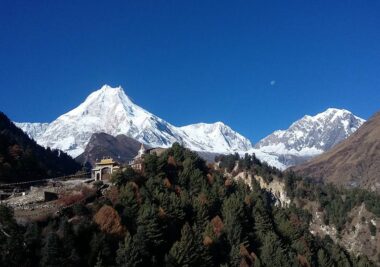
The Manaslu Circuit Trek is one of Nepal’s most rewarding Himalayan adventures, offering spectacular mountain scenery, traditional villages, ancient monasteries, diverse landscapes, and an unforgettable crossing of the high-altitude Larkya La Pass. Located in the remote Manaslu region of north-central Nepal, this trek takes you around the world’s eighth-highest mountain, Mount Manaslu (8,163 m).
Unlike the more commercialized Everest Base Camp and Annapurna Circuit routes, the Manaslu Circuit offers a quieter trekking experience with a strong connection to traditional Himalayan culture. Along the trail, trekkers pass through lush subtropical forests, dramatic river valleys, alpine meadows, glacial landscapes, and traditional settlements influenced by Tibetan Buddhism.
The trek is an excellent choice for adventure seekers who want to experience Nepal’s natural beauty and cultural diversity while exploring a relatively less crowded Himalayan destination. Although it requires good physical fitness and proper acclimatization, the rewards of reaching Larkya La Pass and witnessing the surrounding Himalayan peaks make the journey truly memorable.
This comprehensive guide covers everything you need to know about the Manaslu Circuit Trek, including its highlights, itinerary, difficulty, permits, cost, accommodation, food, transportation, and the best seasons to visit.
Manaslu Circuit Trek Overview
The Manaslu Circuit Trek is a high-altitude trekking adventure that circles Mount Manaslu through the Manaslu Conservation Area. The journey begins in the lower Budhi Gandaki River valley and gradually climbs toward the remote Tibetan-influenced villages of the upper Manaslu region.
The highest point is Larkya La Pass (5,106 m), a spectacular mountain pass surrounded by snow-covered Himalayan peaks. After crossing the pass, the trail descends toward Bimthang and eventually connects with the Annapurna Circuit route near Dharapani.
Here are the essential details to help you understand the trek before planning your adventure.
| Trek Information | Details |
|---|---|
| Destination | Manaslu Region, Nepal |
| Trek Duration | 14–17 days |
| Maximum Elevation | Larkya La Pass, 5,106 m |
| Mount Manaslu | 8,163 m |
| Trek Difficulty | Moderate to Challenging |
| Trekking Distance | Approximately 170–180 km, depending on route |
| Starting Point | Machha Khola |
| Ending Point | Dharapani |
| Best Seasons | Spring and Autumn |
| Accommodation | Teahouses and mountain lodges |
| Transportation | Road transportation |
| Required Guide | Licensed trekking guide |
| Special Permits | Manaslu Restricted Area Permit, MCAP and ACAP |
The itinerary and total distance vary according to the starting point, road conditions, acclimatization schedule, and optional side trips.
Haven Holidays (P) Ltd.+2
Why Choose the Manaslu Circuit Trek?
The Manaslu Circuit Trek is an excellent option for trekkers seeking a combination of Himalayan adventure, cultural exploration, and natural beauty. Its remote location and restricted-area status help preserve the region’s traditional lifestyle and create a more peaceful trekking atmosphere.
Here are some of the main reasons to include this trek on your Nepal trekking bucket list.
1. Spectacular Views of Mount Manaslu
Mount Manaslu, standing at 8,163 meters, is the eighth-highest mountain in the world. The mountain dominates the landscape throughout much of the upper Manaslu region.
Trekkers can enjoy impressive mountain views from villages such as Lho, Shyala, and Samagaon. The scenery becomes even more dramatic as the trail approaches the higher alpine sections.
The surrounding peaks, glaciers, rocky slopes, and snow-covered valleys create excellent opportunities for photography and mountain exploration.
2. Cross the Challenging Larkya La Pass
Crossing Larkya La Pass is the biggest highlight of the Manaslu Circuit Trek. At 5,106 meters, it is the highest point of the standard trekking route.
The pass connects the remote Manaslu Valley with the beautiful Bimthang area on the Annapurna side. Reaching the summit requires an early morning start, steady walking, and good physical preparation.
From the top, trekkers can enjoy magnificent views of Himlung Himal, Cheo Himal, Kang Guru, and other surrounding Himalayan peaks.
The crossing is physically demanding, particularly because of the altitude, cold temperatures, and long walking hours. However, reaching the top is one of the most rewarding experiences of the entire journey.
3. Experience Traditional Tibetan Buddhist Culture
The upper Manaslu region offers a fascinating cultural experience. Many communities have strong Tibetan Buddhist traditions reflected in their architecture, religious practices, monasteries, and daily lifestyles.
As you walk through villages such as Namrung, Lho, and Samagaon, you will encounter traditional stone houses, prayer wheels, mani walls, colorful prayer flags, and ancient monasteries.
Ribung Monastery in Lho is another cultural attraction where visitors can experience the spiritual atmosphere of the Himalayan communities.
The region’s cultural heritage makes the Manaslu Circuit more than just a mountain trekking adventure.
4. Explore Birendra Lake
Birendra Lake is one of the most beautiful natural attractions near Samagaon. Located beneath the impressive Manaslu Glacier, this glacial lake is known for its turquoise-colored water and peaceful surroundings.
Trekkers can take an additional excursion from Samagaon to visit the lake. The hike is relatively short compared with the main trekking stages, making it a worthwhile activity during the acclimatization day.
The surrounding mountains and glacial landscape provide a beautiful setting for photography and relaxation.
5. Visit Manaslu Base Camp
For trekkers looking for an additional adventure, Manaslu Base Camp is an exciting side trip from Samagaon.
The trail climbs through rocky terrain and glacial landscapes toward the base camp, offering impressive views of Mount Manaslu and the surrounding mountains.
The excursion is physically demanding because of the elevation gain and high altitude. It should only be attempted when weather conditions are suitable and trekkers are properly acclimatized.
6. Discover the Beauty of Bimthang
Bimthang is one of the most picturesque settlements on the Manaslu Circuit. Located after the Larkya La Pass crossing, this beautiful alpine valley offers outstanding views of surrounding snow-covered mountains and glaciers.
After the demanding pass-crossing day, arriving at Bimthang provides an opportunity to relax and appreciate the dramatic Himalayan scenery.
The green meadows, mountain streams, forests, and impressive peaks make it one of the most memorable overnight stops on the route.
7. Explore the Manaslu Conservation Area
The Manaslu Conservation Area is home to diverse Himalayan ecosystems, forests, wildlife, and plant species.
As the trail climbs from the lower Budhi Gandaki Valley toward the high mountains, trekkers experience changing vegetation and landscapes. The lower sections feature subtropical forests, while higher elevations contain alpine vegetation and glacial environments.
Wildlife found in the conservation area includes snow leopards, musk deer, and Himalayan tahr. Although sightings are not guaranteed, the region offers an opportunity to experience Nepal’s rich natural environment.
Nepal Tourism Board+1
Manaslu Circuit Trek Itinerary: 16 Days
The following 16-day itinerary provides a gradual journey through the Manaslu region, including an acclimatization day in Samagaon and a crossing of Larkya La Pass.
It is designed to balance trekking, cultural exploration, and altitude adjustment. Walking hours are approximate and can change according to weather, trail conditions, and individual fitness.
| Day | Route | Approx. Altitude | Duration |
|---|---|---|---|
| 1 | Arrival in Kathmandu | 1,400 m | — |
| 2 | Kathmandu to Machha Khola | 930 m | 7–9 hrs drive |
| 3 | Machha Khola to Jagat | 1,340 m | 6–7 hrs |
| 4 | Jagat to Deng | 1,860 m | 6–7 hrs |
| 5 | Deng to Namrung | 2,630 m | 6–7 hrs |
| 6 | Namrung to Lho | 2,957 m | 4–5 hrs |
| 7 | Lho to Samagaon | 3,530 m | 4–5 hrs |
| 8 | Acclimatization at Samagaon | 3,530 m | 3–6 hrs optional |
| 9 | Samagaon to Samdo | 3,875 m | 3–4 hrs |
| 10 | Samdo to Dharamsala | 4,460 m | 4–5 hrs |
| 11 | Dharamsala to Bimthang via Larkya La Pass | 5,106 m | 8–10 hrs |
| 12 | Bimthang to Gho | 2,515 m | 4–5 hrs |
| 13 | Gho to Dharapani | 1,860 m | 4–5 hrs |
| 14 | Dharapani to Kathmandu | 1,400 m | 8–10 hrs drive |
| 15 | Free day in Kathmandu | 1,400 m | — |
| 16 | Final departure | — | — |
Note: This is an illustrative itinerary. Some trekking operators use different overnight stops, add an extra acclimatization day, or arrange a different road transfer.
Day 1: Arrival in Kathmandu (1,400 m)
Your Manaslu Circuit adventure begins when you arrive at Tribhuvan International Airport in Kathmandu. A representative from your trekking company can welcome you and transfer you to your hotel.
After checking in, you can relax following your international flight. Depending on your arrival time, you may explore the nearby streets of Thamel, where you will find trekking equipment shops, restaurants, and travel services.
In the evening, meet your trekking guide for a trip briefing. You can discuss the itinerary, equipment requirements, permit arrangements, and important safety information.
Overnight: Hotel in Kathmandu.
Day 2: Drive from Kathmandu to Machha Khola (930 m)
After breakfast, begin the road journey from Kathmandu toward Machha Khola, the starting point of the trek.
The drive follows the Prithvi Highway before continuing through rural settlements and the scenic Budhi Gandaki River valley. Along the way, you will pass terraced farmland, small towns, green hills, and traditional villages.
The final section of the journey follows a rough mountain road, particularly beyond Arughat. Road conditions can affect the travel time.
Upon reaching Machha Khola, check into a local teahouse and prepare for the first day of trekking.
Driving time: Approximately 7–9 hours.
Overnight: Teahouse in Machha Khola.
Day 3: Trek from Machha Khola to Jagat (1,340 m)
After breakfast, begin walking along the Budhi Gandaki River. The trail passes through beautiful river valleys, small settlements, forests, and suspension bridges.
You will walk through Khorlabesi and reach Tatopani, which is known for its natural hot springs. The trail then continues through rocky sections and stone staircases before reaching Dobhan.
After crossing several suspension bridges and following the river valley, you will eventually arrive at Jagat.
Jagat is an important village and a major checkpoint for entering the restricted Manaslu region. Here, officials may check trekking permits and documentation.
Walking time: Approximately 6–7 hours.
Overnight: Teahouse in Jagat.
Day 4: Trek from Jagat to Deng (1,860 m)
Today’s walk takes you deeper into the Manaslu region. After breakfast, follow the trail through terraced farmland, traditional settlements, and forested hillsides.
The route passes through Salleri, Sirdibas, and Philim, a beautiful Gurung village known for its traditional houses and surrounding agricultural landscapes.
After Philim, the trail continues through bamboo forests and narrow river valleys. You will cross suspension bridges and gradually gain altitude.
As you approach Deng, the landscape becomes increasingly mountainous, and the cultural influence of Tibetan Buddhism becomes more noticeable.
Walking time: Approximately 6–7 hours.
Overnight: Teahouse in Deng.
Day 5: Trek from Deng to Namrung (2,630 m)
The trail continues north along the Budhi Gandaki River, passing through several small settlements and forested areas.
You will cross bridges, walk through narrow gorges, and climb stone staircases along the mountain slopes. The route gradually becomes steeper as you approach higher elevations.
After passing through Ghap, the landscape begins to change, with more impressive mountain views and traditional stone houses.
Eventually, you reach Namrung, an important settlement in the upper Manaslu region.
Namrung is a good place to experience local Himalayan culture and enjoy the surrounding mountain scenery.
Walking time: Approximately 6–7 hours.
Overnight: Teahouse in Namrung.
Day 6: Trek from Namrung to Lho (2,957 m)
Today’s trek offers increasingly beautiful views of the surrounding Himalayan mountains.
Leaving Namrung, the trail passes through traditional villages, cultivated fields, and forests. You will encounter Buddhist prayer flags, mani walls, and traditional Tibetan-style architecture.
As you approach Lho, Mount Manaslu becomes increasingly prominent.
One of the main attractions in Lho is Ribung Monastery, which sits above the village and offers wonderful views of the surrounding mountains.
Take some time to explore the village, observe the local culture, and enjoy the peaceful atmosphere.
Walking time: Approximately 4–5 hours.
Overnight: Teahouse in Lho.
Day 7: Trek from Lho to Samagaon (3,530 m)
After breakfast, continue toward Samagaon, one of the most important villages on the Manaslu Circuit.
The route passes through Shyala, a beautiful settlement surrounded by spectacular Himalayan scenery. You can enjoy panoramic views of Mount Manaslu and other surrounding peaks.
The trail continues through alpine landscapes and gradually reaches Samagaon.
Samagaon is a traditional mountain village with strong Tibetan cultural influences. It is also an important location for acclimatization before continuing toward higher elevations.
Walking time: Approximately 4–5 hours.
Overnight: Teahouse in Samagaon.
Day 8: Acclimatization Day in Samagaon (3,530 m)
Acclimatization is essential before ascending toward Samdo and Dharamsala. Spending an additional day in Samagaon gives your body time to adjust to the reduced oxygen levels.
Rather than staying inactive throughout the day, you can consider a gradual uphill excursion.
Popular options include:
-
Birendra Lake: A beautiful glacial lake beneath the Manaslu Glacier.
-
Manaslu Base Camp: A challenging hike with impressive mountain and glacier views.
-
Pungyen Gompa: A culturally significant monastery offering wonderful views of Mount Manaslu.
Choose your excursion according to your fitness, altitude response, weather, and guide’s advice. You do not need to complete all three activities.
Return to Samagaon for an overnight stay.
Overnight: Teahouse in Samagaon.
Day 9: Trek from Samagaon to Samdo (3,875 m)
Today, the trail gradually climbs toward Samdo, a remote Himalayan village located close to the Tibetan border.
The route follows an open valley with impressive views of surrounding mountains and alpine landscapes. Compared with previous days, the walking distance is relatively short, giving you more time to enjoy the scenery.
Samdo is known for its traditional Tibetan-style houses, local culture, and beautiful mountain surroundings.
Because of the increasing altitude, walk slowly, stay hydrated, and avoid unnecessary physical exertion.
Walking time: Approximately 3–4 hours.
Overnight: Teahouse in Samdo.
Day 10: Trek from Samdo to Dharamsala (4,460 m)
The journey continues toward Dharamsala, also known as Larkya Phedi, the final overnight stop before crossing Larkya La Pass.
After leaving Samdo, the trail gradually climbs through dry, rocky terrain with fewer trees and more exposed mountain landscapes.
You will cross streams and walk along the mountain slopes while enjoying views of surrounding glaciers and snow-covered peaks.
Dharamsala is a basic mountain accommodation area where trekkers spend the night before the challenging pass-crossing day.
Prepare your clothing, snacks, water, and other essential equipment for an early departure the following morning.
Walking time: Approximately 4–5 hours.
Overnight: Teahouse in Dharamsala.
Day 11: Cross Larkya La Pass (5,106 m) and Trek to Bimthang (3,590–3,720 m)
This is the most challenging and rewarding day of the Manaslu Circuit Trek.
Start early in the morning, usually before sunrise, to cross Larkya La Pass while weather conditions are generally more favorable.
The trail climbs gradually through rocky and glacial terrain. As you gain elevation, the surrounding landscape becomes increasingly dramatic, with snow-covered mountains and glaciers dominating the horizon.
After several hours of walking, you will reach Larkya La Pass at 5,106 meters.
From the top, enjoy breathtaking views of Himlung Himal, Cheo Himal, Kang Guru, and other Himalayan peaks.
After celebrating your achievement, begin the long descent toward Bimthang. The downhill trail can be demanding, especially on snow-covered or icy sections, so walk carefully and follow your guide’s instructions.
Eventually, you will reach Bimthang, where you can rest after a memorable day in the mountains.
Walking time: Approximately 8–10 hours.
Overnight: Teahouse in Bimthang.
Day 12: Trek from Bimthang to Gho (2,515 m)
After crossing Larkya La Pass, today’s journey takes you through beautiful alpine landscapes and forested valleys.
The trail descends through meadows and pastures before entering pine and rhododendron forests.
As you lose altitude, the environment becomes greener and warmer. You will also notice changes in vegetation and local settlements.
Continue toward Gho, a peaceful village where you can relax and enjoy a comfortable overnight stay.
Walking time: Approximately 4–5 hours.
Overnight: Teahouse in Gho.
Day 13: Trek from Gho to Dharapani (1,860 m)
The final trekking day follows a descending trail through forests, traditional settlements, and mountain landscapes.
You will pass through Tilije before reaching Dharapani, where the Manaslu Circuit connects with the popular Annapurna Circuit trekking route.
Dharapani is an important settlement with access to road transportation and local accommodation.
After reaching the village, celebrate the completion of your Manaslu Circuit Trek.
Walking time: Approximately 4–5 hours.
Overnight: Teahouse in Dharapani.
Day 14: Drive from Dharapani to Kathmandu
After breakfast, begin your return journey toward Kathmandu.
Depending on road conditions and transportation arrangements, you may travel by local jeep or private vehicle through Besisahar and onward to Kathmandu.
The journey follows beautiful river valleys, hillsides, and rural settlements.
After reaching Kathmandu, transfer to your hotel and enjoy a relaxing evening.
Driving time: Approximately 8–10 hours, depending on road conditions.
Overnight: Hotel in Kathmandu.
Day 15: Free Day in Kathmandu
Enjoy a free day in Kathmandu after completing your Himalayan adventure.
You can explore popular cultural attractions, including:
-
Pashupatinath Temple
-
Boudhanath Stupa
-
Swayambhunath Stupa
-
Kathmandu Durbar Square
-
Patan Durbar Square
You can also purchase souvenirs, enjoy traditional Nepali food, or relax at your hotel.
This additional day provides useful flexibility in case of road delays during the trek.
Overnight: Hotel in Kathmandu.
Day 16: Final Departure
Your Manaslu Circuit Trek officially comes to an end.
Depending on your international flight schedule, a representative can transfer you to Tribhuvan International Airport.
Take home unforgettable memories of the Himalayan mountains, traditional villages, Buddhist culture, and the incredible experience of crossing Larkya La Pass.
Best Time for Manaslu Circuit Trek
Choosing the right season is important for enjoying the Manaslu Circuit Trek. Weather conditions, visibility, trail conditions, and temperatures can significantly influence your trekking experience.
The two most popular trekking seasons are spring and autumn. Winter and monsoon trekking are possible in some circumstances, but they involve additional challenges.
1. Spring (March to May)
Spring is one of the best times for the Manaslu Circuit Trek. The weather gradually becomes warmer, forests turn green, and rhododendron flowers bloom across the hillsides.
-
Generally pleasant daytime temperatures at lower elevations.
-
Beautiful mountain views on clear days.
-
Increasingly favorable conditions for crossing Larkya La.
-
Cold temperatures remain possible at higher elevations.
2. Autumn (September to November)
Autumn is another excellent season, especially October and November. The monsoon rain usually clears, leaving fresh landscapes and excellent mountain visibility.
-
Clear skies and impressive Himalayan panoramas.
-
Comfortable daytime walking conditions at lower elevations.
-
Generally favorable trekking conditions.
-
Popular trekking season, so accommodation can become busy.
3. Winter (December to February)
Winter trekking offers peaceful trails and beautiful snow-covered mountain scenery. However, temperatures can drop significantly, particularly around Samdo, Dharamsala, and Larkya La Pass.
-
Very cold nights and freezing temperatures.
-
Heavy snowfall may block the pass.
-
Some teahouses may close.
-
Additional winter equipment and flexible scheduling are necessary.
4. Monsoon (June to August)
Monsoon is generally the least favorable season for the Manaslu Circuit Trek because of frequent rainfall, cloudy skies, slippery trails, and possible landslides.
-
Heavy rainfall in lower valleys.
-
Leeches and muddy walking trails.
-
Landslide and road disruption risks.
-
Limited mountain visibility.
The upper Manaslu region can experience different weather conditions, but the overall journey requires careful planning.
Nepal Tourism Board also identifies March–May and September–November as the main trekking seasons for the Manaslu Conservation Area.
Nepal Tourism Board+1
My recommendation: Choose October or November for excellent mountain visibility, or March and April for spring scenery and blooming rhododendron forests.
Manaslu Circuit Trek Difficulty
The Manaslu Circuit Trek is generally considered a moderate to challenging Himalayan trek. It is suitable for people with good physical fitness, hiking experience, and a willingness to walk for several consecutive days.
You do not need technical climbing skills or mountaineering experience for the standard trekking route. However, crossing Larkya La Pass at 5,106 meters requires endurance, proper acclimatization, and preparation.
Several factors contribute to the difficulty of this trek.
1. High Altitude
Altitude is one of the biggest challenges of the Manaslu Circuit Trek. The route gradually climbs from approximately 930 meters at Machha Khola to 5,106 meters at Larkya La Pass.
At higher elevations, oxygen availability decreases, increasing the risk of Acute Mountain Sickness (AMS).
Common symptoms include:
-
Headaches
-
Dizziness
-
Nausea
-
Loss of appetite
-
Difficulty sleeping
-
Unusual fatigue
Trekkers should follow a gradual ascent, include acclimatization days, and understand the symptoms of altitude sickness.
If symptoms worsen, do not continue ascending. Descend and seek medical assistance. Severe symptoms require immediate evacuation and emergency care.
2. Long Walking Hours
Most trekking days involve approximately 4–7 hours of walking, although the pass-crossing day can require 8–10 hours or more.
You will encounter uphill climbs, downhill descents, rocky trails, stone steps, and suspension bridges.
Regular walking, hiking, and cardiovascular exercises before departure can help improve your endurance.
3. Challenging Larkya La Pass Crossing
Crossing Larkya La is the most physically demanding section of the trek.
The trail climbs to 5,106 meters, where cold temperatures, strong winds, snow, and reduced oxygen can make walking difficult.
The descent toward Bimthang is also long and can be challenging on the knees and ankles.
Proper trekking boots, warm clothing, trekking poles, and a reliable guide are important.
4. Remote Trail Conditions
Unlike popular trekking destinations with extensive facilities, the Manaslu Circuit passes through remote mountain settlements.
Some trail sections are narrow, steep, rocky, or exposed. Weather conditions can also affect the walking experience.
Trekkers should be prepared for basic accommodation, limited facilities, and occasional changes to the itinerary.
How to Prepare for the Manaslu Circuit Trek
Preparation can make a significant difference in your trekking experience.
Consider the following activities before your trip:
-
Walk or hike regularly for at least 6–8 weeks before departure.
-
Include uphill walking and stair climbing in your training.
-
Improve cardiovascular fitness through cycling, swimming, or running.
-
Practice hiking with a backpack.
-
Strengthen your legs, knees, and core muscles.
-
Wear your trekking boots before arriving in Nepal.
-
Understand altitude sickness and basic mountain safety.
Good preparation will help you manage the physical challenges and enjoy the journey more comfortably.
Manaslu Circuit Trek Permits and Regulations
The Manaslu region is a restricted trekking area in Nepal. Unlike some other popular trekking destinations, you cannot independently trek the standard Manaslu Circuit without following the restricted-area regulations.
Trekkers generally need three permits:
| Permit | Purpose |
|---|---|
| Manaslu Restricted Area Permit (RAP) | Required for entering the restricted Manaslu region |
| Manaslu Conservation Area Permit (MCAP) | Required for entering the Manaslu Conservation Area |
| Annapurna Conservation Area Permit (ACAP) | Required for the section of the route within the Annapurna Conservation Area |
1. Manaslu Restricted Area Permit
The Restricted Area Permit is mandatory for the regulated Manaslu trekking section.
The fee depends on the trekking season and the number of days spent inside the restricted area. Additional charges apply for extra days.
2. Manaslu Conservation Area Permit
The MCAP is required to enter the Manaslu Conservation Area. It supports conservation activities and the protection of the region’s natural environment.
3. Annapurna Conservation Area Permit
The ACAP is necessary because the standard Manaslu Circuit route descends through the Annapurna Conservation Area toward Dharapani.
Important Trekking Regulations
Before planning your trek, understand these important requirements:
-
Trek with a licensed trekking guide.
-
Arrange the restricted-area permit through an authorized trekking agency.
-
The restricted-area regulations generally require a minimum group of two foreign trekkers, excluding the guide.
-
Carry the necessary identification and permit documents.
-
Follow local conservation and trekking regulations.
Permit prices and administrative requirements can change. Confirm the latest rules with the Department of Immigration or an authorized trekking agency before departure.
Amarnepal+1
Manaslu Circuit Trek Cost
The cost of the Manaslu Circuit Trek depends on several factors, including trekking duration, group size, transportation, accommodation, food arrangements, guide and porter services, and permit fees.
A guided package generally includes the main trekking arrangements, making it easier to organize the trip in this restricted region.
Here are the main expenses to consider:
| Cost Category | What It Covers |
|---|---|
| Restricted Area Permit | Special trekking authorization |
| MCAP and ACAP | Conservation area entry permits |
| Guide | Licensed trekking guide services |
| Porter | Luggage transportation |
| Accommodation | Kathmandu hotel and mountain teahouses |
| Meals | Breakfast, lunch, and dinner during trekking |
| Transportation | Kathmandu to Machha Khola and return |
| Insurance | Trekking and high-altitude emergency coverage |
| Personal expenses | Snacks, drinks, charging, showers, and tips |
Estimated Trekking Package Price
For initial budgeting, a guided Manaslu Circuit package may cost approximately US$1,000–$1,800 per person.
This is an indicative planning range, not a fixed market price or confirmed quotation. Shorter or larger-group packages may cost less, while private departures, better accommodation, additional services, and longer itineraries can increase the price.
What Is Usually Included in a Trekking Package?
A standard package may include:
-
Airport pickup and drop-off.
-
Kathmandu hotel accommodation.
-
Ground transportation.
-
Licensed trekking guide.
-
Required trekking permits.
-
Mountain teahouse accommodation.
-
Meals during the trekking period.
-
Porter service, depending on the package.
-
Basic first-aid support.
What Is Usually Excluded?
Travelers should also budget for:
-
International airfare.
-
Nepal visa fees.
-
Travel and trekking insurance.
-
Personal trekking equipment.
-
Additional food and beverages.
-
Hot showers and electronic charging.
-
Personal expenses and tips.
-
Extra accommodation caused by delays.
-
Emergency evacuation costs not covered by insurance.
Before booking, carefully compare package inclusions rather than choosing a trekking company based only on the lowest advertised price.
Accommodation During the Manaslu Circuit Trek
Accommodation along the Manaslu Circuit is mainly provided by local teahouses and mountain lodges.
In lower villages such as Machha Khola, Jagat, and Namrung, you can find relatively comfortable guesthouses with basic facilities.
As you climb toward Samagaon, Samdo, and Dharamsala, accommodation becomes simpler due to the remote location and high altitude.
Most teahouses offer:
-
Twin-sharing rooms.
-
Basic beds and mattresses.
-
Shared bathrooms in many locations.
-
Common dining areas.
-
Simple meals and hot drinks.
-
Limited hot shower facilities.
At higher elevations, facilities may be more basic, and rooms can be cold at night.
It is advisable to carry a good sleeping bag suitable for cold mountain temperatures, even if blankets are provided by the lodges.
Food and Meals on the Manaslu Circuit Trek
Food is an important part of the Manaslu Circuit Trek. Teahouses along the route serve a variety of traditional Nepali dishes and simple international meals.
The most popular trekking meal is Dal Bhat, consisting of rice, lentil soup, vegetables, and sometimes pickles. It is nutritious and provides energy for long walking days.
Other common food options include:
-
Fried rice.
-
Noodles and noodle soup.
-
Vegetable curry.
-
Tibetan bread.
-
Chapati.
-
Porridge.
-
Pancakes.
-
Eggs.
-
Potatoes.
-
Soups and pasta.
Hot drinks such as tea, coffee, ginger tea, and lemon drinks are also available.
As you gain altitude, food choices may become more limited and prices generally increase because supplies are transported to remote villages.
For better energy and hydration, eat regular meals and drink sufficient safe water throughout the trek.
Transportation for the Manaslu Circuit Trek
The Manaslu Circuit Trek begins with a road journey from Kathmandu to Machha Khola and finishes at Dharapani.
There are several transportation options depending on your budget and comfort preferences.
Private Jeep: A private jeep is a convenient option for travelers who prefer flexibility, privacy, and a more comfortable journey. It can also help reduce waiting time when traveling in a group.
Local Bus: Local buses are generally cheaper but can be slower and less comfortable, particularly on rough mountain roads.
Shared Jeep: Shared jeeps are another option for reducing transportation costs while traveling with other passengers.
The return journey from Dharapani generally follows the road toward Besisahar before continuing to Kathmandu.
Road conditions can change depending on rainfall, landslides, construction, and seasonal weather. Allow extra time for transportation.
Manaslu Circuit Trek Packing List
Packing the right equipment is essential for a safe and comfortable experience, especially when crossing Larkya La Pass.
The temperature can vary significantly between the lower valleys and higher mountain settlements.
Here is a practical packing checklist.
Clothing
-
Moisture-wicking base layers.
-
Thermal underwear.
-
Fleece jacket.
-
Insulated down jacket.
-
Waterproof and windproof jacket.
-
Trekking trousers.
-
Thermal trousers.
-
Warm gloves.
-
Woolen hat.
-
Sun hat.
-
Warm trekking socks.
-
Comfortable underwear.
Footwear
-
Comfortable trekking boots.
-
Lightweight camp shoes.
-
Spare socks.
-
Gaiters, depending on snow conditions.
Trekking Equipment
-
Backpack (approximately 30–40 liters for personal gear).
-
Duffel bag if using a porter.
-
Sleeping bag suitable for cold conditions.
-
Trekking poles.
-
Headlamp with spare batteries.
-
Water bottles or hydration system.
-
Sunglasses with UV protection.
-
Sunscreen and lip balm.
Personal and Medical Supplies
-
Personal medications.
-
Basic first-aid kit.
-
Water purification tablets or filter.
-
Hand sanitizer.
-
Wet wipes.
-
Toiletries.
-
High-altitude travel insurance details.
-
Passport and permit documents.
-
Power bank.
Pack according to the season and your itinerary. Your trekking agency or guide can also advise you on additional equipment for current trail conditions.
Travel Insurance for Manaslu Circuit Trek
Travel insurance is highly recommended for the Manaslu Circuit Trek because the route reaches 5,106 meters and passes through remote mountain areas.
Standard travel insurance may not cover high-altitude trekking or emergency helicopter evacuation.
Before purchasing insurance, make sure your policy covers:
-
Trekking up to at least 5,500 meters.
-
Emergency helicopter evacuation.
-
Medical treatment and hospitalization.
-
Search and rescue, where available.
-
Trip cancellation or interruption.
-
Medical expenses related to altitude sickness.
Read the policy carefully and confirm that the activities and maximum trekking elevation are explicitly covered.
Manaslu Circuit Trek vs Everest Base Camp Trek
Both Manaslu Circuit and Everest Base Camp are popular Himalayan trekking adventures in Nepal. However, they offer different experiences in terms of landscape, culture, accommodation, and trekking challenges.
Manaslu Circuit
Everest Base Camp
| Comparison | Manaslu Circuit | Everest Base Camp |
|---|---|---|
| Duration | 14–17 days | 12–14 days |
| Highest Point | 5,106 m | Kala Patthar, approximately 5,545 m |
| Main Attraction | Larkya La Pass | Everest Base Camp and Kala Patthar |
| Mountain Views | Manaslu and surrounding peaks | Everest, Lhotse, Nuptse, Ama Dablam |
| Crowds | Generally quieter | More popular and busier |
| Culture | Tibetan-influenced communities | Sherpa culture |
| Accommodation | Basic teahouses | Well-developed teahouses |
| Special Permits | Restricted-area and conservation permits | Khumbu and other applicable local requirements |
| Transportation | Road access | Usually flight to Lukla or alternative road/flight arrangements |
| Difficulty | Challenging | Moderate to challenging |
Which trek should you choose?
Choose Manaslu Circuit if you prefer quieter trails, traditional Himalayan villages, a remote trekking experience, and the challenge of crossing Larkya La Pass.
Choose Everest Base Camp if your main goal is to experience the famous Khumbu region, explore Sherpa culture, and stand near the world’s highest mountain.
Both treks offer unforgettable Himalayan experiences, but your choice should depend on your interests, available time, budget, and fitness.
Essential Tips for a Successful Manaslu Circuit Trek
Before starting your journey, consider these practical recommendations to make your adventure safer and more enjoyable.
-
Choose the right season: Spring and autumn generally provide the best trekking conditions.
-
Acclimatize properly: Spend an additional day in Samagaon and avoid ascending too quickly.
-
Hire a licensed guide: The restricted-area regulations require guided trekking.
-
Prepare physically: Build your stamina through regular hiking, walking, and cardiovascular exercise.
-
Carry enough cash: ATMs and banking facilities are extremely limited along the route.
-
Pack warm clothing: Temperatures can drop significantly at higher elevations.
-
Check weather conditions: Especially before crossing Larkya La Pass.
-
Purchase appropriate insurance: Ensure high-altitude trekking and emergency evacuation are covered.
-
Allow extra days: Road delays and unexpected weather can affect your itinerary.
-
Respect local traditions: Follow cultural practices when visiting monasteries and traditional villages.
Frequently Asked Questions About Manaslu Circuit Trek
1. How long does the Manaslu Circuit Trek take?
The Manaslu Circuit Trek generally takes 14–17 days, including transportation from Kathmandu, trekking days, acclimatization, and the return journey. The duration depends on your chosen itinerary and optional side trips.
2. How difficult is the Manaslu Circuit Trek?
The trek is considered moderate to challenging. It involves several consecutive days of walking, steep uphill and downhill sections, remote trails, and high-altitude conditions. Good physical fitness and proper acclimatization are essential.
3. What is the highest point of the Manaslu Circuit Trek?
The highest point is Larkya La Pass, which stands at 5,106 meters (16,752 feet) above sea level.
4. What is the best month for the Manaslu Circuit Trek?
October and November are excellent months because of generally clear skies and good mountain visibility. March and April are also popular for warmer weather and blooming rhododendron forests.
5. Do I need a guide for the Manaslu Circuit Trek?
Yes. The Manaslu region is a restricted trekking area, and foreign trekkers must follow the guided trekking regulations. A licensed guide and an authorized trekking agency are required.
6. Can beginners do the Manaslu Circuit Trek?
Beginners can complete the trek if they have good physical fitness, adequate preparation, and a suitable itinerary. However, previous multi-day hiking experience is beneficial because of the challenging terrain and high altitude.
7. How much does the Manaslu Circuit Trek cost?
A guided trekking package may cost approximately US$1,000–$1,800 per person, depending on group size, transportation, accommodation, permits, meals, and included services.
8. Is altitude sickness a problem on the Manaslu Circuit?
Altitude sickness is a potential concern, particularly above 3,000 meters. Proper acclimatization, gradual ascent, hydration, and awareness of symptoms are important for reducing the risk.
9. Is there Wi-Fi and mobile network coverage during the trek?
Mobile network coverage and internet access are available in some villages, but connectivity becomes unreliable at higher elevations. Some teahouses offer Wi-Fi for an additional charge, although availability and quality vary.
10. What kind of accommodation is available during the Manaslu Circuit Trek?
Most accommodation consists of local teahouses and mountain lodges. They generally provide basic rooms, beds, shared bathrooms, and dining facilities. Accommodation becomes simpler at higher elevations.
11. Can I combine the Manaslu Circuit Trek with the Tsum Valley Trek?
Yes. Tsum Valley can be combined with the Manaslu Circuit Trek for a longer Himalayan adventure. This extension offers additional cultural experiences, remote villages, monasteries, and mountain scenery. You will need the applicable additional restricted-area permit.
12. How far is the Manaslu Circuit Trek from Kathmandu?
The road distance from Kathmandu to Machha Khola is approximately 160–180 km, depending on the route and starting point. The journey generally takes 7–9 hours, although road conditions can increase travel time.
13. Is the Manaslu Circuit Trek crowded?
Compared with Everest Base Camp and the Annapurna Circuit, Manaslu generally receives fewer trekkers. Its restricted-area regulations and remote location help maintain a quieter trekking atmosphere.
14. Do I need previous trekking experience?
Previous trekking experience is helpful but not compulsory. However, you should be comfortable walking for 5–7 hours on consecutive days and managing challenging uphill and downhill terrain.
15. Can I trek the Manaslu Circuit during winter?
Winter trekking is possible, but it is more challenging because of heavy snowfall, freezing temperatures, and potential Larkya La Pass closures. It requires careful planning, appropriate equipment, and flexibility.
Conclusion: Is the Manaslu Circuit Trek Worth It?
Absolutely! The Manaslu Circuit Trek is one of the most rewarding trekking experiences in Nepal. It combines spectacular Himalayan scenery, traditional Tibetan-influenced villages, ancient monasteries, beautiful forests, glacial lakes, and the adventure of crossing Larkya La Pass.
From the green river valleys of Machha Khola to the breathtaking mountain landscapes around Samagaon and the challenging high-altitude crossing of Larkya La, every section of the journey offers something unique.
Although the trek requires physical preparation, proper acclimatization, and a willingness to experience basic mountain facilities, the rewards are exceptional.
If you are searching for a quieter alternative to Nepal’s more commercial trekking routes, the Manaslu Circuit is an excellent choice. With the right preparation, an experienced guide, and a carefully planned itinerary, you can enjoy an unforgettable adventure around the eighth-highest mountain in the world.
Ready to explore the Manaslu region? Plan your Manaslu Circuit Trek with an experienced local trekking team and discover the natural and cultural beauty of the Nepalese Himalayas.