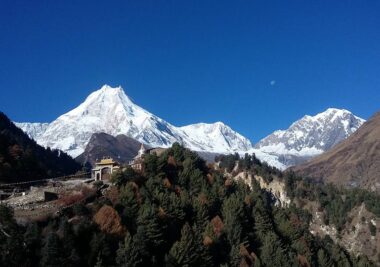
Key Highlights of the Manaslu Circuit Trek Crossing the Legendary Larkya La Pass (5,106m / 16,752ft)
The crossing of Larkya La Pass is the defining moment of the entire Manaslu Circuit Trek and one of the most dramatic high mountain passes in Nepal.
Trekkers usually begin the ascent before dawn, navigating frozen trails, glacial moraines, and rocky alpine terrain under a sky filled with stars. As the sun rises, the surrounding Himalayan giants gradually illuminate, creating one of the most unforgettable mountain panoramas in the country.
From the summit of the pass, trekkers are rewarded with breathtaking views of:
Himlung Himal
Cheo Himal
Kang Guru
Annapurna II
Mount Manaslu
Although the pass is non-technical, it is physically demanding due to:
Thin high-altitude air
Strong mountain winds
Long trekking hours
Snow and ice during colder months
Steep descents toward Bimthang
For many trekkers, crossing Larkya La becomes the emotional and spiritual highlight of the journey.
Sama Gaon & Samdo: Windows into Tibetan Himalayan Life
The villages of Samagaon and Samdo offer one of the richest cultural experiences anywhere in the Nepal Himalayas.
Located close to the Tibetan border, these high-altitude settlements preserve centuries-old Tibetan Buddhist traditions that remain deeply woven into daily life.
What Makes Sama Gaon Special?
Sama Gaon serves as the primary acclimatization stop on the trek and is surrounded by spectacular Himalayan scenery.
Highlights include:
Traditional stone-built Tibetan homes
Ancient monasteries and mani walls
Yak caravans and grazing pastures
Prayer wheels and fluttering prayer flags
Stunning glacier views beneath Mount Manaslu
The village is also the gateway to several rewarding side hikes.
Popular Side Trips from Sama Gaon
Manaslu Base Camp
A challenging but rewarding hike reaching approximately 4,800 meters. The route passes glaciers, rocky moraines, and alpine landscapes while offering close-up views of Mount Manaslu.
Birendra Lake
A beautiful glacial lake famous for its turquoise water and dramatic mountain backdrop. This shorter acclimatization hike is ideal for trekkers wanting a lighter day.
Pungyen Gompa
An ancient monastery hidden beneath the towering Manaslu Glacier. The trail to the monastery offers extraordinary mountain scenery and a peaceful spiritual atmosphere.
Optional Detours: Tsum Valley & Serang Gompa
For trekkers seeking deeper cultural immersion and spiritual solitude, the Manaslu Circuit can be extended into some of Nepal’s most mystical Himalayan valleys.
Tsum Valley — The Hidden Valley of Happiness
Tsum Valley remained isolated from the outside world for centuries and was only opened to trekkers in 2008. Strongly influenced by Tibetan Buddhism, the valley is renowned for its sacred monasteries, remote villages, and peaceful atmosphere.
Trekkers visiting Tsum Valley can experience:
Ancient Buddhist monasteries
Remote cliffside villages
Traditional Tibetan culture
Sacred caves used by Buddhist saints
Spectacular Ganesh Himal views
The valley is considered a spiritual sanctuary where non-violence and compassion are deeply respected cultural values.
Serang Gompa
Hidden within dense alpine forests, Serang Gompa is believed to be more than 500 years old and remains one of the region’s most isolated monasteries.
This detour offers:
A quieter alternative trail
Remote forest landscapes
Opportunities to interact with monks
Deep spiritual tranquility
Authentic Himalayan monastery life
Typical 14-Day Manaslu Circuit Itinerary
While itineraries vary depending on fitness, acclimatization, and side trips, the classic 14-day route offers the ideal balance of adventure, altitude adaptation, and cultural exploration.
Day 1: Drive from Kathmandu to Maccha Khola (890m)
Your adventure begins with a long but scenic drive from Kathmandu toward the remote Gorkha region.
Highlights include:
Trishuli River scenery
Terraced farmland
Rural Nepali villages
Mountain highways and off-road sections
The final stretch beyond Arughat is rough, dusty, and adventurous, especially during monsoon season.
Day 2: Trek from Maccha Khola to Jagat (1,410m)
The trail follows the roaring Budhi Gandaki River through narrow gorges, subtropical forests, and traditional settlements.
Highlights:
Suspension bridge crossings
Hot springs at Tatopani
Waterfalls and river cliffs
Stone staircases carved into hillsides
Jagat also marks the official checkpoint for the restricted Manaslu region.
Day 3: Trek from Jagat to Deng (1,804m)
As the trail climbs higher, the cultural atmosphere gradually shifts toward Tibetan influence.
Trekkers pass:
Buddhist prayer walls
Pine forests
Landslide sections
Deep river canyons
The scenery becomes increasingly dramatic and remote.
Day 4: Trek from Deng to Namrung (2,630m)
This section introduces trekkers to the first major Himalayan panoramas.
Highlights include:
Traditional Tibetan architecture
Forested ridgelines
Views of snow-covered peaks
Ancient monasteries
Namrung is known for its peaceful atmosphere and beautiful mountain scenery.
Day 5: Trek from Namrung to Shyala (3,480m)
This is one of the most visually spectacular trekking days.
As you climb above the tree line, giant Himalayan peaks dominate the skyline.
Trekkers enjoy incredible views of:
Mount Manaslu
Himalchuli
Ngadi Chuli
Ganesh Himal
Shyala is widely considered one of the best mountain-view villages on the route.
Day 6: Trek from Shyala to Sama Gaon (3,530m)
A shorter trekking day allows time to explore monasteries and local culture.
Optional visits include:
Pungyen Gompa
Local yak pastures
Traditional Tibetan homes
The altitude becomes more noticeable here, so slow pacing and hydration are essential.
Day 7: Acclimatization Day at Sama Gaon
This important rest day helps your body adapt to the increasing altitude.
Recommended acclimatization hikes include:
Manaslu Base Camp
Birendra Lake
Pungyen Gompa
Proper acclimatization greatly reduces the risk of altitude sickness before crossing Larkya La Pass.
Day 8: Trek from Sama Gaon to Samdo (3,870m)
A relatively short trekking day leads to the remote Tibetan-origin village of Samdo.
Highlights include:
Expansive alpine landscapes
Yak caravans
Tibetan refugee heritage
Border trade history
The surrounding scenery feels wild, barren, and deeply Himalayan.
Day 9: Trek from Samdo to Dharamsala / Larkya Phedi (4,460m)
This short but important day positions trekkers below Larkya La Pass.
The environment becomes increasingly rugged with:
Glacier valleys
Rocky slopes
Strong winds
Sparse vegetation
Early sleep and preparation are critical for the next day’s pass crossing.
Day 10: Cross Larkya La Pass & Descend to Bimthang (3,700m)
This is the toughest and most rewarding day of the trek.
Expect:
8–10 hours of trekking
Pre-dawn departure
High-altitude conditions
Snow and icy trails
Steep descent into Bimthang
Reaching the summit of Larkya La is a major achievement for trekkers.
Day 11: Trek from Bimthang to Tilje (2,300m)
After the harsh alpine environment, the trail descends into beautiful forests filled with rhododendron, pine, and oak trees.
The warmer temperatures and greener landscapes feel dramatically different from the upper Himalayas.
Day 12: Trek to Dharapani or Tal & Drive to Besisahar
The trail officially connects with the famous Annapurna Circuit route before driving toward Besisahar.
Day 13–14: Drive Back to Kathmandu
The journey concludes with a scenic return drive through central Nepal’s hills, rivers, and villages.
Essential Logistics & Trekking Regulations
Because the Manaslu region borders Tibet and falls within both the Manaslu and Annapurna conservation zones, trekking regulations are strictly controlled.
Independent solo trekking is currently prohibited.
Mandatory Requirements for the Manaslu Circuit Trek
Licensed Guide Requirement
All trekkers must hire a government-licensed trekking guide through a registered Nepali trekking agency.
Guides provide:
Safety and navigation
Permit management
Local cultural knowledge
Emergency support
Communication assistance
Minimum Group Size
To obtain the Restricted Area Permit (RAP), trekkers must travel in a minimum group of two people.
Solo travelers typically join existing groups through trekking agencies.
Required Permits
1. Manaslu Restricted Area Permit (RAP)
This special permit is mandatory because the region lies near the Tibetan border.
Permit Costs:
September–November: USD $100 for the first 7 days
Additional days: Extra daily charges apply
December–August: Lower seasonal pricing
2. Manaslu Conservation Area Permit (MCAP)
Required for entry into the protected Manaslu conservation region.
Approximate Cost:
Around NPR 3,000 per person
3. Annapurna Conservation Area Permit (ACAP)
Necessary because the trek exits through the Annapurna region after crossing Larkya La.
Approximate Cost:
Around NPR 3,000 per person
These permit fees help support conservation projects, local communities, and sustainable tourism initiatives throughout the Himalayan region.
Tea House Experience on the Manaslu Circuit Trek
The Manaslu Circuit Trek is a classic Himalayan tea house trek, meaning trekkers stay in locally operated mountain lodges rather than camping. While the infrastructure has improved significantly in recent years, accommodation remains far more basic and authentic compared to the Everest or Annapurna regions.
For many trekkers, this simplicity becomes one of the most memorable aspects of the journey, offering a genuine connection to local Himalayan life.
What to Expect in Tea Houses
Rooms & Sleeping Conditions
Most tea houses provide:
Twin-sharing rooms with simple wooden beds
Foam mattresses, pillows, and basic blankets
Thin plywood or stone walls with minimal insulation
Shared bathrooms and toilets
Communal dining halls heated by yak-dung stoves
At lower elevations, some tea houses offer attached bathrooms and hot showers, but facilities become increasingly basic as you climb higher toward Larkya La Pass.
In villages such as Dharamsala or Larkya Phedi, accommodation is extremely simple due to the remote high-altitude environment.
Toilet Facilities
Trekkers may encounter both:
Western-style toilets
Traditional squat toilets
Toilet paper is rarely provided, so carrying your own is essential.
Food on the Trail
Despite the remote setting, tea houses provide surprisingly filling and nutritious meals designed for long trekking days.
Most Common Meals
Dal Bhat
Nepal’s famous staple meal consisting of:
Lentil soup
Rice
Seasonal vegetables
Pickles
Occasionally potatoes or curry
A major advantage of Dal Bhat is the unlimited refill system commonly offered in tea houses, making it the best high-energy meal for trekkers.
Other Popular Foods
You will also commonly find:
Momos (Nepali dumplings)
Fried rice
Garlic soup
Tibetan bread
Noodles and pasta
Pancakes and porridge
Eggs and potatoes
Tea, coffee, and hot lemon drinks
Garlic soup is particularly popular at high altitude because many trekkers believe it helps support acclimatization.
Power, Wi-Fi & Connectivity
Electricity is available in most villages, but charging devices usually comes with an additional fee.
Important Things to Know
Charging Costs Increase with Altitude
The higher you go, the more expensive charging becomes because electricity is generated through small hydro systems or solar panels.
Wi-Fi Availability
Basic Wi-Fi is available in some villages, especially:
Namrung
Samagaon
Samdo
However, connections are often:
Slow
Weather dependent
Unstable at high elevations
Near Dharamsala and Larkya La Pass, internet access may disappear completely.
Essential Recommendation
Always carry:
A high-capacity power bank
Spare charging cables
Solar charger (optional)
Offline maps and downloaded documents
Cold temperatures drain batteries quickly, so keep electronics inside your sleeping bag at night.
Drinking Water & Staying Hydrated
Hydration is critical for preventing altitude sickness and maintaining energy during the trek.
Best Water Practices
Instead of constantly buying plastic bottles, trekkers are encouraged to carry:
Reusable water bottles
Insulated flasks
Water purification tablets
Portable water filters or UV purifiers
Most tea houses provide boiled drinking water for a small fee.
Using reusable bottles helps:
Reduce plastic pollution
Lower trekking costs
Support sustainable tourism practices
At higher elevations, warm water inside insulated bottles also helps prevent freezing.
Cash Is Essential
There are no reliable ATMs anywhere along the Manaslu Circuit route.
Once you leave Kathmandu, cash withdrawal options become extremely limited or nonexistent.
Expenses Trekkers Often Forget
Bring enough Nepalese Rupees for:
Hot showers
Battery charging
Wi-Fi access
Snacks and drinks
Extra meals
Tips for guides and porters
Emergency expenses
Carrying small denominations is highly recommended because remote villages may struggle to provide change.
Physical Preparation: Can You Handle the Manaslu Circuit?
The Manaslu Circuit Trek is considered a moderate to challenging Himalayan trek, but it is highly achievable for trekkers who prepare properly.
Unlike technical mountaineering expeditions, the trek requires no climbing experience. However, it demands endurance, mental resilience, and proper altitude awareness.
Why the Trek Is Challenging
Trekkers typically walk:
5–8 hours daily
Up to 10–12 hours on Larkya La Pass day
Challenges include:
Steep stone staircases
Rocky and uneven terrain
Glacier crossings
High altitude
Cold temperatures
Long descents
Thin oxygen levels above 5,000 meters
At the altitude of Larkya La Pass, oxygen availability drops by nearly 40% compared to sea level, making even slow walking physically demanding.
Recommended Training Plan
Start Training Early
Ideally, begin preparing:
12–16 weeks before departure
Consistency matters far more than extreme workouts.
Focus on Cardiovascular Fitness
Strong cardiovascular endurance helps your body perform efficiently in low-oxygen environments.
Recommended Activities
Running
Cycling
Swimming
Stair climbing
Hiking
Incline treadmill walking
Aim for:
3–4 cardio sessions weekly
45–90 minutes per session
Build Lower-Body Strength
Your legs carry you through thousands of uphill and downhill steps.
Key Exercises
Squats
Lunges
Step-ups
Deadlifts
Calf raises
Wall sits
Core training is equally important for backpack stability and posture.
Practice Hiking with Weight
One of the best preparations is hiking with a loaded backpack similar to what you will carry in Nepal.
Recommended Practice
Backpack weight: 10–12kg
Train on uneven terrain
Hike consecutive days when possible
Wear your trekking boots during training
This helps:
Toughen muscles and joints
Reduce blister risk
Improve stamina
Simulate real trail fatigue
Altitude Awareness & Acclimatization
Altitude sickness can affect anyone regardless of age or fitness level.
Common Symptoms
Headache
Nausea
Dizziness
Loss of appetite
Fatigue
Difficulty sleeping
The key prevention strategies are:
Slow ascent
Proper hydration
Acclimatization days
Avoiding alcohol
Listening to your guide
The acclimatization stop at Samagaon plays a crucial role in preparing trekkers for the higher elevations ahead.
Final Thoughts
The Manaslu Circuit Trek is far more than a mountain hike—it is an immersive journey through remote Himalayan wilderness, ancient Tibetan Buddhist culture, and some of Nepal’s most dramatic alpine landscapes.
From crossing the windswept heights of Larkya La Pass to sharing tea with local villagers beneath towering Himalayan peaks, every day on the trail delivers a sense of adventure that feels increasingly rare in the modern world.
The trek demands preparation, patience, and respect for the mountains. Yet for those willing to embrace the physical challenge, basic tea house comforts, and unpredictable Himalayan conditions, the rewards are extraordinary.
For many trekkers, the Manaslu Circuit becomes more than just a trekking route—it becomes a life-changing Himalayan experience that leaves a lasting connection to Nepal’s mountains, cultures, and wilderness.