Everest Base Camp Preparation: Everything You Need to Know
For the preparation for the Everest base camp trek it is essential to have both physical conditioning , in addition to that u need to be mentally prepared as well. One of the most important that you need to include is safety measures as it is done in higher altitude so to keep your body well adjusted , it is recommended to create a plan which includes slow and steady trek with rest along the way of trail as well. Therefore getting proper guide which will help you in safety aspect of the trek is very essentials during Everest base camp trek. Some of the basic thing recommended for this trek are physical training which you should mainly focus on cardio exercise so that you will not get fatigued during your trek to Everest region of Nepal , keeping yourself well hydrated is also great during the trek .
Below are some of the tips that are recommended for Ebc trek –
The Golden Rule: Prioritize Acclimatization
The single most important factor for success isn’t your fitness—it’s how your body handles the thin air.
-
The 3-Night Rule: We strongly recommend an itinerary that includes three nights in Namche Bazaar (11,500 ft).
-
Why it matters: This extra time allows your body to produce the red blood cells necessary to carry oxygen at higher altitudes. Skipping this critical window significantly increases your risk of Acute Mountain Sickness (AMS).
-
Safety First: Acclimatizing thoroughly at lower elevations is the best way to ensure you reach Base Camp safely.
Physical Training Strategy
To prepare your body for 5–8 hours of daily trekking with an average elevation gain of 1,000 feet per day, focus on these three pillars:
Cardio & Aerobic Conditioning
Start training at least 8–12 weeks before your departure.
-
Hiking: Dedicate one day per week to a long-distance hike. Focus on duration over speed, building up to 5–6 hours of continuous movement.
-
Simulated Elevation: If you live in a flat area, use a treadmill on an incline or a stair-stepper at least twice a week.
Strength & Endurance
You will be hiking with a daypack weighing approximately 6kg (12 lbs).
-
Full-Body Workouts: Incorporate strength training twice a week to support your joints and build leg power.
-
Specific Conditioning: While biking and swimming are great for heart health, nothing beats “time on feet” with weight on your back.
Mental Preparation
Don’t let the scale of the mountain intimidate you. The trek is a “slow and steady” journey, not a marathon. With a positive attitude and the right pace, trekkers of all ages can successfully reach the base of the world’s highest peak.
Training Comparison at a Glance
| Training Type | Frequency | Goal |
| Long Hikes | 1x Per Week | Build to 6 hours of endurance |
| Inclines/Stairs | 2x Per Week | Strengthen legs for uphill climbs |
| Strength Training | 2x Per Week | Full-body stability and pack carrying |
| Rest/Recovery | As needed | Prevent injury before the trip |
Expert Tip: The best way to gauge your readiness is to take a few heavily weighted day hikes on hilly terrain. If you can handle those, you are well on your way.
Is the Trek to Everest Base Camp Difficult?
The short answer: It is a manageable challenge. While you don’t need to be an elite athlete, you cannot treat this like a casual stroll.
-
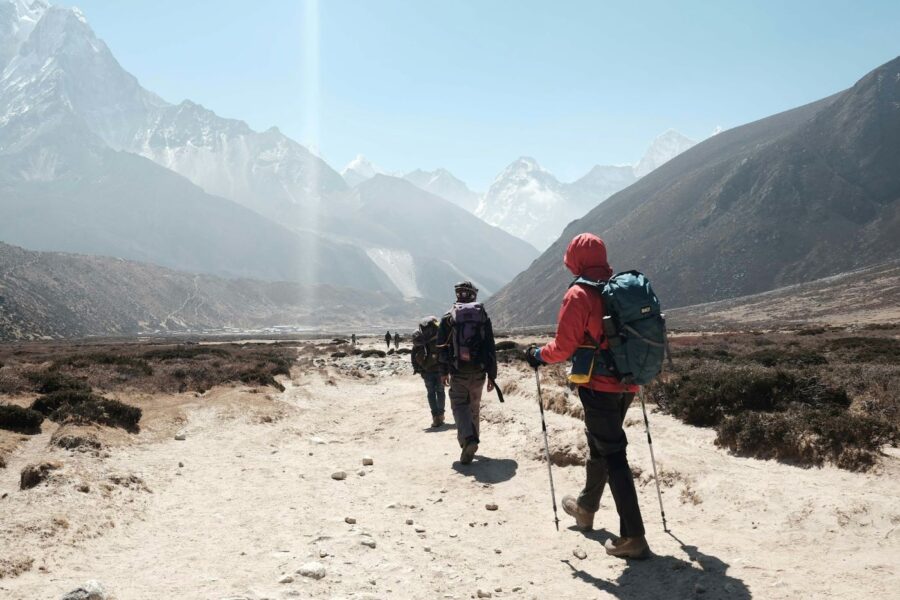
The Physical Demand: You will hike for 5–7 hours daily over 12–14 days. The terrain shifts from dusty lowland paths to rugged, rocky moraine as you climb.
-
The Altitude Factor: This is the greatest variable. High altitude affects everyone differently, regardless of fitness. Symptoms like headaches or nausea are common, making a slow, steady pace and “climb high, sleep low” acclimatization essential.
-
The Environment: Thinning air makes every step feel heavier, and weather can shift from sun-drenched valleys to sudden snowstorms in a matter of hours.
When to Go: Choosing Your Season
Outside of the monsoon season (June to September), there are two primary windows for trekking:
Spring (March – Early May)
-
Vibe: Vibrant and busy. The lower trails are alive with wildflowers and rhododendrons.
-
Experience: You’ll likely see major climbing expeditions preparing for the summit at Base Camp.
-
Weather: Warm and humid at lower elevations, with some afternoon cloud cover.
Autumn (October – November)
-
Vibe: The “Goldilocks” season. This is traditionally the most popular time to go.
-
Experience: Famous for crisp, crystal-clear mountain views and stable blue skies.
-
Note: Trails and teahouses will be at their busiest during this peak window.
Winter (Late November – December)
-
Vibe: Quiet and serene. Perfect for those who want to avoid the crowds.
-
Weather: Much colder, especially at night. However, if you have high-quality gear (a 4-season sleeping bag and a heavy down jacket), the solitude and sharp visibility are well worth the chill.
Preparation Essentials
Success at EBC is built on a tripod of preparation:
-
Physical Training: Focus on leg strength and cardiovascular endurance.
-
Mental Resilience: Prepare for long days and basic living conditions.
-
The Right Gear: Layering is your best friend. From moisture-wicking base layers to heavy-duty outer shells, your clothing must be adaptable.
Note: Many reputable trekking companies provide essential heavy gear—like expedition-grade duvet jackets and sleeping bags—free of charge, so check your inclusions before you buy.
Physical Training Foundations
Your training should revolve around three specific pillars: Cardio, Strength, and Endurance.
Cardiovascular Fitness (5+ days/week)
The goal is to teach your body to utilize oxygen efficiently.
-
Activities: Running, cycling, swimming, or brisk walking.
-
Progression: Start with what feels manageable and gradually increase the duration and intensity.
Strength & Stability (1–3 days/week)
Since you’ll be carrying a daypack, focus on your “chassis” (your legs and core).
-
Key Exercises: Squats, lunges, and step-ups.
-
Focus: You don’t need heavy upper-body mass; you need stable, fatigue-resistant legs for steep inclines.
Specific Endurance (The “Time on Feet” Principle)
The best way to train for hiking is to hike.
-
Practice Hikes: Build up to 5–6 hour walks with minimal breaks.
-
Terrain: Seek out uneven trails, hills, or coastal paths to mimic the Himalayan moraine.
-
Gear Check: Always wear the boots and daypack you intend to use on the trek.
Gym-Based Training Alternative
If you don’t have access to mountains, you can simulate the trek in a gym. Complete this circuit 2x per week:
| Exercise | Duration/Rep | Notes |
| Treadmill | 45 Minutes | Set to “Hill” or high incline; walk/slow jog. |
| Stair-Stepper | 10 Minutes | Aim for 30–45 steps per minute. |
| Recovery Walk | 5 Minutes | No incline; catch your breath. |
| Strength Finisher | 3 Sets | 30 lunges and 30 squats; focus on form. |
Repeat the treadmill/stair circuit 2–3 times per session.
Acclimatization & Nutrition
You cannot “train” for altitude in advance, but you can prepare your body to handle it.
-
The Hydration Rule: Aim for 2–3 liters of water daily on the trail. Proper hydration is the most effective way to combat altitude sickness.
-
Fueling: Your calorie expenditure will skyrocket. Embrace the local diet; Dal Bhat (lentil soup and rice) is the ultimate trekking fuel—it’s nutritious, filling, and provides sustained energy.
-
Education: Download the “Travel at High Altitude” booklet by Medex to recognize symptoms like headaches or nausea early.
Expert Tips for Success
-
Break in Your Boots: Buy your boots early and wear them everywhere—even to the grocery store. Ensure there is a finger’s width of space at the toe to avoid bruising on long descents.
-
Weight Training: Slowly increase your daypack weight during practice hikes until you are comfortable carrying 25 lbs.
-
Mental Fortitude: Use visualization or meditation. Reaching EBC is often a “mind over matter” challenge. Break the trek into small, daily goals rather than focusing on the 17,500-foot total.
Train for the “Real” Elevation
You cannot effectively train if you don’t know what you are training for. On the trek, you will face 30% to 50% less oxygen than at sea level.
-
Muscle Stressing: Since you can’t easily simulate thin air, you must put your muscles under more stress at sea level.
-
The Overload Principle: Gradually increase the weight in your backpack during training. Aim to eventually carry double the weight you expect to have on the trail. This builds a “strength buffer” for when oxygen levels drop.
-
Know the Numbers: Research the daily distances and vertical gains for your specific itinerary. Your weekend training hikes should eventually mirror these daily stats.
Professional Gear: Comfort is a Requirement
You will spend significant time resting and sleeping to recover. If you are cold or uncomfortable, you won’t recover, which leads to fatigue and altitude issues.
The Essentials
-
The Sleeping Bag: Invest in a high-quality down bag rated to 0°F (-17°C).
-
Layering: Focus on moisture-wicking merino wool base layers and a high-loft down jacket.
-
The Boots: This is your most critical piece of gear. We recommend a boot with a rigid sole and high ankle support, such as the La Sportiva Trango GTX.
-
The Break-in: Buy your boots 3–6 months early. Wear them on every training hike to ensure there are no hot spots or blisters before you reach Nepal.
Building Your 6-Month Timeline
-
Months 6-4: Focus on base cardio and sourcing your gear. Start breaking in boots.
-
Months 3-2: Begin weighted hikes and stair-climbing. Start your vaccination series.
-
Month 1: Peak training with a full-weight pack (up to 25-30 lbs). Study your itinerary’s daily elevation charts.
-
2 Weeks Out: Taper your training to allow your body to fully recover before the flight to Lukla.
Expert Insight: Many people find the descent just as taxing as the ascent. Ensure your training includes plenty of downhill hiking to toughen your quads and joints for the long trek back to Lukla.
Success at Everest Base Camp (EBC) is a combination of meticulous gear selection, disciplined physical habits, and professional guidance. To ensure you aren’t just surviving the trek but actually thriving, follow these expert-led strategies for gear, safety, and trail technique.
The Art of Layering and Cultural Respect
With strict weight limits on flights to Lukla, your clothing must be versatile. Use a three-layer system:
-
Base: Thermal leggings and moisture-wicking tops.
-
Insulation: Microfleeces, heavier fleeces, and a high-quality duvet jacket (often provided by premium trekking companies).
-
Outer: A breathable, waterproof shell to block wind and rain.
-
A Note on Culture: While Lycra is functional, it is respectful to wear a loose layer over tight-fitting clothing to align with local Sherpa customs.
Essential Gear & Footwear
-
The “Golden” Boot Rule: Sturdy, waterproof boots are mandatory. Buy them early and break them in during your 12-week training period. Start with short walks and build to full-day hikes to prevent blisters.
-
Hardware: Use trekking poles to reduce impact on your joints and a quality backpack with a comfortable hip belt.
-
Sun Protection: At high altitudes, UV rays are significantly stronger. Pack SPF, a neck gaiter (buff), and category 3 or 4 sunglasses.
Hydration and Pacing Strategy
The 5-Liter Rule
Hydration is your best defense against Acute Mountain Sickness (AMS). Aim for 4–5 liters of water daily.
-
Morning: Drink 1 liter before starting at 8 AM.
-
Trail: Sip 2 liters from a hydration bladder during the morning trek.
-
Lunch/Afternoon: Drink the remaining 2 liters by 5 PM.
-
Tip: Finishing your intake by 5 PM ensures you won’t be waking up all night to use the toilet.
“Slow and Steady”
You will have 30% to 50% less oxygen available above 18,000 feet.
-
Keep your heart rate low. Let others pass you.
-
Minimize daily muscle damage to allow for better recovery overnight.
-
Pressure Breathing: Practice deep inhalations through the nose and forceful exhalations through the mouth to “flood” your system with oxygen.
Safety and Professional Support
When choosing a trekking partner, prioritize those who utilize professional medical monitoring:
-
Health Checks: Ensure your guides use pulse oximeters to test your oxygen saturation and heart rate twice daily (breakfast and dinner).
-
Evacuation Readiness: Verify your team carries satellite phones and that you have Global Rescue or similar evacuation insurance. Since there are no roads, a helicopter is often the only way out in an emergency.
-
Group Size: Smaller teams (maximum 10 people) allow guides to spot subtle changes in behavior that may indicate the onset of AMS.
Timing and Seasonality
| Season | Months | Experience |
| Pre-Monsoon | March – May | Vibrant trails; see Everest summit expeditions. |
| Post-Monsoon | Sept – Dec | Clear skies and stable weather; cooler temps. |
| Peak Crowd | April, May, Oct | Busiest months on the trail. |
| Quiet Window | March, Nov, Dec | Best for solitude and clear, crisp photography. |
Final Expert Tip: Don’t neglect your descent. Coming down is often harder on the legs than going up. Ensure your training includes “eccentric” loading (downhill walking) to prepare your quads for the return to Lukla.
Training for Everest Base Camp is a marathon, not a sprint. While the trek covers a significant distance—roughly 120km (75 miles) round trip—the secret to success lies in a “slow and steady” approach. By spreading the ascent over 8 days and the descent over 3, you allow your body the time it needs to adapt to the thinning air.
Here are the final essential tips to ensure you arrive in Nepal prepared, resilient, and ready to enjoy the view.
Master Your Gear Early
The best gear in the world won’t help you if it doesn’t fit your body.
-
The Boot Test: Break in your trekking boots at least 3 months out. Wear them on trails, at the gym, or even to the store. Ensure there is a finger’s width of space at the front to protect your toes during the long descent.
-
Pack Practice: Don’t wait until Lukla to find out your daypack rubs your shoulders. Wear it during your training hikes, gradually increasing the weight until it feels like a natural extension of your body.
Strategic Physical Preparation
-
Cardio Consistency: Aim for 2–3 dedicated cardio sessions per week (cycling, swimming, or jogging). This conditions your heart and lungs to perform efficiently in low-oxygen environments.
-
The 12-Week Window: Give yourself at least 8–12 weeks of lead time. Rushing your fitness in the final fortnight won’t help; your body needs time to build genuine endurance.
-
The Taper: In the final week before you fly to Nepal, stop training hard. Switch to light activity and stretching. You want to arrive at the trailhead feeling fresh and recovered, not exhausted from training.
Maintenance and Recovery
| Habit | Benefit |
| Nutrition | Increase your protein and calorie intake as your training intensifies to support muscle repair. |
| Morning Stretches | Use dynamic stretches (leg swings, arm circles) to wake up your muscles before hitting the trail. |
| Evening Stretches | Spend 10 minutes on static stretches after arriving at the lodge. This improves sleep quality and reduces morning stiffness. |
Keeping Perspective: Fitness vs. Altitude
It is a common misconception that being a “marathon runner” makes you immune to the mountains.
-
Fitness vs. Altitude: Physical fitness helps you endure the 5–8 hours of daily hiking, but it does not guarantee immunity from High Altitude Sickness (AMS).
-
The Equalizer: Altitude can affect the ultra-fit and the casual hiker alike. This is why our itinerary prioritizes a reserved pace and frequent acclimatization breaks.
Summary of the Trek at a Glance
-
Total Duration: 11 Days (8 days up, 3 days down).
-
Daily Movement: 5–8 hours of trekking.
-
Average Gain: 300m (1,000 feet) per day.
-
Rest Days: 2 full days dedicated to acclimatization.
Final Thought: You are traveling to the Himalayas to bask in the world’s most iconic landscapes, not to be bent over struggling for air. Proper training ensures that when you reach 17,500 feet, you have the energy to look up and take it all in.