Manaslu Circuit Trek Highlights: Why This Hidden Himalayan Gem Should Be Your Next Adventure
Discover the breathtaking Manaslu Circuit trek highlights—from Larkya La Pass to Birendra Lake, remote villages to ancient monasteries. Your complete guide to this off-the-beaten-path Himalayan adventure.
The Mountain You’ve Never Heard Of (But Should Have)
Here’s the thing about the Himalayas: everyone knows Everest. Most people have heard of Annapurna. But Manaslu? The world’s eighth-highest mountain might as well be a secret handshake among serious trekkers. And honestly? That’s kind of the point.
I remember standing at the foot of Manaslu for the first time, feeling like I’d stumbled into something exclusive—a members-only club where the entry fee was just willingness to trek for two weeks through one of Nepal’s most spectacular (and overlooked) regions. The Manaslu Circuit isn’t just another trek; it’s the trek for people who think the Annapurna Circuit is getting a bit too…populated.
So what makes the Manaslu Circuit trek highlights so special? Buckle up, because we’re about to explore mountain panoramas that’ll make your Instagram followers question if you’ve learned Photoshop, high-altitude passes that separate the dreamers from the doers, and cultural experiences so authentic they don’t even have Wi-Fi to Instagram about them.
The Crown Jewel: Larkya La Pass—Your Date with 17,100 Feet
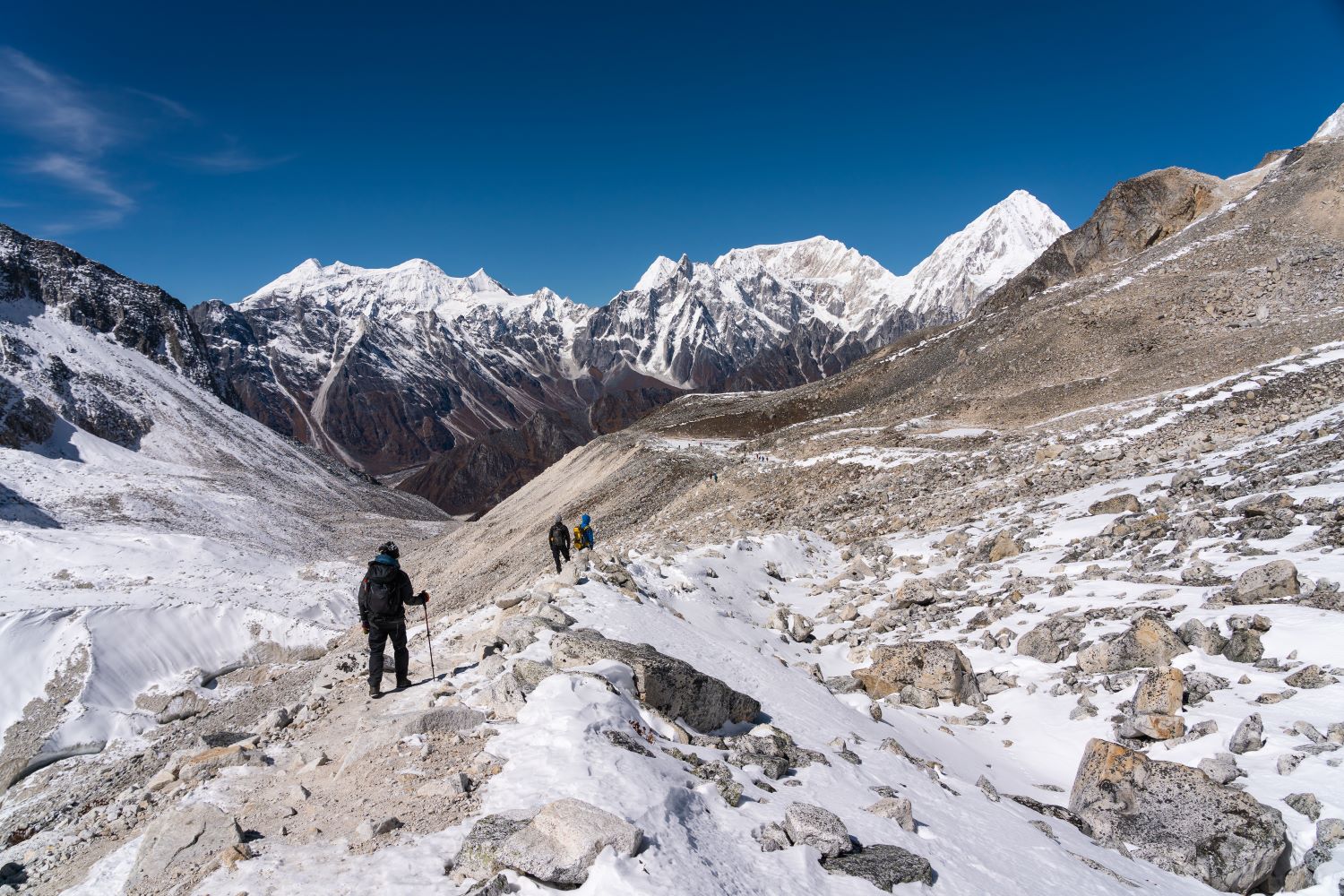
Let’s talk about the elephant in the room—or rather, the mountain pass at 5,160 meters (17,100 feet). Larkya La Pass isn’t just the highest point on the Manaslu Circuit; it’s the moment when everything clicks. The altitude, the struggle, the views—they all culminate in one of those “this is why I’m here” moments that justifies every blister, every early morning, every instant noodle dinner.
Is Larkya La Pass difficult? Look, I’m not going to sugarcoat it. It’s not a walk in the park unless your local park happens to be above 17,000 feet with glacier views and oxygen levels that make you appreciate every breath. The pass typically takes 8-10 hours from Dharamsala (the last village before the crossing) to Bimthang on the other side. You’ll start your day around 3-4 AM—yes, in the dark, yes, it’s cold—but here’s what they don’t tell you: watching the sun rise over the Himalayas from Larkya La is like witnessing creation itself.
The pass rewards you with 360-degree views of Himalayan giants—Manaslu, Himlung Himal, Cheo Himal, Kang Guru, and Annapurna II. It’s nature’s way of saying, “Thanks for showing up.”
Pro tip: Spend an extra day acclimatizing in Samdo before attempting the pass. Your body (and your summit success rate) will thank you.
Viewpoints That’ll Break Your Camera (In a Good Way)
Birendra Lake: The Secret Spot
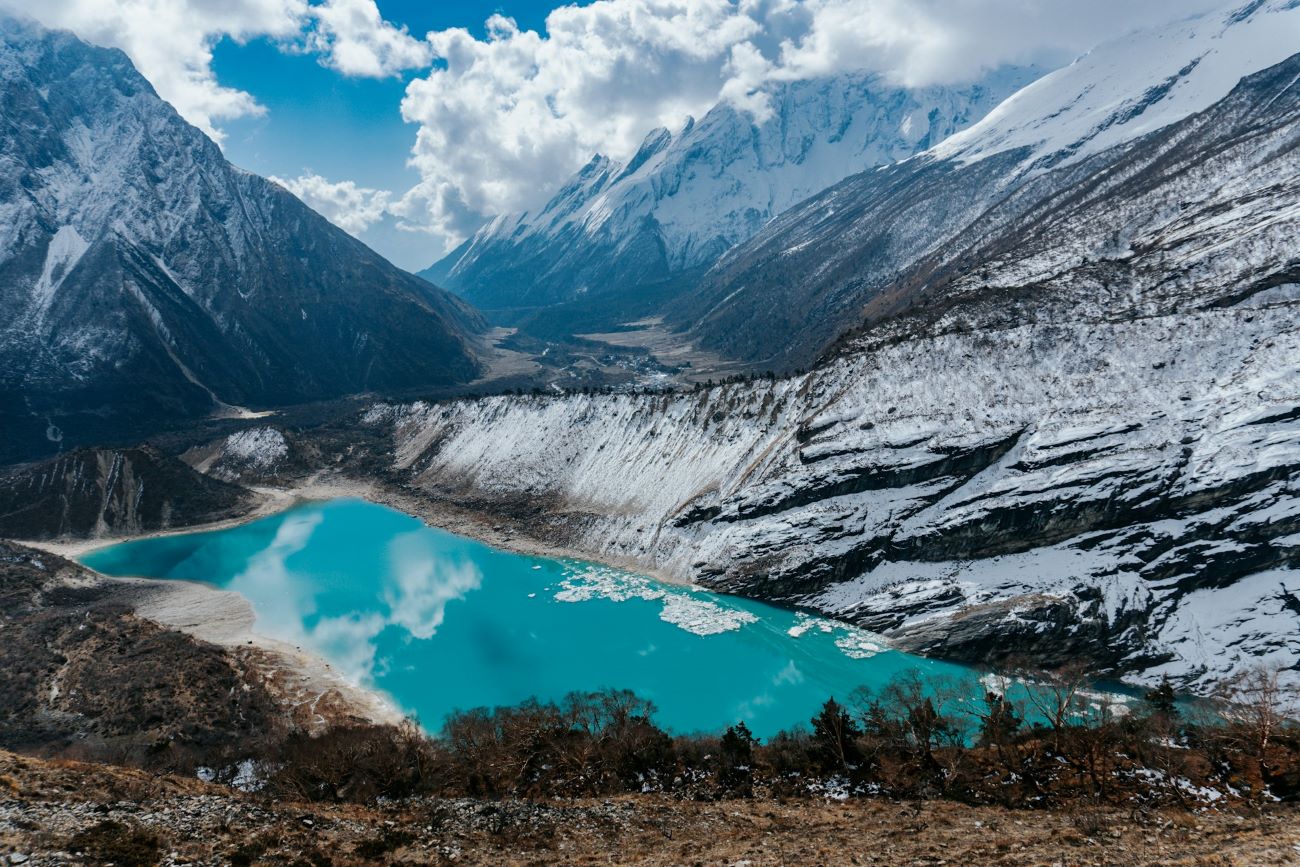
Here’s a highlight most trekkers miss: Birendra Lake. This glacial gem sits above Samdo at roughly 4,450 meters, and it requires a side trip of about 4-5 hours round trip. Is it worth the detour? Only if you like pristine turquoise waters reflecting Manaslu’s northern face without another soul around.
The lake is named after King Birendra, and standing there, you understand why royalty gets things named after them. It’s the kind of place where you sit, forget to take photos for a solid five minutes, and just…exist.
Shyala and Samdo: Where Villages Meet Mountains
The villages of Shyala and Samdo aren’t just stops on your itinerary—they’re viewpoints with soul. Samdo (3,860m) sits near the Tibetan border, and the village itself offers phenomenal sunrise views over the Manaslu range. The monastery perched above the village is the perfect spot for that “contemplating life” photo you didn’t know you needed.
Shyala, slightly lower at 3,520m, gives you the first dramatic views of the Larkya Glacier. These villages are where you realize the Manaslu Circuit trek highlights aren’t just about mountains—they’re about the intersection of human resilience and natural beauty.
The Lesser-Known Gems: Namrung and Lho
Namrung (2,630m) and Lho (3,180m) are often overlooked in the rush to reach higher altitudes, but these traditional Tibetan villages pack serious visual punch. Namrung offers your first proper views of Manaslu’s southern face, framed by terraced fields that look hand-painted. Lho, meanwhile, sits directly below the mountain and houses the beautiful Lho Monastery—more on that later.
Cultural Highlights: Monasteries, Mani Walls, and Mountain Wisdom
Pungyen Gompa: The Spiritual Gateway
Located in Lho village, Pungyen Gompa (also called Lho Monastery) is over 150 years old and serves as the spiritual heart of the region. The monastery’s location—with Manaslu looming directly behind—creates one of those “is this real life?” moments. Monks here practice Tibetan Buddhism, and if you’re lucky enough to visit during prayer time, the sound of chanting echoing against mountain walls is something that stays with you.
The monastery features intricate murals, spinning prayer wheels, and an atmosphere so peaceful you’ll forget about altitude sickness for a minute. This is where culture and mountain merge into something transcendent.
[Insert image: Pungyen Gompa monastery with Manaslu backdrop]
Ribung Gompa and Mani Walls
Ribung Gompa near Samagaon is another spiritual highlight, but what really gets me are the mani walls—these incredible stone walls carved with Buddhist prayers and mantras that line the trail. Some stretch for hundreds of meters, representing years of devotion. Walking past them, always keeping them to your right (Buddhist protocol), you’re participating in a tradition that predates modern trekking by centuries.
The Tsum Valley Extension: A Highlight Within a Highlight
Want to go deeper into cultural highlights? The Tsum Valley side trip is like discovering a valley that time forgot—in the best possible way. This sacred Himalayan pilgrimage valley adds 5-7 days to your trek but delivers monasteries like Mu Gompa and Rachen Gompa, where nuns and monks live in genuine isolation.
The Tsum Valley is where you’ll find the most authentic Tibetan Buddhist culture in the entire region. Villages here still practice polyandry, ancient animist beliefs blend with Buddhism, and the concept of “tourist infrastructure” is charmingly absent. If the main Manaslu Circuit highlights are the main course, Tsum Valley is the secret dessert menu.
Manaslu Base Camp: The Side Trip That Defines Your Trek
Let’s address the question on everyone’s mind: Is Manaslu Base Camp worth the detour? Short answer: absolutely. Longer answer: ABSOLUTELY.
The Manaslu Base Camp side trip from Samagaon takes 6-8 hours round trip and brings you to 4,800 meters, face-to-face with the Manaslu massif and its surrounding glaciers. This isn’t some distant mountain view—this is intimate, this is raw, this is the mountain in all its dangerous beauty.
What makes this highlight special is the solitude. Unlike Everest Base Camp, which can feel like a carnival during peak season, Manaslu Base Camp often has just you, your guide, and the mountain. It’s the mountaineering experience without the technical mountaineering.
The base camp sits in a glacial amphitheater with ice seracs, crevasses, and the kind of scale that makes you understand why people climb mountains. You’ll see actual expeditions setting up camp during climbing season (spring), which adds an adventurous buzz to the atmosphere.
Pro tip: The trail can be tricky to navigate—glacial moraines aren’t marked with arrows—so don’t attempt this without a local guide who knows the way.
What Makes Manaslu Different: The Real Talk
Off-the-Beaten-Path (For Now)
One of the biggest Manaslu Circuit trek highlights? It’s still genuinely remote. While the Annapurna Circuit has been discovered by every gap-year student and their travel blogger cousin, Manaslu maintains that “wait, how did I end up here?” feeling.
The circuit sees roughly 6,000-7,000 trekkers annually compared to Annapurna’s 100,000+. That’s not a typo. You’ll have trails to yourself, teahouses where you’re the only guest, and mountain views uncluttered by crowds.
Will this last? Probably not. Manaslu is being “discovered” as we speak, so there’s a bit of a ticking clock on the “off-the-beaten-path” designation. But for now, it’s gloriously uncrowded.
The Cultural Immersion Factor
The Manaslu region has maintained its Tibetan Buddhist culture more authentically than most trekking regions. This isn’t a culture preserved for tourists—it’s the real deal. People here still farm, trade with Tibet (semi-legally), and practice their traditions because that’s their life, not because it’s on a tour itinerary.
You’ll encounter fewer English speakers, more curious locals (you’re still a novelty), and cultural experiences that feel participatory rather than performative.
The Scenery Spectrum
Where Annapurna gives you diversity and Everest gives you “big mountain energy,” Manaslu gives you both. The circuit moves through seven climate zones—from subtropical forests with rhododendrons to arctic conditions at Larkya La. You’ll trek past rice terraces, through alpine meadows, alongside glacial rivers, and over high-altitude desert.
The scenery and culture combination is what sets Manaslu apart. It’s not just pretty mountains; it’s pretty mountains with prayer flags, monasteries, and yaks.
The Best Season for Highlights: Timing Your Trek
When should you trek the Manaslu Circuit to maximize those highlight experiences? Here’s the breakdown:
| Season | Pros | Cons | Best For |
|---|---|---|---|
| Spring (March-May) | Clear mountain views, rhododendron blooms, warmer temperatures | Busier trails (though still quiet), dustier paths | Photography, comfortable trekking, wildflowers |
| Autumn (Sept-Nov) | Crystal-clear skies, perfect visibility, stable weather | Peak season means more trekkers (relatively), colder at altitude | First-timers, guaranteed views, best overall experience |
| Winter (Dec-Feb) | Complete solitude, snow-covered landscapes | Very cold, some teahouses closed, challenging pass crossing | Experienced trekkers seeking isolation |
| Monsoon (June-Aug) | Green landscapes, fewer people | Heavy rain, leeches, obscured mountain views, trail damage | Hardcore adventurers only |
Verdict: Autumn (October-November) is the sweet spot for Manaslu Circuit highlights. You get clear mountain panoramas, comfortable temperatures, and all teahouses open. Spring is a close second if you want blooming rhododendrons to complement your mountain views.
Village Highlights: Where Culture Meets Comfort
Samagaon: The Trekking Hub
Samagaon (3,530m) serves as the cultural and logistical heart of the trek. This large village offers the best teahouse facilities on the circuit, but more importantly, it’s where you base yourself for side trips to Manaslu Base Camp and Birendra Lake.
The village itself is a highlight—with its monastery, mani walls, potato fields (yes, they’re photogenic), and Manaslu views that make you understand why people settled here despite the altitude. Spend at least two nights here for acclimatization and exploration.
Namrung: The Gateway to High Country
Namrung marks the beginning of serious altitude gains and the shift into pure mountain culture. The village clings to a hillside, offering sunrise views that locals have been waking up to for generations. The monastery here is smaller but equally charming, and the village itself feels like the definition of “remote mountain community.”
Lho: Monastery with a View
Lho village wins the “best monastery setting” award. Pungyen Gompa sits here with Manaslu rising directly behind it—a composition so perfect it feels staged. The village also offers some of the best viewpoints on the Manaslu Circuit for mountain photography.
Wildlife and Flora in the Manaslu Conservation Area
One overlooked aspect of Manaslu Circuit trek highlights: the Manaslu Conservation Area is home to incredible biodiversity. While you’re not trekking here for a safari experience, keep your eyes open for:
- Snow Leopards: Extremely rare sightings, but they’re here
- Red Pandas: In lower altitude forests
- Himalayan Tahr: Mountain goats you’ll likely see on rocky slopes
- Blue Sheep: Often spotted near higher villages
- Himalayan Monal: Nepal’s national bird, with iridescent plumage
- Rhododendron Forests: 26 species, blooming in spring in every color imaginable
- Alpine Meadows: Wildflowers in spring and early summer
The conservation area designation means this region is protected, which helps maintain both wildlife populations and the pristine nature that makes the trek so special.
Practical Highlight Navigation: How Many Days?
So you want to hit all the key highlights—what’s the ideal itinerary?
Minimum for main circuit: 12-14 days
With Manaslu Base Camp: 13-15 days
With Tsum Valley: 18-21 days
With both side trips: 20-23 days
Here’s a sample itinerary focusing on highlights:
| Day | Route | Highlights |
|---|---|---|
| 1-3 | Soti Khola to Deng | Budhi Gandaki River gorge, waterfalls |
| 4-5 | Deng to Namrung | First Manaslu views, Tibetan cultural transition |
| 6 | Namrung to Lho | Lho Monastery, mountain panoramas |
| 7 | Lho to Samagaon | Arrival at trekking hub |
| 8 | Samagaon | Manaslu Base Camp side trip |
| 9 | Samagaon | Birendra Lake or rest day |
| 10 | Samagaon to Samdo | Village viewpoints, Tibet border proximity |
| 11 | Samdo to Dharamsala | Final acclimatization before pass |
| 12 | Dharamsala to Bimthang via Larkya La | THE BIG ONE – pass crossing |
| 13-14 | Bimthang to Dharapani | Descent through different climate zones |
This gives you time to actually experience the highlights rather than just checking them off a list.
Teahouses and Lodges: Where to Stay at Highlight Villages
One common question: Are teahouses available near major viewpoints? The short answer is yes—the Manaslu Circuit has developed enough infrastructure to support trekkers while maintaining its remote character.
Samagaon offers the best selection—multiple lodges with heated dining rooms, western toilets (sometimes), and even the occasional hot shower. Samdo, Namrung, and Lho have several teahouse options each, though more basic. Dharamsala (before Larkya La) has limited but adequate lodges.
The lodges near best viewpoints like those in Lho and Samdo are particularly special—imagine waking up to Manaslu views from your window. It’s not luxury, but it’s luxury enough when the alternative is a tent.
What to expect:
- Shared bathrooms (usually)
- Basic rooms with twin beds
- Dal bhat (rice and lentils) that’ll fuel your trek
- Communal dining areas with stoves
- Amazing conversations with other trekkers
Permits: Accessing the Highlight Areas
Yes, you need special permits to access these highlight areas. The Manaslu Circuit isn’t a free-for-all—it’s a restricted area requiring:
- Manaslu Restricted Area Permit (RAP): Required for the circuit, costs vary by season ($100 for Sept-Nov, $75 for Dec-Aug per week)
- Manaslu Conservation Area Permit (MCAP): NPR 3,000 (about $30)
- Annapurna Conservation Area Permit (ACAP): NPR 3,000 (required for the final section after Larkya La)
- Tsum Valley Permit (if doing that extension): Additional cost
You cannot trek independently—you must either join an organized group or hire a registered guide. This is actually a blessing in disguise; local guides know the highlight viewpoints, best times for photos, and can navigate the less-marked sections around Manaslu Base Camp and Birendra Lake.
Photography Spots: The Gram-Worthy Highlights
Let’s be honest—part of the appeal of Manaslu Circuit trek highlights is the photography. Here are the money shots:
Top 10 Photography Spots:
- Larkya La Pass – Summit at sunrise
- Birendra Lake – Reflection shots of Manaslu
- Pungyen Gompa – Monastery with mountain backdrop
- Mani Walls near Lho – Leading lines with prayer stones
- Manaslu Base Camp – Glacial amphitheater
- Samdo Village – Traditional architecture with peaks
- Budhi Gandaki Gorge – Waterfalls and suspension bridges
- Namrung Fields – Terraced landscapes
- Bimthang Meadows – Alpine flowers (spring) with mountains
- Prayer Flags – Literally everywhere, use them as foreground elements
Pro photographer tip: Bring a polarizing filter for those glacial lake shots, shoot during golden hour (duh), and don’t underestimate the power of villagers in traditional dress as subjects (always ask permission first).
Things to Do Beyond Walking: Maximizing Your Highlights
The Manaslu Circuit trek isn’t just a walking holiday—here are activities that enhance the highlight experience:
- Visit Local Monasteries During Prayer Time: The chanting, drums, and horn music create an unforgettable atmosphere
- Attend Cultural Performances (if timing works): Some villages host traditional dances during festivals
- Try Tibetan Butter Tea: It’s…an acquired taste, but it’s cultural immersion in a cup
- Photograph Yak Caravans: Still the primary transport for goods in the region
- Chat with Expedition Teams (at Manaslu Base Camp during climbing season): Hear firsthand mountaineering stories
- Watch Sunrise/Sunset from Viewpoints: The light on Manaslu is worth waking up for
- Learn Basic Tibetan Phrases: “Tashi Delek” (hello) goes a long way
Gear for Experiencing the Highlights (The Essentials)
To fully enjoy the Manaslu Circuit trek highlights, you need the right gear. Here’s what’ll make or break your experience:
The Non-Negotiables:
- Four-Season Down Jacket: Larkya La gets cold—like, really cold. The North Face Summit series or equivalent will keep you functional at 17,000 feet.
- Quality Trekking Boots: You’re walking 6-8 hours daily on everything from jungle trails to glacial moraines. Salomon or Scarpa high-ankle waterproof boots are worth every penny.
- Sleeping Bag (-10°C comfort rating): Teahouses provide blankets, but nights at Samdo and Dharamsala require serious insulation.
- Trekking Poles: Your knees will thank you on the 4,000-foot descent from Larkya La. Black Diamond poles are lightweight and reliable.
- Camera with Good Low-Light Performance: Sony mirrorless or equivalent—you’ll be shooting in early morning and twilight at the best viewpoints.
- Hydration System (2-3L): The altitude makes you thirsty, and water sources aren’t always convenient. Nalgene bottles or a CamelBak-style bladder work.
The Nice-to-Haves:
- UV-Protection Sunglasses (Category 3-4): Snow glare at altitude is no joke
- Headlamp with Extra Batteries: For pre-dawn Larkya La starts
- Merino Base Layers: Temperature regulation from hot valleys to freezing passes
- Portable Battery Pack: Solar chargers work poorly in gorges and during short winter days
- Action Camera (GoPro): For hands-free video while navigating tricky sections
[Insert image: Essential trekking gear laid out]
The Verdict: Why Manaslu Should Be Your Next Trek
Look, I could tell you that the Manaslu Circuit trek highlights include some of the most spectacular mountain scenery in the Himalayas. I could mention that it’s less crowded than Everest or Annapurna. I could talk about the authentic culture, the challenging high pass, the pristine glacial lakes.
But here’s the real reason to trek the Manaslu Circuit: it’s one of the last great Himalayan adventures that still feels like an adventure rather than a well-worn tourist route. It’s where you can still have genuine moments of discovery, where the locals are as curious about you as you are about them, where the mountains feel…wild.
The Manaslu Circuit highlights—Larkya La Pass, Birendra Lake, Manaslu Base Camp, ancient monasteries, remote villages—they’re spectacular. But they’re spectacular in context. They’re part of a journey that takes you from subtropical forests to arctic passes, from Hindu villages to Tibetan Buddhist communities, from developed trails to pathways that challenge your sense of direction.
Is it the right trek for you? If you’ve done Everest or Annapurna and want something more remote, yes. If you want your first serious Himalayan trek to blow your mind without blowing your budget, yes. If you prefer experiences over amenities, absolutely. If you need Wi-Fi and a latte at every stop, maybe stick to Annapurna.
The Manaslu region isn’t trying to be the most famous or the most developed. It’s just being itself—authentically Himalayan, genuinely challenging, and spectacularly beautiful. And that, more than any single viewpoint or monastery, is the highlight worth traveling halfway around the world to experience.
Ready to Trek? Your Action Plan
So you’re convinced. Here’s what to do next:
- Book Your Trip: Contact reputable Nepal-based trekking companies 3-6 months in advance, especially for peak season (October-November)
- Train: Start a fitness regimen focusing on cardio endurance and leg strength. Aim for 4-6 hour hikes with elevation gain.
- Get Your Permits: Your trekking company handles this, but budget extra for permit costs
- Invest in Gear: Don’t cheap out on boots, sleeping bag, or jacket—the highlands won’t forgive cheap gear
- Consider Side Trips: Decide now whether you want to add Manaslu Base Camp, Birendra Lake, or Tsum Valley to your itinerary
- Book Flights to Kathmandu: International to Tribhuvan, then arrange transport to Soti Khola (trek starting point)
- Get Travel Insurance: Make sure it covers trekking up to 6,000m and helicopter evacuation
The Manaslu Circuit trek highlights are waiting. The mountains aren’t going anywhere, but the uncrowded trails and authentic culture? Those have an expiration date. Get there while it’s still special.
Start planning your Manaslu adventure today—because some experiences can’t wait.
About the Author: [This is where you’d add your bio, establishing EEAT credentials—your trekking experience, years in Nepal, guide certifications, or whatever establishes your authority on Himalayan trekking]
Have you trekked the Manaslu Circuit? Share your favorite highlights in the comments below!