Peak climbing in Nepal
Are you ready to transition from trekking to mountaineering? With a myriad of snowy giants to choose from, selecting the right peak to scale can be a challenge. Whether you are an experienced hiker looking for the next step or an aspiring alpinist, this guide is designed to help you navigate the best trekking peaks in Nepal.
What is a “Trekking Peak”?
Classified by the Nepal Mountaineering Association (NMA), “trekking peaks” generally range between 5,000m and 7,000m (16,400ft – 22,900ft). While the name implies simplicity, these climbs require a specific climbing permit and a fee separate from standard trekking permits.
While many of these peaks are considered non-technical—meaning they don’t require advanced rope skills—they demand excellent physical fitness and the ability to cope with high altitude. They serve as the perfect bridge between a standard trek and a full-scale expedition, often leading you along popular trekking routes before diverging toward the summit.
Below are the top ten destinations for peak climbing in Nepal, followed by a deep dive into the top three.
Top 10 Trekking Peaks in Nepal
-
Island Peak (6,189m / 20,305ft)
-
Mera Peak (6,476m / 21,247ft)
-
Lobuche East (6,119m / 20,070ft)
-
Yala Peak (5,700m / 18,700ft)
-
Pisang Peak (6,091m / 19,978ft)
-
Chulu West (6,419m / 21,055ft)
-
Dhampus Peak (6,012m / 19,719ft)
-
Pokalde Peak (5,806m / 19,049ft)
-
Pharchamo Peak (6,187m / 20,298ft)
-
Tent Peak (Tharpu Chuli) (5,663m / 18,575ft)
1. Island Peak (Imja Tse)
-
Altitude: 6,189m (20,305ft)
-
Region: Everest (Khumbu)
-
Difficulty: Alpine PD+ (Little Difficult)
The Gateway to the Himalayas Arguably the most popular trekking peak in Nepal, Island Peak (locally known as Imja Tse) offers a classic mountaineering experience in the heart of the Khumbu region. Surrounded by Sherpa culture and towering 8,000m giants—including Lhotse, Makalu, and Cho Oyu—this peak is a visual masterpiece.
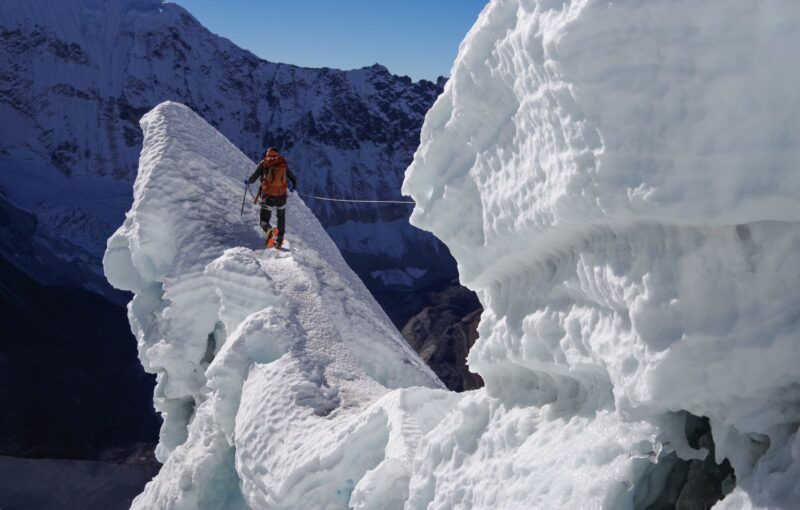
Many climbers combine Island Peak with the classic Everest Base Camp trek or a hike to Kala Patthar for acclimatization. While the climb is largely non-technical, the final push involves a thrilling 100-meter steep ascent along a ridgeline that requires the use of fixed ropes and crampons. It is the perfect choice for those seeking their first Himalayan summit.
2. Mera Peak
-
Altitude: 6,476m (21,247ft)
-
Region: Everest (Hinku Valley)
-
Difficulty: Alpine F (Easy/Straightforward)
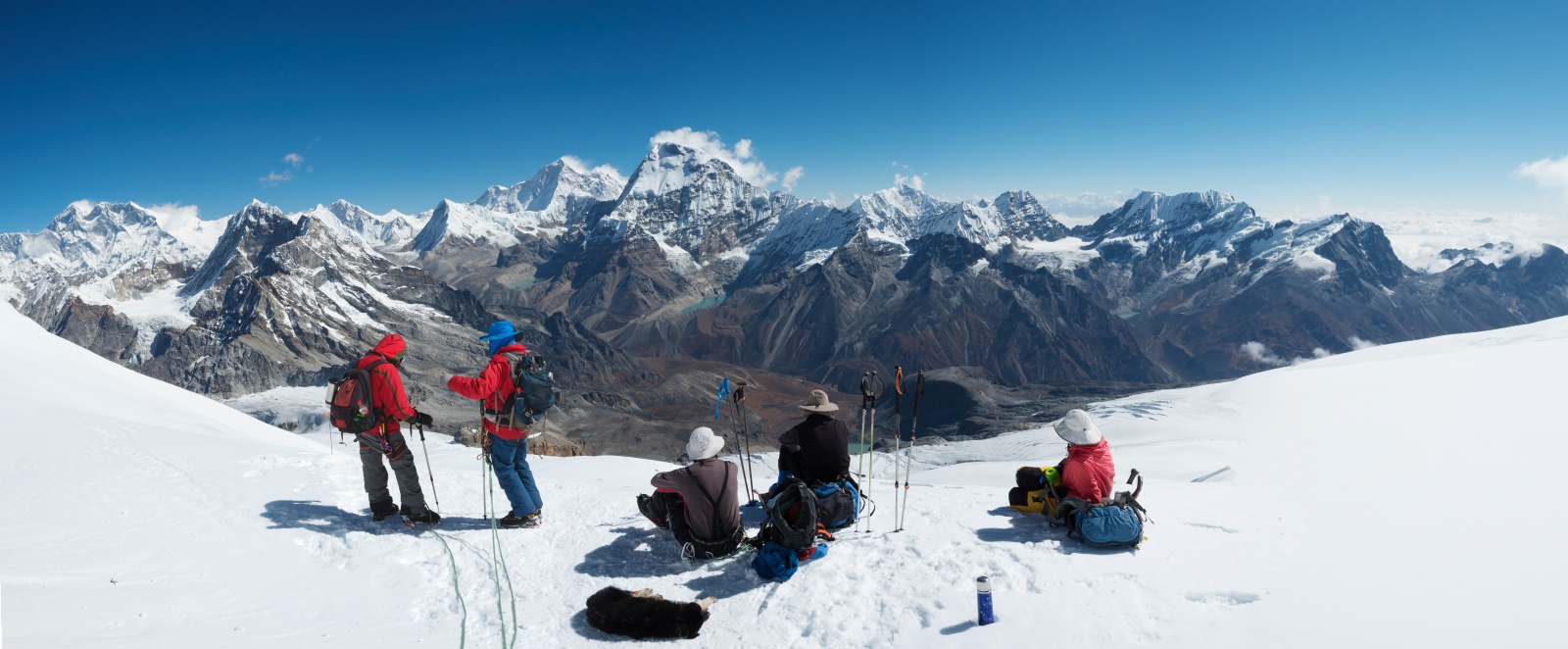
The Highest Trekking Peak If you are looking for maximum altitude with minimum technical difficulty, Mera Peak is the ultimate choice. It holds the title of the highest trekking peak in Nepal, yet it is surprisingly accessible for beginners due to its non-steep, snow-domed slopes.
The mountain consists of three summits: Mera North, Central, and South (climbers typically target Mera Central). The ascent is straightforward, with the biggest challenges being fitness and proper acclimatization rather than technical climbing skills. The reward at the top is arguably the best panorama in the Himalayas, with views of five 8,000m peaks, including Mount Everest.
3. Lobuche East Peak
-
Altitude: 6,119m (20,070ft)
-
Region: Everest (Khumbu)
-
Difficulty: Alpine PD+ (Technical feel)
The Technical Challenge For those who want a step up in difficulty from Mera or Island Peak, Lobuche East offers a grittier challenge. While it shares the same “PD+” grade as Island Peak, Lobuche feels significantly more technical and requires previous mountaineering experience or training.
The mountain comprises two summits: Lobuche East and Lobuche Far East. The climb involves navigating steep snow and ice slopes that require reliable rope work. Because of its location, Lobuche is often combined with an Island Peak climb on a single expedition. Conquering this peak earns you a commanding view of the Everest range and a true sense of mountaineering achievement.
4. Yala Peak
-
Altitude: 5,700m (18,700ft)
-
Region: Langtang Valley
-
Difficulty: Easy / Non-technical
The Kathmandu Gateway Located closest to Kathmandu, Yala Peak is one of the most accessible and beginner-friendly climbing destinations in Nepal. It is an ideal choice for those with limited trekking experience but a high level of physical fitness. While it is less crowded than the peaks in the Everest region, it offers a deeply rewarding cultural and scenic experience.
The journey takes you through the picturesque Langtang Valley, characterized by its distinct Tibetan-influenced culture and the famous Kyanjin Gompa village. From the summit, you are treated to a stunning view of the entire Langtang range, including the massive Shishapangma (8,013m), the highest mountain in Tibet. For a longer adventure, this climb can be paired with a trek to the sacred Gosaikunda Lake or the monasteries of Helambu.
5. Pisang Peak
-
Altitude: 6,091m (19,978ft)
-
Region: Annapurna (Manang Valley)
-
Difficulty: Technical / Moderate
The Annapurna Gem Rising majestically above Pisang village, this peak is a highlight of the eastern Annapurna range. Most climbers incorporate this ascent into the world-famous Annapurna Circuit trek, which includes crossing the Thorong La Pass (5,416m).
The climb follows a well-defined ridge leading to a steep summit pyramid. Because of its technical nature, we recommend this peak for those with some previous mountaineering experience. The effort is rewarded with a 360-degree panorama: Manaslu (8,163m) to the northeast, Annapurna II and IV to the south, and the vast trans-Himalayan Tibetan plateau to the north.
6. Chulu West Peak
-
Altitude: 6,419m (21,055ft)
-
Region: Annapurna (Manang Valley)
-
Difficulty: Challenging / Technical
The Adventurer’s Choice Similar to Pisang Peak, Chulu West is situated near the Annapurna Circuit trail and the Thorong La Pass. However, it is a longer and more technically demanding expedition. Reaching the summit typically requires the establishment of two high camps, making it a true test of endurance and high-altitude skill.
Chulu West is best suited for trekkers in peak physical condition who have prior experience using ice axes and crampons. For those who embrace the challenge, the summit offers an unparalleled vantage point of the Dhaulagiri and Annapurna massifs, providing a sense of “hard-earned success” that few other trekking peaks can match.
7. Dhampus Peak (Thapa Peak)
-
Altitude: 6,012m (19,719ft)
-
Region: Dhaulagiri (Kaligandaki)
-
Difficulty: Non-technical / Straightforward
Off the Beaten Path For climbers looking to escape the busier Everest and Annapurna trails, Dhampus Peak (also known as Thapa Peak) is a hidden treasure. Located northeast of the massive Dhaulagiri range, the approach involves crossing high-altitude passes like the French Pass (5,360m) and Dhampus Pass (5,240m).
No prior technical climbing experience is required for this peak, making it accessible to fit hikers. The trail winds through the rugged, rural landscapes of western Nepal and the Kaligandaki region. From the summit, you can see over thirty different peaks nestled between the Annapurna and Dhaulagiri ranges, with an incredible close-up view of Tukuche and Dhaulagiri I.
8. Pokalde Peak (Dolma Ri)
-
Altitude: 5,806m (19,049ft)
-
Region: Everest (Khumbu)
-
Difficulty: Easy / Scrambling
The Shortest Path to a Summit
Located just 12 km southwest of Mount Everest, Pokalde Peak—also known as Dolma Ri—is one of the most accessible peaks for those short on time. The final summit push is a manageable 650-meter hike from base camp. Remarkably, depending on the season, this peak can often be summitted without the need for ice axes or crampons, making it a high-altitude scramble rather than a technical climb.
Pokalde is rapidly growing in popularity as a “commercial tourist peak” because it provides the full Everest trekking experience with a fraction of the difficulty of neighboring summits. For those looking for an ultimate mountaineering challenge, many climbers choose to combine Pokalde with nearby ascents of Island Peak and Lobuche East.
9. Pharchamo Peak
-
Altitude: 6,187m (20,298ft)
-
Region: Rolwaling Valley
-
Difficulty: Moderate / Achievable
Wilderness and the Legend of the Yeti
If you crave the rich Sherpa culture of the Everest region but want to avoid the crowds, Pharchamo Peak is the perfect hidden gem. Located in the beautiful Rolwaling Valley to the west of Khumbu, this route remains quiet even during peak seasons, offering a sense of solitude and rich biodiversity.
The climb features a well-defined north-by-northwest ridge that makes for an achievable and satisfying ascent. From the top, you’ll enjoy majestic views of Mt. Gauri Shankar, as well as the giants of the Langtang and Everest ranges. Adding to its mystique, the Rolwaling region is famous for local legends of the “Yeti.” To this day, the area continues to capture the imagination of explorers with reported sightings of this mysterious creature.
10. Tent Peak (Tharpu Chuli)
-
Altitude: 5,663m (18,575ft)
-
Region: Annapurna Sanctuary
-
Difficulty: Introductory / Amateur Mountaineering
The Heart of the Sanctuary
Locally known as Tharpu Chuli, Tent Peak sits in the center of the Annapurna Sanctuary, offering a 360-degree theater of some of the highest mountains on Earth. Standing on the summit, you are surrounded by Annapurna I (8,091m), Annapurna South, and Annapurna III.
Tent Peak is the most climbed peak in the Annapurna region and ranks as the third most popular trekking peak in all of Nepal, trailing only Island and Mera Peak. Its relatively low altitude makes it the ideal “entry-level” mountain for trekkers ready to try their hand at amateur mountaineering. The journey is typically integrated with a trek to Annapurna Base Camp, providing a seamless transition from the trekking trail to the snowy summit.
Summary of the Top 10 Peaks
| Peak | Altitude | Best Known For |
| Island Peak | 6,189m | The classic “first” Himalayan summit. |
| Mera Peak | 6,476m | The highest trekking peak with easy slopes. |
| Lobuche East | 6,119m | A technical step-up for aspiring alpinists. |
| Yala Peak | 5,700m | Best for beginners and closest to Kathmandu. |
| Pisang Peak | 6,091m | Stunning views over the Annapurna Circuit. |
| Chulu West | 6,419m | A long, rewarding, and adventurous haul. |
| Dhampus Peak | 6,012m | A quiet, non-technical alternative in the west. |
| Pokalde Peak | 5,806m | A short, accessible peak near Everest. |
| Pharchamo Peak | 6,187m | Remote wilderness and Sherpa culture. |
| Tent Peak | 5,663m | Best views within the Annapurna Sanctuary. |
How to Prepare: Your Roadmap to the Summit
Climbing a trekking peak in Nepal is a significant achievement that requires a balance of physical endurance, mental resilience, and the right equipment.
1. Physical Training: Building the “Mountain Engine”
Even for “non-technical” peaks like Mera or Yala, the altitude and duration of the climb will test your body. You should start training 3–6 months before your trip.
-
Cardiovascular Endurance: Focus on “Zone 2” training (steady, moderate intensity). Hiking, running, or cycling for 1+ hours 3–4 times a week builds the aerobic base needed for long summit days.
-
Weighted Inclines: The best training for climbing a mountain is walking uphill. Use a treadmill on an incline or find a local hill. Gradually increase your backpack weight until you can comfortably carry 10–12kg for several hours.
-
Leg and Core Strength: Incorporate squats, lunges, and step-ups into your routine. A strong core helps with balance on uneven glacial terrain.
2. Mental Preparation
High-altitude climbing involves cold temperatures, basic living conditions, and occasional discomfort.
-
Patience: Acclimatization is a slow process. Be prepared to “walk slow” and rest often.
-
Resilience: Summit days often begin at midnight and can last 10–14 hours. Mental toughness is what gets you through the final 100 meters.
3. Essential Gear Checklist
While most trekking peaks don’t require professional-grade vertical ice tools, you will need specialized mountaineering equipment.
Technical Hardware
-
Boots: B3-rated mountaineering boots (double boots are highly recommended for peaks over 6,000m like Mera or Island Peak).
-
Crampons: Twelve-point steel crampons compatible with your boots.
-
Ice Axe: A lightweight walking axe for balance and self-arrest.
-
Harness & Carabiners: A climbing harness, a few locking carabiners, and a “descender” (figure-8 or ATC) for rappelling.
Clothing & Layering
-
Base Layers: Moisture-wicking merino wool or synthetic layers (avoid cotton).
-
Insulation: A heavy-duty down jacket (rated for -15°C to -20°C) for summit night.
-
Shell: Waterproof and windproof Gore-Tex jacket and trousers.
-
Hands/Feet: Thick wool socks, liner gloves, and heavy waterproof mittens.
4. Acclimatization Strategy
Altitude is the single most important factor in your success.
-
Hydration: Aim for 3–4 liters of water per day.
-
Nutrition: Your appetite may drop at altitude; focus on high-carb, easily digestible foods.
-
The Golden Rule: “Climb high, sleep low.” Ensure your itinerary includes dedicated rest days before pushing above 5,000m.